Climate and Multi-hazard risk and vulnerabilities
1. Multi-hazard exposure
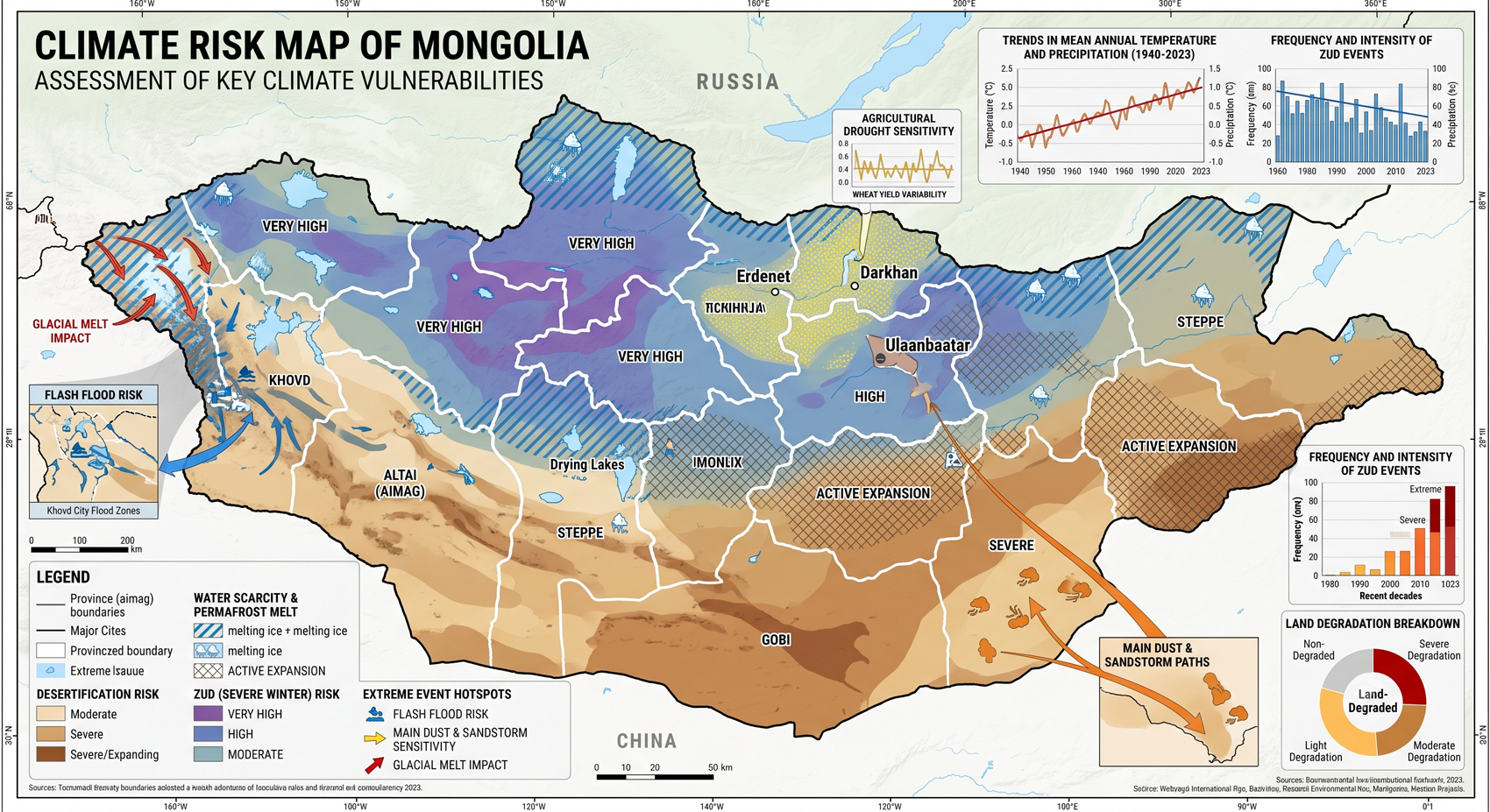
Mongolia’s disaster-risk profile is distinct because it is dominated by compound climate extremes rather than tropical cyclones or coastal hazards. The country faces severe winters, hot and dry summers, drought, dzud, strong winds, dust storms, wildfires, flash floods, river flooding, and pasture degradation. The World Bank and ADB climate risk profile for Mongolia highlights the country’s exposure to warming, drought, flood risk, rangeland stress, and climate-sensitive livelihoods. (Asian Development Bank)
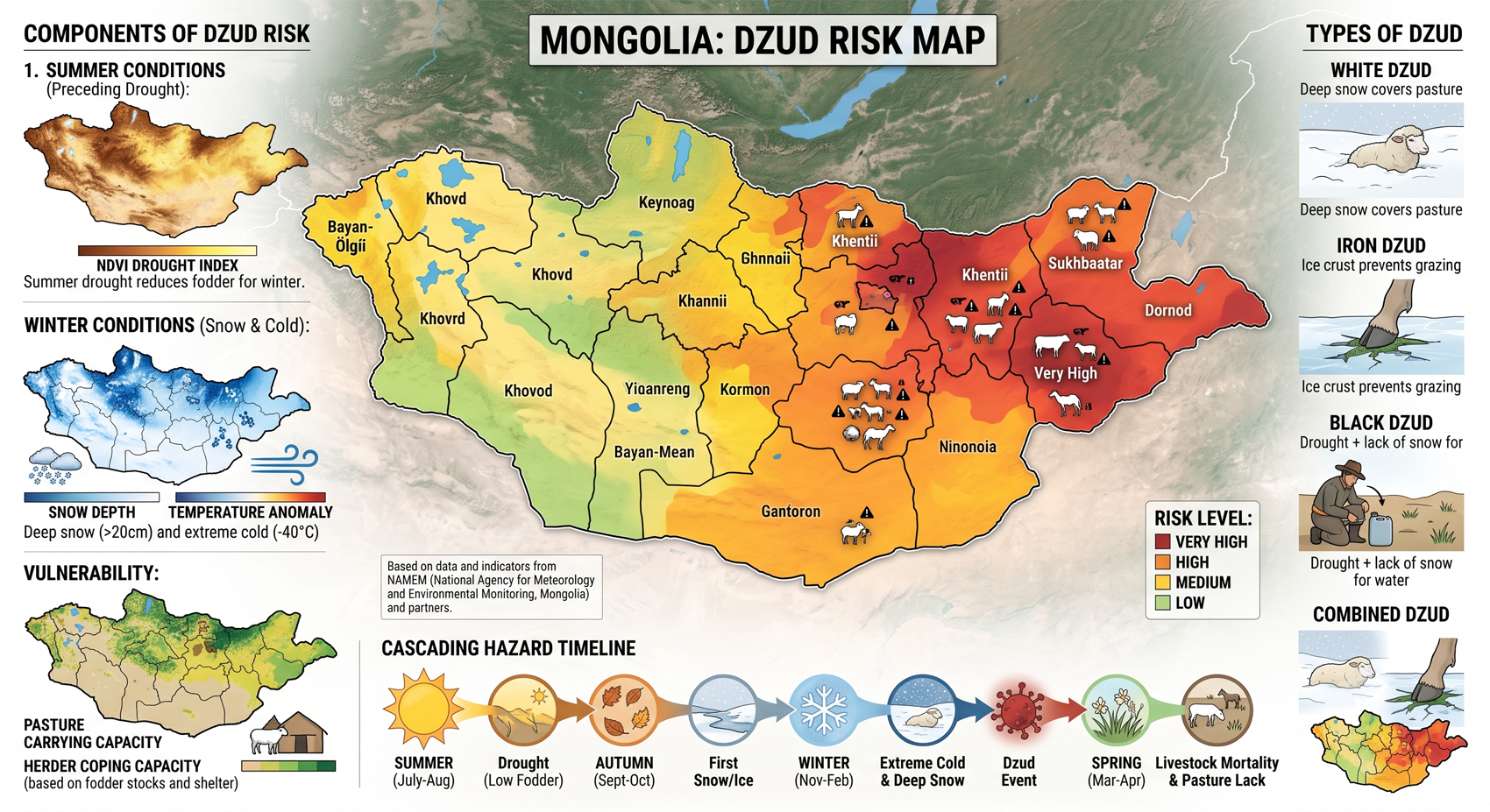
The most distinctive hazard is dzud, a severe winter disaster that often follows summer drought. During a dzud, deep snow, ice crusting, extreme cold, and poor pasture conditions prevent livestock from grazing, leading to mass livestock mortality and severe livelihood losses for herder households. AP reported that the 2024 dzud killed more than 7.1 million livestock, more than one-tenth of Mongolia’s livestock population, severely affecting herders and the national economy. (AP News)
Mongolia is highly vulnerable to climate change and multi-hazard risks due to its landlocked continental climate, extreme seasonal temperature variability, arid and semi-arid ecosystems, dependence on livestock herding, pasture degradation, water scarcity, desertification, rapid urbanization, and exposure to recurrent dzud, droughts, snowstorms, dust storms, floods, wildfires, extreme cold, heatwaves, and land degradation. Mongolia’s National Emergency Management Agency identifies recurring hazards such as dzud, heavy snow and ice cover, strong winds and storms, floods, wildfires, and droughts as risks affecting livelihoods, the economy, and sustainable development. (greensoft.mn)
Mongolia is highly exposed and vulnerable to climate change and multi-hazard risks due to its harsh continental climate, arid and semi-arid ecosystems, dependence on livestock herding, degraded pasturelands, water scarcity, rural remoteness, and growing urban pressures. The country faces recurrent risks from dzud, droughts, extreme cold, heavy snowfall, snowstorms, dust storms, floods, flash floods, wildfires, heatwaves, desertification, pasture degradation, and livestock disease. Climate change is intensifying these vulnerabilities through rising temperatures, more frequent droughts, harsher winter disasters, reduced pasture productivity, water stress, land degradation, and growing risks to herder livelihoods, food security, public health, infrastructure, ecosystems, and rural resilience. Strengthening multi-hazard early warning systems, dzud and drought forecasting, impact-based forecasting, rangeland restoration, climate-resilient livestock systems, water security, disaster risk financing, livestock insurance, shock-responsive social protection, and locally led adaptation is essential to reduce losses and protect Mongolia’s development gains.
2. Climate change as a risk multiplier
Climate change is intensifying Mongolia’s already harsh natural conditions. Rising temperatures, longer and more frequent droughts, reduced soil moisture, variable precipitation, degraded pasture, and heavier winter snow events increase the likelihood of compound disasters such as drought followed by dzud. Mongolia’s 2025 National Adaptation Plan focuses on strengthening resilience against climate change, weather-related disasters, and associated vulnerability. (UNFCCC)
Climate change also increases the risk of desertification and land degradation. UNDP reports that around 77% of Mongolia’s land is classified as degraded, driven by overgrazing, climate change, and unsustainable pasture practices. This degradation directly threatens herders, livestock productivity, biodiversity, and rural livelihoods. (UNDP)
3. Dzud, drought, and herder livelihood vulnerability
The most critical vulnerability in Mongolia is the dependence of rural households on pastoral livestock systems. Herders are exposed to drought, pasture decline, livestock disease, water scarcity, harsh winters, and market shocks. When drought reduces summer pasture and hay availability, animals enter winter undernourished; if heavy snow and ice follow, dzud mortality rises sharply.
UNDP’s rural resilience work in Mongolia focuses on climate-vulnerable herder communities in provinces such as Khovd, Zavkhan, Dornod, and Sukhbaatar, covering steppe, desert steppe, mountain, mountain steppe, and forest steppe zones. (Adaptation UNDP) These areas illustrate how climate exposure varies across Mongolia’s ecological zones but consistently threatens livestock-based livelihoods.
4. Water scarcity and desertification vulnerability
Water security is a major climate-risk issue for Mongolia, particularly in the Gobi, steppe, and dryland regions. Water demand is increasing due to urbanization, mining, agriculture, livestock production, and economic development, while climate change and groundwater depletion are increasing pressure on available resources. OECD notes that Mongolia faces growing water-resource pressure because of rising demand, climate change, and groundwater depletion. (OECD)
Desertification and pasture degradation increase exposure to dust storms, reduced forage availability, livestock stress, biodiversity loss, and rural poverty. These risks are especially serious for herder households with limited alternative income sources and weak access to water, fodder, veterinary services, insurance, and markets.
5. Flood, wildfire, and urban vulnerability
Although Mongolia is often associated with drought and dzud, it also faces flood and wildfire risks. Intense rainfall can trigger flash floods, especially in dry catchments, urban drainage systems, and settlements located near river channels or low-lying areas. Floods can damage roads, bridges, housing, schools, health facilities, water systems, and urban infrastructure.
Wildfire risk is also significant, particularly during dry and windy periods. Grassland and forest fires can damage pasture, forests, settlements, livestock shelters, and rural livelihoods. Strong winds and dust storms can disrupt transport, damage infrastructure, reduce air quality, and create health risks.
Ulaanbaatar and other urban areas face a different risk profile, including flash flooding, heat stress, air pollution, infrastructure congestion, and informal settlement vulnerability. Migration from rural areas after livestock losses can increase pressure on urban housing, services, employment, water, sanitation, and health systems.
6. Sector-specific vulnerability summary
| Sector | Main climate and multi-hazard risks |
|---|---|
| Livestock and herding | Dzud, drought, pasture degradation, water scarcity, livestock disease, fodder shortage |
| Pasture and rangelands | Desertification, overgrazing, soil erosion, reduced vegetation cover, biodiversity loss |
| Water resources | Groundwater depletion, drought, rising demand, declining recharge, mining and urban water stress |
| Agriculture | Drought, frost, short growing seasons, rainfall variability, crop failure, soil moisture decline |
| Urban settlements | Flash floods, heat stress, air pollution, infrastructure pressure, rural-to-urban migration |
| Transport infrastructure | Snowstorms, floods, dust storms, road disruption, isolation of remote communities |
| Health | Extreme cold, heat stress, air pollution, dust exposure, livestock-related disease risks |
| Public finance and economy | Livestock losses, emergency relief costs, rural poverty, insurance and recovery financing needs |
7. Social vulnerability
The most vulnerable groups include herder households, small livestock owners, women-headed households, children, older persons, people with disabilities, remote rural communities, poor urban households, informal ger-area residents, and households dependent on climate-sensitive livestock and natural resources.
Vulnerability is highest where climate exposure overlaps with poor access to water, fodder, veterinary services, roads, early warning, insurance, savings, social protection, and alternative income sources. Dzud can rapidly push herder households into debt, asset loss, migration, and poverty, particularly when livestock mortality is high and recovery takes several years.
8. Priority resilience needs
Mongolia’s resilience agenda should prioritize multi-hazard early warning systems, dzud risk forecasting, drought monitoring, impact-based forecasting, pasture-risk mapping, climate-resilient livestock systems, fodder reserves, water security, rangeland restoration, livestock insurance, wildfire preparedness, flood-risk management, shock-responsive social protection, disaster risk financing, and locally led adaptation.
A practical resilience package for Mongolia should include:
| Priority area | Key actions |
|---|---|
| Early warning and anticipatory action | Dzud, drought, snowstorm, flood, wildfire, dust storm, and heat-risk warnings with last-mile communication |
| Dzud risk reduction | Seasonal risk forecasting, fodder and hay reserves, livestock shelters, veterinary support, emergency cash assistance |
| Pasture and rangeland resilience | Rotational grazing, pasture-user groups, rangeland restoration, carrying-capacity management |
| Water security | Groundwater monitoring, protected wells, water harvesting, drought contingency planning, efficient water use |
| Livelihood diversification | Support for alternative income, value-chain development, insurance, savings groups, market access |
| Urban resilience | Flood drainage, heat-risk planning, ger-area upgrading, air-quality improvement, resilient basic services |
| Disaster risk financing | Index-based livestock insurance, contingency funds, forecast-based financing, scalable social protection |
| Climate-risk governance | Unified climate-disaster databases, risk-informed planning, local capacity building, community preparedness |
Mongolia: Detailed Climate, Multi-Hazard Disaster-Risk and Vulnerability Profile
National Emergency Management Agency (Mongolian: Онцгой байдлын ерөнхий газар, romanized: Ontsgoi Baidlyn yerönkhii gazar) https://nema.gov.mn/
The National Emergency Management Agency (Mongolian: Онцгой байдлын ерөнхий газар, romanized: Ontsgoi Baidlyn yerönkhii gazar) or NEMA (ОБЕГ, OBYeG) is a paramilitary government agency overseeing emergency services in Mongolia. It was established with the duty to conduct nationwide post-disaster activities. Similar to the Russian Ministry of Emergency Situations in its mandate, it is responsible for developing environmental legislation as well as managing the fallout from natural disasters and conducting rescue work.[
The Civil Defense Directorate of the Mongolian Armed Forces is the main executive body responsible for implementing civil defense measures, functioning under the direct authority of the Minister of Defense.
POLICY FRAMEWORKS
State Policy on Disaster Protection
National Security Concept of Mongolia
The Basis of the Defense Policy of Mongolia
National Framework in Strengthening Disaster Protection Capacity
National Programme on Community Participatory Disaster Risk Reduction
National Plan for Prevention and Rescue of Population, Animals and Properties from Disaster, Disaster Response and Early Warning
The mid-term Strategy for implementing Sendai Framework for Disaster Risk Reduction in Mongolia
.png)
NATIONAL EMERGENCY MANAGEMENT AGENCY (NEMA) Монгол Улсын Засгийн газрын тохируулагч агентлаг ОНЦГОЙ БАЙДЛЫН ЕРӨНХИЙ ГАЗАР
THE GOVERNMENT OF MONGOLIA http://en.nema.gov.mn
OUR VISION
The vision of Emergency Management Organization of Mongolia will be a leading organization that is trustworthy and capable at region national and international level.
OUR DUTY
Our duty is to implement laws, regulations and state policies on disaster protection, to organize and manage disaster protection activities both at national and local level and to provide professional management.
NEMA FUNCTION
- Strengthen the legal environment of disaster protection, improve policy coordination, and develop partnership and cooperation on disaster risk reduction at national, regional and international level.
- Develop and strengthen a disaster risk management system and introduce science and innovation in disaster protection activities.
- Strengthen the management leadership of the organization and human resource development, and capacity building.
- Ensure disaster prevention measures as a universal activity, increase community disaster awareness and ensure public participation in disaster risk reduction.
- Strengthen professional management on disaster protection, enhance the preparedness of equipment and techniques, strengthen capacity of search and rescue, response and recovery operations in disaster sites.
- Ensure the fire safety, strengthen fire fighting system and improve the preparedness of techniques through fire prevention and state control.
- Deliver state reserve activities with management and coordination; strengthen disaster response through efficient humanitarian assistance coordination and recovery.
- Increase disaster budget, financing, logistics and investment and introduce new technologies in disaster protection.
- Conduct monitoring and evaluation, and internal audit and increase the outcome and productivity in disaster protection.
MISSION
The mission of Emergency Management Organization of Mongolia is to ensure national security, state social and economic sustainable development, and safe enjoyable life conditions for the People of Mongolia through protecting and preventing the population and their property, ecosystem, cultural value and historical monuments from potential hazards, reducing disaster risks, ensuring public participation in disaster management activities, expanding multilateral cooperation as well as developing disaster research.
LAW ON DISASTER PROTECTION
Law on Disaster Protection regulates the process to organize the disaster protection activities in a timely and effective manner, as well as to regulate relations related to the Emergency Management Organization of Mongolia, and management system, organization and operation of disaster protection activities.
Law on Disaster Protection regulates coordination of the involvement of Emergency Management Organization of Mongolia, National Council on Disaster Risk Reduction, State Emergency Commission, State Services of Disaster Protection, State and Local Authorities, enterprises, private entities and civil society in the framework of disaster prevention, preparedness, disaster risk reduction, search and rescue, response and recovery activities, as well as to implement state control on disaster protection.
LAW ON FIRE SAFETY
Law on Fire Safety regulates the process of obligation and duty as well as mandates of local authorities, private enterprises and entities and individuals on providing the fire safety.
Law on Fire Safety organizes nationwide fire fighting and fire prevention activities.
LAW ON STATE RESERVE
Law on State Reserve regulates the process for stocking state reserve items, storage, transportation and renewal of the emergency stockpiles.
Law in State Reserve reinforces the law implementation through the state reserve branches for stockpiling, storing and restocking state reserve items in accordance with approved location, list, quantity and disposing of them by a decision of the Government.
POLICY FRAMEWORKS
State Policy on Disaster Protection
National Security Concept of Mongolia
The Basis of the Defense Policy of Mongolia
National Framework in Strengthening Disaster Protection Capacity
National Programme on Community Participatory Disaster Risk Reduction
National Plan for Prevention and Rescue of Population, Animals and Properties from Disaster, Disaster Response and Early Warning
The mid-term Strategy for implementing Sendai Framework for Disaster Risk Reduction in Mongolia
Coalition for Disaster Resilient of infrastructure (CDRI) 2025
.jpg)
At the 2019 United Nations Climate Action Summit, the Prime Minister of India initiated the establishment of the Coalition for Disaster Resilient of infrastructure (CDRI). The coalition currently comprises 47 member countries, including Mongolia. The goal of the CDRI is “systematically supporting the development infrastructure that is resilient to future disasters and climate change, in alignment with the Paris Agreement on climate change, the Sendai framework for Disaster Risk Reduction, and the UN Sustainable Development Goals.”
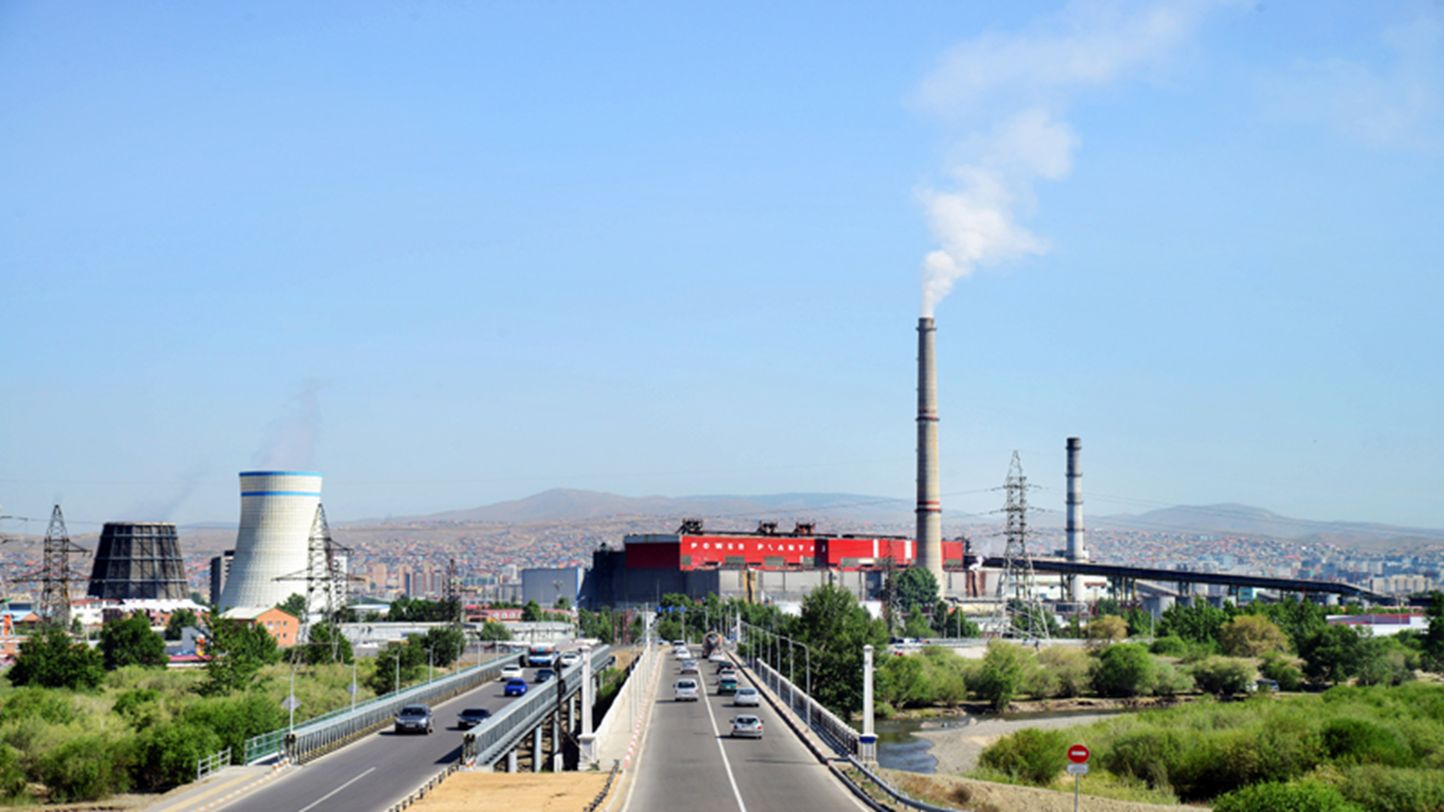
Mongolia’s accession to the CDRI demonstrates the Government’s recognition that disaster risk reduction is a fundamental to sustainable development and highlights the country’s commitment to high-level leadership and attention in developing disaster resilient infrastructure.
This international scientific conference is convened to address Mongolia’s evolving disaster risk challenges amid rapid socio-economic development and urbanization, where government initiatives to enhance urban disaster resilience, improve infrastructure standards, and foster public-private partnerships face significant implementation challenges. The conference aims to bring together distinguished researchers, academic institutions, and technical experts to facilitate scientific discourse, exchange cutting-edge research findings, and develop evidence-based solutions for disaster risk reduction and resilience building in Mongolia’s unique geographical and developmental context.

OBJECTIVES OF THE CONFERENCE
- To increase the involvement of scientific institutions, researchers, and scholars in enhancing disaster-resilient infrastructure, reducing disaster risk, and strengthening disaster resilience.
- To learn from the experiences and practices of other countries in developing and reinforcing disaster-resilient infrastructure.
- To foster collaboration among science and technology institutions, providing researchers and scholars with opportunities to share knowledge, skills, and experience.
- To support policymakers in the infrastructure sector with science- and risk-based decision-making.
EXPECTED OUTCOMES
The following outcomes are expected from this scientific conference:
- The conference will produce a set of recommendations on enhancing the role and engagement of the scientific community in building and strengthening disaster-resilient infrastructure, as well as methodologies for science-based policymaking and decision-making.
- Knowledge and understanding will be strengthened among policymakers, stakeholders, and local authorities regarding the planning and implementation of disaster-resilient infrastructure in both existing and newly planned cities.
- Participants will share knowledge and experiences on the impacts of natural and human-induced disasters on infrastructure, approaches to risk reduction, and strategies for improving preparedness, thereby enhancing collaboration among stakeholders.

MAIN DISCUSSION TOPICS
- Partnerships for disaster risk reduction and disaster risk governance
- Programs and planning for critical infrastructure (transport, health, energy, communications, etc.)
- Disaster risk assessment and methodologies for critical infrastructure
- International standards, norms, and regulations on disaster-resilient infrastructure, and good practices in their localization
- Infrastructure risk based on geospatial information
- Knowledge-sharing on disaster-resilient infrastructure / ensuring coordination among stakeholders
- Nature-based solutions for building disaster-resilient infrastructure
- Using data, technology, and innovation in disaster-resilient urban planning, infrastructure, and disaster response
- Today’s investments for building a more disaster-resilient tomorrow
- Approaches to strengthening infrastructure capacity at the local level to build disaster-resilient cities
- Sharing disaster resilience databases, technology, and innovation (good practices implemented by different countries)
SCOPE OF PARTICIPANTS AND REGISTRATION PERIOD
The conference is open to international and domestic scholars, researchers, government policy-makers, and specialists working in the fields of disaster risk reduction and infrastructure resilience.
Methodology, Tools, and Guidelines on Impact-Based Forecasting (IBF)
The mid-term Strategy for implementing Sendai Framework for Disaster Risk Reduction in Mongolia