Myanmar

Multi-hazard Early Warning System Design & Implementation Center (MHEWC): A Global Platform for Multi-Hazard Early Warning Systems (MHEWS)-Supporting the Global South

Created with Sketch.

Climate risk and vulnerabilities of Myanmar

Myanmar is highly vulnerable to climate change and multi-hazard risks due to its exposure to cyclones, storm surges, floods, landslides, droughts, extreme heat, earthquakes, tsunamis, coastal erosion, salinity intrusion, and forest fires. The country’s long Bay of Bengal coastline, low-lying Ayeyarwady Delta, major river basins, mountainous terrain, monsoon rainfall, climate-sensitive agriculture and fisheries, and fragile infrastructure create a complex risk environment. Climate change is intensifying these vulnerabilities through rising temperatures, erratic rainfall, more extreme precipitation, increasing flood and storm impacts, drought stress, sea-level rise, and water and food-security pressures. Vulnerability is further compounded by conflict, displacement, poverty, weakened institutions, limited humanitarian access, and high dependence on natural-resource-based livelihoods. Strengthening multi-hazard early warning systems, cyclone and flood preparedness, climate-resilient agriculture, water security, coastal protection, resilient infrastructure, disaster risk financing, and inclusive community-based preparedness is essential to reduce losses and protect vulnerable communities.  Myanmar is highly vulnerable to multi-hazard risks due to its long Bay of Bengal coastline, low-lying Ayeyarwady Delta, major river basins, mountainous and landslide-prone terrain, monsoon climate, exposure to tropical cyclones, active seismic setting, high rural dependence on agriculture and fisheries, and the compounding effects of conflict, displacement, poverty, and weakened service delivery.

UNOSAT

1. Multi-hazard exposure

Myanmar faces one of the most complex hazard profiles in Southeast Asia. The country is exposed to earthquakes, floods, strong winds, cyclones, storm surges, periodic droughts, fires, tsunamis, and industrial or technological hazards. The 2023 Humanitarian Needs Overview reported that Myanmar ranked very high globally for exposure to natural hazards, particularly floods, earthquakes, and tsunamis.

Cyclones and floods are among the most severe recurring hazards. Myanmar’s coastline is exposed to tropical cyclones forming in the Bay of Bengal, and major cyclone events have included Cyclone Nargis in 2008, Cyclone Mocha in 2023, and the flood and landslide impacts associated with Typhoon Yagi in 2024. The World Bank notes that damaging tropical cyclone occurrence has shown an increasing trend in recent decades, with impacts caused by high winds, storm surge, floods, and associated landslides. (World Bank)

2. Climate change as a risk multiplier

Climate change is increasing Myanmar’s exposure to rapid-onset and slow-onset hazards. The Red Cross Red Crescent Climate Centre reports that Myanmar faces high disaster risk and is exposed to riverine, urban and coastal flooding, tropical cyclones, landslides, heatwaves, and droughts; it also notes that mean annual temperature increased by about 0.2°C per decade during 1961–2015.

Myanmar’s Climate Change Strategy states that observed and projected climate impacts are heightening the risks of rapid-onset disasters such as floods and cyclones, while also driving slower changes including erratic rainfall, higher temperatures, reduced agricultural productivity in the Central Dry Zone, sea-level rise, and soil salinization.

3. Cyclone, storm surge, and coastal vulnerability

Myanmar’s coastal regions, especially Rakhine State, Ayeyarwady Region, Yangon Region, Mon State, and Tanintharyi Region, are highly vulnerable to cyclones, storm surge, coastal flooding, erosion, and saltwater intrusion. The Ayeyarwady Delta is particularly exposed because of its low elevation, dense rural settlements, rice production, fisheries, river channels, and proximity to the Bay of Bengal.

Cyclone Nargis remains the most devastating example of Myanmar’s cyclone risk. The World Bank’s 2025 flood assessment notes that Nargis caused up to 146,000 deaths in the low-lying Irrawaddy/Ayeyarwady Delta and generated very large economic damages and losses. (World Bank) This demonstrates the importance of cyclone early warning, evacuation planning, resilient shelters, coastal embankments, mangrove restoration, and last-mile risk communication.

4. Flood and landslide vulnerability

Flooding is one of Myanmar’s most recurrent and damaging hazards. Flood risk is high along major river systems including the Ayeyarwady, Chindwin, Sittaung, Salween/Thanlwin, Bago, and Yangon river systems, as well as in urban areas with poor drainage. The Climate Centre notes that flooding frequently occurs during the rainy season from June to October, and that rainfall has become more intense and unpredictable, increasing flood risk.

The 2024 Typhoon Yagi-related floods show how severe this risk can become. The World Bank estimated that nearly 2.4 million people, more than 1 million structures, about 430,000 hectares of cropland, and around 2,200 km of road infrastructure were exposed to flooding caused by Typhoon Yagi in Myanmar. (World Bank) Reported impacts included more than 433 deaths, over 958,000 people affected, more than 320,000 people displaced, damaged roads and bridges, affected schools, damaged telecommunication towers, electricity disruption, and large areas of flooded cropland. (World Bank)

5. Drought, heat, and Central Dry Zone vulnerability

Drought and heat stress are major concerns, particularly in Myanmar’s Central Dry Zone, where rainfall variability, high temperatures, water scarcity, degraded soils, and dependence on rainfed farming increase vulnerability. Climate change is expected to worsen agricultural water stress, reduce crop yields, disrupt planting calendars, increase livestock stress, and affect rural livelihoods.

Drought also interacts with food insecurity, migration, water access, and health risks. Households with limited irrigation, savings, insurance, and livelihood diversification are especially vulnerable. Climate shocks in dry-zone areas can therefore become both food-security risks and poverty/debt risks.

6. Agriculture, fisheries, and livelihood vulnerability

Myanmar’s rural economy is highly climate-sensitive. Agriculture, fisheries, and livestock are central to livelihoods and food security, but they are exposed to floods, droughts, salinity intrusion, heat stress, pests, diseases, and cyclone damage. The Climate Centre notes that as much as 85% of rural livelihoods depend on climate-sensitive sectors, and that agriculture is a core sector employing a large share of the labour force.

Key agricultural vulnerabilities include:

SectorMain risks
Rice productionFloods, drought, salinity intrusion, storm damage, rainfall variability
Dry-zone farmingDrought, heat stress, poor soil moisture, crop failure
LivestockHeat stress, water scarcity, disease, feed shortages
FisheriesCyclones, storm surge, changing river flows, coastal ecosystem degradation
Rural marketsRoad disruption, crop losses, price shocks, reduced income
SmallholdersLimited access to credit, irrigation, insurance, climate information, and recovery support

7. Water, WASH, and health vulnerability

Myanmar’s water systems are vulnerable to both drought and flood contamination. Flooding can damage wells, ponds, water systems, latrines, roads, and health facilities, while drought can reduce safe water availability and increase pressure on groundwater. Coastal areas also face increasing saltwater intrusion, which can make groundwater unsuitable for drinking and agriculture.

Climate change also increases public health risks. The Climate Centre notes that climate change is expected to increase risks from vector-borne and waterborne diseases, damage health infrastructure, and increase injury, loss of life, and mental-health challenges. Floods can increase cholera, typhoid, hepatitis A, and other waterborne disease risks, while heatwaves can increase heat-related illness and mortality.

8. Urban and infrastructure vulnerability

Urban areas such as Yangon, Mandalay, Nay Pyi Taw, Bago, Mawlamyine, and coastal towns face risks from urban flooding, poor drainage, river overflow, heat stress, cyclones, water contamination, and infrastructure disruption. Yangon is particularly vulnerable because of its low-lying deltaic setting, river confluences, urban growth, drainage congestion, and exposure to coastal and riverine flooding.

Critical infrastructure risks include:

Infrastructure systemMain risks
Roads and bridgesFlood washouts, landslides, cyclone damage, access disruption
Schools and health facilitiesFlooding, wind damage, earthquake exposure, service interruption
Water and sanitation systemsFlood contamination, drought stress, salinity intrusion
Electricity and telecomsWind damage, flood exposure, landslides, recovery delays
Ports and coastal assetsStorm surge, sea-level rise, erosion, cyclone damage
Irrigation and embankmentsFlood overtopping, sedimentation, drought stress, poor maintenance

9. Earthquake and tsunami vulnerability

Myanmar also faces significant geophysical risk. The country is exposed to seismic activity, including along major fault systems, and to tsunami risk along its coast. Earthquakes can damage buildings, roads, bridges, hospitals, schools, water networks, and power systems. Coastal earthquake and tsunami risk is particularly serious where warning coverage, evacuation routes, shelters, and public awareness are weak.

UNDRR emphasized in 2025 that Myanmar requires stronger support to understand climate and disaster risks and to strengthen early warning systems, including after earthquake impacts. (UNDRR)

10. Conflict-sensitive and social vulnerability

Myanmar’s disaster risk is strongly intensified by conflict, displacement, access constraints, poverty, and weakened institutions. Floods, cyclones, and earthquakes can affect areas where humanitarian access is already restricted, infrastructure is damaged, and communities have limited coping capacity. The World Bank’s 2025 analysis of Typhoon Yagi specifically notes that conflict and insecurity complicated disaster impacts, limited access to affected areas, and constrained humanitarian response and recovery. (World Bank)

The most vulnerable groups include internally displaced people, conflict-affected communities, smallholder farmers, landless rural workers, fishing communities, women-headed households, children, older persons, people with disabilities, ethnic minority communities, informal urban settlers, and people living in flood-prone, cyclone-prone, drought-prone, landslide-prone, coastal, or seismic areas.

11. Priority resilience needs

Myanmar’s resilience agenda should prioritize:

Priority areaKey actions
Multi-hazard early warning systemsStrengthen cyclone, flood, landslide, drought, heat, earthquake, and tsunami warning; improve last-mile communication
Cyclone and coastal risk managementShelters, evacuation routes, storm-surge mapping, embankments, mangrove restoration
Flood and landslide risk reductionRiver-basin forecasting, slope-risk mapping, drainage upgrades, watershed management
Climate-smart agricultureDrought-tolerant crops, flood-resilient rice, salinity management, crop advisories, index insurance
Water security and WASHSafe water systems, groundwater monitoring, flood-safe sanitation, drought preparedness
Urban resilienceRisk-informed urban planning, drainage improvement, resilient housing, heat action planning
Infrastructure resilienceClimate- and seismic-resilient roads, bridges, schools, hospitals, and energy systems
Shock-responsive social protectionScalable cash support, anticipatory action, livelihood recovery, support for displaced people
Disaster risk financingContingency finance, insurance mechanisms, emergency funds, recovery financing
Community-based preparednessLocal evacuation planning, inclusive risk communication, drills, local response capacity


Myanmar Disaster Preparedness Agency (MDPA)

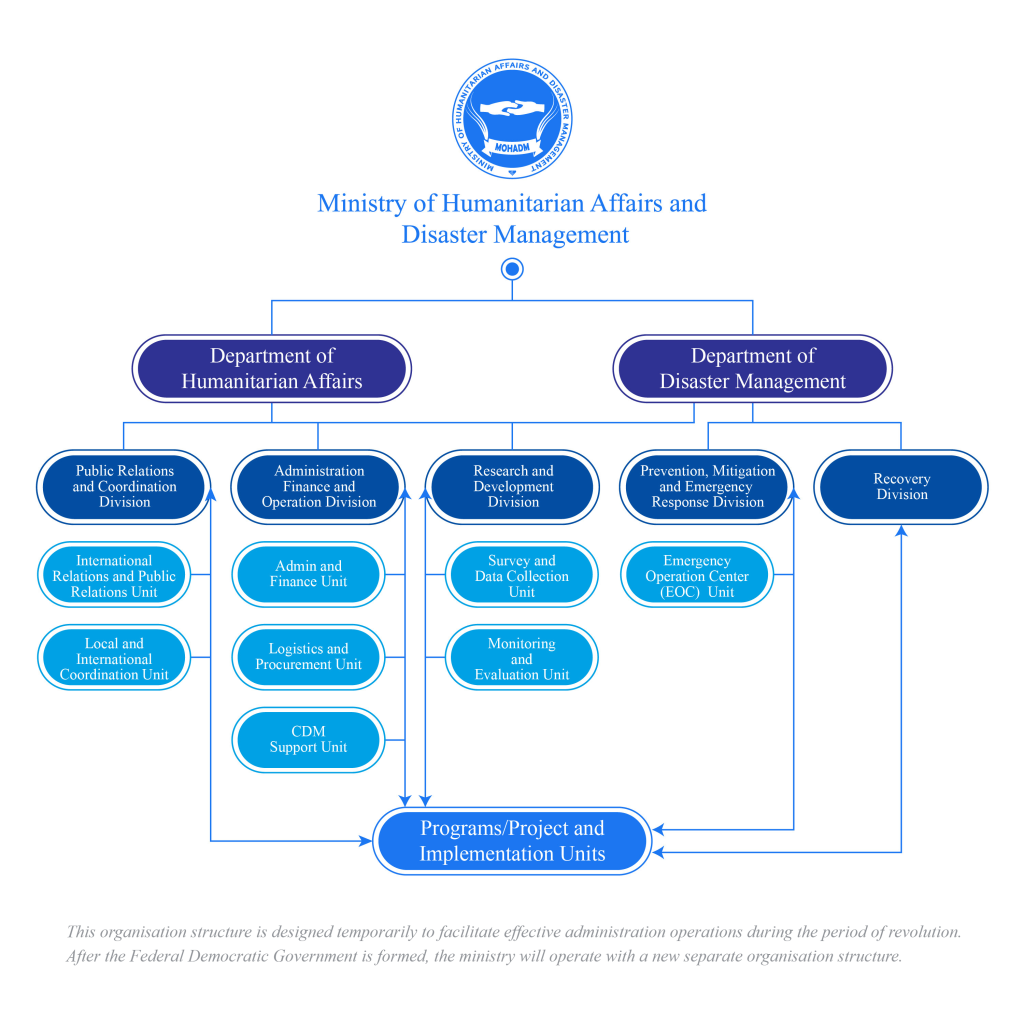
The Myanmar Disaster Preparedness Agency (MDPA) is the national focal point for planning, executing, facilitating and coordinating disaster preparedness activities. The Myanmar National Disaster Preparedness Agency (MDPA) was constituted in 2011 under the Chairmanship of the Union Minister of Social Welfare, Relief and Resettlement. https://mohadm.nugmyanmar.org

Department of Disaster Management (DDM)

Relief and Resettlement Department had emerged in Myanmar since the pre-independence .1945, a center for social and rehabilitation has emerged in the Office of the Director load desertion collecting loans and resettlement issues. 1948 When independence of Education, Ministry of Social and Rehabilitation was originally formed as operations proceed. Education on (1-11-1951) Relief and re-formed as the Ministry of placement loan collection, deserters Insurgency community housing forsaken supplies to rescue people, destroyed homes and placed back in service. (17-3-1952) Day, in collaboration with the Ministry of Minority Affairs in the Ministry of Relief and Resettlement, re-established as an IDP loans collection Relief aid and resettlement work. The emergence of social welfare activities, social welfare, 1953 Relief and re-formed as the Ministry of resettling 1957 Relief Re-positioning, and was reorganized as the Ministry of National Unity. In 1972, rescue, Resettlement and the Ministry of National Unity formed as canceled. Relief and Resettlement Department under the Ministry of Social Welfare Department. Relief and Resettlement Department, Emergency Management Center (EOC), Disaster Management Training Center (DMTC), Region / State Department’s Office (15) Office and the Office of the District Officer’s Office (29) activities. On 31.1.2018 the name of Relief and Resettlement Department, the Department of Disaster Management name was transformed.

Department of  Rehabilitation

Department of Rehabilitation undertakes its tasks by underlining the rehabilitation programs on peace and ethnic affairs and abiding the policy of ministry which is bringing about the society that ensure enjoyment of human rights through providing rehabilitation programs for people with disabilities, ex-drug addicts, human trafficking, sex trafficking, child soldiers, abandoned children, child soldier, child rape survivors, children in conflict with the law, street children, pregnant women, older people, commercial sex workers, natural disasters  and manmade disasters.Department of Rehabilitation undertakes its tasks by underlining the rehabilitation programs on peace and ethnic affairs and abiding the policy of ministry which is bringing about the society that ensure enjoyment of human rights through providing rehabilitation programs for people with disabilities, ex-drug addicts, human trafficking, sex trafficking, child soldiers, abandoned children, child soldier, child rape survivors, children in conflict with the law, street children, pregnant women, older pe
Useful Documents

An appeal to the Director of the Myanmar Disaster Preparedness Agency (MDPA) 

Dear Sir/Madam,

Greetings from the Multi-Hazard Early Warning System Design and Implementation Center (MHEWC).

MHEWC provides technical solutions to strengthen Disaster Risk Management (DRM) governance systems, multi-hazard early warning systems, risk-informed planning, and climate resilience. We would like to offer our technical support to the Myanmar Disaster Preparedness Agency (MDPA) in strengthening its institutional, technical, and operational capacities in the following areas:

  • Upgrading the existing web portal into a geospatial, database-driven, and app-enabled Decision Support System (DSS) for disaster risk governance and early warning management.
  • Conducting multi-hazard risk assessments, producing geospatial hazard and risk maps, and establishing a centralized repository and database management system for hazard, exposure, vulnerability, and risk information.
  • Assessing existing monitoring and observation capacities and supporting MDPA in the installation, enhancement, and integration of observation networks, including Automated Weather Stations (AWS), hybrid weather and hazard monitoring systems, real-time sensor data ingestion, ICT enablement, and data-driven hazard detection and warning mechanisms from national to last-mile levels.
  • Designing and operationalizing an end-to-end Multi-Hazard Early Warning System (MHEWS), including weather nowcasting, hazard nowcasting, impact forecasting, forecast-based anticipatory early action, emergency preparedness and response management, forecast-based financing, Early Action Protocols, and DSS-supported Standing Orders on Disaster and Standard Operating Procedures.
  • Supporting the design, implementation, and operationalization of a fully automated Hazard Detection, Monitoring, Prediction, Multi-Hazard and Disaster Emergency Operations Center (EOC).
  • Reviewing and upgrading multi-hazard preparedness, response, and recovery plans across administrative levels and priority sectors.
  • Conducting climate and multi-hazard risk and vulnerability assessments to support risk-informed policy, planning, and investment decisions.
  • Developing a geospatial platform-driven Decision Support System for DRM governance, including GIS maps, databases, analytical tools, and local government and sector-level risk-informed planning and budgeting mechanisms.
  • Providing additional technical assistance, advisory support, and capacity-building services as required by MDPA.

We would welcome the opportunity to discuss MDPA’s priorities and jointly explore a practical implementation roadmap for strengthening Myanmar’s multi-hazard early warning, disaster preparedness, and risk governance systems.

We look forward to your kind response.

Sincerely,

Z M Sajjadul Islam
Director
Multi-Hazard Early Warning System Design and Implementation Center (MHEWC)
Web: www.mhewc.org
Phone & WhatsApp: +88 01711 979179
Email: zmsajjad@gmail.com

ခင်ဗျာ/မမ၊

ဘက်စုံအန္တရာယ်ကြိုတင်သတိပေးစနစ် ဒီဇိုင်းနှင့် အကောင်အထည်ဖော်ရေးဌာန (MHEWC) မှ နှုတ်ခွန်းဆက်သအပ်ပါသည်။

MHEWC သည် ဘေးအန္တရာယ်စီမံခန့်ခွဲမှု (DRM) အုပ်ချုပ်မှုစနစ်များ၊ ဘက်စုံအန္တရာယ်ကြိုတင်သတိပေးစနစ်များ၊ အန္တရာယ်အသိပညာပေးစီမံကိန်းရေးဆွဲခြင်းနှင့် ရာသီဥတုဒဏ်ခံနိုင်ရည်ရှိမှုတို့ကို အားကောင်းစေရန် နည်းပညာဆိုင်ရာဖြေရှင်းချက်များကို ပံ့ပိုးပေးပါသည်။ အောက်ပါနယ်ပယ်များတွင် ၎င်း၏အဖွဲ့အစည်းဆိုင်ရာ၊ နည်းပညာနှင့် လုပ်ငန်းလည်ပတ်မှုစွမ်းရည်များကို အားကောင်းစေရန်အတွက် မြန်မာနိုင်ငံဘေးအန္တရာယ်ကြိုတင်ပြင်ဆင်ရေးအေဂျင်စီ (MDPA) အား ကျွန်ုပ်တို့၏နည်းပညာပံ့ပိုးမှုကို ပေးလိုပါသည်-
• လက်ရှိဝဘ်ပေါ်တယ်ကို ဘေးအန္တရာယ်စီမံခန့်ခွဲမှုနှင့် အစောပိုင်းသတိပေးစီမံခန့်ခွဲမှုအတွက် ပထဝီဝင်၊ ဒေတာဘေ့စ်မောင်းနှင်သည့် နှင့် အက်ပ်ဖွင့်ထားသော ဆုံးဖြတ်ချက်ပံ့ပိုးမှုစနစ် (DSS) အဖြစ် အဆင့်မြှင့်တင်ခြင်း။
• ဘက်စုံအန္တရာယ်အန္တရာယ်အကဲဖြတ်မှုများပြုလုပ်ခြင်း၊ ပထဝီဝင်အန္တရာယ်နှင့် အန္တရာယ်မြေပုံများထုတ်လုပ်ခြင်းနှင့် အန္တရာယ်၊ ထိတွေ့မှု၊ အားနည်းချက်နှင့် အန္တရာယ်အချက်အလက်များအတွက် ဗဟိုသိုလှောင်ရုံနှင့် ဒေတာဘေ့စ်စီမံခန့်ခွဲမှုစနစ်တစ်ခုတည်ထောင်ခြင်း။
• လက်ရှိစောင့်ကြည့်ခြင်းနှင့် စောင့်ကြည့်ခြင်းစွမ်းရည်များကို အကဲဖြတ်ခြင်းနှင့် အလိုအလျောက်ရာသီဥတုစခန်းများ (AWS)၊ ရောနှောရာသီဥတုနှင့် အန္တရာယ်စောင့်ကြည့်ရေးစနစ်များ၊ အချိန်နှင့်တပြေးညီ အာရုံခံကိရိယာဒေတာထည့်သွင်းခြင်း၊ ICT အသုံးချမှုနှင့် အမျိုးသားအဆင့်မှ နောက်ဆုံးမိုင်အဆင့်အထိ အချက်အလက်အခြေပြု အန္တရာယ်ထောက်လှမ်းခြင်းနှင့် သတိပေးခြင်းယန္တရားများ အပါအဝင် စောင့်ကြည့်ရေးကွန်ရက်များ တပ်ဆင်ခြင်း၊ မြှင့်တင်ခြင်းနှင့် ပေါင်းစပ်ခြင်းတို့တွင် MDPA ကို ပံ့ပိုးပေးခြင်း။
• ရာသီဥတုအခြေအနေခန့်မှန်းခြင်း၊ အန္တရာယ်အခြေအနေခန့်မှန်းခြင်း၊ သက်ရောက်မှုခန့်မှန်းခြင်း၊ ခန့်မှန်းချက်အခြေခံ ကြိုတင်ခန့်မှန်းချက်အစောပိုင်းလုပ်ဆောင်ချက်၊ အရေးပေါ်ပြင်ဆင်မှုနှင့် တုံ့ပြန်မှုစီမံခန့်ခွဲမှု၊ ခန့်မှန်းချက်အခြေခံငွေကြေးထောက်ပံ့မှု၊ အစောပိုင်းလုပ်ဆောင်မှုပရိုတိုကောများနှင့် ဘေးအန္တရာယ်နှင့် စံလည်ပတ်မှုလုပ်ထုံးလုပ်နည်းများအပေါ် DSS မှ ပံ့ပိုးပေးသော အမြဲတမ်းအမိန့်များ အပါအဝင် အဆုံးမှအဆုံး ဘက်စုံအန္တရာယ်ကြိုတင်သတိပေးစနစ် (MHEWS) ကို ဒီဇိုင်းရေးဆွဲခြင်းနှင့် လည်ပတ်ခြင်း။
• အပြည့်အဝအလိုအလျောက် အန္တရာယ်ထောက်လှမ်းခြင်း၊ စောင့်ကြည့်ခြင်း၊ ခန့်မှန်းခြင်း၊ ဘက်စုံအန္တရာယ်နှင့် ဘေးအန္တရာယ်အရေးပေါ်လည်ပတ်မှုစင်တာ (EOC) ၏ ဒီဇိုင်း၊ အကောင်အထည်ဖော်ခြင်းနှင့် လည်ပတ်ခြင်းကို ပံ့ပိုးပေးခြင်း။
• အုပ်ချုပ်ရေးအဆင့်များနှင့် ဦးစားပေးကဏ္ဍများတစ်လျှောက် ဘက်စုံအန္တရာယ်ကြိုတင်ပြင်ဆင်မှု၊ တုံ့ပြန်မှုနှင့် ပြန်လည်ထူထောင်ရေးအစီအစဉ်များကို ပြန်လည်သုံးသပ်ခြင်းနှင့် အဆင့်မြှင့်တင်ခြင်း။
• အန္တရာယ်အသိပညာပေးမူဝါဒ၊ စီမံကိန်းရေးဆွဲခြင်းနှင့် ရင်းနှီးမြှုပ်နှံမှုဆုံးဖြတ်ချက်များကို ပံ့ပိုးရန်အတွက် ရာသီဥတုနှင့် ဘက်စုံအန္တရာယ်အန္တရာယ်နှင့် ထိခိုက်လွယ်မှုအကဲဖြတ်ခြင်းများ ပြုလုပ်ခြင်း။ • GIS မြေပုံများ၊ ဒေတာဘေ့စ်များ၊ ခွဲခြမ်းစိတ်ဖြာရေးကိရိယာများနှင့် ဒေသန္တရအစိုးရနှင့် ကဏ္ဍအဆင့် အန္တရာယ်အသိပညာပေး စီမံကိန်းရေးဆွဲခြင်းနှင့် ဘတ်ဂျက်ရေးဆွဲခြင်း ယန္တရားများ အပါအဝင် DRM အုပ်ချုပ်မှုအတွက် ပထဝီဝင်ပလက်ဖောင်းအခြေပြု ဆုံးဖြတ်ချက်ပံ့ပိုးမှုစနစ်တစ်ခု တီထွင်ခြင်း။
• MDPA မှ လိုအပ်သည့်အတိုင်း နည်းပညာအကူအညီ၊ အကြံပေးပံ့ပိုးမှုနှင့် စွမ်းရည်မြှင့်တင်ရေးဝန်ဆောင်မှုများ ပေးအပ်ခြင်း။

MDPA ၏ ဦးစားပေးများကို ဆွေးနွေးရန်နှင့် မြန်မာနိုင်ငံ၏ အန္တရာယ်များစွာ ကြိုတင်သတိပေးခြင်း၊ ဘေးအန္တရာယ်ကြိုတင်ပြင်ဆင်မှုနှင့် အန္တရာယ်အုပ်ချုပ်မှုစနစ်များကို အားကောင်းစေရန်အတွက် လက်တွေ့အကောင်အထည်ဖော်မှု လမ်းပြမြေပုံတစ်ခုကို ပူးတွဲစူးစမ်းလေ့လာရန် အခွင့်အရေးကို ကျွန်ုပ်တို့ ကြိုဆိုပါသည်။

သင့်ထံမှ ကြင်နာသောတုံ့ပြန်မှုကို ကျွန်ုပ်တို့ မျှော်လင့်ပါသည်။
လေးစားစွာဖြင့်၊
Z M Sajjadul Islam
ဒါရိုက်တာ
အန္တရာယ်များစွာ ကြိုတင်သတိပေးစနစ် ဒီဇိုင်းနှင့် အကောင်အထည်ဖော်ရေးဌာန (MHEWC)
ဝဘ်: www.mhewc.org
ဖုန်းနှင့် WhatsApp: +88 01711 979179
အီးမေးလ်: zmsajjad@gmail.com

Jaxx Wallet Download

Jaxx Liberty Wallet

Jaxx Wallet

gem visa login

gem visa login australia