Recent Comments……..
Comment 1;
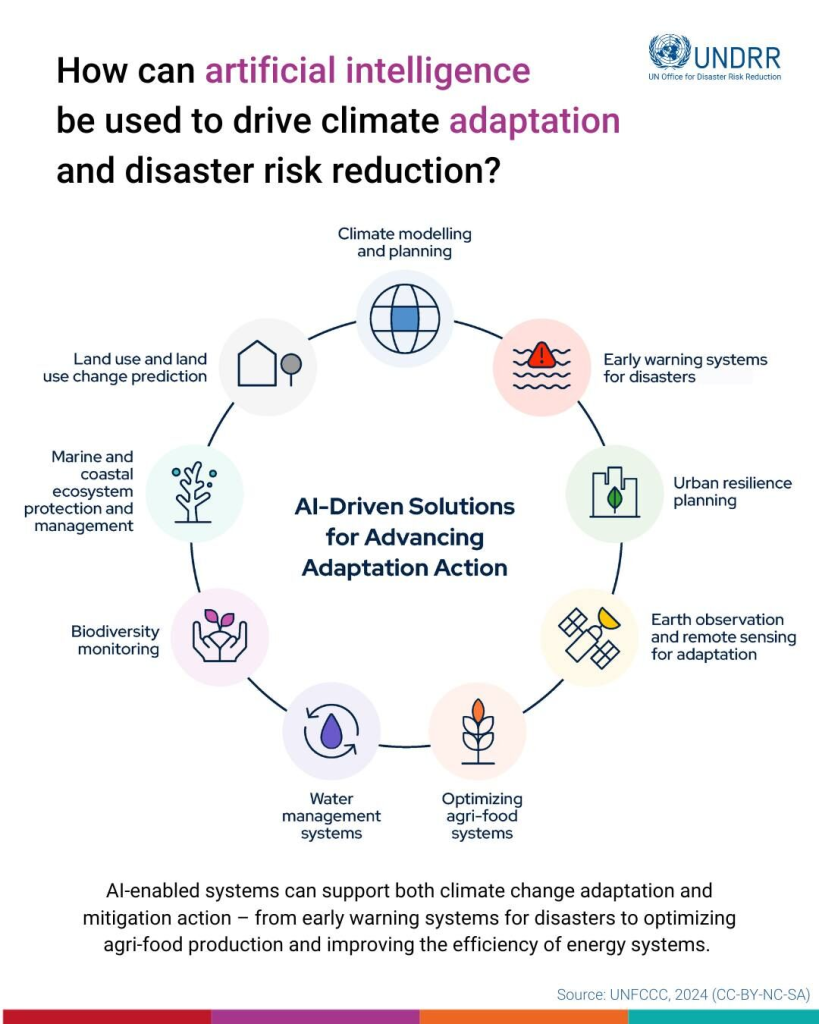
How about creating a hazardous-weather Early Warning System that explicitly reflects the region’s evolving climate? And how about building a climate information system that enables “good climate” outcomes supporting anticipatory, locally led adaptation grounded in ecosystem- and landscape-based approaches?
To make progress, we need an inclusive, integrated model that brings together meteorology, weather services, and climate intelligence to inform locally tailored, win-win climate action. This should align adaptation, mitigation, Nature-based Solutions (NbS), locally led adaptation (LLA), and resilience-building interventions. The model must be shaped by local realities, regional meteorology, observed climate trends, near-term weather risks, biodiversity, soil type and soil health, agroecology, ecosystem dynamics, and water-cycle processes.
Because agri-food production sits at the heart of the local adaptation value chain, we should also develop a fully climate-informed food production value chain. Its elements are deeply interconnected, linking landscapes, biodiversity, the built environment, and weather systems.
Defining and operationalizing this inclusive value chain will require focused research and development. Let’s convene consultations and explore the pathway forward in more detail.
Please support Research & Development (R&D) in this regard.
Comment 2;
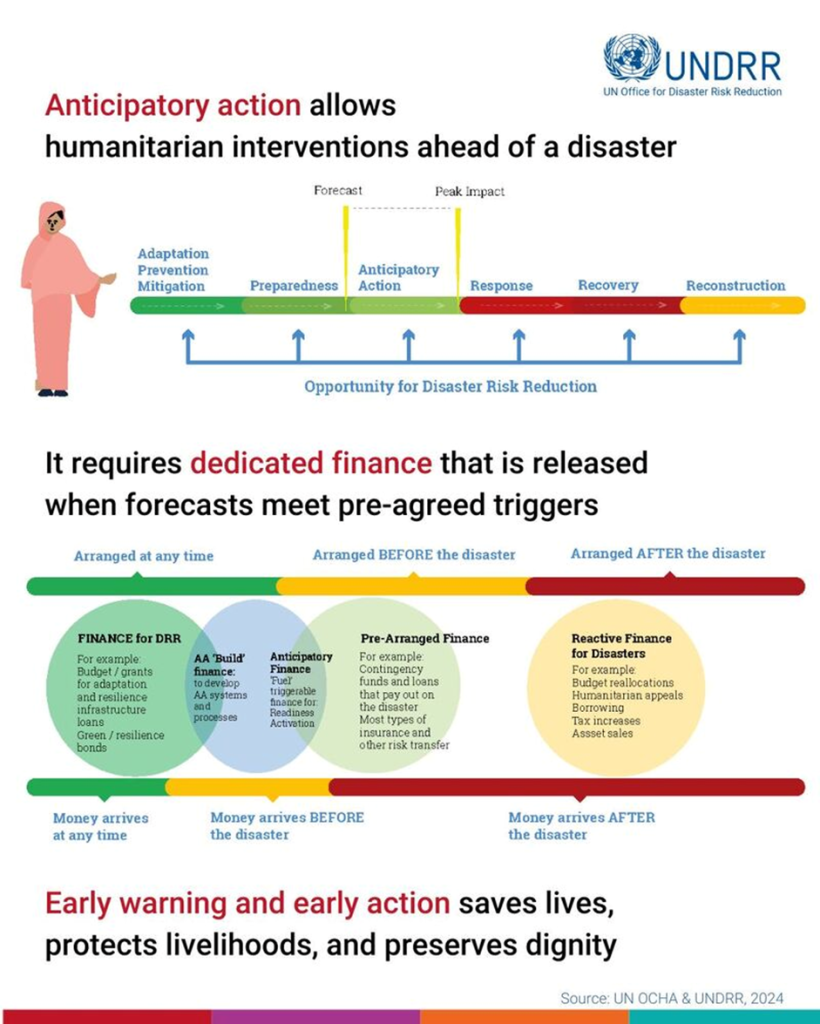
The DRR financing flow appears broadly sound, but it remains insufficiently inclusive.
International agencies often prioritize producing policy signals and narratives, while investing less in the sustained, hands-on engagement needed to translate these into transformative change on the ground. The UN system also falls short in applying the right level of effort and in penetrating entrenched, country-level, tangential, and unskilled bureaucracies to drive policy translation, stimulate meaningful development action, inject stronger idea incentives into weak and fragmented governance arrangements, and build the capacity required to govern and deliver localized, risk-informed, last-mile development.
Against this backdrop, a critical question persists: how much have development partners actually achieved in service delivery after spending billions on SDG-related ideas, knowledge production, and technology transfer? It increasingly appears that development partners have yet to meaningfully penetrate and catalyze transformative change in LDCs and other developing countries. In many settings, the UN system is perceived and treated more like a national CSO than a system-level enabler of structural change, which is deeply concerning in what level they will be able to bring about institutional fitness in robust level planning and development.
Unfortunately, the efforts of development partners (UN agencies and INGOs) have not been sufficient to convert policy intent into localized, context-driven policy and programmatic action. What is needed is stronger risk-informed intervention capacity across central, regional, and last-mile actors, alongside systematic technical capacity-building at every tier of governance using tools, techniques, and implementation approaches that match local landscapes, social dynamics, and resource endowments.
These challenges persist largely because many development partners still face their own technical gaps, weak and ineffective mechanisms for applied knowledge transfer, limited nexus-building, and recurring shortcomings in stakeholder identification and partnering. Too often, knowledge, ideas, and technologies are transferred without adequate contextual fit.
Most critically, programs, projects, and schemes are sometimes anchored to the wrong institutions or counterparts, particularly through inappropriate selection of DRM partners, which undermines ownership, weakens sector-level coordination and partnerships, and ultimately reduces uptake and transformative impact.
These constraints continue to undermine development partner-led approaches and the pursuit of transformative change.
We therefore request an opportunity to undertake targeted R&D on this agenda to generate practical, evidence-based solutions that bridge these gaps and enable more context-appropriate development planning and more effective interventions.
………………………………………………………………Linkedin Post ………………………………………………………………………………………….
Post 1:
” Forecast-based Financing (FbF) decision-making system”
Risk-informed local development planning and financing in stable periods relies on coordinated, inclusive participation by all essential actors: government duty-bearers, donors, I/NGOs, sector agencies, financial institutions, insurers, credit providers, and at-risk communities, anchored in shared evidence and jointly agreed priorities. In parallel, climate and disaster risk-financing instruments must be scaled urgently so governments and humanitarian partners can strengthen safety nets for high-risk groups and deliver assistance that is faster, more predictable, and better targeted.
Governments’ capacity to manage climate risk is increasingly constrained by compound shocks, hydrometeorological hazards, and extreme weather-related events, alongside economic crises and pandemics that erode response capacity and destabilize local economies. As climate disruption intensifies, extreme events are occurring more often, with greater severity and shorter onset times, generating significant loss and damage on the frontline and increasing the need for accessible, actionable weather and climate information services.
To support timely preparedness and response, especially when lead times are short, strong observation networks, high-resolution numerical weather prediction, impact-based warnings, and integrated multi-hazard early warning systems are indispensable decision-support tools. These capabilities improve frontline resilience by enabling early action when forecasts indicate triggers that could escalate into disasters with a high probability of loss and damage.
An ICT-enabled Forecast-based Financing (FbF) mechanism converts these capabilities into practical operations by coordinating backend processes to release critical funds that trigger anticipatory humanitarian actions in areas identified by impact-based forecasting (IBF) as likely to experience severe impacts. FbF is activated when National Meteorological and Hydrological Services (NMHS) issue impact-based forecasts, thresholds, warning levels, special alerts, and quantified anticipatory loss-and-damage estimates through an integrated IBF platform. It then allows humanitarian systems to mobilize early-action funding quickly based on forecast impacts, risk and vulnerability profiles, and projected losses and damages aiming to anticipate disasters, prevent impacts where feasible, and reduce human suffering and avoidable loss.
For further details, please refer to the strategic document:
https://www.mhewc.org/wp-content/uploads/2026/02/Forecast-Based-FinancingFBF-Methodology.pdf
Please visit the Global Early Warning System(EWS) Platform at www.mhewc.org