L’Algérie ne souffre pas de phénomènes chroniques ou fréquents, si ce n’est de fortes pluviosités qui, en hiver, inondent parfois brutalement des oueds. Dans le désert, les tempêtes de sable peuvent entraîner des perturbations et notamment interrompre le trafic aérien.
Climate and weather phenomena
The climate is extremely hot throughout the country during the summer months. Episodes of heavy rainfall, which can lead to localized flooding, are common in winter. Snowfall is frequent in the high mountains and can cause road closures.
Natural disasters
Algeria does not suffer from chronic or frequent weather phenomena, except for heavy rainfall which, in winter, sometimes causes sudden flooding of wadis (riverbeds). In the desert, sandstorms can cause disruptions and, in particular, interrupt air traffic.
Northern Algeria, located on the boundary of the African and Eurasian tectonic plates, faces a moderate seismic risk. In the event of a major earthquake, aftershocks are to be expected. If an earthquake occurs, it is recommended to take shelter in an open space, in a doorway, under a sturdy piece of furniture, or in a parked car.
Disaster risk profiles
Law No. 24-04 of 16 Chaâbane 1445, corresponding to February 26, 2024, concerning ” rules for the prevention, intervention, and reduction of disaster risks within the framework of sustainable development,” represents a significant step forward in the field of major risk prevention and management. This legal framework currently aims to strengthen national resilience capacities in the face of natural and man-made disasters by adopting an integrated and proactive approach.
Law No. 24-04 emphasizes several strategic priorities:
- Risk prevention : It introduces measures aimed at identifying, assessing and reducing vulnerabilities through appropriate land-use planning policies and sustainable development plans.
- Strengthening crisis management : The legislative text clarifies the roles and responsibilities of the institutions concerned in managing emergency situations and coordinating interventions.
- Awareness and education : The law promotes a culture of prevention among citizens and local stakeholders, emphasizing training and information as key tools.
- Climate change integration : It recognizes the impacts of climate change on the intensification of disasters and proposes specific measures to mitigate their effects.
This law introduced new risks and provides for implementing regulations. Thus, the following 18 risks constitute disaster risks within the meaning of this law 24-04:
- seismic risks;
- geological risks;
- the risks of flooding;
- extreme climate risks;
- the risks of forest fires;
- industrial and energy risks;
- space risks;
- radiological and nuclear risks;
- risks affecting human health;
- risks affecting animal and plant health;
- the risks of air, marine and water pollution;
- the risks of large gatherings of people;
- the risks of desertification;
- the risks of drought;
- the risks of coastal erosion and sea level rise;
- cyber risks;
- locust risks;
- biotechnological risks.
The published implementing texts are:
- Executive Decree No. 25-60 of 28 Rajab 1446 corresponding to 28 January 2025 establishing the procedures for the development and implementation of prioritized reinforcement plans aimed at preserving infrastructure and buildings of strategic or heritage value against disaster risks
- Executive Decree No. 25-61 of 28 Rajab 1446, corresponding to January 28, 2025, establishing the missions, composition, and operation of the intersectoral committee responsible for assessing the damage caused by the disaster
- Executive Decree No. 25-62 of 28 Rajab 1446, corresponding to January 28, 2025, establishing the procedures for developing the specific plan for the management of rubble, residues, and other waste generated by the disaster
- Executive Decree No. 25-63 of 28 Rajab 1446 corresponding to 28 January 2025 establishing the conditions and procedures for the development, implementation and management of disaster risk intervention plans
Seismic Risk
Algeria is a country subject to significant seismic activity, as evidenced by the numerous earthquakes that have occurred to date across several regions of the country. Since the first known earthquake in Algiers in 1365, many other earthquakes of varying intensities have occurred and continued to this day. These include, among others, Algiers in 1716, Oran in 1796, Blida in 1825, Orléansville (Chlef) in 1954 and 1980, and Boumerdès in 2003.
Indeed, northern Algeria is subject to recurring earthquakes, most often of low to moderate intensity, but which can sometimes be violent. The earthquakes that occur in the country are shallow and occur at a depth of no more than 15 km. In this northern region, seismic activity is continuous, with an average of about fifty micro-tremors recorded monthly. An earthquake exceeding magnitude 4.0 occurs every three months.
The new Algerian seismic regulations promulgated in 2024 (RPA 2024) establish a new zoning system for the national territory. This system is divided into seven (7) zones of increasing seismicity, as defined on the seismicity zone map (7 zones), Figure 1, namely:
A new spatial distribution of seismic hazard in Algeria has been established in the new RPA (Algerian Seismic Hazard Plan). Six seismic zones have been specified to mitigate the transition between zones and prepare for GRID seismic zoning (USA, Italy, etc.). The entire northern strip of Algeria (extensive in the east and narrow in the west) falls within seismic zones IV, V, and VI (PGA ≥ 0.20g).
Furthermore, the seismotectonic map of the North of the Maghreb (figure 2 below) indicates the continuity of seismic faults in the region.
The Risk of Floods
This risk arises when flood-prone areas become urbanized, industrialized, or agricultural. Extreme weather events are, in most cases, the triggers for these floods. The vulnerability of exposed populations depends on numerous factors: the degree of exposure of buildings and strategic locations, the complexity and interdependence of networks, the diversity of public actors responsible for services, etc. These factors affect the ability to quickly restore satisfactory functioning after a disruptive event.
Algeria, facing climate change and rapid urbanization, will experience a significant increase in flooding catalyzed by extreme weather events.
According to the flood risk map, figure 3, it is noted that the northern zone of Algeria remains the most exposed, with the exception of the wilaya of Adrar characterized by a moderate risk.
The Risk of Forest Fires
Algeria covers an area of 2.382 million km² , making it the largest country in Africa. However, its forest area, at approximately 4.1 million hectares, remains one of the smallest on the African continent. The Sahara, one of the world’s largest deserts, occupies more than 2 million km², or 84% of the national territory. As shown on the forest distribution map (Figure 4), nearly 42% of the forested areas are covered by maquis shrubland, which can be defined as any woody vegetation not exceeding 7 meters in height. The predominance of maquis reflects the degraded state of Algerian forests.
In the Mediterranean region, Algeria stands out as one of the countries facing a serious problem with forest fires. Despite the burned areas appearing modest in absolute terms compared to other Mediterranean countries, the scarcity of wooded areas and the risk of desertification significantly amplify their devastating impact. With only 4.1 million hectares of forest, spread across 40 provinces (Wilayas), covering approximately 1.76% of the territory, Algeria is particularly vulnerable. The frequent recurrence of devastating fires, occurring less than 10 years apart, further exacerbates the ecological consequences of this situation.
Forest fires represent a substantial natural threat, causing significant damage to forest ecosystems, wildlife, populations, and infrastructure.
Recent statistics, not only nationally but also globally, indicate an increased risk of forest fires, influenced by various factors such as extreme weather conditions (heat waves, extreme temperatures, humidity, strong winds), the availability of flammable fuels (dead leaves, dry branches, fallen trees), human activities (campfires, cigarettes, fireworks), topography (slopes, valleys), and land management practices (clear-cutting, poor forest management). To mitigate this risk, proactive measures are needed, including fuel management, the use of fire-resistant soils, the implementation of early warning systems, ensuring adequate firefighting resources, and public education.
Climate Risk – Losses and Damages
Climate change is progressing rapidly, and climate-related risks are intensifying. Climate risk depends on the hazard itself, the exposure of property and people, and their vulnerability to this transboundary hazard. Beyond the impacts on economic production, individuals and populations are also vulnerable to intangible or non-economic losses and damages. Thus, the discourse on Loss and Damage ( L&D ) was initiated in recent decades by some island states concerned about the potentially irreversible impacts of climate change, which may exceed the limits of physical and social adaptation. It became institutionalized in international climate policy through the Warsaw Mechanism on Loss and Damage, adopted in 2013, and was firmly incorporated into the Paris Agreement in 2015.
Algeria has developed a Climate Plan as part of its commitments to combat climate change and promote sustainable development. This plan is aligned with the objectives of the Paris Agreement and the Sustainable Development Goals (SDGs). Here is an overview of the main aspects of Algeria’s climate plan.
Algeria’s Climate Plan, designed to combat climate change while supporting sustainable development, sets ambitious targets in line with the Paris Agreement and the Sustainable Development Goals (SDGs). Among its key actions, the plan includes reducing greenhouse gas emissions through the promotion of energy efficiency and the adoption of clean technologies. It also encourages the transition to renewable energy, particularly through investment in solar and wind power.
The plan includes initiatives to improve water resource management and ecosystem conservation, particularly in vulnerable areas such as arid regions. It also provides for strengthening infrastructure to withstand climate impacts, such as floods and droughts. Furthermore, reforestation and desertification control programs are being implemented to preserve soils and promote biodiversity.
Finally, Algeria is committed to raising public awareness and promoting environmental education, while strengthening international cooperation for a collective response to climate change.
Learning from the past to strengthen resilience to disasters and climate in Algeria

On October 10, 1980, a magnitude 7.1 earthquake devastated the Algerian city of El Asnam (now known as Chlef), killing thousands and causing significant economic losses. It was followed three hours later by a magnitude 6.3 aftershock, making it one of the largest and deadliest earthquakes ever recorded in Algeria. Then, 23 years later, a magnitude 6.8 earthquake struck the country again, causing widespread damage in five north-central provinces.
What would happen if a disaster of comparable magnitude struck the country today?
Unfortunately, disasters of this kind are far from rare in Algeria. Whether earthquakes, forest fires, or floods, Algeria has experienced its share of calamities over the years and has learned valuable lessons. According to estimates from the Algerian government, annual expenditures over the past 15 years to address floods, earthquakes, and forest fires average $255 million (35.14 billion dinars), with approximately 70% of that allocated to flooding. Recognizing the growing risks posed by urbanization and climate change, the government has adopted numerous policies, regulations, and planning measures that demonstrate its commitment to better preparing for, managing, and mitigating crises. However, the authorities are equally aware that the process of building disaster resilience is far from complete and that much work remains to be done.
Thus, the National Delegation for Major Risks (DNRM), which coordinates disaster risk management initiatives in Algeria, worked with the World Bank to assess the country’s situation in this area and to identify priority actions that would contribute to strengthening resilience to future climate and disaster risks. With the support of the Global Facility for Disaster Risk Reduction and Recovery (GFDRR) (a), this collaboration led to the joint completion of the Diagnostic on Climate and Disaster Risk Management in Algeria , a study that profiles the country’s climate and disaster risks, estimates their macroeconomic impacts, and highlights Algeria’s progress as well as current challenges in managing these hazards.
This diagnosis, the result of work carried out from 2021 to 2023, represents the culmination of an in-depth examination of more than 500 documents, a comprehensive multi-stakeholder consultation workshop conducted in 2021, and bilateral interviews between the DNRM and all relevant stakeholders.
“The partnership between the World Bank and the National Delegation for Major Risks reflects our shared commitment to strengthening disaster risk reduction and resilience in Algeria. The recommendations made in the study will guide our decisions and help us define priority activities to protect our communities.”
Professor Hamid Afra , national delegate for major risks.
According to the assessment, losses due to disasters could represent an average of 0.7% of Algeria’s GDP per year, nearly double the historical average. This increase is primarily attributed to the potential threat of a devastating earthquake in rapidly growing urban areas, making them more vulnerable. Climate change also contributes to the increased frequency and intensity of disasters. The priority actions recommended in the report include the need to improve inter-institutional coordination, deepen knowledge of climate and disaster risks, promote investments aimed at reducing the risks of floods and forest fires, strengthen early warning systems, and encourage financing and insurance for natural hazards.
With support from the World Bank, the diagnostic findings and recommendations were widely disseminated at several events held in Algeria to raise awareness of the risks and foster dialogue on potential areas of collaboration at the national, regional, and international levels. On May 8, 2023, a donor roundtable brought together representatives of development partners and Algerian institutions to discuss the country’s disaster and climate risks and to explore opportunities for collaboration between the government and donors. Later that year, on December 12, the official launch of the study took place in Algiers, attended by members of several government institutions. Following these events, various dissemination activities brought together more than 600 representatives from three wilayas (provinces) in eastern, western, and southeastern Algeria, with the aim of engaging stakeholders and regional communities in the implementation of the identified priority actions.
Strengthening resilience in Algeria is an achievable goal. This requires the mobilization of all stakeholders to implement comprehensive and integrated approaches. Lessons learned from past disasters and the priorities established to address catastrophes and climate challenges offer insights into the solutions needed to build a future where Algerians are safer and better prepared for natural hazards.
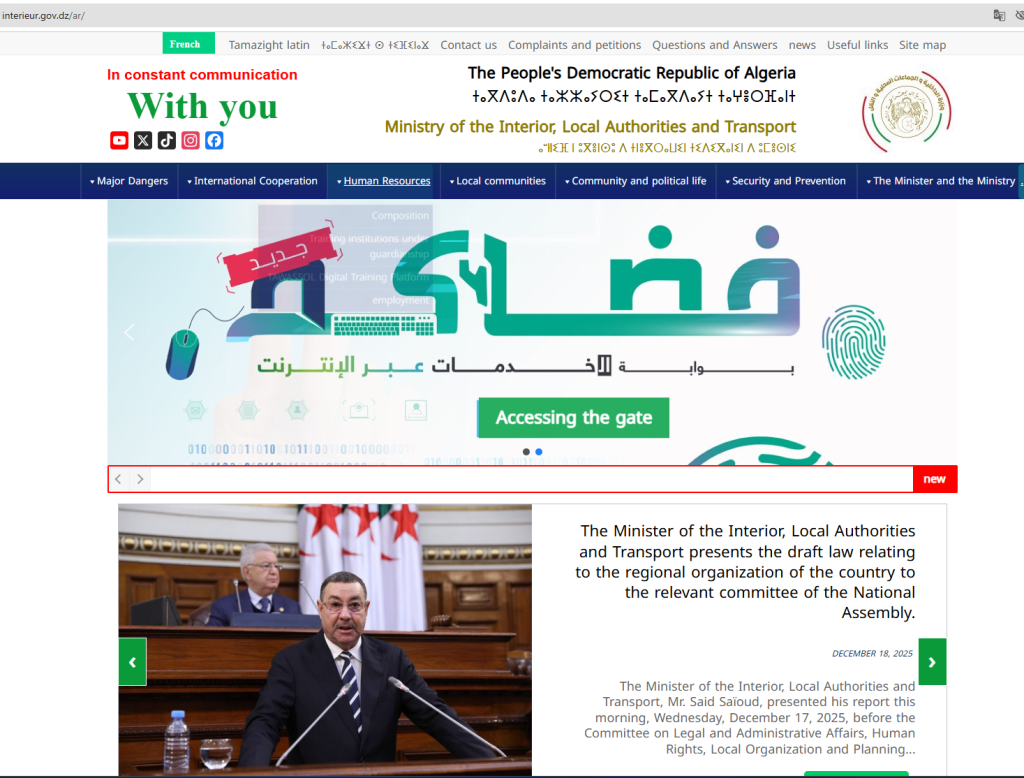
The Ministry of the Interior, Local Authorities and Transport of the People’s Democratic Republic of Algeria
The general context of disaster risk management in Algeria
Disasters, whether of natural or man-made origin, have devastating effects on human life, property, and the environment. In the face of the increasing frequency and intensity of these phenomena, it has become necessary to establish effective mechanisms to mitigate their consequences for the affected population. At the heart of this lies the need to develop a disaster risk management strategy that allows for the reduction of losses and damages, and the building of a resilient society.
In fact, Algeria’s exposure to disaster risks is a real and growing concern. The country constantly faces a variety of hazards that have become more frequent as a result of disturbances and climate change. These hazards include natural events, such as earthquakes, forest fires, floods, geological hazards, and desertification, as well as human-caused hazards (resulting from human activities). These potential phenomena, whether resulting from short-term or long-term processes, leave serious impacts that can threaten the lives of large numbers of people, cause serious material damage, and often exceed the Algerian society’s capacity to respond. Some of these disasters are sometimes characterized by their low frequency, which leads to forgetting and a decrease in the level of vigilance among individuals and institutions regarding their prevention and mitigation.
Algeria faces a variety of challenges related to disaster risk , especially in urban areas, where there is rapid demographic and economic growth. Potential estimates suggest that economic losses from disasters could reach an average of 0.7% of GDP annually, almost double the historical average. This increase is mainly related to the high risk of major earthquakes in these densely populated areas with fragile infrastructure. Moreover, the effects of climate change will intensify variations in hydrometeorological conditions, increase the frequency and intensity of extreme weather events, and accelerate sea-level rise. This rise in water levels is exacerbated by sand extraction and coastal urbanization, which incur significant annual costs estimated at $313 million, or 0.2% of GDP.
Thus, disaster risks in Algeria cause significant annual losses of life and property. Over the past twenty years (2004-2024), the state spent approximately 771.40 million Algerian dinars (DZD) on interventions, averaging 38 billion DZD annually , primarily on prevention, forecasting, monitoring, and early warning. These losses are mainly attributed to the three most significant risks: earthquakes, floods, and forest fires.
Since independence, Algeria has been committed to reducing the effects of disasters by adopting a special legal and regulatory arsenal, including technical ones, in order to enhance preparedness for major events.
Since the El Asnam earthquake in 1980, risk prevention has been integrated into the national normative framework, along with regulations relating to urban planning and construction. Despite the progress made, challenges remain, particularly in the area of law enforcement and resource mobilization.
Algeria has strengthened its disaster risk management through numerous assessments, particularly concerning the impacts of climate change on the agriculture and forestry sectors. In 2015, a national assessment identified 865 sites at risk of flooding, while several studies on seismic hazards and microzoning have been conducted. Similarly, studies on seismic hazards and microzoning have demonstrated Algeria’s significant vulnerability to these risks.
In May 2021, the conference organized by our ministerial sector enabled the formulation and extraction of 140 recommendations for the National Risk Management Strategy, which was finalized in 2024. This strategy aims to strengthen coherence between sectoral policies and integrate resilience into development programs, in accordance with the Sendai Framework 2015-2030 .
Furthermore, the Algerian authorities have invested heavily in strengthening and developing human capacities, procedures, and resources necessary for emergency management without giving sufficient importance to prevention. The state must provide citizens with equal and permanent access to all information relating to disaster risks, and this right includes:
- Knowing the risks, dangers, and vulnerabilities in their place of residence and activity;
- Knowledge of the prevention, intervention, and recovery mechanisms applied to their place of residence or activity;
- The state is also keen to provide this information to various stakeholders;
- The state organizes an annual awareness and training program in the field of disaster risk management for the benefit of local communities, various stakeholders and civil society;
- The State develops and implements the national strategy for communication related to disaster risks, and accordingly it oversees the development of methods for organizing communication, promotion and support for any media campaign or action related to disaster risk management;
Similarly, disaster risk education is being established at all educational levels. The disaster risk education program aims to:
- Providing general information about disaster risks;
- Providing training on risk and hazard awareness, vulnerability, prevention, intervention, and recovery methods;
- A national program for scientific research and technological development is established for disaster risk management at the level of research bodies specializing in this matter. These research programs are concerned with identifying and developing appropriate and effective scientific and technological methods and means at an acceptable economic cost.
- The state is keen to raise the level of qualification, specialization and expertise of institutions and all bodies involved in managing disaster risks.
Disaster risk classification
Law No. 24-04 dated 16 Shaban 1445 corresponding to 26 February 2024, which includes “Rules for Prevention, Intervention and Reduction of Disaster Risks within the Framework of Sustainable Development”, is considered an important advance in the field of prevention and management of major risks. This legal framework currently aims to strengthen national capacities in the field of ability to cope with natural and man-made disasters, through the adoption of an integrated and proactive approach.
Law No. 04-24 focuses on several strategic priorities:
- Risk prevention : Measures are provided to control, assess and mitigate vulnerability to the risks concerned and to prevent the consequences of such risk occurring through urban planning policies and sustainable development plans.
- Strengthening crisis management : This legal text clarifies the roles and responsibilities of institutions involved in managing emergencies and coordinating interventions.
- Education and awareness : The law promotes a culture of prevention among citizens and local actors, with an emphasis on training and information as essential tools.
- Integrating climate change: It recognizes the effects of climate change on the intensification of disasters and proposes special measures to mitigate their effects.
New hazards have been included in this law, and several implementing texts will result from it. Consequently, the following 18 hazards constitute disaster hazards according to the concept of this law 24-04:
- Seismic hazards;
- Geological hazards;
- Flood hazards;
- Extreme weather hazards;
- The dangers of forest fires;
- Industrial and energy hazards;
- Space hazards;
- Radiological and nuclear hazards;
- Risks related to human health;
- Risks related to animal and plant health;
- Dangers of air, sea and water pollution;
- The dangers of large human gatherings;
- Dangers of desertification;
- Dangers of drought;
- The dangers of coastal erosion and rising sea levels;
- Cyber threats;
- The dangers of locusts;
- Dangers of biotechnology
The executive decrees that have been published are:
- Executive Decree No. 25-60 dated 28 Rajab 1446 corresponding to 28 January 2025, sets out the procedures for preparing and implementing priority reinforcement plans to protect infrastructure and buildings of strategic or heritage value from disaster risks.
- Executive Decree No. 25-61 dated 28 Rajab 1446 corresponding to 28 January 2025, defines the tasks, composition and operation of the joint sectoral committee tasked with assessing the damages caused by the disaster.
- Executive Decree No. 25-62 dated 28 Rajab 1446, corresponding to 28 January 2025, specifies the procedures for preparing the plan for managing debris, waste, and other refuse resulting from the disaster.
- Executive Decree No. 25-62 dated 28 Rajab 1446, corresponding to 28 January 2025, sets forth the conditions and procedures for preparing, implementing and managing intervention plans in the field of disaster risks.
Earthquake risk
Algeria experiences significant seismic activity, with numerous earthquakes occurring in various parts of the country to this day. Since the first known earthquake in Algeria in 1365, many others of varying intensity have followed, including those in Algiers in 1716, Oran in 1796, Blida in 1825, Orléans (Chlef) in 1954 and 1980, and Boumerdès in 2003.
Northern Algeria is indeed prone to frequent earthquakes, often of weak to moderate intensity, though they can occasionally be powerful. These are shallow earthquakes, occurring at depths of up to 15 kilometers. Seismic activity in northern Algeria is constant, with an average of about fifty minor tremors recorded each month. An earthquake exceeding 4.0 on the Richter scale occurs approximately every three months.
The new earthquake protection law in Algeria, enacted in 2024 (RPA 2024), establishes a new division of the national territory. It divides the country into seven (07) zones based on increased seismic activity, as illustrated in the seismic activity zone map in Figure 1, as follows:
A new spatial distribution of seismic hazard in Algeria has been defined in the new Earthquake Protection Act (RPA). Six seismic zones have been identified to mitigate transitions between zones and prepare for a GRID seismic division (USA, Italy, etc.). The entire northern strip of Algeria (which extends eastward and narrows westward) occupies seismic zones IV, V, and VI (PGA ≥ 0.20g).
Furthermore, the seismic tectonic map of northern Morocco ( Figure 2 below ) indicates the continuity of seismic faults in the region.
Flood risk
This risk arises when flood-prone areas become urban, industrial, or agricultural. Extreme weather events are often the primary triggers for these floods. The vulnerability of affected populations depends on several factors: the degree of exposure of buildings and strategic locations, the complexity and interconnectedness of networks, the diversity of public actors responsible for services, and others. These factors influence the ability to recover quickly after a disaster.
Algeria, in light of climate change and accelerating urbanization, will face a significant increase in floods caused by extreme weather events.
According to the flood risk map, Figure 3, it is noted that the northern region of Algeria remains the most exposed, with the exception of Adrar province, which is characterized by moderate risk.
Forest fire risk
Algeria covers an area of 2.382 million square kilometers, making it the largest country in Africa by area. However, its forest area, at approximately 4.1 million hectares, remains one of the least forested on the African continent. The Sahara Desert, one of the world’s largest deserts, occupies more than 2 million square kilometers, or 84% of the national territory. As the forest distribution map (Figure 4) shows, about 42% of the forested area is scrubland, which can be defined as any woody vegetation not exceeding 7 meters in height. The dominance of scrubland reflects the state of forest degradation in Algeria.
In the Mediterranean region, Algeria stands out as one of the countries facing a serious problem related to forest fires. Although the burned areas may seem modest in absolute terms compared to other Mediterranean countries, the scarcity of forested areas and the risk of desertification significantly amplify their devastating impact. With 4.1 million hectares spread across 40 provinces, covering approximately 1.76% of the land, Algeria is particularly vulnerable to recurring destructive fires occurring less than every 10 years, exacerbating the environmental consequences of this situation.
Forest fires represent a major natural threat, causing significant damage to forest ecosystems, wildlife, populations, and infrastructure. Recent statistics, not only nationally but also globally, indicate an increasing risk of forest fires, influenced by various factors such as extreme weather conditions (heat waves, high temperatures, humidity, strong winds), the availability of flammable materials (fallen leaves, dry branches, fallen trees), human activities (camping, cigarettes, fireworks), topography (slopes, valleys), and land management practices (illegal logging, poor forest management).
To mitigate this risk, it is essential to take proactive measures, including moving flammable materials, using fire-resistant land, putting in place early warning systems, ensuring adequate resources for firefighting, and raising public awareness.
Extreme weather hazards – losses and damages
Climate change is progressing rapidly, increasing climate-related risks. Climate risk depends on weather events and the exposure and vulnerability of people and property to these transboundary events. Beyond the impacts on economic production, individuals and communities are also vulnerable to non-material or non-economic losses and damages.
In this context, the discussion surrounding “Loss and Damage” (L&D) has been initiated in recent decades by some island nations concerned about the potentially irreversible impacts of climate change that exceed the limits of physical and social adaptation. This concept has been integrated into international climate policy through the Warsaw Mechanism on Loss and Damage, adopted in 2013, and has been given serious consideration in the 2015 Paris Agreement.
Algeria has developed a climate plan as part of its commitments to combat climate change and promote sustainable development. This plan aligns with the goals of the Paris Agreement and the Sustainable Development Goals (SDGs). Here is an overview of the key aspects of Algeria’s climate plan:
Algeria’s climate plan, designed to combat climate change while supporting sustainable development, sets ambitious targets aligned with the Paris Agreement and the Sustainable Development Goals (SDGs). Among its key measures, the plan aims to reduce greenhouse gas emissions by promoting energy efficiency and adopting clean technologies. It also encourages the transition to renewable energy sources, particularly through investment in solar and wind power.
The plan included initiatives to improve water resource management and preserve ecosystems, particularly in fragile areas such as arid regions. It also included strengthening infrastructure to mitigate the impacts of climate change, such as floods and droughts. In addition, afforestation and desertification control programs are being implemented to conserve land and enhance biodiversity.
Finally, Algeria is committed to increasing population awareness and promoting environmental consciousness, while strengthening international cooperation for a collective response to climate change
At the national level
The average annual expenditure of the Algerian state during the period 2004-2024 amounted to 38 billion Algerian dinars, and this is only in terms of interventions after the disaster at the level of 3 main risks, namely: floods, earthquakes and forest fires.
Indeed, the dangers resulting from the disaster are present at the time, so it is necessary to manage them in their various stages, which are: prevention, prediction, anticipation or monitoring, preparation, intervention, recovery, and returning to a better situation by drawing the necessary lessons.
To deal with disaster risk management, the following challenges must be overcome.
- Algeria, which covers an area of 382 million square kilometers, has about 80% of its population concentrated in the north (6% of its territory), and is exposed to a wide range of natural hazards.
- The northern part of Algeria, which lies at the meeting point of the Eurasian and African tectonic plates, is considered an area of high seismic activity;
- Floods represent another phenomenon with dire consequences in the history of disasters in Algeria.
- In addition, Algeria is frequently affected by forest fires, the number of which has increased since last year.
- In Algeria, you can also observe different forms of drought (related to meteorology, hydrology, and agriculture).
- Algeria also experiences heat waves and significant heat waves. Climate models predict rising temperatures across the country, with more frequent heat waves and fewer freezing days.
- Algeria is strongly threatened by the phenomena of erosion and desertification.
- The Algerian territory is a major area of concentration, particularly in the north, along the coastal strip, which stretches between 50 and 100 kilometers in width and depth. In 2008, 86% of the population lived in urban areas, a trend expected to increase in the coming decades.
- Climate change is contributing to an increase in the frequency and intensity of hydrometeorological hazards such as floods, extreme temperatures, droughts, and wildfires. Climate change is expected to have the following impacts:
- Vegetation and soil deteriorate, leading to further erosion;
- Increased frequency of extreme weather events (heavy rains, droughts, heat waves, forest fires, sea flooding, etc.);
- Rising sea levels lead to the phenomenon of low-lying coastal areas being submerged, groundwater layers becoming salinized, and coastal areas and marine environments being disrupted.
- Disturbances related to groundwater recharge, surface runoff, silt accumulation, or even the filling of reservoir dams;
- Food security has deteriorated and population displacement has increased due to the expected expansion of the desert region (the temperate region that currently shelters 75% of Algeria’s population, 70% of its sheep herd, and 55% of its grain production).
- The country is increasingly exposed to flooding due to the combined effects of rapid urbanization and climate change.
- Seismic hazards can have dire consequences for urban areas in the north of the country, which are experiencing significant population growth.
- The existing body of texts forms a solid foundation for developing a policy for disaster risk management and enhancing resilience in Algeria; however, the implementation of legal texts often presents a challenge.
- Effective institutional coordination mechanisms between sectors and management levels are essential to ensure the coherence of this broad set of standards and strategies and effective implementation.
- Given the increasing impacts of climate change on the frequency and intensity of natural hazards, coordination efforts to reduce disaster risks must be more closely linked with efforts to adapt to climate change.
- Multi-risk assessments have not yet been carried out frequently.
- There is a fairly large amount of data on disaster risks and climate change. However, challenges remain in standardizing and institutionalizing information sharing between institutions and with the public.
- A digital platform, managed by the Ministry of the Interior at the local level, should be established to centralize all data relating to emergency organization plans and “sensitive sites” in all states.
At the global/ regional level
Disaster risk management cannot be isolated from geopolitical and security contexts. An integrated approach combining vulnerability reduction, institution building, and international cooperation is essential to mitigate the combined impact of security challenges and disasters.
Security challenges and global events, such as wars and other geopolitical crises, affect and influence disaster risk management in several ways
Thematic network of major risks
Thematic Network for Major Hazards is a platform designed to unify skills, pool resources, and foster collaborative efforts to implement projects of common interest. It aims to add value to collaborative work on disaster risk reduction in Algeria. Ultimately, this network should contribute to increasing the resilience of Algerian society to disasters.
It also constitutes a powerful lever and its mobilizing and structural effects should contribute to reducing disaster risks in Algeria.
The thematic network’s tasks include the following:
- To be a force for proposing and supporting responses to national requirements and strategies regarding major hazards of natural origin (earthquakes, floods, droughts, landslides, etc.) and their potential combined impacts, and those of human origin (industrial/technological or caused by natural phenomena), as well as hazards arising from climate change, cybercrime, epidemics and human gatherings;
- Identifying, contacting, and gathering all internationally renowned Algerian scientific talents, both resident and non-resident, through the Thematic Agency for Scientific and Technological Research (ATRST), which works on the main risk topics facing the country;
- Establishing collaborations with other thematic networks and national research organizations (EPST laboratories and universities) and initiating, through ATRST, international collaborations with renowned institutions working in the same field of expertise;
- The consolidation of skills, the promotion of shared equipment implementation, and the consolidation of thematic network resources will be achieved through ATRST services, which will be responsible for communicating, publishing, and disseminating its activities through the creation of a dedicated website and collaborative digital platform.
- Working through an integrated and unified approach to risk, vulnerability and resilience studies, by combining engineering sciences and human and social sciences, and acting as a support for decision-making;
- Evaluating the results of the scientific activities carried out by the thematic network;
- To promote and contribute to the establishment of a mechanism for effectively transferring knowledge and practical experience to the social and economic sector, and to value the results of research related to understanding, preventing, and mitigating major risks and implementing early warning systems;
- Ensuring scientific and technological monitoring and utilizing, through an appropriate mechanism, all knowledge acquired to date and research findings related to key risk topics;
- Disseminating and popularizing knowledge and research results in various specialized media (communication media and scientific publications) and the general public (press, audio-visual media, magazines, etc.);
- Reconciling national emergencies with international commitments, including the priority actions of the Sendai Framework (expected for 2030), namely: understanding disaster risks, strengthening disaster risk governance, investing in disaster risk reduction for resilience, and enhancing disaster preparedness;
- Implementing the national policy for disaster risk management (with its four components: prevention, prediction, preparedness, and recovery to better condition) and strengthening the actions and capabilities necessary to enhance the overall resilience of Algerian society as well as reduce exposure to disaster risks;
- Mobilizing Algerian skills to adopt a continuous training strategy that integrates the acquisition of new knowledge and promotes joint thinking in order to master mechanisms for addressing various challenges in the field of disaster risk reduction.
Establishment of the National Delegation for Major Risks
The creation of the National Delegation for Major Risks is the fruit of the progressive approach adopted, driven by the need to learn lessons from past disasters and adopt a sustainable approach to protecting human life, infrastructure and the environment. It reflects our country’s will and desire to strengthen it, with strong and effective institutional tools, to reduce the effects of disaster risks.
The establishment of the National Delegation for Major Risks in Algeria comes in the context of the devastating and recorded natural events, as well as the desire of the public authorities to improve the system for managing major risks, especially after the tragic earthquake that struck the city of Boumerdès and its suburbs on May 21, 2003, causing significant human and material losses. This earthquake, which measured 6.8 on the Richter scale, highlighted the weakness of the infrastructure and the limitations of the current systems for disaster prevention and management.
On the legal level : The National Delegation for Major Risks is considered an entity established by legislative text, which demonstrates the will of the public authorities to make it a special institutional body to serve the prevention of disaster risks.
Accordingly, the National Delegation for Major Risks was first established under Article 68 of Law 04-20 of December 25, 2004. The need for a horizontal structure for risk prevention arose following the devastating earthquake that struck Boumerdès Province in 2003, causing significant loss of life and property. This law placed the National Delegation for Major Risks under the authority of the Head of Government and referred the definition of its tasks, organization, and operation to an executive decree, which serves as the implementing text of this law.
It was only in 2011, with the publication of Executive Decree No. 11-194 of May 22, 2011, as amended and supplemented, that the National Delegation for Major Risks was established and put into operation. Article 2 of this Executive Decree stipulates that the Delegation is an external department of the central administration of the Ministry of the Interior.
The new Law No. 04-24 ( concerning rules for prevention, intervention, and reduction of disaster risks within the framework of sustainable development ), issued on February 26, 2024, stipulates in Article 18 the establishment of the National Delegation for Major Risks, placing it under the authority of the Minister of the Interior. Article 18 of Law 04-24 states that, in addition to the institutions involved in developing the national disaster management system, a National Delegation for Major Risks is established under the authority of the Minister of the Interior, tasked with evaluating and coordinating the activities of the national disaster risk management system.
Accordingly, and in accordance with Executive Decree No. 11-194 of May 22, 2011, as amended and supplemented (currently under review), the National Delegation for Major Risks is responsible for coordinating and evaluating the actions taken within the framework of the national system for the prevention and management of major risks by the various relevant institutions. In fact, the work of the National Delegation for Major Risks is proactive, ahead of other national actors, and it is tasked with ensuring the interactive coexistence of the national system for disaster risk prevention, while providing it with a dynamic of continuous improvement through means such as, in particular, ongoing evaluation and monitoring, and synergistic and structural consultation. As such, it is responsible for:
- Creating a database based on information collected at the level of the relevant departments;
- Strengthening and developing information related to the prevention of major risks for the benefit of stakeholders and the population;
- Evaluate and coordinate the actions taken within the framework of the national system for preventing major risks and submit proposals aimed at improving its effectiveness;
- Participating in regional and international cooperation programs related to its tasks.
- Contributing to the advancement of scientific and technical knowledge and training in the field of major hazards;
- Conducting any studies or research with the relevant institutions aimed at reducing major risks.
The National Delegation for Major Risks is responsible for preparing and overseeing the implementation of the national strategy for disaster risk management within the framework of sustainable development for the relevant authorities.
At the intervention level : Within the institutional landscape for disaster risk management, the National Delegation for Major Risks is among the various active institutional stakeholders and partners from the private sector and civil society. This intervention chain constitutes the national disaster risk management system in its various basic, supplementary, successive, remedial, and preventive phases, which are essential for prevention, response, and recovery.
The work of the National Delegation for Major Risks comes in the prevention phase, knowing that this phase necessarily has repercussions on the other phases.
It is responsible for assessing and coordinating preventive measures for the national system and forms a key multi-sectoral platform to advise decision-makers, inform the public and coordinate disaster risk reduction efforts in Algeria.
It operates as a strategic and conceptual field for preventing and anticipating risks, before a disaster occurs, through monitoring, studying, evaluating, coordinating and motivating, while structurally integrating it into the Interior and Local Authorities sector, which in turn intervenes in the operational phase, both during and after the event, through the General Directorate of Civil Protection and Local Authorities.
Capabilities of the National Delegation for Major Risks – Disaster Risk Management
Since 2020, the National Delegation for Major Risks has experienced a special dynamism and played a key role in preparing and updating several laws and regulations related to major risks, in addition to preparing the National Strategy for Disaster Risk Management. For example, the Delegation contributed effectively to the preparation of Law No. 24-04 dated February 26, 2024, which strengthens existing measures and introduces innovative methods to improve the process of managing risks. This law emphasizes the inclusion of international standards, the responsibility of local communities, and the importance of regional planning to reduce weaknesses and vulnerabilities. As for the National Strategy for Disaster Risk Management , it was completed in 2024 and is in the process of being approved by the government, in accordance with the instructions of the Presidency of the Republic.
In order to strengthen inter-sectoral coordination in the field of major risk reduction, an inter-sectoral committee was established under the National Delegation for Major Risks pursuant to the provisions of Article 11 of Executive Decree No. 11-194 dated May 22, 2011. This inter-sectoral committee, chaired by the Minister of the Interior or his representative, is composed of 34 members distributed as follows:
- 14 members from the ministries,
- 14 members from public institutions and bodies,
- 04 members as Algerian experts, including two (2) residing in Algeria and two (2) residing abroad,
- 02 Representatives of civil society
The National Delegation for Major Risks plays a strategic role in disaster risk management to ensure the resilience of Algerian society. Its capabilities can be summarized primarily as follows:
- The National Delegation for Major Risks is in a position to play a pivotal role in coordinating between various public, private and international institutions involved in managing major risks, and can promote an integrated approach to reducing vulnerabilities, fatalities, damage and economic losses associated with disasters.
- The delegation has the capacity to contribute to the development of legislative and regulatory frameworks, such as the implementation of Law 24-04, which includes rules for prevention, intervention and reduction of disaster risks within the framework of sustainable development. This includes strengthening building rules and standards, regional planning and environmental protection.
- Through its leading role in coordination and its power to propose and recommend, the delegation can advance public initiatives and programs aimed at developing the prevention and resilience capacities of communities and administrations, as well as improving the capacity of local populations and institutional actors to respond effectively to crises.
- The delegation has important capabilities to focus on an information system related to risks, geographic, spatial databases, as well as digital platforms for multi-risk early warning.
- Thanks to partnerships with international organizations (World Bank, Japan International Cooperation Agency and UNICRI, etc.), the National Delegation for Major Risks has benefited and continues to benefit from the transfer of knowledge, funding and technologies to strengthen its capabilities.
- The National Delegation for Major Risks plays an important role in prevention by monitoring the design and content of the General Plans for Disaster Risk Prevention (PGPRC), as well as the Emergency Response Plans (ORSEC).
Since 2020, the delegate has developed partnerships with several national bodies, including ministries, scientific bodies and local groups, to ensure a coherent and coordinated approach.
National policies adopted for disaster risk management
Algeria, which faces a variety of natural and human hazards, has profoundly transformed its disaster response policy into disaster risk management by incorporating the principles of the Sendai Framework for Disaster Risk Reduction (2015-2030). This change in approach represents a major shift, as it is no longer a matter of responding to disasters once they occur, but rather a matter of proactive intervention to manage risks. This preventive approach is based on assessing vulnerabilities and weaknesses, reducing risk factors, and enhancing the resilience of infrastructure and the population.
Convinced of its ability to utilize its abundant natural resources, such as water, land and energy, Algeria is thus implementing an effective strategy to reduce disaster risks.
In response to these challenges, the Algerian government has put in place a strong policy framework and strategy for disaster risk management and adaptation to climate change .
Algeria has a modern normative framework for risk management, which gives high priority to prevention. Algeria is fully committed to all international framework agreements related to disaster risk management, particularly the Sendai Framework for Disaster Risk Reduction (2015), and before it the Hyogo Framework for Action (2005), the Paris Climate Agreement (2015), in addition to the new Cities-Housing III program (2017).
The Algerian state has adopted a series of structural, institutional, and legislative measures. The enactment of Law No. 24-04 of February 26, 2024, which includes rules for disaster prevention, intervention, and risk reduction within the framework of sustainable development, represents a crucial step. This law establishes a legal framework for integrated and coordinated risk management, while strengthening the responsibilities of local authorities. Furthermore, the state is focusing on developing infrastructure adapted to specific risks and hazards, particularly through projects such as the seismic rehabilitation of older buildings and the commissioning of the national early warning network.
Emphasis is also placed on raising citizens’ awareness and training local actors, because effective risk management requires collective participation, and international partnerships also allow Algeria to benefit from advanced expertise and appropriate technological solutions.
By adopting a proactive, centralized approach to risk management, Algeria aligns itself with international best practices while responding to the specificities of its territory. This strategic shift demonstrates a firm commitment to protecting human lives, minimizing economic losses, and preserving the environment.
The disaster risk management policy aims to achieve the following strategic objectives:
- Reducing the number of deaths caused by disasters;
- Reducing the number of people affected by disasters;
- Reducing direct economic losses from disasters as a percentage of GDP;
- Reduce fluctuations in basic services and disaster damage to essential infrastructure, including health or educational institutions, by enhancing their resilience;
- Improving citizens’ access to early warning systems and information related to disaster risks.
According to the provisions of Article 17 of Law No. 04-24, Prevention, Intervention and Reduction of Disaster Risks, within the framework of sustainable development , constitutes a comprehensive system prepared and managed by the State, supported by scientific bodies, and implemented by public bodies, institutions and local authorities according to their territorial jurisdiction, in consultation with public and private economic operators, with the participation of civil society in accordance with the conditions set forth by this law and its implementing texts, in particular the legislation and regulations in force.
In addition to all of the above, prevention, intervention and reduction of disaster risks, and strengthening resilience and flexibility are national priorities, and as such, the State provides the necessary funding for all related operations .
Finally, the State’s policy is expressed in the National Strategy for Disaster Risk Management ( SNRRC ) : adopting a strategy aimed at reducing risks by focusing on prevention, risk management, and resilience to major disasters.
The National Delegation for Major Risks focuses its efforts primarily on:
- Stimulating the mobilization and improving the performance of the national disaster risk management system, which directly contributes to strengthening national resilience capabilities.
- Developing an integrated, proactive, interactive, and collaborative approach to risk reduction strategies.
- Promoting a culture of risk prevention and establishing the concept of resilience and steadfastness in the face of disasters.
- Adopt a dynamic, predictive approach to risk prevention.
- Formulating effective strategies to enhance Algeria’s ability to cope with the challenges of climate change.
In reality, disaster risks remain a persistent phenomenon, necessitating comprehensive management across all phases, from prevention and forecasting to intervention, recovery, and rebuilding better, while also drawing lessons learned. It is worth noting the general principle in disaster risk management that ” investing one Algerian dinar in prevention saves 15 Algerian dinars in intervention .”
Thus, our country’s new vision is geared towards disaster risk management, not disaster management . This vision will be achieved through the implementation of the National Disaster Risk Management Strategy – 2025-2050.
The goals set
The National Delegation for Major Risks plays a central role in coordinating and activating the national disaster risk management system, and thus constitutes a sensitive and important issue for the security and preparedness of our country in the face of these existential risks. Its role as an active party in designing and preparing national disaster risk management strategies, as a facilitator for their implementation, and as a factor in benefiting from experiences and lessons learned in this field, makes the National Delegation for Major Risks the driving element in the national institutional landscape for disaster risk prevention.
The objectives set by the National Commission for Major Risks regarding disaster risk management are consistent with those stipulated in Law No. 04-24, namely:
- Reducing loss of life, economic damage, infrastructure losses and disruption of basic services caused by disasters.
- Enhancing community resilience by integrating disaster risk reduction into development strategies.
- Improving governance and disaster risk management systems at all levels.
- Increasing awareness and a culture of disaster prevention within communities.
In order to allow human communities, the activities they host, and their environment in general, to be part of the Sustainable Development Goals, the rules for prevention, intervention, and reduction of disaster risks must be based on the following principles:
- The precautionary principle: on the basis of which certainty is absent, taking into account the lack of modern scientific and technical knowledge, which should not be a reason for delaying the adoption of effective and appropriate measures aimed at anticipating, at an economically acceptable cost, any danger to people, property and the environment in general;
- The principle of concurrence: which, when identifying and assessing the consequences of each risk or vulnerability, takes into account their interactions and the exacerbation of risks due to their concurrent occurrence;
- The principle of preventive action and corrective action according to the priority of the origin: according to which it is necessary, to the extent possible, to use the best techniques, at an economically acceptable cost, to ascertain the factors of vulnerability and weakness, before taking any action;
- The principle of participation: according to which every citizen should have the right to access knowledge of the danger and risks to which he is exposed, and information relating to relevant vulnerability factors, as well as to the entire relevant apparatus;
- The principle of integrating new technologies: according to which care must be taken to follow, whenever possible, technological developments and integrate them when necessary to ensure that tasks are better embodied.
Therefore, the National Delegation for Major Risks was designed to be a space for monitoring, coordination, study, evaluation and guidance of the entire National System for Disaster Risk Management, which consists of actors and partners concerned with disaster risk management. For this reason, and based on regulations, it was tasked with preparing an annual report that includes everything that has been embodied in the National System for Disaster Risk Management, accompanied by the Delegation’s recommendations, which are submitted to the highest authorities in the country in order to provide them with a powerful tool to guide our public policies and future interventions in this crucial area.
Therefore, assigning it the task of preparing this annual report, in terms of content and deadlines, constitutes a central objective that the National Commission for Major Risks is expected to achieve.

Under the theme “The National Strategy for Disaster Risk Management: From Vision to Implementation,” an international scientific symposium opened Monday at the Mentouri Brothers University (Constantine 1), with experts and researchers from Algeria and several countries in the Mediterranean basin in attendance. The event, organized within the framework of the SURE-MED 2025 program, coincides with the 40th anniversary of the Constantine earthquake (1985) and is part of Algeria’s ongoing efforts to strengthen its resilience to natural hazards.
Participants emphasized that this national strategy marks a major transformation in the approach to natural disasters, shifting from a reactive, post-crisis management-focused approach to a proactive one centered on prevention and vulnerability reduction. The new implementation phase relies on strengthening community and institutional resilience through the integration of risk management into local development and urban planning policies. Algerian authorities are also working to modernize early warning systems, improve building standards, and update geological and seismic maps, in coordination with scientific and academic institutions.
These actions are part of the Sendai Framework for Disaster Risk Reduction (2015-2030), to which Algeria fully subscribes, making prevention a national priority. The experts present emphasized the need to promote scientific research in the field of disaster management through the training of specialized skills and the development of innovative technological solutions, particularly through digitalization, artificial intelligence (AI), and remote sensing. They also called for the integration of the concept of urban resilience into planning and development schemes, while involving local authorities and civil society in awareness and prevention programs.
According to researchers, the success of this strategy hinges on increased cooperation between research centers and local authorities, as well as the continuous exchange of scientific and technical data to improve forecasting capabilities and reduce impacts on populations. Organized in partnership between the Constantine Regional Planning Research Center (CRAT), the Astronomy, Astrophysics and Geophysics Research Center (CRAAG), and the Mentouri Brothers University (Constantine 1) and Salah Boubnider University (Constantine 3), this international symposium, which runs until Wednesday, aims to consolidate a culture of sustainable prevention based on science, cooperation, and innovation.
Disasters, whether natural or man-made, have devastating impacts on human lives, property, and the environment. Given the increasing frequency and intensity of these events, it is imperative to establish effective mechanisms to mitigate their consequences for affected populations. At the heart of this approach lies the need for a disaster risk management strategy that reduces losses and damages and builds a resilient society.
Algeria remains particularly vulnerable to disaster risks, a reality made all the more acute by the increasing frequency of extreme weather events linked to climate change. These risks, whether natural or man-made, include earthquakes, forest fires, floods, landslides, desertification, sand encroachment, and erosion. Whether they result from rapid or gradual processes, these phenomena can lead to considerable loss of life, significant material damage, and overwhelm the Algerian society’s response capacity. Their low frequency, in some cases, leads to a lapse in vigilance and a gradual erosion of prevention efforts.
Algeria faces a range of challenges related to disaster risks, particularly pronounced in urban areas experiencing rapid population and economic growth. Probabilistic analyses estimate that economic losses from disasters could average 0.7% of GDP annually, almost twice the historical average. This increase is primarily due to the high risk of major earthquakes in these densely populated and vulnerable regions. Furthermore, the effects of climate change will intensify variations in hydrometeorological conditions, increase the frequency and severity of extreme weather events, and accelerate sea-level rise. Coastal erosion, exacerbated by rising sea levels, sand mining, and coastal urbanization, already generates significant annual costs estimated at $313 million, or 0.2% of GDP.
Disaster risks in Algeria cause significant damage to human lives and property every year. Over the past 20 years (2004-2024), the state has spent approximately 771.4 million Algerian dinars ( DA) on disaster response, representing an annual average of 38 million DA . These losses are primarily due to the three most prevalent risks: earthquakes, floods, and forest fires.
Since independence, Algeria has committed to reducing the impact of disasters by adopting a legal framework and technical regulations to strengthen preparedness for major events.
Since the El Asnam earthquake in 1980, risk prevention has been integrated into the national regulatory framework, with regulations concerning land-use planning and construction. Although progress has been made, challenges remain, particularly in law enforcement and resource mobilization.
Algeria has strengthened its disaster risk management through several assessments, particularly regarding the impacts of climate change on the agricultural and forestry sectors. In 2015, a national assessment identified 865 sites at risk of flooding. Similarly, studies conducted on seismic risk and microzonation have demonstrated Algeria’s high vulnerability to this risk.
In May 2021, a conference organised by our sector resulted in 140 recommendations for a national risk management strategy, to be finalised in 2024. This strategy aims to strengthen coherence between sectoral policies and to integrate resilience into development programmes, in accordance with the Sendai Framework 2015-2030.
Furthermore, the Algerian authorities have invested heavily in strengthening and modernizing human resources, procedures, and equipment for emergency management without placing sufficient emphasis on prevention. The State must guarantee citizens equal and continuous access to all information related to disaster risks. This right covers:
- Knowledge of the risks, hazards and vulnerabilities of their place of residence and activity;
- Knowledge of the prevention, intervention and recovery mechanisms applicable to their place of residence or activity.
- The State also provides this information to the various stakeholders.
- The State organizes annually, for the benefit of local authorities, various stakeholders and civil society, an awareness and training program in the field of disaster risks.
- The State develops and implements the national communication strategy related to disaster risks. In this capacity, it establishes methods for organizing communications, promoting and supporting any information campaign or action related to disaster risks.
Similarly, disaster risk education is established at all levels of schooling. The objectives of disaster risk education programs are:
- To provide general information on disaster risks;
- To instill training on the knowledge of risks, hazards, vulnerabilities, and means of prevention, intervention and recovery;
- To establish a national program for scientific research and technological development on disaster risks at the level of the relevant research bodies. The purpose of these research programs is to define and continuously develop appropriate, effective, and economically viable scientific and technological methods and resources.
To ensure that the level of qualification, specialization and expertise of institutions and all bodies involved in the field of disaster risks is raised.
Risk management: Algeria strengthens its national disaster prevention strategy

ALGIERS – The annual report on disaster risk management for the year 2024 and the national disaster risk management strategy for the period 2025-2035 were presented at the meeting of the Intersectoral Committee for Disaster Risk Prevention, according to a statement released Monday by the Ministry of the Interior, Local Authorities and Transport.
In accordance with the directives of the Minister of the Interior, Local Authorities and Transport, Mr. Saïd Sayoud, the National Delegate for Major Risks chaired, on Sunday at the ministry headquarters, the meeting of the Intersectoral Committee for Disaster Risk Prevention, in the presence of representatives of the various sectors concerned,” the same source specifies.
The meeting was devoted to “the presentation of the annual report on disaster risk management for the year 2024, and of the national disaster risk management strategy for the period 2025-2035, as well as to the assessment of the progress of the work of the committees responsible for the development, updating and implementation of public prevention plans”.
Emphasis was placed during this meeting on “the need to strengthen intersectoral coordination and adopt a proactive approach to disaster risk prevention, capable of improving the level of preparedness and the effectiveness of interventions on the ground”.
This meeting is part of “the ongoing efforts of the State to strengthen the prevention system and the optimal management of various risks”, the statement notes.
Download climate, multi-hazard, and disaster risk-related documents on Algeria
https://drive.google.com/drive/folders/18nRMUb_x8MGvknluKU6u47gP4dJCf4hp?usp=drive_link