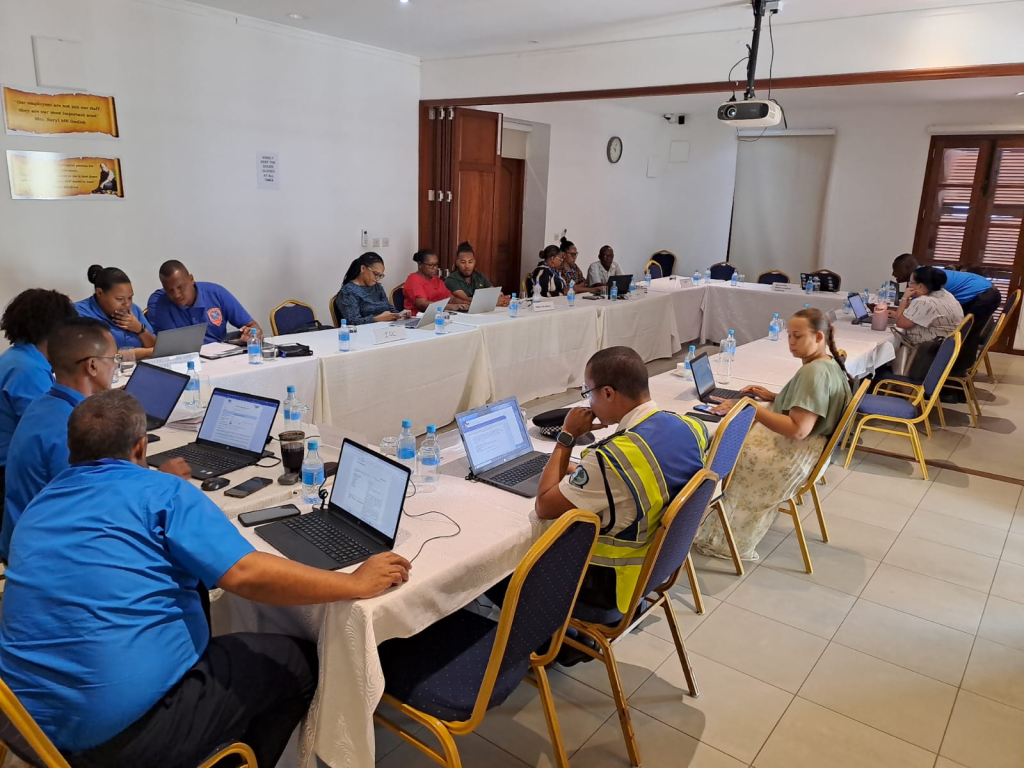
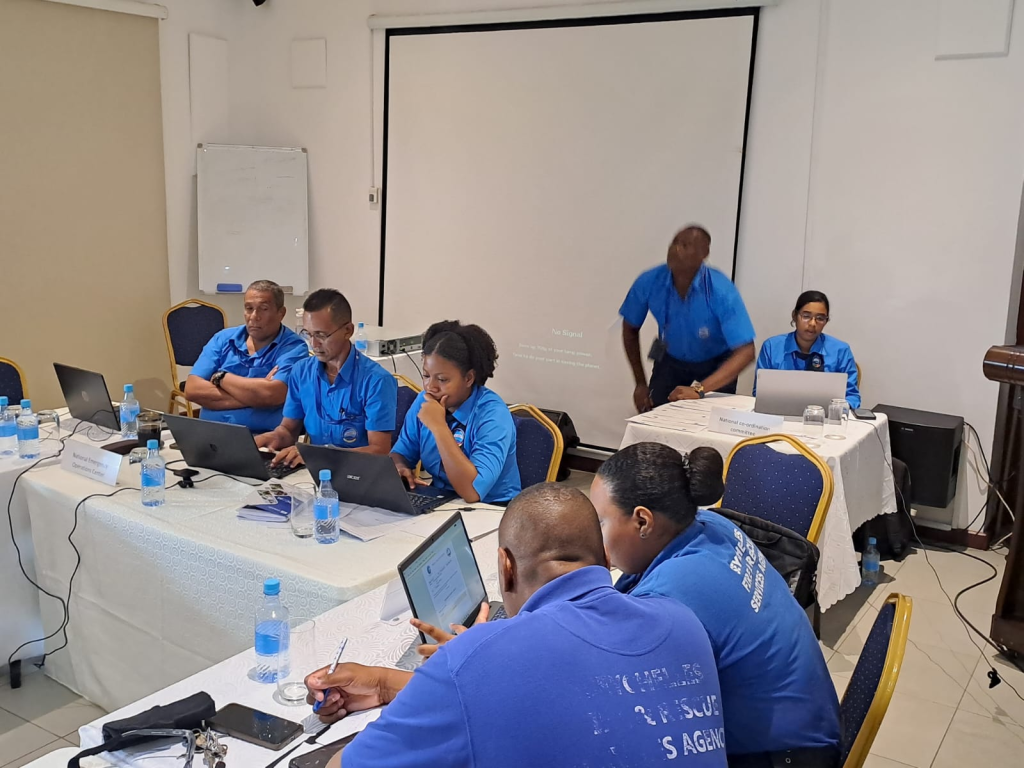
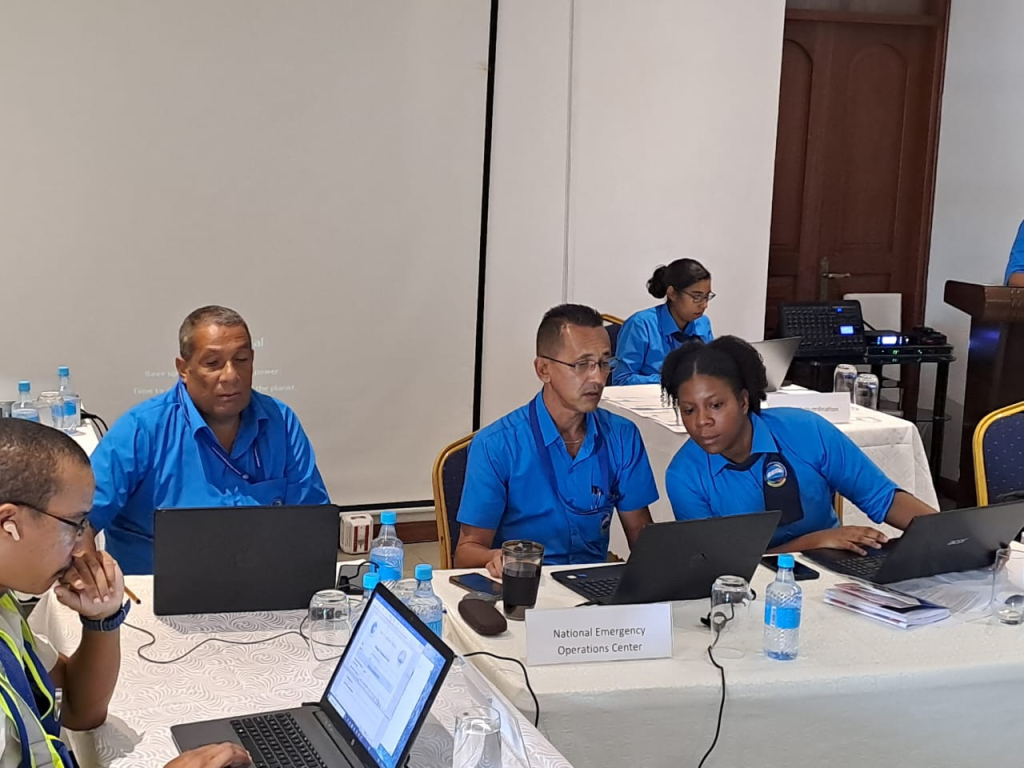
The Disaster Risk Management Division (DRMD)
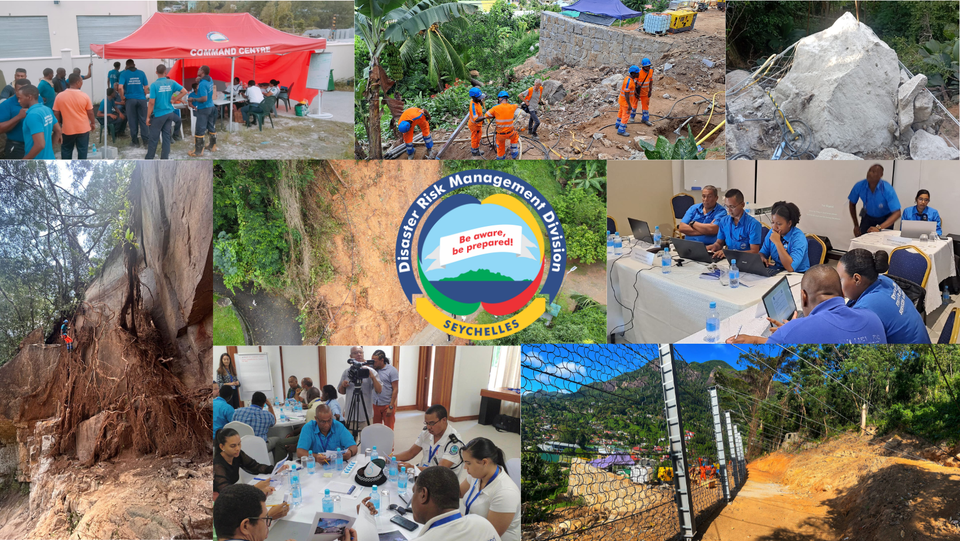
The Republic of Seychelles is a collection of more than 115 islands in the western Indian Ocean, south of the Equator. The country’s ocean territory is approximately 3,000 times larger than its land area owing to the distance between islands. The islands are of two types; approximately one-third are granitic, and the remainder are coralline. The three major granitic islands are the “Mahé Group” – Mahé, Praslin, and La Digue – at the northeastern end of the country’s ocean territory. Mahé, by far the largest island, is also home to nearly 90% of the population, and most of the remainder of Seychelles’ residents live on Praslin or La Digue. Most of the outer islands host only seasonal tourists, researchers, or Coast Guard and meteorological service personnel.
Tourism and fisheries make up a large portion of the country’s Gross Domestic Product (GDP). As a high-income country, Seychelles delivers health and education services, public utilities, and social safety net programs to its people. However, it remains vulnerable to many of the same challenges as other small island developing states (SIDS), including but not limited to remoteness, a small market, limited revenues, exposure to global commodities price shocks, and climate change impacts.
The country’s exposure to natural hazards is concentrated on storms and subsequent flooding, as well as landslides, mudslides, and rock falls. Major hazards are linked to sea level rise, which will increase exposure to storm surges and tsunamis generated elsewhere in the Indian Ocean, and to sea temperature changes, which will impact marine ecology. In addition, the country confronts challenges related to “anthropic” hazards – e.g., pollution, chemicals, solid waste, and ship or aircraft accidents. Although Seychelles continues to invest in its ability to confront these hazards and to cooperate internationally to address them, the country’s geographic isolation means that any incident will have to be handled locally until external assistance can arrive from far away.
Since 2014, the Disaster Risk Management Division (DRMD) has been a separate government department tasked with comprehensive all-hazards management. Alongside the Division, there are three oversight and advisory committees – the National Disaster Risk Management Committee, the Vulnerability Assessment Committee, and the National Platform for Disaster Risk Reduction. National policy also demands that each local authority establishes and implements a disaster risk management (DRM) framework. Separately, the Ministry of Agriculture, Climate Change and Environment (MACCE) oversees ecological protection, safe water resources, and strengthening of capacities to address the impacts of climate change and climate-related disasters. Risk management and reduction are parts of the DRM and climate change sectors, and both integrate non-government and community groups.
Disaster response under the DRMD focuses on an incident command system, local leadership, and all-hazards functional capabilities. In case of emergency, the DRMD Director General is responsible for establishing and running the National Emergency Operations Centre and supplementary emergency operations centers, as required. Key partners involved in a response are the national police and fire-and- rescue services, as well as the Seychelles Defence Forces and the Red Cross Society of Seychelles. The country has built strong cooperation with United Nations (UN) system agencies and regional inter-governmental organizations, including the Indian Ocean Commission and Indian Ocean Rim Association. Beyond disaster management support, these groupings likely will prove to be important to Seychelles’ climate change actions since the impacts of climate change can be expected to affect the economy and society, both of which require multilateral and multi-sectoral strategies.
MANDATE OF THE DIVISION
In accordance to the Disaster Risk Management Act, 2014 the Disaster Risk Management Division is established for the effective management of disaster through a comprehensive and integrated all-hazard approach and for matters connected therewith or incidental thereto.
DISASTER RISK ASSESSMENT AND MITIGATION
Disaster Risk Assessment and Mitigation entails;
- Designing methods, establishing norms and criteria for auditing guidelines to undertake hazard surveillance identification, analysis and risk assessment.
- Supporting the development of community based sustainable development programmes and interventions aimed at reducing the risk and impact of hazards and disasters.
- Identifying areas of concern and to advice stakeholders on appropriate measures to minimises the impact of negative effects of all hazards.
- Contributing towards the promotion of situation awareness of different categories of potential hazards in the Seychelles.
PREPAREDNESS AND PLANNING
Preparedness and Planning entails;
- Engaging governmental bodies, non-governmental organisations, private sectors and communities to develop and implement preparedness & emergency response plans and standard operating procedures in line with their functions;
- Engaging the governmental and non-governmental organisations to develop their Business Continuity Plan (BCP) to guide their functions during emergencies;
- Reviewing and approving all plans and Standing Operating Procedures (SOPs) prepared by stakeholders and ensure integration and alignment to the National Integrated Emergency Management Plan;
- Monitoring the effectiveness of plans and SOPs produced request updating of these plans and procedures within specific timeframes;
- Providing technical assistance to stakeholders with the development and implementation of plans and procedures;
HUMANITARIAN AFFAIRS, RECOVERY AND ENFORCEMENT
Humanitarian Affairs, Recovery And Enforcement entails;
- Coordinating, monitoring and promoting rehabilitation and recovery programmes for disaster risk management among government institutions, non-governmental organisations, private sector entities and communities including adoption of common standards and best practices.
- Supporting and ensuring the implementation of community-based recovery programmes and interventions aimed at reducing the risk and impact of hazards and disasters.
- Ensuring compliance and implementing of appropriate measures by stakeholders to prevent or reduce the impact of hazards.
- Developing guidelines on, and provide technical assistance to, the preparation of disaster risk management plans at national level with focus on humanitarian affairs and recovery.
- Supporting and putting in place appropriate measures to recover from the impact or negative effects of disaster.
- Coordinating, supporting and facilitating assessment following a disaster with the aim of recovery efficacy.
- Coordinating and facilitating national and international humanitarian assistance and response before, during and after a disaster.
- Collecting, compiling and processing data and information that will contribute towards evidence base and practicable decision making for recovery, humanitarian response and enforcement.
EDUCATION, RESEARCH AND INFORMATION
Education, Research and Information entails;
- Promoting capacity building related to the building of resilience and reducing vulnerability nationally.
- Creating awareness programmes towards disaster resilience nationally.
- Creating initiatives that raise human capital and the development of staff of the division.
- Preparing, implement and monitor training plans.
- Collecting, collating and processing information contributing towards effective, evidence-based decision making.
- Maintaining an efficient DRM database accessible to stakeholders.
- Coordinating national education, awareness and public relations activities related to DRM.
- Being the liaison between the division and the media.
- Creating, maintain and monitor the content of social media and other virtual information.
- Co-ordinating and promoting research activities relating to DRM in the Republic.
Climate Risk and Early Warning Systems
The Seychelles Meteorological Authority has recently updated the Strategic Plan 2019-2023 (current 2025-2029) and the review of the Meteorological Act 2015 which are significantly bolstered by support from the Climate Risk and Early Warning Systems (CREWS) project. The strategic plan, meticulously revised with the assistance of a WMO consultant and launched during the WMO Day 2024 commemoration, aims to enhance Seychelles’ resilience to climate variability and change. This forward-looking plan focuses on making the operational plan a dynamic tool for effectively monitoring and evaluating key performance indicators over the next five years, ensuring actionable insights and impactful responses to climate risks.
Furthermore, the ongoing review of the Meteorological Act 2015, motivated by the evolving needs since its inception and the aim to incorporate commercialization aspects, is pivotal for the CREWS project’s goals in Seychelles. By addressing legislative gaps and facilitating the generation of revenues, this review is expected to strengthen the operational capacity and sustainability of climate risk management and early warning systems in Seychelles. These steps, supported under the CREWS initiative, underscore a comprehensive approach to enhancing climate resilience and preparedness in the face of increasing climate-related challenges.
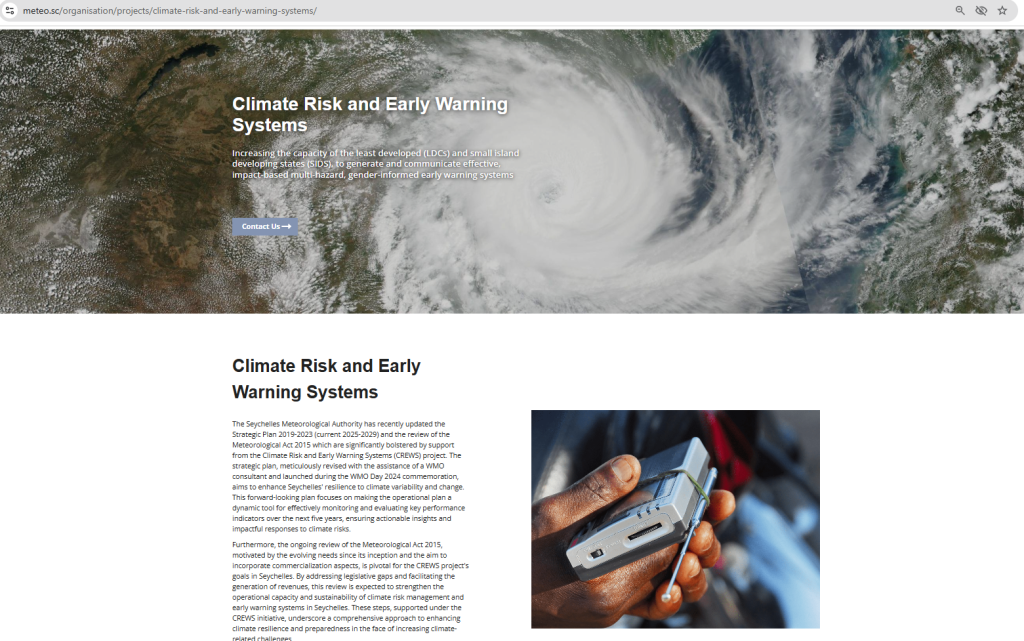
Seychelles prepared to achieve Early Warnings for All (EW4All) target by 2027
26 Jan, 2025Article
Seychelles is now ready to achieve the target established by the United Nations Secretary General Mr. António Guterres with the Early Warnings for All (EW4All) – a global initiative to ensure that everyone on Earth is protected by early warnings by 2027.
The Seychelles Meteorological Authority (SMA), with the support of the World Meteorological Organization (WMO), and in coordination with its national counterparts – the Disaster Risk Management Division (DRMD), the Department of Information Communications Technology (DICT) and the Seychelles Communications Regulator Authority (SCRA), and the Red Cross Society of Seychelles (RCSS) – organized the National Validation Workshop on Early Warning for All (EW4All) Seychelles on 23 January 2025 at the Savoy Seychelles Resort & Spa Hotel. The event counted with the presence of Mr. Flavien Joubert, Minister of Agriculture, Climate Change and Environment, and Mr. Enroll Fonseka, Minister of Internal Affairs, and other high-level officials. A highly turnout with over 70 representatives of national stakeholders participated in this event with the objective to jointly endorse and launch a comprehensive National EW4All Roadmap and Action Plan aimed at enhancing Early Warning Systems, enabling critical actions by the different stakeholders across the Multi-hazard Early Warning Systems (MHEWS) value cycle. An EW4All Coordination Committee was established to drive and oversee the implementation of the EW4All Roadmap and Action Plan, which will be chaired by the national counterparts (SMA, DRMD, DICT/SCRA and RCSS) in a rotational approach; being Mr. Vincent Amelie, the CEO of SMA, the initial appointed Chair.
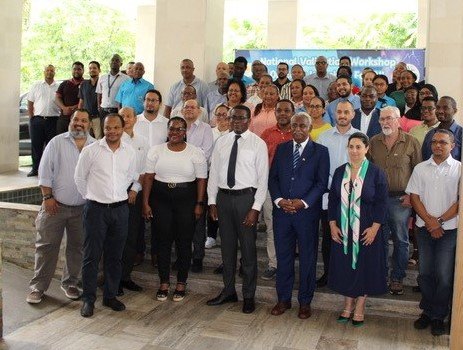
The workshop initiated with a powerful message from the WMO Secretary General Professor Celeste Saulo, who recalled that for small island nations like Seychelles, the effects of climate change are becoming all too evident. In recent years, Seychelles faced several hazardous events that highlighted its vulnerability. These events serve as stark reminders of the need for robust people centered, multi-hazard early warning systems that can save lives, reduce economic loss, and enhance the country’s resilience to future climate shocks. Professor Saulo highlighted the importance of having the EW4All Roadmap and Action Plan ready as “this Roadmap is not just a guiding document for the Seychelles government alone—it must serve as a tool for coordination across all sectors. It should be used by all to guide planning, investment, funding, action, and monitoring. This is a collective effort, and we all have a role to play. From the government to the private sector, from civil society to local communities—each one of us has an important part in ensuring the success of this initiative.” Professor Saulo strongly believes that Seychelles is an example to showcase not just in the region, but globally; and “reassured that WMO remains fully committed to providing the continued support and assistance needed for the successful implementation of the Roadmap and Action Plan”.
Mr. Flavien Joubert, Minister of Agriculture, Climate Change and Environment, highlighted that “today’s event could not have come at a more opportune time when we are all trying to find solutions to address weather and climate related issues that are having major impacts around the world, threatening sustainable development, thus the very survival of mankind”. Mr. Joubert noted that this is particularly relevant for Seychelles as weather is getting hotter and heavy precipitation and flooding events are becoming more devastating and repetitive, costing people their businesses, their homes, and impacting the economy. “It is therefore imperative that we step up on what we are already doing to address the emerging challenges of climate change and sea level rise” – stressed Mr. Joubert. Despite the country’s efforts, there are still many more actions to be engaged in as those identified and included in the Seychelles EW4All gap analysis and action plan. “Let us make this plan one of the most ambitious and comprehensive initiatives ever launched to save lives and protect livelihoods, and build a more resilient Seychelles” – emphasized Mr Joubert. The Minister is therefore confident that the plan will get the support of the Cabinet.
Early Warnings for All
The Seychelles Meteorological Authority (SMA), through the “Early Warnings for All” initiative, aims at enhancing community safety through comprehensive education on emergency preparedness. In September and October 2023, SMA embarked on a crucial mission to visit homes for the elderly across Mahe, Praslin, and La Digue, to ensure our most vulnerable are well-informed and prepared.
Kicking off on the 20th of September, the campaign began with an enlightening visit to the residents of Au Cap Home, currently relocated to North-East Point. Through these visits, SMA is dedicated to explaining the color-coded alert system, empowering every individual with the knowledge to effectively respond to emergencies, thereby fostering a safer, well-prepared community.
Coastal flood Hazard level: High
In the area you have selected (Seychelles) coastal flood hazard is classified as high according to the information that is currently available. This means that potentially-damaging waves are expected to flood the coast at least once in the next 10 years. Based on this information, the impact of coastal flood must be considered in different phases of the project for any activities located near the coast. Project planning decisions, project design, and construction methods must take into account the level of coastal flood hazard. Further detailed information should be obtained to adequately account for the level of hazard.
Climate change impact: According to the IPCC (2013), there is high confidence that extremes in sea level will increase with mean sea level rise yet there is low confidence in region-specific projections in storm surges. Projects in low-lying coastal areas such as deltas, or in island states should be designed to be robust to projected increases in global sea level.
Recommendations
- INTERACTING HAZARDS: Project planning, design, and construction practices should account for coastal flood and storm surge from cyclones and other weather events occurring in your project area. More information
- EMERGENCY RESPONSE PLANS: Identify the regional and national government’s emergency response policy and protocols to coastal flooding in your project area and incorporate as necessary. More information
- TECHNICAL EXPERTISE: Consult with an expert familiar with coastal flooding risk that has experience with natural hazards and/or construction practices in your local area. Such consulting professionals include structural engineers, civil engineers, and atmospheric scientists. Incorporate local and subject-matter expertise in the design, construction, and maintenance phases of your project. More information
- INSURANCE: For coastal flooding risks that cannot be mitigated, consider insurance products specifically aimed at alleviating the financial costs associated with flooding. More information
- CRITICAL INFRASTRUCTURE: If the project involves the development of critical infrastructure (e.g., a hospital, fire station, or power transmission line), or will support critical infrastructure, you should consider how your project can be affected by coastal flooding that occurs outside of the specific project location. More information
RCSS gears up for the Early Warning for All Initiative in Seychelles
Preparing for the launch of the Early Warning for All Initiative in Seychelles, Ms. Francesca Cecchin – Consultant on Climate Change at the IFRC Country Cluster Delegation to the Indian Ocean Islands from the International Federation of Red Cross and Red Crescent Societies (IFRC) has been in Seychelles since last Monday in order to offer technical and operational support to the Seychelles Red Cross Society (RCSS). This is the case considering Pillar 4—Preparedness to Respond—will be spearheaded nationally by the RCSS.
Her mission has been to assist the National Society with the technical and operational aspects of preparing all the documents for the launch of the EW4All initiative (such as the gap analysis checklist and the pre-identification of Pillar 4 priorities and activities) and to take part in the initiative’s national launch workshop.
Moreover, mapping/baseline research on RCSS’s ongoing and planned actions on EWSs, anticipatory action, and other areas of intervention connected to climate risks has been facilitated by the mission, which has been supplying complementing information in parallel. Ultimately, the mission will help future resource mobilization efforts and the further integration of RCSS activities inside the EW4All strategy.
Early warning systems (EWS) are key elements of disaster risk reduction and climate change adaptation, as they help reduce or avoid the detrimental impacts of hazardous events. To be effective, early warning systems need to be risk-informed, target communities most at risk, disseminate messages and warnings efficiently, ensure preparedness and support early action. Early warning systems must rely on a sound scientific and technical basis and focus on the most vulnerable people and sectors. This implies the adoption of a system-based approach incorporating all relevant risk factors, whether arising from the climate-hazards or social vulnerabilities, and from short-term or long-term processes.
The Early Warnings for All effort brings together the public and private sectors, governments, civil society, and the wider UN system to create people-centered, end-to-end multi-hazard early warning systems and close gaps. The initiative seeks to safeguard lives and livelihoods against natural disasters like floods, heatwaves, storms, and tsunamis by 2027 through fostering synergies across initiatives and partnerships across sectors via coordination and collaboration.
The Early Warnings for All initiative is built on four pillars to support countries in building and operating effective and inclusive multi-hazard early warning systems:
- Pillar 1: Disaster risk knowledge – led by the United Nations Office for Disaster Risk Reduction (UNDRR)
- Pillar 2: Observations and Forecasting – led by the World Meteorological Organization (WMO)
- Pillar 3: Dissemination and communication – led by the International Telecommunication Union (ITU)
- Pillar 4: Preparedness to respond – led by the International Federation of Red Cross and Red Crescent Societies (IFRC)

With over 13 countries around the world having already launched the initiative at the national level to scale up prior efforts and strengthen national early warning systems, Seychelles will begin the national implementation of the EW4All initiative during a workshop on the 30th and 31st July 2024. Along with the RCSS, the other focal points for the initiative in Seychelles are the Disaster Risk Management Division (DRMD), the Seychelles Meteorological Authority (SMA), and the Department of Information Communication Technology (DICT).
Expectations leading up to the EW4Aall initiative national launch workshop:
Early Warning, Anticipatory Action and Preparedness are key intervention areas for IFRC and Red Cross Red Crescent National Societies to reduce communities’ vulnerability and exposure to the impacts of climate change, in both rural and urban settings. Through effective end-to-end community early warning systems and anticipatory action, communities and National Societies will be better prepared to manage forecasted weather events and new climate extremes, including by being able to access resources ahead of their impact.
The EW4All initiative is a great opportunity to catalyse public attention and provide renewed political visibility on the importance of early warning and anticipatory action. It can provide a unique opportunity to foster joint action to reduce the humanitarian impacts of climate and weather-related disasters. As such, it is crucial that all stakeholders are engaged, and that ad-hoc mechanisms for continuous coordination and exchange are put in place.
The EW4All initiative offers a good reminder that life-saving early warnings require effective hazard monitoring, forecasting and prediction, disaster risk assessment, risk communication and early action planning. But each of these components is equally important; failure in one component can lead to the inefficiency of the whole system. Our expectations for the workshop include having fruitful discussions and establishing a clear coordination mechanism with dedicated focal point people and platforms for regular discussion. It is crucial that this mechanism is country-driven and adapted to the specific context of Seychelles, to allow coherence and due monitoring of advancements.
Additionally, the drafting of the National EW4All Roadmap provides an opportunity to address local, national, regional and global levels. Local authorities and community leaders need to be involved in the implementation of the initiative to ensure that communities most at risk can access precise and timely warnings based on sound observation data, but also be able to act on those warning. Similarly, early warning systems set-up at community level must be strictly connected to those at the national level, to avoid duplications and confusion.
Following the national launch and consultation on Early Warnings for All, the expected results include:
- Agreement on national coordination mechanism to guide the scale-up of early warning systems;
- Gap Analysis that identifies national and sub-national policy, technical, financial and other gaps in Seychelles across the four pillars of EW4All;
- Agreement on process for the formulation of multi-year, multi-stakeholder EW4All National Roadmap (2023-2027) to achieve universal early warning coverage in Seychelles.
OPERATIONALISATION OF THE LA GOGUE DAM BREAK EMERGENCY PREPAREDNESS PLAN.
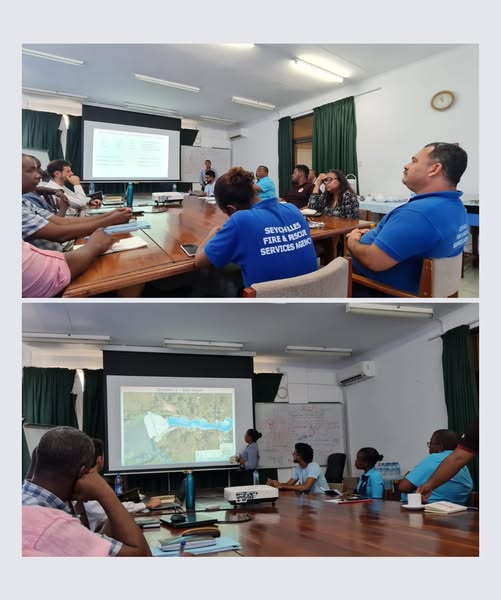
On the 24th of January 2023, the Public Utilities Corporation hosted a meeting discussing operationalisation of their Dam Break Emergency Plan for La Gogue. In attendance was the P.U.C La Sogue Project team and consultants, the Disaster Risk Management Division, Seychelles Fire and Rescue Services Agency, Seychelles Public Transportation Corporation, Red cross and the Environment Assessment and Permit Section.
The La Gogue Dam Project, which began in 2018, aims to increase the raw water system’s capacity by raising the dam embankment by six meters, increasing the dam’s storage capacity by 60%. Before the extension the dam had a capacity of 1 million cubic metres, currently it has a unit of 1.6 million cubic metres when fully filled.
The main objective of the meeting was to operationalise the plan that the P.U.C had drafted which takes into account 3 main scenarios under various conditions:
1. Dam break conditions.
2. Incoming of the probable maximum flood.
3. Incoming of 100 years of return period.
It was highlighted that 2 main areas are at risk. Coming from a model that P.u.C had produced of the flooded areas and houses at risk, the Anse Etoile and Glacis region on both sides of the raised saddles were identified as high risk. Discussion of P.U.C’s alarm stages and actions recommended for preparedness and responds if ever the 3 scenarios were to occur was also conducted.
In the end, it was agreed that P.U.C’s La Gogue Dam Break Emergency Plan was comprehensive and the way forward being the creation of a working group that will work on the operationalisation of responses in both areas.
The first working group session is scheduled for Friday the 27th of January 2023, in attendance will be all members present during the meeting and additional stakeholders whose involvement would be requirement during the suggested scenarios.
It is expected that prior to the Dam reaching its full capacity the plan would be a hundred percent operational and exercises concerning responders, stakeholders and the public would have been conducted.
Tsunami Preparedness