The WHO/UNICEF Joint Monitoring Programme (JMP) is the custodian of global data on Water Supply, Sanitation and Hygiene (WASH).
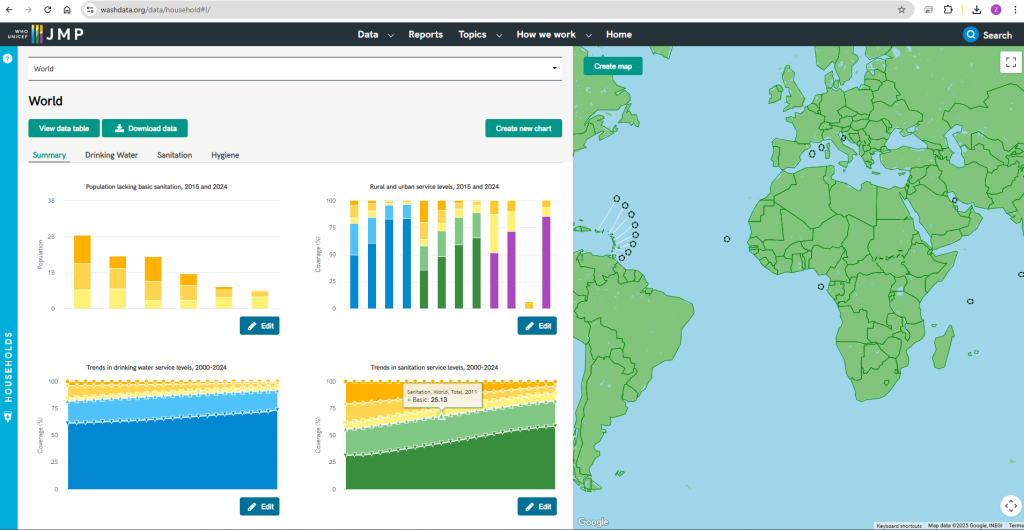
Global WASH Cluster
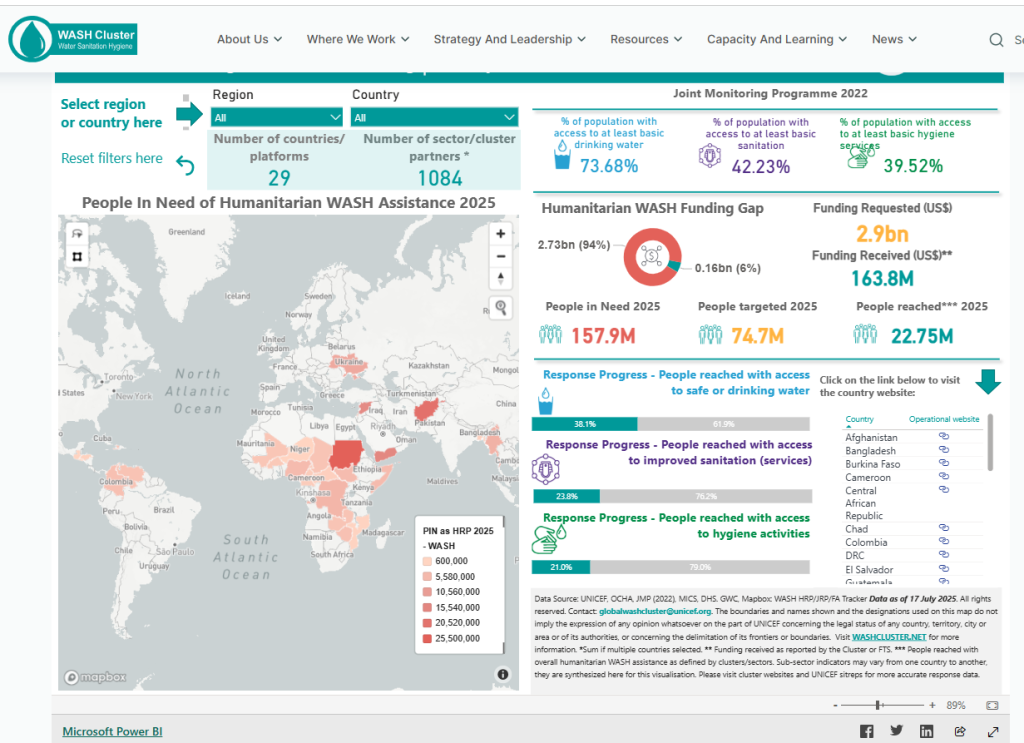
The Global WASH Cluster Humanitarian Response Plans (HRPs) dashboard outlines the needs, targets and responses of 29 HRP countries in 2025, and provides links to the National Coordination Platforms (NCPs) websites via ReliefWeb/Humanitarian Response for further information. Simply choose a country/region at the top left of the dashboard and display the country data.
Multi Indicator Cluster Surveys(MICS)
Early warning, early action
Affording the time to protect children’s lives, and build resilience in a changing climate.
UNICEF Innovation

15 September 2025
In a changing climate, the difference between disruption and safety can come down to minutes. For children facing floods, storms, heatwaves, and drought, timely and accessible early warnings are critical. Yet in many of the countries where UNICEF works, early warning systems (EWS) remain incomplete, inaccessible, or not designed with the needs of children in mind.
Achieving Early Warnings for All requires technology alongside infrastructure, clear communication pathways, and community trust so that alerts turn into action. Through Climate Ventures, UNICEF is investing in early-stage and scale-ready solutions that pair digital tools with reliable hardware and services. From artificial intelligence (AI)-driven hazard mapping to affordable, hyperlocal alert networks, Climate Ventures is connecting today’s urgent needs with the resilience children will need tomorrow.
Why early warnings matter for children
Climate shocks disrupt schooling, strain health services, and put water and sanitation systems at risk, making children in low- and middle-income countries especially vulnerable. Today, 90 per cent of children breathe polluted air, 125 million face water scarcity, and 79 million are exposed to flooding. When warnings come too late, families have less time to evacuate, safeguard assets, or protect children from dangerous conditions.
But early warning systems can do more than issue alerts. They can mobilize community action, enable anticipatory humanitarian response, and save lives. They are among the most proven and cost-effective climate adaptation measures when they are accessible, inclusive, and linked to clear action plans. To reach every child, these solutions need investment and partners willing to scale them.
Strengthening our ability to scale proven solutions
Through Climate Ventures, UNICEF invests in both early-stage innovation and ready-to-scale solutions, ensuring children benefit today while breakthroughs are nurtured for tomorrow.
Operating across 190 countries, UNICEF sees firsthand the risks children face when early warning systems are absent, and is also well placed to develop solutions that work. Two ventures demonstrate how this translates into real protection:
- In Libya, Mozn has built a youth-led platform with 900,000 followers and achieved 70 per cent faster disaster response. Now scaling nationally, it aims to reach 1 million active users by 2026 and eventually 7.6 million citizens, creating an open-source model other countries can adapt.
- In Mali, Map Action is transforming citizen reports into real-time alerts using AI and voice recognition. Already reaching 100,000 users, it plans to expand to 250,000 across flood-prone regions by 2026, with offline functionality and government partnerships to ensure long-term sustainability.