National Disaster Management Office (NDMO), Fiji

https://www.ndmo.gov.fj ( Website is not accessible from outside in Fiji???? )
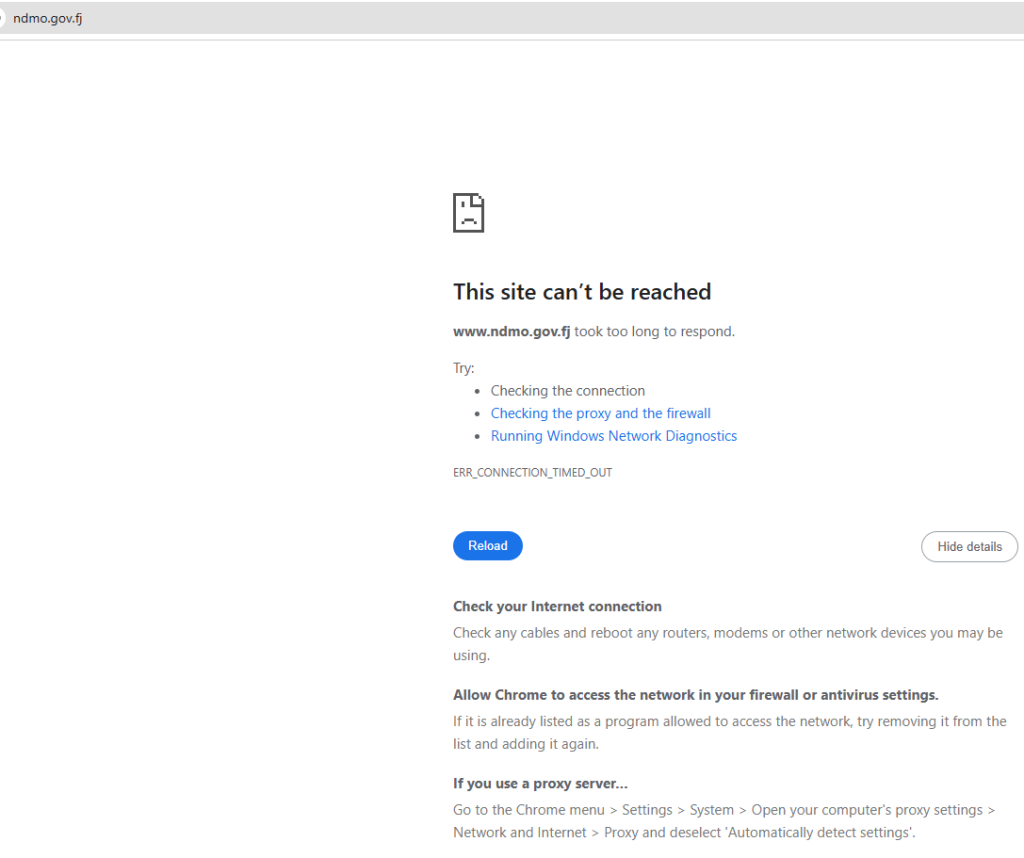
(NDMO, Please shoot this trouble. Why is it not accessible from the outside in Fiji? )
The NDMO was established to facilitate, coordinate and manage national disaster risk reduction and disaster management activities to enhance the provisions of a safer and more secure Fiji.
The NDMO is guided by the following six (6) principles to help prepare, plan and respond to national disaster situations: 1. Governance – Organisational, Institutional, Policy and Decision-making Framework 2. Knowledge, Information, Public Awareness and Education 3. Analysis & Evaluation of Hazards, Vulnerabilities and Elements at Risk 4. Planning for effective Preparedness, Response and Recovery 5. Effective, Integrated and People-Focused Early Warning Systems 6. Reduction of Underlying Risk Factors.
Fiji faces many natural hazards- cyclones, floods, droughts and the threat of earthquakes and tsunamis. This October, join us to get informed and be prepared on how to protect your family and community.
NATIONAL DISASTER MANAGEMENT COUNCIL (NDMC)
During emergency operations, it will have overall responsibility for the efficient conduct of emergency operations at National, Divisional and District levels through the respective Emergency Operation Centres (EOCs)
Fiji National Emergency Operation Centre
Government office
Suva, Fiji · +679 331 9250
Capacity Building :
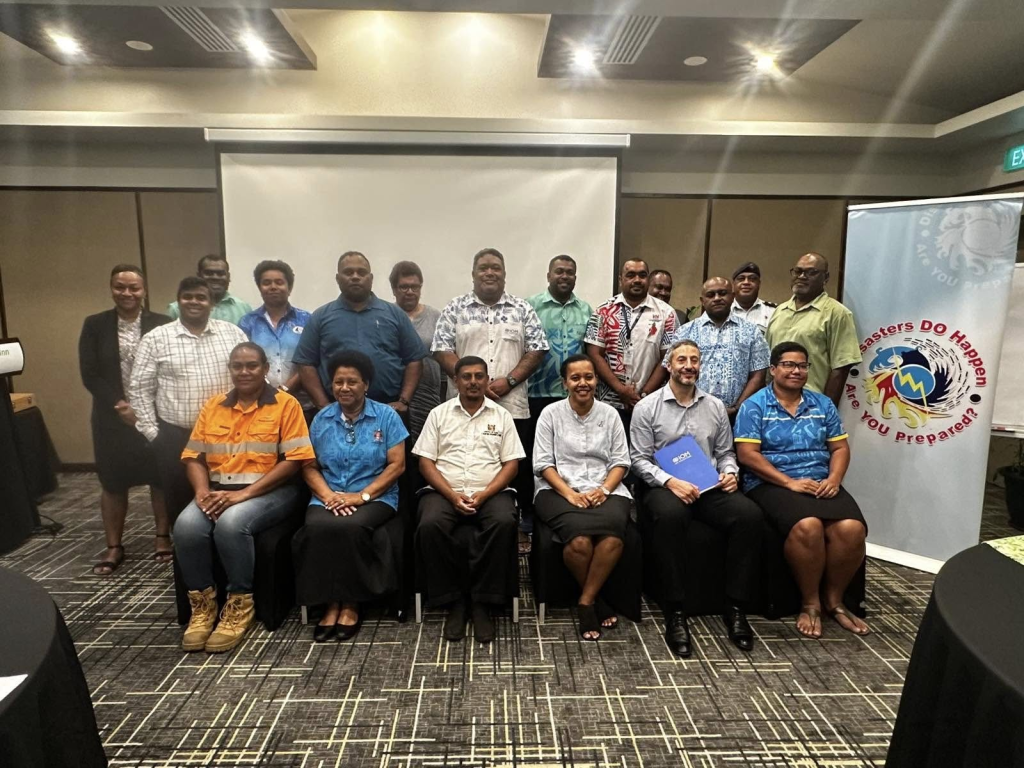
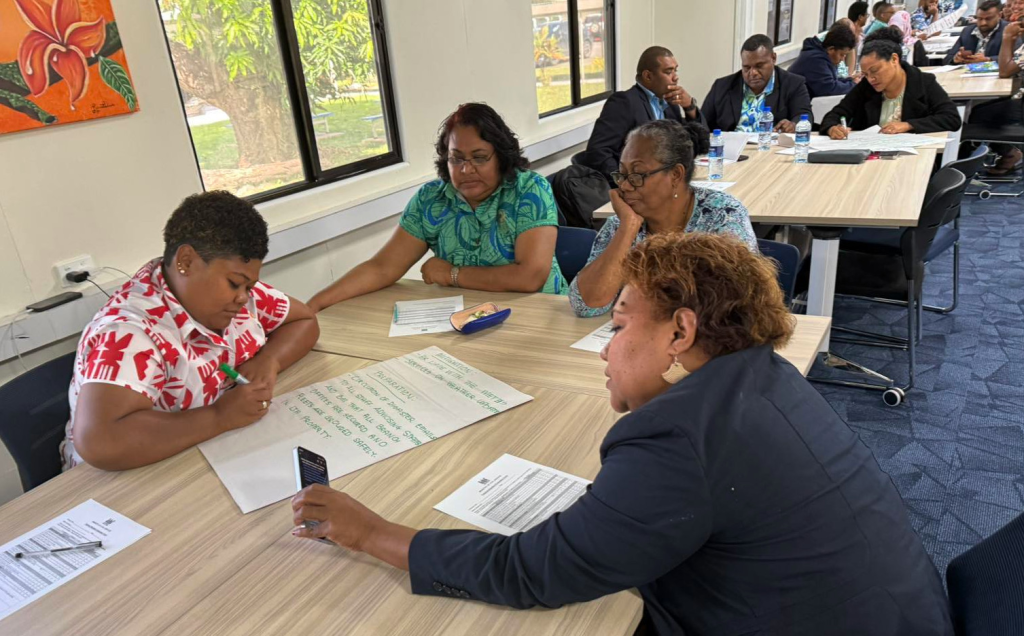
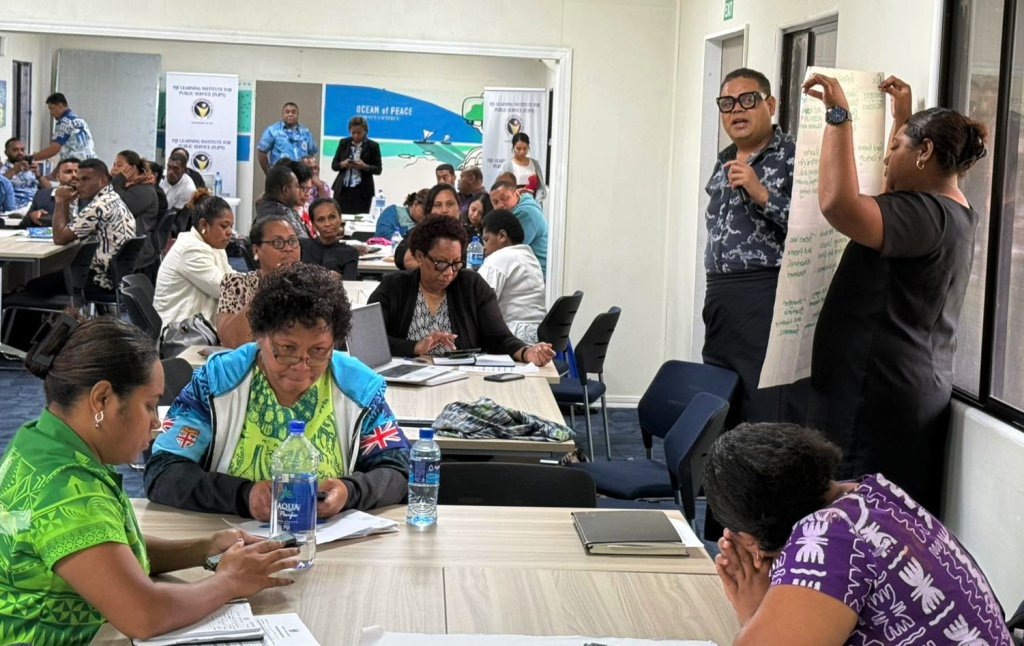
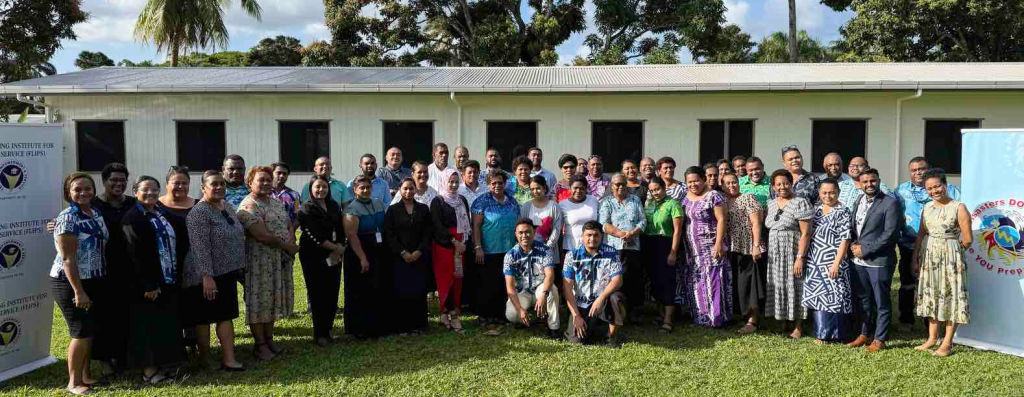
The National Disaster Risk Management Office (Fiji NDRMO) conducted a Disaster Risk Management (DRM) Training for civil servants from across Government in Suva last week. The programme focused on Fiji’s National Disaster Risk Management Arrangements and the process of conducting an Initial Damage Assessment (IDA).
Training civil servants on DRM is vital because Government officials play a central role in coordinating response and recovery efforts during disasters. By strengthening their understanding of national arrangements, officials are better equipped to:
 Respond quickly and effectively to emergencies;
Work together effectively across ministries and agencies;
Ensure that IDAs are accurate and timely, helping guide relief and recovery resources to where they are needed most; and
Support communities with coordinated, inclusive, and resilient solutions.
The Fiji NDRMO team sincerely acknowledges the Ministry of Civil Service for incorporating DRM training and awareness into their training calendar. This support will ensure that disaster preparedness becomes part of the continuous professional development of our civil servants.
Health Emergencies and Disaster in Fiji
According to the World Health Organisation, over the last 10 years, an average of 700 disasters has been reported every year. Annually, an estimated 268 million people are affected by disasters, of whom more than 100,000 are killed. In 2010, humanitarian emergencies requiring international assistance occurred in 32 countries. The epidemiological profile associated with disasters and conflicts is changing. Although most of the mortality associated with disasters and conflicts continues to be due to infectious diseases, non-communicable diseases are increasingly among the top five causes of morbidity and mortality in such settings. Global trends in urbanisation are providing a further impetus for the adaptation of intervention strategies.
Fiji is geographically situated in one of the most natural disaster prone areas in the world. Some hazards occur as a consequence of tropical depressions and cyclones or as part of tropical weather condition that normally affects the region. Hazards such as landslides, flash floods and storm surges are most common.
Since 1980, there have been 36 recorded natural disasters in Fiji, with 221 fatalities and over 1 billion dollars worth of economic damage to Fiji’s economy.
National Health Emergencies and Disaster Management Plan (HEADMAP)
In 2002, The Ministry of Health had drafted its National Disaster Management Plan and aligned it to the Fiji National Disaster Management Plan. The first National Health Emergencies and Disaster Management Plan (or HEADMAP) was designed along with the Fiji National Pandemic Plan and the Draft Communicable Disease Guideline, Since then, the review of the 2007 – 2011 HEADMAP has seen the addition of standard operating procedures (SOPs) and specific guidelines for various types of hazards faced in Fiji.
The revised HEADMAP, released in January 2013 is supported by a number of other plans and documents related to disaster risk reduction and disaster management.
Objectives of HEADMAP
The primary objective of the Fiji National Health Emergencies and Disaster Management Plan (HEADMAP) is to serve as a guide for the health sector in the management of public health emergencies and disasters.
The specific objectives include:
- Minimise the potential loss of lives and impact of disasters;
- Ensure prompt and appropriate disaster responses to affected communities
- Achieve rapid recovery and rehabilitation following any emergency/disaster.
- Ensure provision of adequate resources to support implementation at various levels
Cluster Approach to Disaster Management
Coordination in emergencies is vital. Appropriate coordination results in fewer gaps and less overlaps. It allows for a more coherent and complementary approach, and encourages different partners in the response, preparedness and recovery phases of disasters to work together for better collective results.
Disaster Management Clusters have been adopted for Fiji to improve coordination. The Clusters are groups of organisations working in the main sectors of humanitarian action. Clusters provide a clear point of contact and are accountable for adequate and appropriate action. They create partnerships between international humanitarian actors, national and local authorities, and civil society.
A global cluster system has been in place for some time, strongly supported by the United Nations and partner organizations. Clusters have also been implemented at the Regional level, represented by the Pacific Humanitarian Team (PHT).
The Fiji National Clusters have been closely based on the global and regional clusters. The adoption of similar clusters means that there is better understanding of the role of each cluster, providing ready access to terms of reference and standard operating procedures. It also means that there is more potential for assistance for partnering, training and funding.
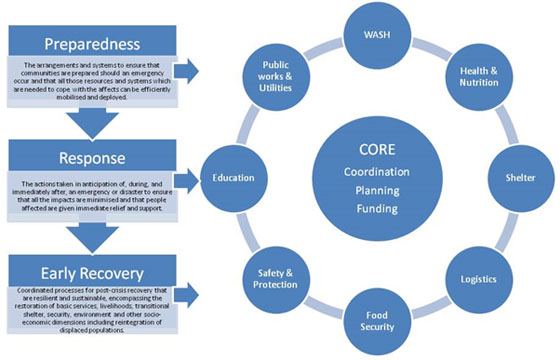
Eight National Clusters have been adopted. These are illustrated in figure below.
They are:
- Health & Nutrition (Lead: MOH, Co-Lead: WHO),
- Shelter (Lead: MOLGUDH&E, Co-Lead: IFRC),
- Education (Lead: MOE, Co-Leads: UNICEF, STC),
- Food Security (Lead: DOA, Co-Lead: NK),
- Safety & Protection (Lead MOWSW&PA, Co-Lead: NK),
- WASH (Lead: MOH-EH, Co-Lead: UNICEF),
- Logistics (Lead: MOF – FPO, Co-lead: NDMO),
- Public Works & Utilities (Lead: MOWT&PU, Co-Lead: NK).
Fiji National Disaster Management Clusters
Comprehensive Emergency & Disaster Management
In order to incorporate the Risk Reduction and Risk Management components of Disasters Management, the Health & Disaster Emergency Management requires an integrated comprehensive approach through four phases of emergency & disaster management, namely:
(a) Mitigation and Wellness (Prevention)
This phase encompasses actions to avoid an incident, to intervene to stop an incident from occurring or to mitigate an incident’s effects. It involves actions to protect lives and property and to defend against attacks, and may include public health surveillance and testing processes, immunizations, isolation or quarantine.
(b) Preparedness
This phase includes the activities necessary to build and sustain performance across the other phases. It involves efforts at all levels: to identify risks or threats; to determine vulnerabilities; to identify resources available and to address those vulnerabilities; to identify requirements or shortfalls; and conduct training and exercises.
(c) Response
This phase incorporates the activities necessary to address the immediate and short-term effects of an incident. Response activities include assessing preliminary effects, activating and deploying emergency resources, executing an emergency management plan, allocating existing resources in support of the plan and obtaining additional resources to sustain response operations.
(d) Recovery
The final phase encompasses those actions necessary to bring a community back to normal. It entails the coordination and execution of business continuity plans and the reconstitution of government operations and services
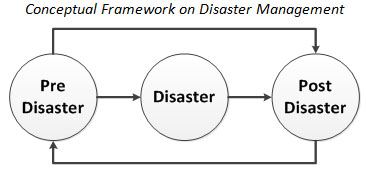
The integrated comprehensive approach through four phases of emergency & disaster management is shown in the figure below:
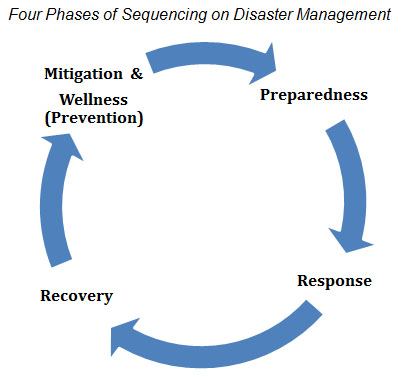
These phases are interdependent and, in practice, an affected community will address all of the phases consecutively although the emphasis may shift between them. The health services sectors need to be involved in all phases.
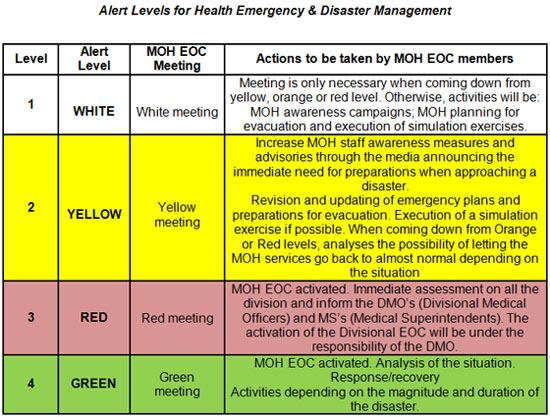
Alert Levels
The following are the emergency activation levels that apply to the ministry. This is an internal emergency management structure and the levels are not directly related to those that may be assigned in other organizations or jurisdictions:
Disaster Preparedness Campaign
The Government of Fiji is committed to improve disaster preparedness throughout the nation – and to ensure that everyone, young, old, woman, man, able, disabled, sick or healthy know how to protect themselves and other before, during and after a disaster.
The Ministry of Health therefore has developed the Get Ready. Disasters Happen campaign. This has been done with financial support from AusAID and NZ Aid and technical support from UNICEF Pacific.
Disaster Events:
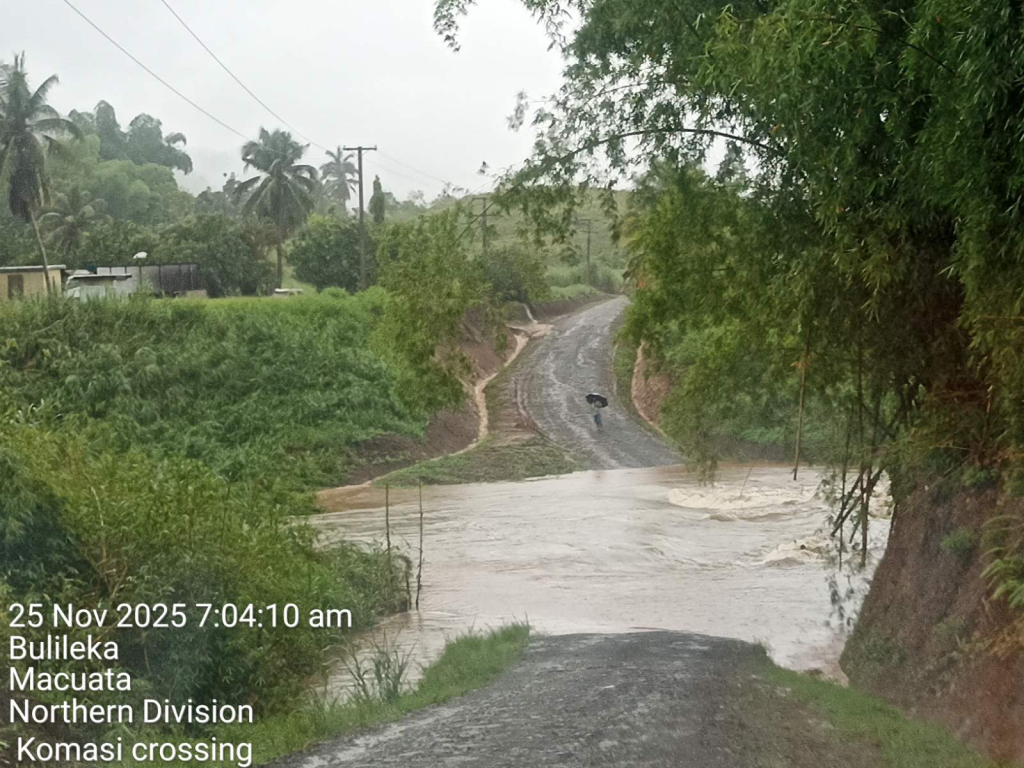
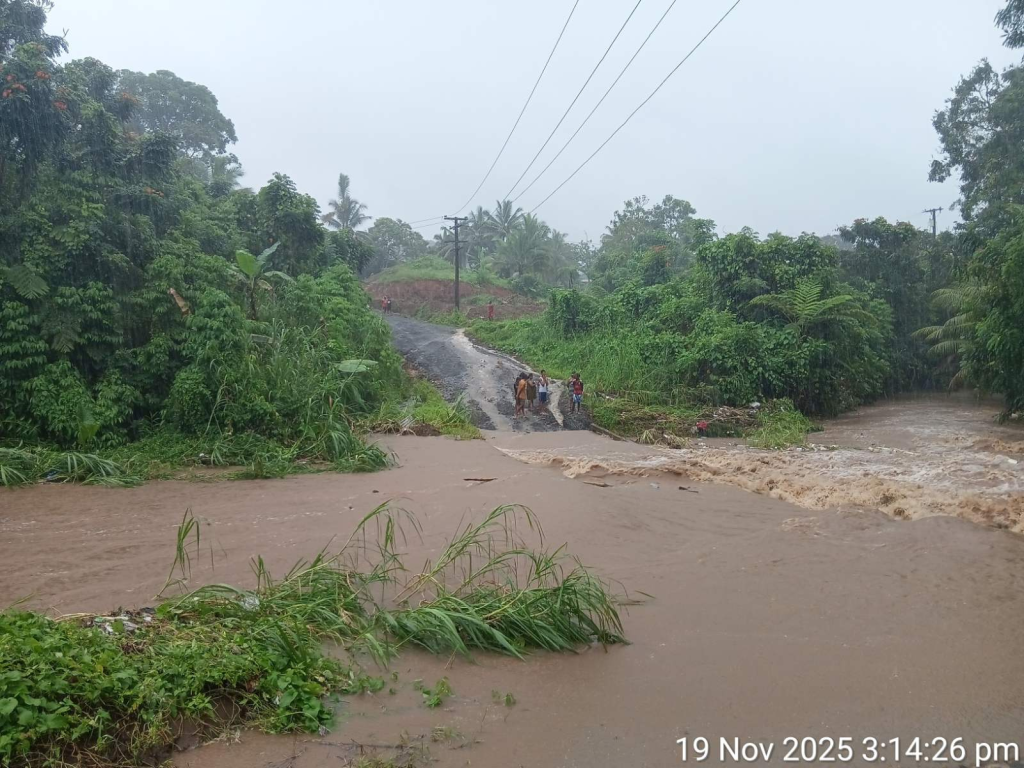
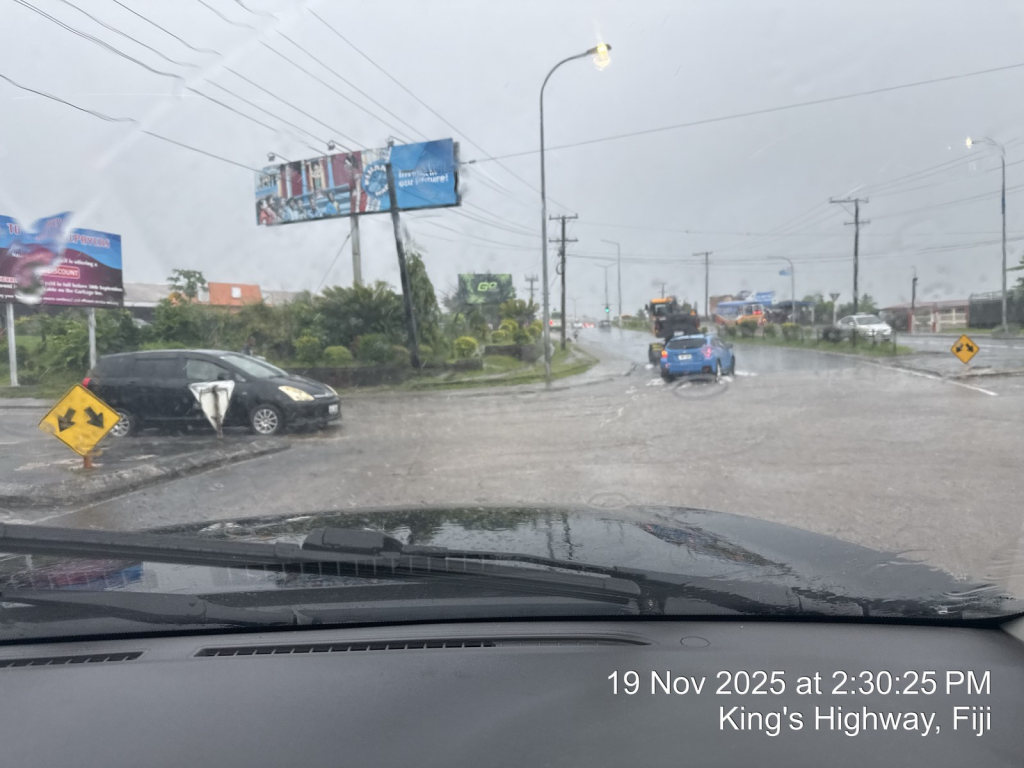
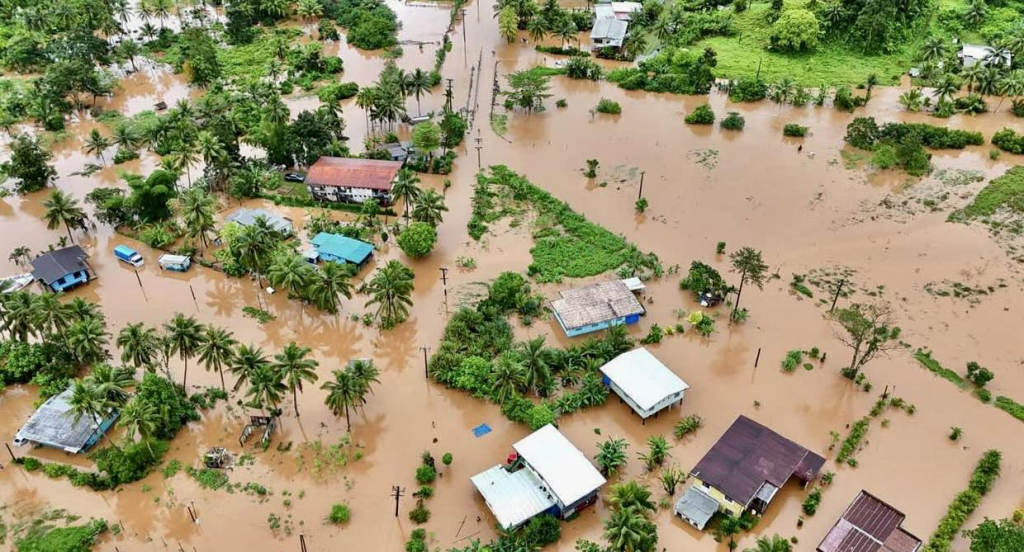
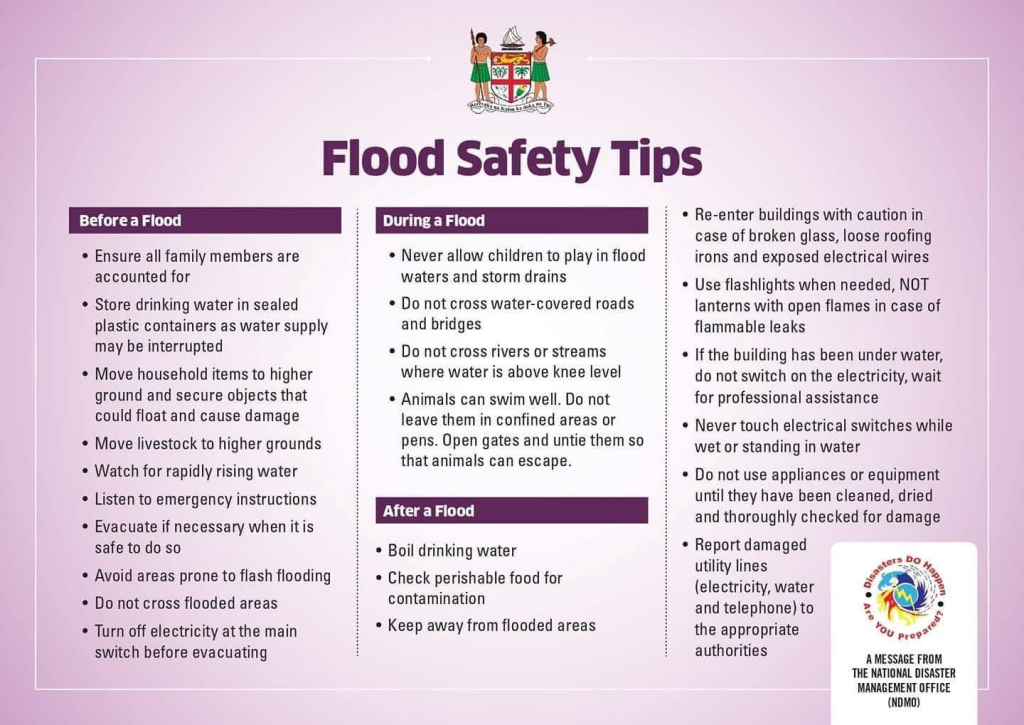
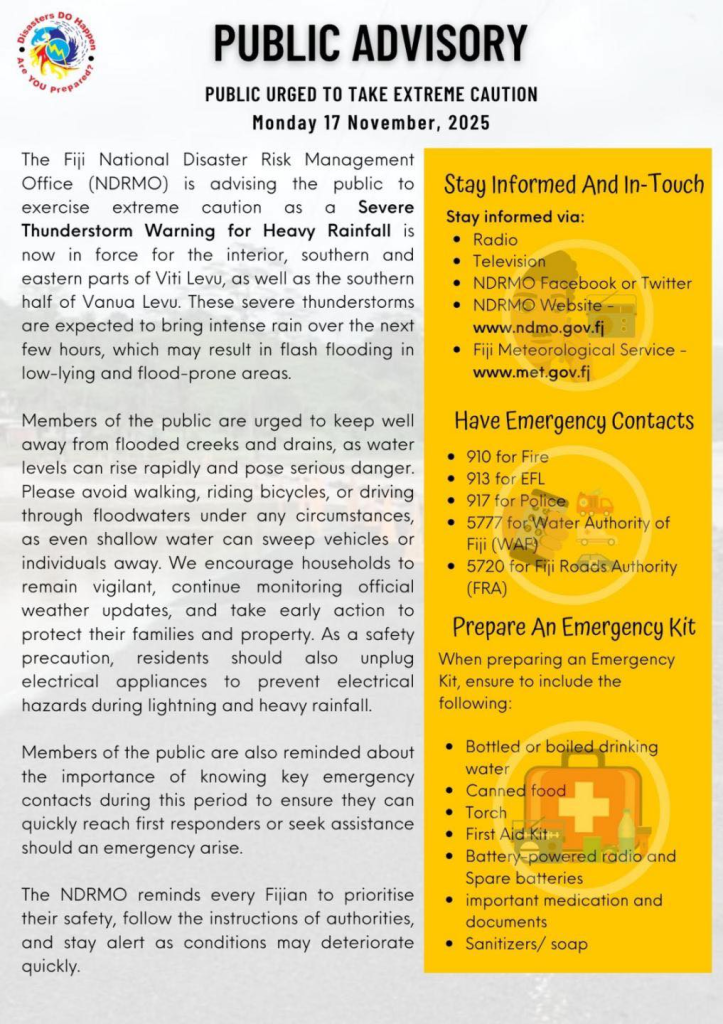
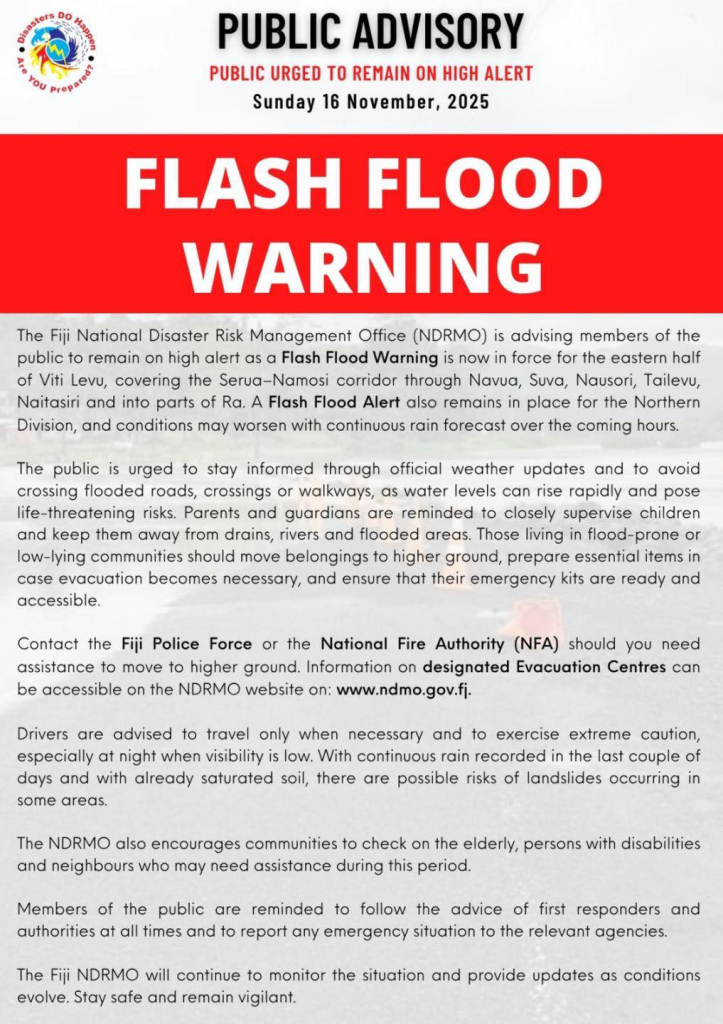
Flood
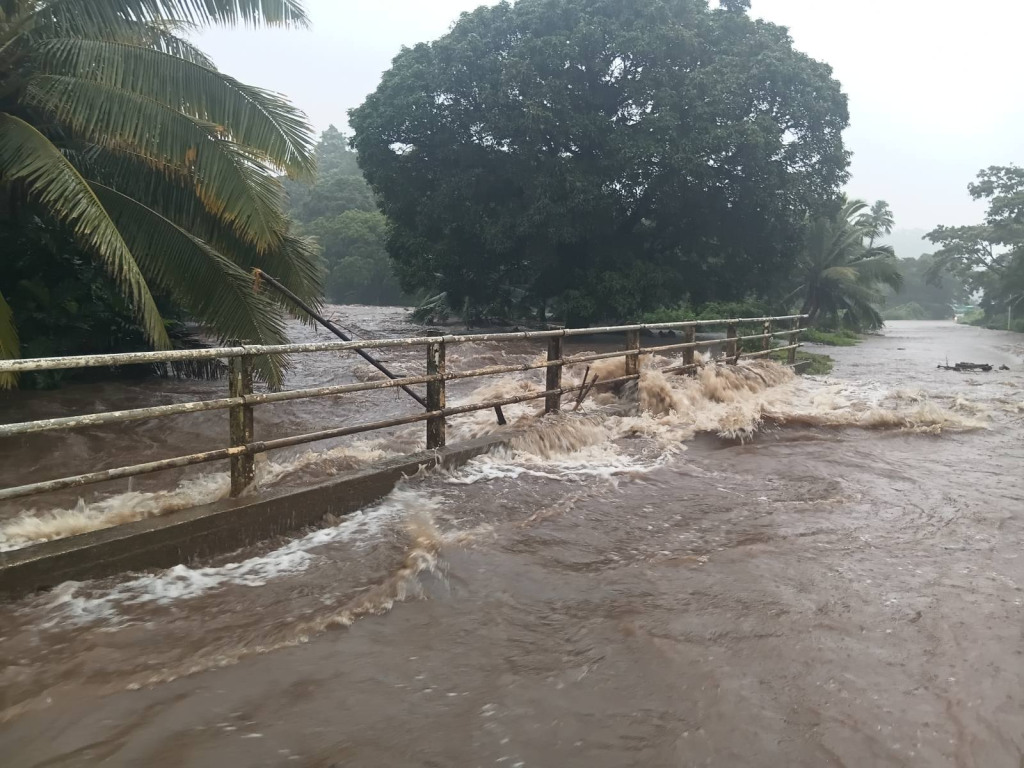
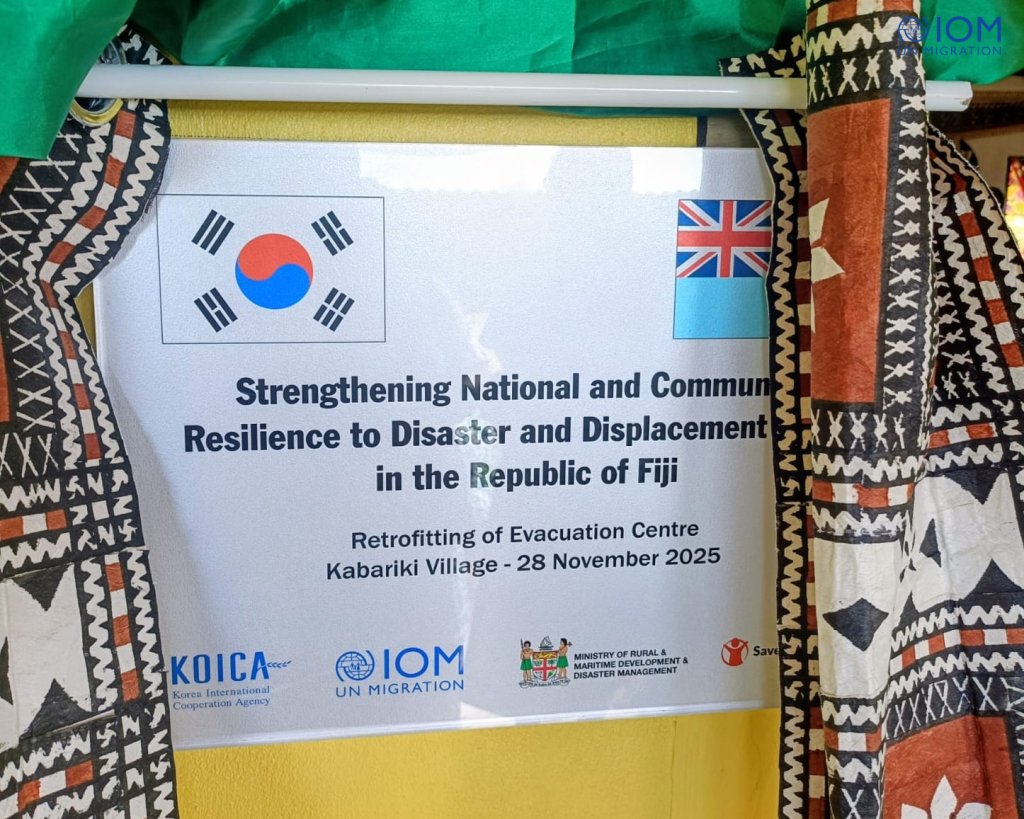
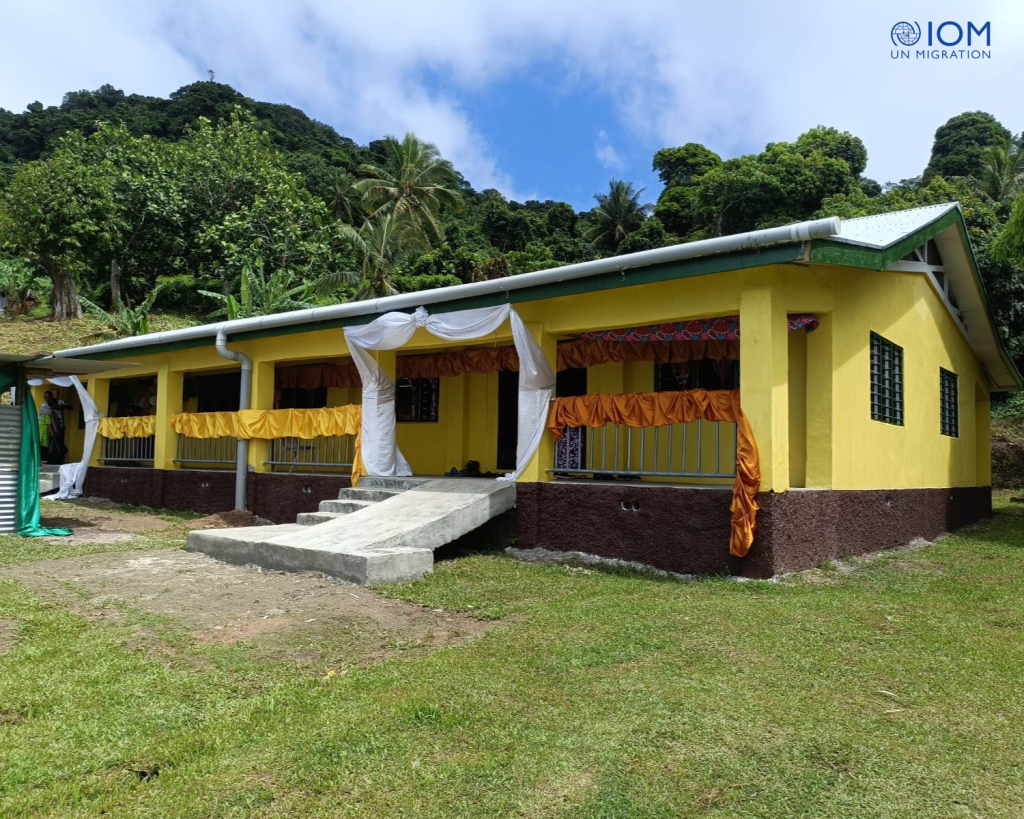
November 2025