Methodology, Tools, Guidelines, and Implementation of Forecast-Based Financing (FBF) system for Mongolia (New Methodology)
[ Integrated Impact-based forecasting(IBF) tools-driven FBF Process, Please download below]
Prepared by : Z M Sajjadul Islam, International Consultant (Team Leader ) of UNDP-GCF
Acronyms
ALAGaC/ Administration of Land Affairs, Geodesy, and Cartography
ALAMGaC Agency for Land Administration and Management, Geodesy, and Cartography
AWS Automatic Weather Station
5W Who will do what, where, when, and how
BTS Base transceiver station
CRVA climate risk and vulnerability assessment
CSV Excel file comma-separated values
CAP Common Alerting Protocol
CBO/CSO Community-based organizations / Community services organizations
IBFWS Impact-based Forecast and Warning Services
CRVA Climate Risk and Vulnerability Assessment
DIMA National Rangeland Monitoring Database
EM-DAT Emergency Events Database
DCPC Data Collection and Processing Center
DTM/DEM Digital Terrain Models (DTM)/ Digital Elevation Models (DEM)
EAP early action protocol
EOC Emergency Operations Center
FAO Food and Agriculture Organization
AM/FM Radio Amplitude Modulation/Frequency Modulation
FBF forecast based Financing
FGD Focus Group Discussion
GIS Geographic Information System
GPS Global Positioning System
HCT Humanitarian Country Team
HPC high processing power computing
IBF impact-based forecasting
ICS Incidence Command System
ICT Information and Communication Technology
IFRC International Federation of Red Cross and Red
IM Information Management
IP Internet Protocol
I-NGOs International /National Non-Governmental Organization
IRIMHE Information and Research Institute of Meteorology, Hydrology, and Environment
IVR Interactive Voice Response
KII Key Informant Interviews
KML/KMZ Keyhole Markup Language
LEMA Local Emergency Management Agency
L & D Loss and Damage
MET Ministry of Environment and Tourism
MIS Management Information System
MHEWS multi-hazard early warning system
MODIS Moderate Resolution Imaging Spectroradiometer
MoED Ministry of Economy and Development
MOU Memorandum of understanding
MoFALI Ministry of Food, Agriculture and Light Industry
MRCS Mongolian Red Cross Society
NAMEM National Agency Meteorology and the Environmental Monitoring
NEC National Emergency Commission
NEMA National Emergency Management Agency
NMHS National Meteorological and Hydrological Services
NOAA National Oceanic and Atmospheric Administration
ODBC/JDBC Open Database Connectivity/ Java Database Connectivity
PDNA post-disaster damage, loss and needs assessment
NSO National statistics office
PIU Project Implementation Unit
PSTN Public switched telephone network
RIMES Regional Integrated Early Warning System for Africa and Asia
R & D Research & Development
SMS Short Message/Messaging Service
SEC State Emergency Commission
SME Small and Medium Enterprise
SoD standing orders on disaster
SOP Standard Operating Procedures
TWG Technical Working Group
WCS Web Coverage Services
WMS Web Map Service
WFS Web Feature Service
WPS Web programming service
UHF Ultra-high frequency
UNDP United Nations Development Programme
UNEP United Nations Environment Programme
UNFPA United Nations Population Fund
UNICEF United Nations International Children’s Emergency Fund
VHF Very high frequency
WFP UN World Food Program
WMO World Meteorological Organization
Table of Contents
1.1 Rationale: Forecast-based financing (FBF) facility. 5
1.2 Development of a centralized dashboard for the FBF decision-making process. 6
2.0 FBF Decision Support System.. 8
1.5 Rationalizing IFB-driven FBF. 10
1.6 IBF driven forecast-based risk financing (FBF) mechanism for Mongolia. 11
2.0 Stakeholder Partnership Coordination and Engagement 20
2.2 FBF Framework approach: 20
2.4 Functions of leading partners for the FBF Process. 34
3.0 Risk Finance Planning & decision-making dashboard. 38
3.1 IBF Driven FBF decision-making mechanism.. 40
4.0 Forecast based Financing (FBF) Process. 54
4.1 FBF framework approach. 54
4.3 IBF integrated FBF approach for DRR. 57
4.4 FBF risk consideration approach & Readiness for Climate Risk Finance Mobilization. 57
5.0 Methodology for Developing Early Action Protocol ( EAP) 60
5.1 Define types of EAP and Functions: 61
5.2 Team composition for developing EAP and early warning based early actions : 65
5.3 Steps of Developing EAP. 66
5.4 Developing EAP for managing season-specific and combined dzud risks. 72
6.0 Early Warning and Early Action for the rapid onset events. 75
6.1 Early Warning and Early Action : 75
6.2 Developing Forecast based early Action : 76
6.3 Anticipatory Actions for Copping the Rapid Onset Hazards. 77
7.0 FBF strategy development for the vulnerable sectors. 80
7.1 : IBF integrated informed FBF tool supporting long-term planning. 80
FbF in rehabilitation phase – programme advisories. 84
1.0 Introduction: Forecast-Based Financing (FBF) Mechanism
Forecast-based Financing (FBF) is a risk-financing mechanism that uses credible forecasts and early warnings to anticipate weather- and climate-related emergencies that may affect high-value elements and generate Loss and Damage (L&D). It enables pre-agreed, early actions to be implemented in advance to reduce impacts and minimize L&D. FBF relies on precision forecasting, effective early warning, and clearly defined Early Action Protocols (EAPs).
In Mongolia’s context, the FBF trigger should be automated through an integrated system that combines weather warning, alerting, multi-hazard early warning, and Impact-Based Forecasting (IBF) within the meteorological agency. Because extreme events evolve through lead times spanning hours to weeks and often produce cascading effects the integrated IBF-FBF design requires an ICT-enabled architecture: geospatial tools, a database of ground-level exposed elements, automated impact calculations for medium-to-high value assets, and categorization of elements likely to be affected. This architecture should support rapid spatiotemporal estimation of anticipatory L&D aligned to forecast thresholds and issued warnings.
An IBF-integrated FBF system should also operationalize the national disaster management organization (NDMO) to activate EAPs and forecast-based humanitarian early action, enabling the timely mobilization of disaster risk financing, such as CERF, UN-track funds, national emergency response funds, and other response financing windows to reduce L&D during climate crises. Under normal conditions, the same framework can support risk-informed financing decisions for slow-onset hazards by enabling both ex-ante and ex-post financing strategies for climate risk reduction.
Overall, multi-modal risk financing and fiscal mobilization for FBF, disaster emergency response, and climate crisis management require evidence-based, decision-support tools that quantify needs before crises occur. Without such tools, response is delayed by bureaucratic processes that constrain the rapid delivery of life-saving humanitarian assistance.
.
1.1 Rationale Forecast-based financing (FBF)
Risk-informed local development planning and finance decision-making in normal circumstances entails a concerted effort, which involves the inclusive participation of all relevant stakeholders (including governments and duty-bearers, stakeholders, donors, I-NGOs, sector departments, financial institutions, insurers, credit operators, vulnerable communities, etc.) and a shared consensus. The rollout of climate and disaster risk financing instruments is urgently needed to enable governments and the humanitarian sector to strengthen Safety Nets for the most vulnerable and provide more timely financing and assistance. Compounding hydrometeorological hazards, geological hazards induced by extreme weather events, financial crises, and pandemics, are increasingly challenging governments’ abilities to manage climate risks, limiting their ability to effectively respond to climate extremes for boosting the local economy.
Due to global climate perturbation, extreme weather events are impending as the fastest onset with higher intensities & frequencies, and significantly causing loss and damage to the climate frontlines. Improved access to weather information services is now highly demanded by the climate frontlines. Robust observation mechanisms, precision level numerical weather predictions, weather warnings, and multi-hazard early warning systems are indispensable tools for making informed decisions effective at the critical juncture of humanitarian preparedness and response planning at the advent of hazardous impending weather being forecasted over the shortest lead time to prepare for the frontline community for strengthening the withstanding capacity against the impending triggers/hazards that could potentially turn into a disaster and loss and damage are highly likely.
The robust ICT-enabled FBF mechanism is the output of service delivery, which involves multiple and recurring processes in the background. The FBF process is invoked when national meteorological and hydrological services (NMHS) issue impact forecasts (triggers) through impact-based forecast platforms, such as thresholds of impacts, levels of early warnings, special alerts, and calculated anticipatory loss and damage associated with impending hazardous events.
The FBF mechanism enables the humanitarian program cycle to access humanitarian funding for early action informed by the impact-based forecast (IBF) on impending extreme weather effects, impact levels, risks, vulnerabilities, losses, and damages likely to occur. The goal of FBF is to anticipate disasters, prevent their impact whenever possible, and minimize human suffering and losses.
1.2 Development of a centralized dashboard for the FBF decision-making process.
- Establishing a centralized, decision-ready IBF/FBF dashboard is essential to visualize impending multi-hazards, track persistent hazard trends already experienced on the ground, and translate forecast information into actionable early action and financing decisions. The dashboard should integrate hazard forecasts and observed incidents with geospatial layers of high-value elements including cities, townships, settlements, critical infrastructure, and essential service delivery facilities to identify what is likely to be affected, where, when, and at what severity. Based on this analysis, the system should recommend the appropriate Early Action Protocols (EAPs) for each event type, define the required preparedness and response actions, and quantify the inclusive risk-financing needs required for rapid mobilization, thereby reducing impact levels and Loss and Damage (L&D).
- An IBF-integrated FBF approach enables the National Disaster Management Organization (NDMO) to convene and operationalize rapid, inclusive, and coordinated early action planning. This includes structured participation by sector departments, stakeholders, local government and grassroots actors, private sector operators, insurers and risk financiers, humanitarian agencies, and climate-frontline communities. The objective is to institutionalize: (i) sector-specific EAP development, (ii) anticipatory humanitarian response planning, and (iii) climate action planning with timely and risk-informed allocation and mobilization of financing.
- A dashboard-based FBF decision support system should specifically help stakeholders to:
- Trigger hazard- and crisis-specific early actions based on agreed thresholds and impact forecasts.
- Support timely emergency response activation, humanitarian assistance planning, and risk mitigation measures.
- Coordinate resource mobilization across national funds, donor windows, UN financing instruments, and private-sector mechanisms.
- Beyond rapid-onset emergencies, the IBF/FBF dashboard can also provide evidence-based tools to support ex-ante and ex-post financing strategies for slow- and medium-onset climate crises. These tools can strengthen:
- Negotiation and advocacy with donors, financial institutions, and private sector partners (“grand bargaining”) by quantifying needs and demonstrating expected benefits.
- Mixed financing and co-financing modalities to address drought, prolonged winter risk, and other evolving climate stressors.
- Policy and planning processes to optimize risk-finance mobilization and improve the timeliness and effectiveness of disbursement for climate action implementation.
- In summary, a centralized IBF/FBF dashboard functions as a risk-informed coordination and financing engine linking multi-hazard forecasting and field evidence to EAPs, operational planning, and rapid, inclusive risk-finance decisions to minimize L&D and protect lives, livelihoods, and critical services.
1.3 Objective :
The core elements of Forecast-based Financing (FbF) are established in advance to support weather- and climate-risk–integrated planning and timely allocation of financial resources. This includes pre-agreed forecast thresholds (triggers), defined early actions, and identified allocatable resources to enable rapid implementation when threshold conditions are met. Roles and responsibilities for all actors involved are specified within the Early Action Protocol (EAP) and early warning–based early action planning, ensuring clear accountability and full commitment to execution across participating stakeholders.
1.4 Overview of FBF
Forecast-based Financing (FBF) is proposed as a core mechanism to strengthen Mongolia’s disaster emergency management and to comprehensively support humanitarian program cycles. Through an IBF-driven approach, FBF enables scenario-setting in advance, clarifying what consequences are likely from impending hazards before they interact with the ground. Because emergency risk management and critical financing decisions depend on rapid, credible situational overviews, the IBF-integrated FBF dashboard is designed to provide quick-turnaround, evidence-based decision support for impending extreme weather events.
Operationally, the IBF-FBF dashboard supports the timely execution of early warning and advisory-based early action, including early action planning, contingency planning, disaster preparedness planning, and rapid financing mobilization. These risk-informed tools (supplied by IBF outputs) are also essential to streamline bureaucratic processes and strengthen advocacy and “grand bargaining” with climate and humanitarian financing actors, enabling faster mobilization of risk finance ahead of escalating climate crises.
In addition, an informed FBF mechanism can improve policy and planning coherence among stakeholders by promoting inclusive, participatory, and coordinated multi-stakeholder engagement in risk financing and crisis response.
As climate emergencies increasingly shift toward faster-onset and higher-intensity patterns, traditional risk management approaches are becoming less effective. IBF-informed FBF introduces a modern methodology and set of tools intended to improve preparedness, accelerate decision-making, and reduce Loss and Damage under rapidly evolving climate risk conditions.
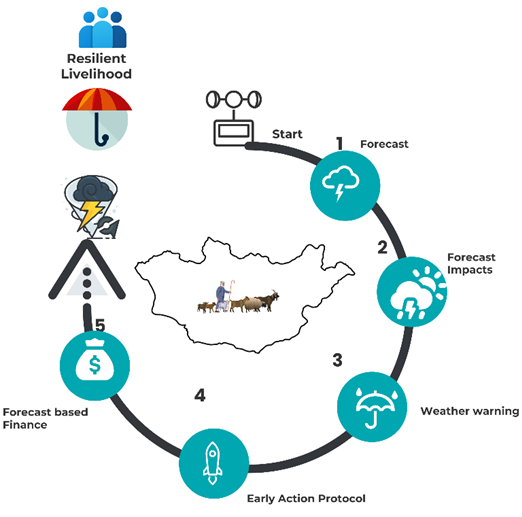
Figure 1: FBF work flow diagram
The traditional climate and multi-hazard risk financing limited to relief and in-kind support mobilization. However, the IBF informed FBF process to be enabled to leverage the financing instruments for the humanitarian community to plan contingencies for preparedness in the advent of impending multi-hazards and post-disaster response planning for the frontline community to be better prepared ahead of forecasted impending hazards likely the loss and damages and to understand the impact level minimizing the L & D.
However, the IBF driven FBF an excellent leverage for the humanitarian program cycle ahead of disaster strikes being always faces critical challenges in terms of number of the population are likely to be impacting, magnitude, the threshold of trails of disasters, assessment and summing up anticipatory L & D , what would be the preparedness for the frontline vulnerable community, forecast-based early action planning, contingency preparation, timely pre-positioning relief items to the doorstep of the vulnerable community, etc., so that loss and damage could be minimized to as lowest as possible.
The dashboard informed IBF can sufficiently meet the humanitarian decision making process with the evidence-based and ICT-driven tools can represent the clear picture of where the extreme and hazardous weather event induced impact thresholds are spanning, and exactly how many elements are likely to be impacted based on forecasted extreme weather thresholds. As a result, the national and local government efforts remain challenged to formulate demand-driven contingency planning for the target group and location, prepositioning emergency relief items (types and amount), cash grants, and in-kind support to be prioritizing and essentially to mobilize the most vulnerable areas and hard to reach areas for better preparedness.
1.5 Rationalizing IFB-driven FBF.
The FbF process is another outset of the whole climate emergency management process in which the system needs to essentially inform the stakeholders about the risk-informed tools and mandate the inclusive financing mechanism being well incorporated with the whole value chain. We understand disaster emergency risk management is such a time-critical response management process that needs to come across over the quick disposal of decision-making process over the government bureaucratic channel within a short time span otherwise response cannot be mobilized at the point of crisis, effectively and efficiently, and L & D would be the larger extent.
However, integrated IBF & FBF are intended to represent an informed tool driven, evidence-based grand bargaining instrument being intended objectively to drive foster, self-esteemed, empirically fastening the political and bureaucratic decisions making process which would be supportive to address the onset of climate/weather emergencies, and to planning and mobilizing resources for addressing disaster emergencies, so that quick -time-around decisions can be made to save lives, and properties and getting vulnerable sectors & elements well prepared for the impending hazards.
IBF and concurrent FBF are being attempted to remove the planning and decision-making barriers, creating enabling and coherent coordination mechanism that enables access for funding, planning early action, contingencies, and mobilizing resources for risk preparedness at local level.
1.6 IBF driven forecast-based risk financing (FBF) mechanism for Mongolia.
The whole risk financing mechanism to address the climate risk and crises, impeding hazards, and potential disasters are likely to do damage. The perspective of weather extreme and impending multi-hazards in Mongolia are varying. The risk finance instrument should be aligned with the need-based risk management and deliverability for sustaining actions from national to local to the frontline vulnerable community level.
The persistent climate risk and vulnerability patterns over the Mongolian landscape are recurrently varying over the geographical, landscape, landform, landcover, environmental, and hydrometeorological settings. Additionally, the impending hazardous weather events are also heavily spatiotemporally impactful, and while those events are interacting with the ground-level elements the impact levels also vary from place to place. Considering the variability patterns of both the weather system and landscape – a suitable IBF methodology (proposed) and corresponding FBF methodology and informed tools are also intended.
Informing the whole risk management mechanism, Mongolia needs a variety of impact forecasts for tacking both hazardous weather and good weather whatever is impending and interacting over the grounds. An integrated IBF and FBF are instrumentalized and intended to support the whole spectrum of government climate crisis management strategies. The proposed IBF has a multi-faceted capacity to inform government and stakeholders policy and planning desk for supporting risk management planning, strategies, action planning, program and project design, implementation, and monitoring, etc.
The whole IBF partnership and workflow is mandated to support all demand-driven IBF and FBF. The risk information service upgradation and demand are mounting at pace with climate crises.
2.0 Stakeholder Partnership Coordination and Engagement
2.1 Core objective:
- Ensuring inclusive participation of stakeholders (state, non-state, and development partners ) in risk-informed early action protocol development and strategy for forecast-based financing (FBF).
- Supporting sector ministry & departments in risk-informed intervention development and inclusive budgeting & financing for better preparedness against the impending different onset extreme weather invents and multi-hazards.
- Establishing an integrated & inclusive financing mechanism being heavily informed by Impact forecast, early warnings ( multi-hazards) likely to impend, persisting risk & vulnerabilities, and evidence-based risk financing modality development. Ensure optimized utilization of risk finance by avoiding overarching and duplication of interventions and recurrently giving equal importance to hard-to-reach areas.
2.2 FBF Framework approach:
Addressing the impending multi-hazards ( slow onset, medium onset, and rapid onset ) risk and vulnerabilities, Mongolia needs a multi-modal risk financing mechanism to address different types of multi-hazards. For the detection of diverse and rapidly changing weather phenomena, an impact forecasting and integrated impact-based forecasting (IBF) methodology is already being proposed. Back-to-back IBF informed FBF intended to inform emergency hazard management agencies, humanitarian actors, and sector departments about how to develop early warning-based early action plans (contingency & preparedness) to act before disasters to minimize the socio-economic costs of impending weather and climate hazards.
Multi-stakeholder, vulnerable sectors, relevant organizations, frontline herders, vulnerable communities, and individuals can make critical decisions to ensure that resources and supplies are in place to take early action and to respond as soon as it is safe to do so. IBF-supported FBF plays an important role in facilitating Red Cross Red Crescent running Forecast-based finance Mobilization, early action planning, and preparedness.
It is however a critical job over the very shortest spanning of a lead-time understandability of the anticipatory impacts, loss & damage, and scalability of impending extreme weather event(s) turning to multi-hazard(s) being just forecasted. IBF-supported FBF can play an important role in overcoming the difficulties relating to the anticipatory estimation of L & D, formulation of early warning-based early actions, detailed early action protocol (EAP), and contingencies for preparedness the forecast-based financing mechanism is essential for mitigating risk and vulnerabilities.
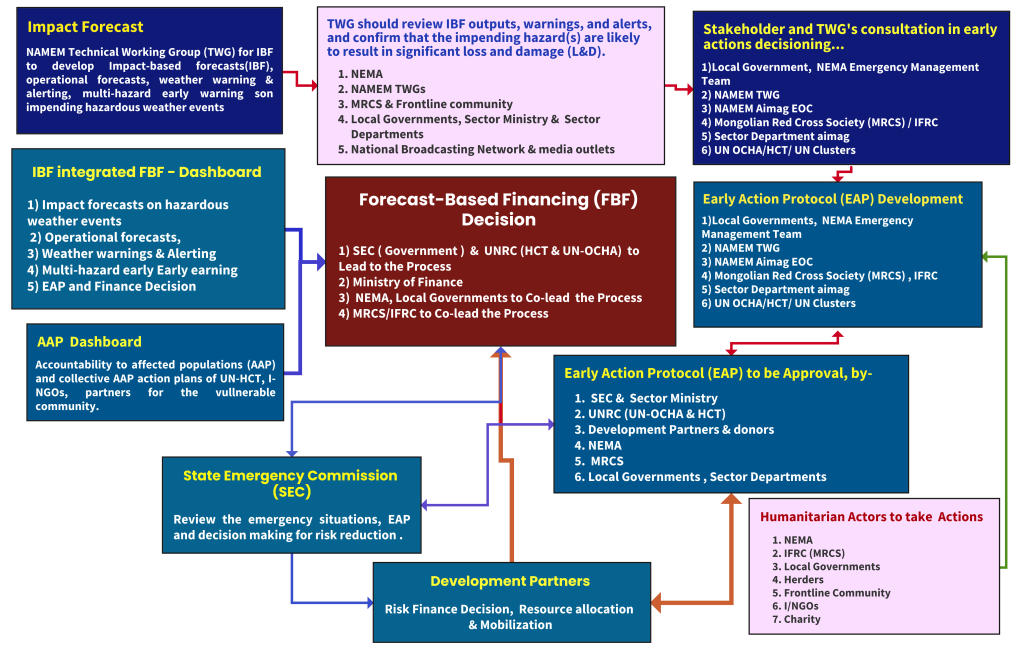
Figure 2: FBF decisions framework – governed by the partnership and functional coordination process (Source : Z M Sajjadul Islam )
2.3 Team composition for the Forecast based financing ( FBF) decision and inclusive functional process :
- Leading the FBF decision making Process :
- The State Emergency Commission (SEC) of the Prime Minister’s Office ( PMO)
- Co-leading the GOM the UN Residence Coordinator (UNRC) with United Nations Office for the Coordination of Humanitarian Affairs (OCHA), Humanitarian Country Team(HCT), UN Clusters ( UN Agencies)
- Other executive members of the decision-making processes;
- Ministries of Finance (MoF), responsibilities for climate change engagement
- Ministry of Food, Agriculture and Light Industry
- Ministry of Environment and Tourism
- Ministry of Economy and Development
- Ministry of Environment and Green Development (MEGD), Economic Development (MED), and
- The central government administration authority responsible for environment and green development (MEGD)
- National Implementing Entity (NIM)
- Inter-disciplinary and inter-sectoral National Climate Committee /NCC/ now led by the MEGD,
- Designed National Authority (DNA) of Planning
- Clean Development Mechanism (CDM) Bureau – MET/NAMA
- Renewable Energy Centre
- Co-Leading FBF decision making Process: Cabinet Secretariat and Ministry of Finance and other relevant sector ministries. Following government departments and stakeholders to support the process;
- National Emergency Management Agency (NEMA) and functional departments – National Center for Emergency and Disaster Relief (NCEDR), the military serves as first responders for earthquakes, wildfires, forest fires, contagious diseases, snow and dust storms, and severe winters.
- Mongolian Red Cross Society (MRCS) on the behalf of International Federation of Red Cross and Red Crescent Societies(IFRC).
- Early Action Protocol Development :
- Aimag Governor
- Soum Governor
- Local Emergency Management Agency (LEMA) of NEMA at aimag/soum level (NEMA Emergency Management Team)
- UN OCHA/HCT/UN Clusters
- FAO’s Early Warning Early Action (EWEA)
- Mongolian Red Cross Society (MRCS) – EOC
- Sector Department at aimag /soum level
- NAMEM IBF designated a Technical Working Group (TWG) at HQ level
- NAMEM Aimag EOC, Local Governments at the local level ( Aimag, Soum, Bag)
- Sector Department
- Stakeholders, Value chain Operators, and Logistic Operators at the Local level
- Early Action Protocol (EAP Pre-Approval) :
- NEMA Emergency Management Team
- NAMEM TWGs
- NAMEM Aimag EOC
- Mongolian Red Cross Society (MRCS) , IFRC
- Sector Department aimag
- UN OCHA/HCT/UN Clusters
- Local Financing intuitions e.g Government Banks, Private Banks(Khan Bank), Small and medium enterprises( SME)
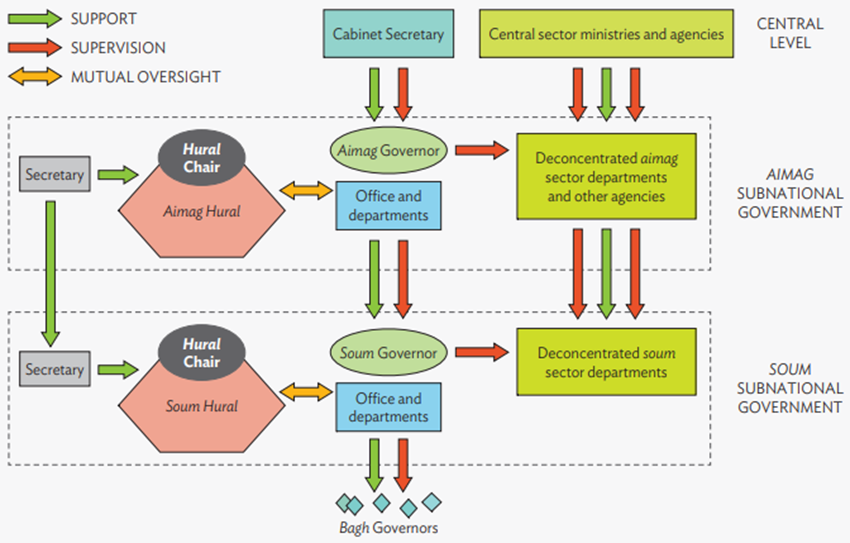
Figure 3: Schematic View of local governments in Mongolia ( Source: 2021-August, ADB [1])
[1] https://www.adb.org/sites/default/files/publication/726896/decentralization-governance-economic-development-mongolia.pdf
- Formulation of Anticipatory Early Action along with IBF :
- Aimag Governor
- Soum Governor
- Local Emergency Management Agency (LEMA) of NEMA at aimag/soum level (NEMA Emergency Management Team)
- UN OCHA/HCT/UN Clusters
- Mongolian Red Cross Society (MRCS) – EOC
- Sector Department at aimag /soum/bag level
- NAMEM IBF designated several technical working Groups (TWG) at the HQ level
- NAMEM Aimag EOC, Local Governments at the local level( Aimag, Soum, Bag)
- Sector Department
- Stakeholders, Value chain Operators, and Logistic Operators at the Local level
- Review of Impact Forecast on impeding hazardous weather events and consequential situations at the local level:
- NEMA
- MRCS
- NAMEM
- Sector Ministry
- Sector Department
- National Broadcasting network
- Other partners:
1) Bilateral and multilateral cooperation
- The Ministry of the Russian Federation for Affairs for Civil Defense, Emergencies and Elimination of Consequences of Natural Disasters
- Federal Agency for State Reserve, Russian Federation
- Ministry of Emergency Management, People’s Republic of China
- China Earthquake Administration
- State Forestry Administration, People’s Republic of China
- Ministry of Interior and Safety, Republic of Korea
- National Fire Agency, Republic of Korea
- State Committee of Emergency and Disaster Management of the Democratic People’s Republic of Korea
- General Directorate for Civil Defense and Crises Management, French Republic
- Directorate for Disaster Management, Republic of Hungary
- Ministry of Emergency Situation, Republic of Kyrgyzstan
- Ministry of Internal Affairs of the Republic of Kazakhstan
- Other potential partners
- Other International Organizations.
- International Civil Defense Organization (ICDO)
- Asian Disaster Reduction Center (ADRC)
- Asian Disaster Preparedness Center (ADPC)
- RIMES
- International Fire Chiefs’ Association of Asia (IFCAA)
- World Bank (WB)
- Asian Development Bank (ADB)
- Mercy Corps
- World Vision (WV)
- Save the Children
- Japan International Cooperation Agency (JICA)
- Korea International Cooperation Agency (KOICA)
- Turkish International Cooperation Agency (TICA)
- Swiss Agency for Development and Cooperation (SDC)
- United States Agency for International Development (USAID)
- Other potential partners/donors
2.4 Functions of leading partners for the FBF Process
- Functional Responsibilities of Partners ( slow- medium onset hazards) :
- State Emergency Commission (SEC) to review IBF – early action plan (EAP) in the corresponding budget, organize policy/strategy dialogue with donors, UNRC ( HCT & Clusters) for advocacy for finances of impending impactful hazards.
- Formulate policy/strategy for the sectors vulnerable to slow onset but largely impactful hazards (e.g. droughts, prolonged winter hazards, waters stress and desertification, deforestation, degradation of pasture biomass/rangeland, etc.).
- Formulation of risk-informed local development planning and budgeting and resource mobilization strategies for meeting financial demands from internal and external sources.
- Developing standing orders on disaster(SOD) and defining activities ( 5W – who will do what, where, when how ) of all stakeholders/actors under SEC and NEMA disaster emergency management stakeholders
- Formulation Standard Operating Procedure ( SoP) of operationalizing FBF framework and disaster preparedness
- Formulate climate risk-informed inclusive planning and budgeting for the local governments and strategy for the resource mobilizations (Internal & External).
- Functional Responsibilities for the occurrence of rapid onset hazards and induced disasters.
- Review forecasts, early action protocol (EAP) and plans, anticipatory early actions, and quick approval of EAP.
- Formulate disaster emergency preparedness and response plan(informed by IBF & FBF tools)
- Formulate local governments ( aimag, soum, bag) wise SOD, and SOP for better functioning humanitarian actions.
- Mandating partners /stakeholders to project and scheme designing according to policy, plans, SOD, SOP
The purpose outlines of standing orders on Disaster (SOD) is basically to mandate the roles and responsibilities of DRM structured and participated stakeholders/sectors/actors, and their activities, during the normal time, during disaster onset. SOP ( 5W – who will do what, where, when how ) of all stakeholders/actors to work coordinately for optimization of DRM activities.
- Develop FBF framework/SOP – based on the following stages of disaster management cycles at aimag level.
- Mandating & accountability of local stakeholders for disaster preparedness planning, budgeting, and resource mobilization strategy at Aimag, Soum, Bag level
- Review the sector ( livestock) risk-repository database, and risk atlas and conduct a comprehensive pre-disaster need assessment, identify the potential risk areas, elements at risk, anticipatory loss, and damages are likely over the lead-time of the high-impact forecast being issues with IBF.
- Review local government’s Disaster Risk Management (DRM) plans on slow, medium, and rapid onset multi-hazard events, review corresponding resources to mobilize and funding gaps for mitigating different onset hazards.
- Mandating & accountability of local stakeholders during a disaster emergency
- Collaborate with humanitarian actors and develop situation reports & maps (daily). Anticipatory estimation of L & D of the day, immediate humanitarian needs by communicating with herders, vulnerable groups, and sector departments, and estimate immediate needs ( cash/in-kind/logistic support) for saving lives and assets.
- Supporting Post-disaster rehabilitation :
- Conducting detailed situation reporting of loss & damages of the sectors, herders, vulnerable communities etc., who have lost their livestock, assets, damages physical & financial assets, standing agricultural crops, etc., and advocacy for financing.
3.0 Risk Finance Planning & Decision-Making Dashboard
The Mongolian climate risks and vulnerabilities are seasonally diverse, extreme, uncertain, and have a rapid onset. In normal circumstances, the critical Multi-hazard/disaster/climate risk financing decision-making mechanism runs through a time-consuming process through the governmental channel without having an informed dashboard, based on, e.g., an ICT database-driven, evidence-based (GIS map), stakeholder-concerted, inclusive, and participatory local process. The risk financing partners mostly conduct processes independently and make decisions individually. The integrated IBF & FBF Dashboard-based mechanism is an excellent tool for quick onset/timely decisions, which supports mainstreaming the whole risk assessment, impact forecasting, and corresponding risk financing mechanism in an integrated and informed manner.
Doing so, the coherent approach for coordination, information exchange, and decision-making process is designed in such a way that the inclusive participation of state, non-state actors, partners, financing instruments, project developers, sector ministries and departments, local governments, actors/stakeholders, and vulnerable communities is ensured.
The design aspect of the IBF & FBF process will substantially reduce the ‘operational frictions’, overlapping, overarching, repetition of funding, and inclusively intervene in all corners of Mongolia so no one is left behind.
The inputs for developing informed tools for informing the dashboard would be the summarized information of every component of IBF and the corresponding FBF process so that an at-a-glance impending & existing risk can be assessed, scenarios can be visualized, action plans and protocol to be concerted to bridge the gaps.
FBF and the critical process can be scientifically determined by informed tools, early warning, EAP, early actions, etc., to timely decide when, where, how much, how resources are to be mobilized, and how funds are to be released to the climate front-line for undertaking actions.
Figure 2: integrated and inclusive, risk-informed risk-financing decision-making dashboard
……………………………………………………………………………….
Download IBF Document in PDF ( full version)
Download IBF in Microsoft Word(full version)
Annexures for Impact-Based Forecasting Methodology tools, guidelines
Annexure 1 Checklist of elements Download
Annexure 1 Checklist of elements Download
Annexure 3 Input indictors and variables for livestock impact analysis Download
Annexure 4 Herders Queries-Livestock managment Download
Annexure 5 GIS Data requisition Download
Annexure 6 Winter weather emergency advisory Download
Annexure 2 Stakeholder prepared database Download
Copyright Notice: This summary is based on the technical frameworks and documents of the National Agency for Meteorology and Environmental Monitoring (NAMEM), the Information and Research Institute of Meteorology, Hydrology and Environment (IRIMHE) of Mongolia, and the Multi-hazard Early Warning System Design & Implementation Center (MHEWC). All rights to the original methodology and implementation guidelines are reserved by the author ( Z M Sajjadul Islam of UNDP Mongolia ) and the respective organizations.
https://www.unescap.org/sites/default/d8files/event-documents/Mongolia%20-%20Climate%20Change%20and%20Disaster%20Risk%20Profile.pdf , https://www.adaptation-undp.org/mongolia-achieves-milestone-national-adaptation-planning, https://cabinet.gov.mn/wp-content/uploads/2050_VISION_LONG-TERM-DEVELOPMENT-POLICY.pdf
[2] https://e-mongolia.mn/home
[3] https://mn-prism-mng.web.app
[4] https://nlis-2.mofa.gov.mn/login
[5] https://livestock.mofa.gov.mn/login
[6] https://herd.mofa.gov.mn/login
[10] https://nlis-2.mofa.gov.mn/login
[11] https://livestock.mofa.gov.mn/login
[12] https://herd.mofa.gov.mn/login
[13] http://fodder.mofa.gov.mn
[15] http://fodder.mofa.gov.mn
[17] https://mn-prism-mng.web.app ,
[18] https://nlis-2.mofa.gov.mn/login
[19] https://livestock.mofa.gov.mn/login
[22] https://mn-prism-mng.web.app
[23] https://nlis-2.mofa.gov.mn/login
[24] https://livestock.mofa.gov.mn/login
[25] https://herd.mofa.gov.mn/login
[26] http://fodder.mofa.gov.mn
[30] Approval of the Action Plan of the Government of Mongolia for 2020-2024. https://cabinet.gov.mn/wp-content/uploads/2020-2024_-ActionPlan_GOM_Eng_Edited_OE-2.pdf
…………………………………………………………………………………………………………………………………………………………………………………………….