Department of Disaster Prevention and Mitigation (DDPM) of the Ministry of Interior
Established under the Ministry of Interior as the prime agency for coordinating disaster risk management activities by all related organizations at all levels.
Important Notice :
It is quite regrettable that the Department of Disaster Prevention and Mitigation (DDPM) of the Ministry of Interior of Thailand has blocked access to its website, https://www.disaster.go.th (????). At the same time, Thailand hosts the Asian Disaster Preparedness Center (ADPC) https://www.adpc.net and the Asian Institute of Technology https://ait.ac.th !!!!!!!
[ Notice: The Global MHEWC Platform humbly & strongly advises all Global South countries to avoid blocking hydrometeorological, landscape-level climate data, and multi-hazard risk information from general visitors, as such transparency is critical for adequate early warning and risk governance, and conducting research and Development. ]
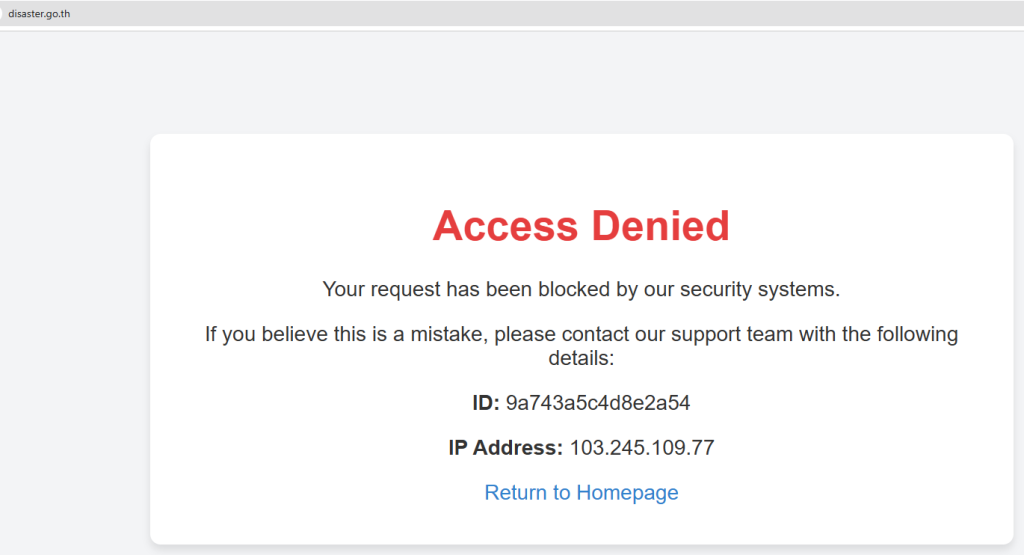
Department of Disaster Prevention and Mitigation(DDPM)
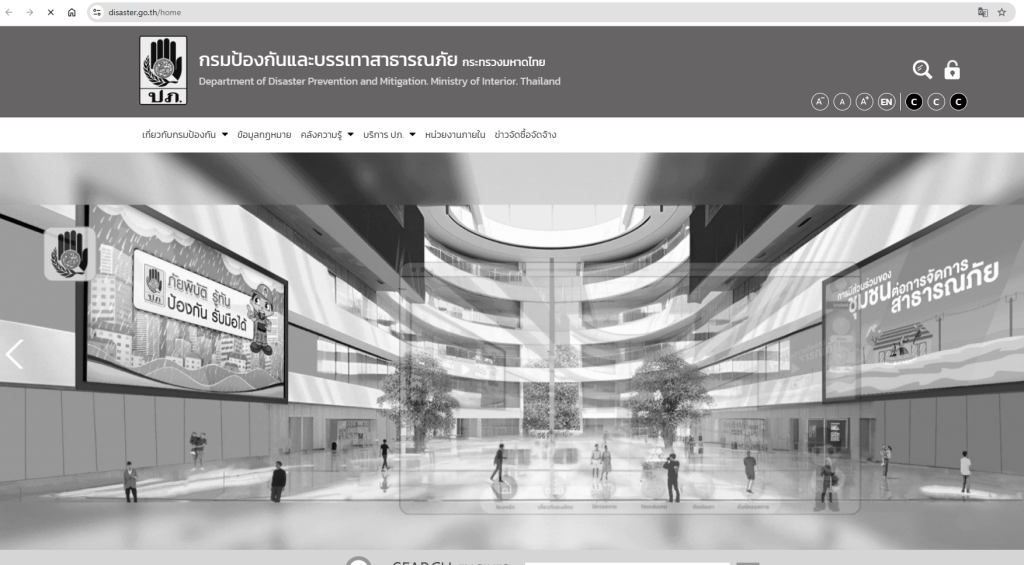

DDPM Background
DDPM was established on the 3rd of October 2002 as an agency under Ministry of Interior (MOI) to handle disaster management responsibilities. As disaster situations in Thailand got worse due to population increase, urbanization and impact of climate change, the establishment of DDPM is to have a better and more effective mechanism to prevent disaster damage and loss and to mitigate calamity due to man-made and natural disasters.
Director

Mr.Teerapat Kutchamath
(Director – General Department of Disaster Prevention and Mitigation)
Organizational structure


.png)

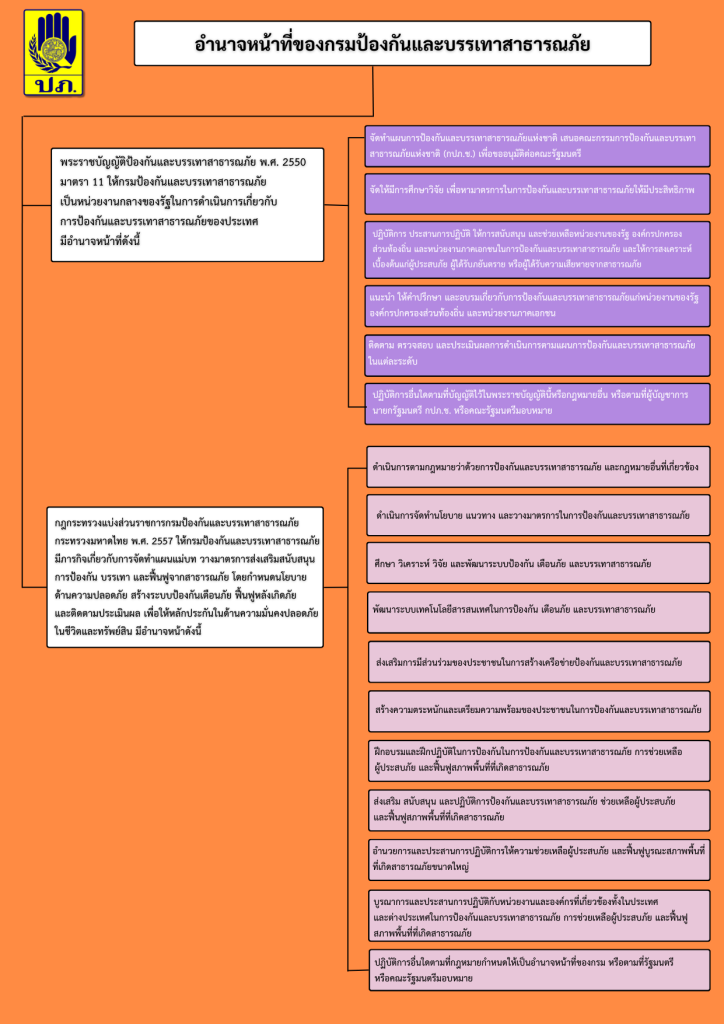
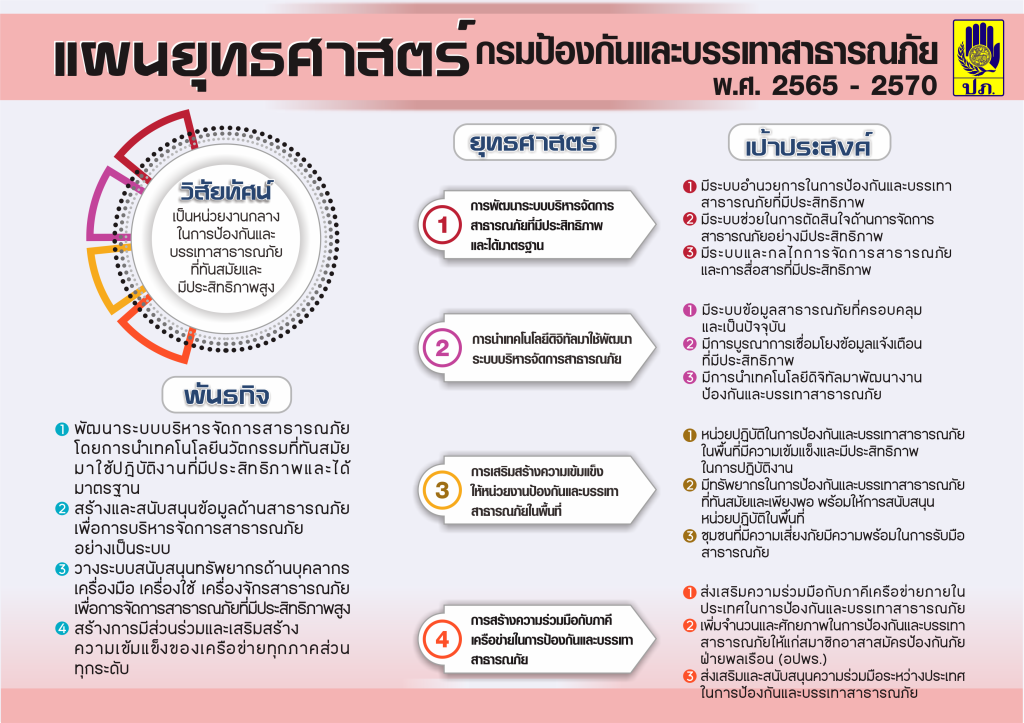



 | |
 | Formulate policy, guideline and measures on disaster prevention and mitigation; |
| Study, analyse, research and develop systems on disaster prevention, disaster warning and disaster mitigation; |
| Develop information technology on disaster prevention and mitigation; |
| Promote people participation on disaster managment activites; |
| Build disaster risk awareness; |
| Provide training to build capacity and improve skills on disaster management and disaster relief; |
| Promote, support and implement programs for assisting disaster victims and disaster recovery; |
| Direct and coordinate operation to assist disaster victims in large-scale disasters; and |
| Coordinate with domestic and international agencies/organizations; |
Thailand’s population of nearly 70 million to be protected by new early warning and hazard monitoring technologies
Source(s): Pacific Disaster CenterUpload your content

aphotostory/Shutterstock
Thailand operates a Multi-Hazard Early Warning System (MHEWS) designed to detect, monitor, and disseminate alerts for a wide range of hazards—including floods, tropical cyclones, tsunamis, landslides, drought, and extreme weather. The system integrates data from meteorological, hydrological, geological, and ocean monitoring networks and is coordinated mainly by the Thai Meteorological Department (TMD), the Department of Disaster Prevention and Mitigation (DDPM), and partner agencies.
It provides real-time warnings through sirens, SMS, radio, television, mobile apps, and community-based channels, enabling rapid communication to at-risk populations. Thailand’s system emphasizes risk assessment, community preparedness, and multi-agency coordination, following international standards and lessons learned from major disasters such as the 2004 Indian Ocean tsunami.
The national government of Thailand and Pacific Disaster Center (PDC) have just operationalized a new early warning and hazard monitoring system called ThaiAWARE. The system will provide advanced decision support capabilities to the country’s disaster managers and help protect its 70 million residents and millions of visitors who make Thailand a vacation destination each year.
“Early warning is a really important function and one that has been proven to save lives and reduce loss from disasters,” said Regional Advisor Harlan Hale of USAID’s Bureau for Humanitarian Assistance. “Unfortunately, from the impacts of climate change, especially in this region, we can expect more disaster events and perhaps more severe disaster events.” USAID provided critical funding support for the ThaiAWARE project throughout recent years. The ThaiAWARE supplies decision makers with real-time, dynamic information from both international and national sources and offers the world’s most advanced multi-hazard exposure modeling capabilities in a single platform. This comprehensive system for Thailand’s disaster managers enables them to jump into action which means a faster response. A faster response means a better response with fewer impacts and a speedier recovery.
“I believe the ThaiAWARE system will become an important tool in making Thailand resilient,” said Thailand’s Department of Disaster Prevention and Mitigation (DDPM) Director General Boontham Lertsukekasem, who expressed his appreciation for the USAID-funded project and highlighted its importance in enhancing early warning for Thailand. “We would like to express our sincere gratitude to USAID and PDC once again for your support.”
DDPM and PDC—a University of Hawaii Applied Science and Technology Center—celebrated the launch of the new ThaiAWARE system during a virtual ceremony on Dec. 15 marking the completion of the project. Various government and nongovernmental stakeholders attended, including representatives from DDPM, the National Disaster Warning Center (NDWC), the ASEAN Coordinating Centre for Humanitarian Assistance (AHA Centre), USAID and more.
It was during the aftermath of the devastating M9.0 Indian Ocean earthquake and tsunami of 2004 that the government of Thailand first partnered with PDC. “PDC was at ground zero during the formation of Thailand’s NDWC and we helped implement the nation’s first early warning system in partnership with the DDPM in 2006,” said PDC Deputy Executive Director Chris Chiesa. The initial system, now branded ThaiAWARE, was PDC’s first customized, remote deployment of DisasterAWARE in Asia, and only the second world-wide. “The system we just launched with the government of Thailand includes the new early warning and multi-hazard monitoring technologies offered in DisasterAWARE, as well as critical predictive hazard impact analysis tools and hundreds of new national data layers to support effective preparedness and response,” Chiesa added.
Chiesa explained that this is another important milestone in a longstanding partnership of more than 15 years, for which he anticipates exciting new developments in the coming year. He shared details of a pending U.S. Trade and Development Agency (USTDA)-funded program that will leverage the ThaiAWARE system for public alerting.
“It will allow mass notification,” Chiesa said of the project planned for early 2022. “It will allow residents and visitors of Thailand to receive disaster notifications for tsunamis, floods, wildfires, COVID outbreaks. We’re extremely hopeful that we get this project started very soon.”