Climate risk and vulnerabilities of Morocco
Morocco is highly vulnerable to climate change and multi-hazard risks due to its arid and semi-arid climate, recurrent droughts, severe water scarcity, exposure to flash floods, long Atlantic and Mediterranean coastlines, mountain systems, earthquake-prone zones, dependence on climate-sensitive agriculture, and concentration of people, infrastructure, tourism, ports, and industry in exposed urban and coastal areas. The World Bank’s Country Climate and Development Report identifies three priority areas for Morocco’s climate-resilience pathway: tackling water scarcity and droughts, enhancing resilience to floods, and decarbonizing the economy. (World Bank)
Morocco is highly exposed and vulnerable to climate change and multi-hazard risks due to its arid and semi-arid climate, recurrent droughts, severe water scarcity, mountain and coastal exposure, dependence on climate-sensitive agriculture, rapid urbanization, and pressure on groundwater, dams, ecosystems, and rural livelihoods. The country faces growing risks from droughts, heatwaves, flash floods, riverine and urban flooding, coastal erosion, sea-level rise, saltwater intrusion, desertification, land degradation, wildfires, landslides, earthquakes, and climate-sensitive health impacts. Climate change is expected to intensify these vulnerabilities through rising temperatures, more frequent droughts, heavier rainfall extremes, reduced water availability, agricultural losses, flood damage, coastal impacts, and growing pressure on food security, infrastructure, tourism, ecosystems, and vulnerable communities. Strengthening multi-hazard early warning systems, drought and flood forecasting, water-security planning, climate-resilient agriculture, coastal protection, wildfire preparedness, seismic risk reduction, disaster risk financing, and locally led adaptation is essential to reduce losses and protect Morocco’s development gains.

1. Multi-hazard exposure
Morocco’s main climate and disaster risks include drought, extreme heat, flash floods, riverine floods, urban flooding, coastal erosion, sea-level rise, wildfires, desertification, landslides, earthquakes, and water scarcity. The World Bank Climate Risk Country Profile highlights droughts, extreme heat, flooding, and storms as key hazards that can affect livelihoods, employment, poverty, and migration pressures. (Climate Change Knowledge Portal)
The country’s risk profile is geographically diverse. The Atlas Mountains and Rif region are exposed to flash floods, landslides, snow-related hazards, and earthquakes; the Atlantic and Mediterranean coasts face erosion, sea-level rise, storm surge, and coastal flooding; the interior plains and semi-arid zones face drought, heat, desertification, and water scarcity; and major cities such as Casablanca, Rabat, Tangier, Marrakech, Fez, Agadir, and Oujda face combined risks from heat, flooding, water stress, urban expansion, and infrastructure exposure.
2. Climate change as a development risk multiplier
Climate change is a direct development risk for Morocco because it affects water security, agriculture, food prices, rural livelihoods, urban resilience, tourism, energy, and public finance. The World Bank states that climate change poses a serious threat to Morocco’s economic growth and human potential, while the CCDR identifies resilience investments, governance, equity, and private-sector finance as central to Morocco’s long-term climate response. (World Bank)
Morocco has already experienced severe multi-year drought. Reuters reported in January 2026 that Morocco declared the end of a seven-year drought after abundant winter rainfall, with rainfall up 95% from the previous year and dam-filling rates rising to 46%; however, the same report noted that the drought had depleted dams, reduced wheat harvests, cut the national cattle herd, caused heavy farming job losses, and accelerated desalination plans. (Reuters)
3. Water scarcity and drought vulnerability
Water scarcity is Morocco’s most strategic climate vulnerability. Drought affects drinking-water supply, irrigation, livestock, groundwater recharge, dam storage, hydropower potential, rural employment, food production, and social stability. Morocco’s water challenge is particularly acute because agriculture is highly water-dependent, while cities, tourism, industry, and export agriculture are increasing demand.
Morocco is expanding desalination as a key adaptation response. In December 2025, the water minister said the country planned to supply 60% of drinking water from treated seawater by 2030, up from 25%, with 17 desalination plants already operating, four more under construction, and all new plants planned to use renewable energy. Reuters also reported that Morocco aims to produce 1.7 billion cubic metres of desalinated water annually by 2030. (Reuters)
4. Flood and flash-flood vulnerability
Flooding is one of Morocco’s most damaging rapid-onset hazards. Flash floods can occur in mountain catchments, wadis, semi-arid basins, urban drainage systems, and coastal cities after intense rainfall. Flood risk is particularly high where heavy rainfall interacts with steep slopes, degraded catchments, urban expansion, informal settlements, blocked drainage, and infrastructure located in flood-prone areas.
Key flood-prone systems include the Sebou, Oum Er-Rbia, Moulouya, Tensift, Souss-Massa, Loukkos, Draa, Ziz, and Bouregreg basins, as well as urban and peri-urban areas where drainage capacity has not kept pace with expansion. The World Bank CCDR explicitly identifies enhancing resilience to floods as one of Morocco’s three major climate and development priorities. (World Bank)
5. Agriculture, food security, and rural livelihoods
Agriculture is one of Morocco’s most climate-sensitive sectors. Drought, rainfall variability, heat stress, irrigation water shortages, groundwater depletion, soil erosion, pests, and desertification affect cereals, olives, citrus, vegetables, livestock, rangelands, and export-oriented horticulture. Rainfed cereal production is especially vulnerable to rainfall deficits, while irrigated agriculture faces increasing pressure from water scarcity and aquifer depletion.
Climate impacts on agriculture have wider social consequences because they affect rural employment, food prices, livestock assets, seasonal migration, and poverty. The recent seven-year drought shows how water stress can reduce wheat harvests, shrink livestock herds, and cause job losses in farming. (Reuters)
6. Coastal vulnerability and sea-level rise
Morocco’s Atlantic and Mediterranean coasts are exposed to coastal erosion, sea-level rise, storm surge, saltwater intrusion, coastal flooding, port disruption, and damage to tourism and urban assets. Coastal zones host major cities, ports, industrial zones, tourism areas, wetlands, fisheries, and transport corridors, making coastal risk a national economic issue as well as a local community concern.
High-risk coastal areas include parts of Casablanca-Settat, Rabat-Salé-Kénitra, Tangier-Tétouan-Al Hoceima, Oriental, Souss-Massa, and the Mediterranean coast. Coastal erosion and sea-level rise can damage beaches, roads, ports, tourism infrastructure, groundwater, wetlands, and low-lying settlements. Morocco’s National Adaptation Plan 2022–2030, published through the UNFCCC, provides the country’s formal framework for adaptation planning. (UNFCCC)
7. Earthquake, landslide, wildfire, and mountain risk
Morocco also faces significant geophysical and mountain hazards, including earthquakes, landslides, rockfalls, and slope instability. The Atlas and Rif regions are particularly exposed to seismic and slope-related hazards, while mountain roads, rural settlements, water infrastructure, schools, and health facilities may be vulnerable to cascading impacts.
Wildfire risk is also increasing in forested and semi-arid areas due to heat, drought, vegetation stress, land-use pressure, and strong winds. Forest and rangeland degradation can worsen erosion, reduce water retention, increase flood runoff, and undermine ecosystem services.
8. Sector-specific vulnerability summary
| Sector | Main climate and multi-hazard risks |
|---|---|
| Water resources | Drought, declining rainfall, groundwater depletion, dam evaporation, salinity intrusion, rising demand |
| Agriculture and livestock | Drought, heat stress, irrigation shortages, rangeland degradation, crop failure, livestock losses |
| Urban settlements | Flash floods, drainage failure, heat stress, water shortages, informal settlement exposure |
| Coastal zones | Sea-level rise, coastal erosion, storm surge, saltwater intrusion, tourism and port exposure |
| Transport infrastructure | Flooded roads, bridge damage, landslides, mountain-road disruption, coastal-road exposure |
| Health | Heat stress, waterborne disease after floods, air-quality impacts from dust and wildfire smoke |
| Tourism | Water scarcity, coastal erosion, heat stress, flood disruption, ecosystem degradation |
| Ecosystems | Desertification, forest degradation, wildfire, biodiversity loss, watershed erosion |
| Public finance | Drought relief, flood recovery, infrastructure repair, water-security investment needs |
9. Social vulnerability
The most vulnerable groups include smallholder farmers, pastoralists, rural households in drought-prone areas, low-income urban residents, informal settlers, women-headed households, children, older persons, people with disabilities, coastal communities, mountain communities, and households dependent on agriculture, livestock, tourism, fisheries, or informal work.
Vulnerability is highest where hazard exposure overlaps with poverty, weak housing, limited savings, low insurance coverage, insecure access to water, degraded land, and limited access to timely early warning and recovery support.
10. Priority resilience needs
Morocco’s resilience agenda should prioritize multi-hazard early warning systems, drought monitoring, flood forecasting, impact-based forecasting, water-security planning, groundwater regulation, desalination powered by renewable energy, wastewater reuse, climate-resilient agriculture, coastal-zone management, wildfire preparedness, earthquake-safe infrastructure, disaster risk financing, and locally led adaptation.
A practical resilience package for Morocco should include:
| Priority area | Key actions |
|---|---|
| Early warning and anticipatory action | Impact-based warnings for drought, floods, heatwaves, wildfires, landslides, coastal hazards, and cold/snow events |
| Water security | Desalination, wastewater reuse, leakage reduction, groundwater monitoring, demand management, drought contingency planning |
| Flood-risk management | Basin-scale forecasting, wadi flood mapping, drainage upgrading, floodplain zoning, resilient bridges and roads |
| Climate-resilient agriculture | Drought-tolerant crops, water-saving irrigation, agro-climate advisories, livestock protection, crop insurance |
| Coastal resilience | Shoreline monitoring, coastal setback planning, nature-based protection, port and tourism asset protection |
| Mountain and seismic resilience | Landslide mapping, earthquake-safe construction, slope stabilization, resilient rural roads and public facilities |
| Urban resilience | Stormwater drainage, heat-risk planning, water-sensitive urban planning, informal settlement upgrading |
| Risk financing | Contingency finance, insurance mechanisms, forecast-based financing, resilient recovery planning |
https://www.environnement.gov.ma

Risk management in Morocco
Founded in December 1957, the CRM is a non-governmental public benefit organization that works closely with the government on primary health care, prevention, and social protection programs.
In recent years, Morocco has experienced several natural disasters (earthquakes, floods, flash floods, locust infestations, desertification, drought, landslides, etc.) and some technological accidents. These disasters have resulted in considerable loss of life, significant material damage, and incalculable economic and environmental losses. Consequently, risk prevention has gradually become a major concern for various stakeholders, including government ministries, the private sector, and insurance companies.
The floods of recent years, and especially the Al Hoceima earthquake of February 24, 2004, have revealed several weaknesses intrinsically linked to the vulnerability of the socio-economic fabric and basic infrastructure, as well as to institutional, technical, and organizational shortcomings in dealing with disasters of such magnitude.
Thus, Morocco, aware that knowledge of risks is essential for a better reduction of the impacts of disasters, is working on the one hand to make it a shared responsibility between the State and citizens, and on the other hand to take into account risk prevention in national development policies and strategies.
Flood

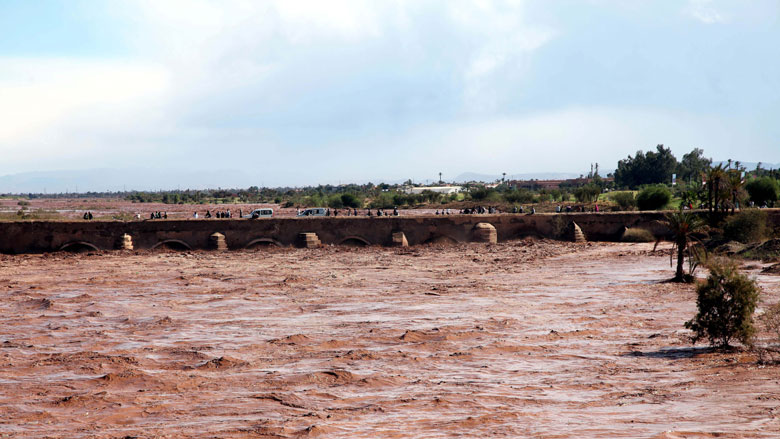
Press Release – On September 8, 2024 in regions of Ouarzazate, Zagora, Tinghir, Tata and Errachidia, heavy rainfall has left the several material and human losses. Due to massive flood many houses collapsed and many people lost their lives (18 deaths and 8 missed) and their belongings (livestock, farming material, cars …)
World Bank Supporting Morocco on the path to resilience in the face of disasters and climate change
At Least One Dead in Morocco after Heavy Rains
by Naharnet Newsdesk 09 January 2021, 00:26

Torrential rain in Morocco this week after a period of drought has caused at least one death in its economic capital Casablanca, as bad weather remains forecast for the coming days.
Authorities said one person was killed and four injured after the roof of a structure in the old city of Casablanca caved in on Thursday evening.
A dilapidated house occupied by squatters has also collapsed in another part of the city, authorities said. Two people were rescued while the search operations continued.
Between Monday and Friday, precipitation levels in Casablanca rose from 35 millimeters to 100 millimeters, according to the meteorological department.
Authorities urged motorists to limit their movements due to storms expected until the end of the week, with wind gusts of up to 100 kilometers per hour forecast along with rain and hail, and snow at high altitude.
The weather disrupted trains in the greater Casablanca region in recent days, and some neighborhoods saw flooding after the sewage system reached maximum capacity, management company Lydec said.
Moroccan media and social media users have criticized Casablanca’s dilapidated water drainage systems and what they say is authorities’ lack of action.
Yet the country has also welcomed the rain after a period of drought that has hurt its crucial agricultural sector, which accounts for 14 percent of the country’s GDP.
The program for resilience and integrated disaster risk management has helped to strengthen Morocco’s capacity to cope with natural hazards and climate change by supporting the development of a national disaster risk management strategy, supporting structural investments in risk reduction for more than 174,000 beneficiaries, insuring nearly 9 million people against bodily injury during catastrophic events, and creating a solidarity fund for the benefit of nearly 6 million of the country’s poorest and most vulnerable people.
Challenge
Morocco is among the countries in the Middle East and North Africa (MENA) region most exposed to geological and climatic risks. According to World Bank estimates, disasters such as floods, earthquakes, and droughts cost the country more than $575 million annually. Furthermore, rapid urbanization and climate change are likely to increase the frequency and severity of extreme weather events.
Approach
To address the increasing risks of climate-related and natural disasters in Morocco, the project sought to improve the institutional frameworks for financing disaster risk reduction activities and to strengthen the financial resilience of targeted populations to natural hazards. To achieve these objectives, the World Bank relied on both financing and technical assistance. Two loans from the International Bank for Reconstruction and Development (IBRD) were allocated under a results-based program (PforR). This is the first time the World Bank has used this financing instrument for disaster risk management operations. Designed to provide comprehensive support, this program supports institutional reforms and capacity building, increases investment in disaster risk reduction, and supports an innovative public-private insurance scheme. All these areas of work benefit from the technical assistance and capacity-building support provided by the World Bank.
“ The Flood Monitoring Project, led by the Directorate of Natural Risk Management, has received funding from the Fund for Combating the Effects of Natural Disasters (FLCN), which is supported by the World Bank. It is being implemented in four pilot zones and aims to improve flood risk management in the Kingdom of Morocco. This project is being carried out in close collaboration with the General Directorate of Meteorology (DGM), the Directorate of Water Research and Planning (DRPE), as well as the four River Basin Agencies and pilot provinces. Its main objective is to establish an integrated risk management support system organized around a national center and operational provincial centers that will monitor flood risk and support emergency response authorities in implementing preventive measures .” Achraf Hadine, Head of the National Risk Forecasting Center, Directorate of Natural Risk Management, Ministry of the Interior, Kingdom of Morocco
Results
By focusing on strengthening disaster risk management and financing, the program directly contributes to objective 10 of the country partnership framework established with Morocco, which aims to “improve adaptation to climate change and resilience to natural disasters”.
The program has enabled Morocco to better adapt to climate change and improve its resilience to natural disasters by contributing to the following results:
- The National Disaster Relief Fund (NDRF) has been restructured, transitioning from an emergency response mechanism to a national resilience fund. As of March 2022, the fund had supported 180 disaster risk reduction projects, representing a total investment of $304 million, of which $111 million was co-financed by the NDF. Completed structural projects cover more than 174,000 direct beneficiaries nationwide.
- In February 2021, Morocco’s first national disaster risk management strategy (2021-2031) was developed under the leadership of the newly created Directorate of Natural Risk Management within the Ministry of the Interior. This strategy resulted in a priority action plan (2021-2023) and an operational action plan (2021-2026) encompassing 18 programs and 57 projects.
- An innovative insurance program to cover the consequences of catastrophic events (Law No. 110-14) was passed in 2018 and took effect in January 2020. The law introduced a private insurance program covering nearly 9 million people and created a separate Catastrophic Events Solidarity Fund (CESF) for the poorest and most vulnerable households (approximately 6 million people). The combined private and public programs can pay out approximately $100 million in benefits annually.
Contribution of the World Bank Group
The World Bank has provided a total of $300 million in funding for its results-oriented program on resilience and integrated disaster risk management. This program was complemented by several technical assistance programs funded by the Global Facility for Disaster Reduction and Recovery (GFDRR) and the Swiss State Secretariat for Economic Affairs (SECO) for approximately $1.5 million, including support for the National Disaster Risk Reduction Strategy (NDRS), the national natural hazard management strategy, urban resilience, and disaster risk financing and insurance solutions.
Partners
The project’s main partners are the Moroccan Ministry of the Interior and the Ministry of Economy and Finance. The World Bank has pursued a collaborative approach with these partners through regular implementation support missions.
Perspectives
Until its closure (scheduled for December 31, 2023), the program will continue to work to improve the impact of disaster risk reduction projects funded by the FLCN and to support the operationalization of the new Directorate of Natural Hazard Management. This Directorate will ensure the sustainability of the program’s progress, as it will act as the main coordinating institution for disaster risk management and oversee the implementation of the national disaster risk strategy. The approach taken by this program has been replicated in other countries: results-based programs for disaster risk management have been implemented in Mozambique and, more recently, in Tunisia.
Elements of a National Strategy for the Prevention and Management of Major Risks
The Department of the Environment, in collaboration with and with financial support from the UNDP, has launched a project to develop the elements of a National Strategy for Disaster Risk Prevention and Management.This strategy document is structured in two parts: the first part provides an overview of all aspects of current disaster risk management in Morocco, and the second part proposes strategic directions for improving the effectiveness of disaster risk management and prevention in Morocco, based on the strategic pillars of the Hyogo Declaration.This document will serve as a working basis for developing a comprehensive and integrated approach to
disaster risk management and reduction, with support from the World Bank.
Mapping and Geographic Information Systems (GIS) for major risks
The main objective of implementing the Geographic Information System (GIS) for natural and technological risks at the national level is to have a database enabling the development of thematic risk distribution maps for Morocco and also to serve as a decision-making tool for developing risk prevention plans.The GIS implementation was carried out in three phases:
- Phase 1: Collection of data relating to natural and technological risks in Morocco;
- Phase 2: Development of the Risk GIS
- Phase 3: Setting up the web mapping server and developing communication tools.
During the “Identification, Collection, and Creation of the Risk Database” phase, all existing information on major risks in Morocco was collected, analyzed, processed, and structured. This work enabled the identification, description, and geographical location of the following risks:
- Seismic risk / Tsunamis;
- The risk of mass movement;
- The risk of flooding;
- The risk of forest fires;
- The risk of locust invasion;
- Technological risk; and
- Chemical risk.
The National Emergency Plan for Combating Accidental Marine Pollution (PUN)
In order to address massive accidental pollution or serious threats of massive pollution affecting or likely to affect marine waters under national sovereignty or jurisdiction, as well as the Moroccan coastline (and its related interests), an emergency plan called the “National Emergency Plan for Combating Accidental Marine Pollution” is established.The National Emergency Plan for Combating Accidental Marine Pollution “compiles the information, directives, and instructions necessary for public authorities to prevent or combat, under the best possible conditions, any massive marine pollution by hydrocarbons and other harmful products that threatens the marine environment and the national coastline.The national emergency plan includes provisions aimed at ensuring:
- the establishment of an appropriate detection and alert system in the event of massive marine pollution;
- the rapid, efficient and coordinated organization of prevention and control actions and the definition of the main elements in particular by rational management of control resources, the distribution of responsibilities and tasks, the identification of the most sensitive areas to be protected as a priority and of storage sites for recovered products;
- international cooperation and to facilitate mutual assistance if such assistance is requested or if Morocco is engaged, due to agreements to which it is a party, in an action of international cooperation;
- the accounting management of operations with a view to possible subsequent compensation;
- managing the stock of anti-pollution products and equipment, as well as updating the inventory of available personnel and equipment;
- training and education of qualified personnel in the prevention and control of massive marine pollution by hydrocarbons and other harmful products.
The National Emergency Plan for Combating Accidental Marine Pollution (PUN)
The overall responsibility for preparing for and conducting the response to massive accidental marine pollution lies with the government authority in charge of environmental protection, which is designated as the national coordinator.Decree
No. 95-717 of 10 Rajab 1417 (November 22, 1996) , establishing the National Unified Pollution Response Plan (PUN), and its implementing order
No. 3-3-00 of 17 Jumada I 1424 (July 16, 2003) , develop an organization at the national and local levels, designating the Department of the Environment as the
National Coordinator and the Governors
as Local Coordinators , and distributing tasks and responsibilities among the relevant departments according to their prerogatives.
The structures of the PUN
At the national level, the overall responsibility for combating accidental marine pollution is entrusted to the Department of the Environment, whose mission is to lead and coordinate preventive and response actions between the Departments concerned by the PUN and to develop and strengthen international, regional and sub-regional cooperation on accidental marine pollution.
To this end, the Department of the Environment has established a Strategic Intervention Service which acts as the permanent secretariat for the Plan. This service contributes to the implementation of prevention projects and the updating of the National Urban Plan (PUN), staff training, and the implementation of awareness-raising activities.
At the local level, the responsibility for the fight at sea and on land is entrusted to the Governor of the Prefecture or Province appointed as Local Coordinator.
At sea, anti-corruption operations are entrusted to the Royal Navy Inspectorate. In carrying out its duties, it collaborates closely with the following departments: the Merchant Marine, the National Ports Agency, Maritime Fisheries, the Royal Gendarmerie, and the Royal Air Force.
On land, firefighting operations are entrusted to the General Directorate of Civil Protection. In carrying out its duties, it collaborates closely with the following departments: Equipment (transport), Environment, the Royal Gendarmerie, and the Royal Armed Forces.
Equipment storage centers
Two of them, located at the Port of Mohammedia and the Port of Nador and managed by the National Ports Agency, store and maintain the equipment and can intervene at any time in the event of a PUN activation.
The National Emergency Plan for Combating Accidental Marine Pollution (PUN)
Equipment stocks and their implementationThe stock of equipment made available to national authorities in case of need is generally composed as follows: see list.Morocco has acquired such equipment primarily for the UNP (National Urban Response), but it can also be used to participate in oil spill response operations abroad within the framework of international conventions, regional or sub-regional agreements.
UNP Simulation Exercises
: The UNP simulation exercises, called SIMULEX, are conducted every two years to train responders to combat accidental marine pollution.The objectives of the simulation exercise are:
- Test the procedures outlined by the PUN
- Deploy intervention teams at sea and on land while leading the response operation
- Specify the technical and logistical resources to be implemented
- Strengthen interdepartmental coordination
- To avoid potential malfunctions in the event of actual pollution
- Identify and fill the gaps in the PUN
- Update the PUN
The exercise is structured around an intervention and response scenario simulating the following events:
- Saving human lives in peril;
- Extinguishing fire on a disabled oil tanker;
- Intervention to combat an oil spill through containment and recovery operations;
- Protection of coastlines threatened by pollution.
Simulex 2002 off the coast of Mohammedia;
Simulex 2004 off the coast of Nador;
Simulex 2006 off the coast of Agadir
; Simulex 2008 off the coast of Nador
; Simulex 2010 off the coast of Tangier
; Simulex 2012 off the coast of Jorf Lasfar;
Simulex 2014 off the coast of Tangier-Med
As the National Coordinator of the National Emergency Plan, the Ministry Delegate in charge of the Environment is currently conducting an evaluation study of the national system for combating accidental marine pollution in order to update the National Emergency Plan.
Accidental Marine Pollution
The National Emergency Plan for Combating Accidental Marine Pollution (PUN)
Disaster risk management and climate resilience in Morocco: a pilot results-based financing initiative
- Axel Baeumler Olivier Mahul April 20, 2016
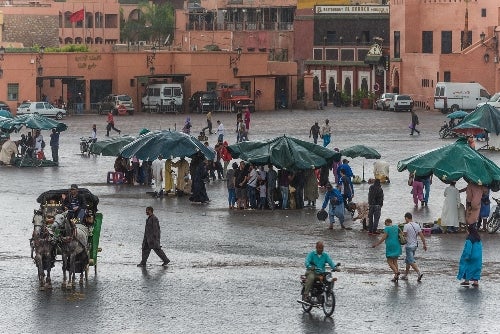 Can results-based financing help countries better anticipate natural disasters? Can financial incentives promote disaster prevention rather than response? Can insurance programs mitigate the financial consequences of a disaster?With the Moroccan government, the World Bank implemented its first Results-Based Program (a World Bank financing instrument) operation to improve risk management and resilience. This program, structured around three pillars, uses a unique integrated approach to strengthen a country’s resilience to natural disasters. It aims to:
- strengthen institutional resilience, through closer government coordination;
- strengthening physical resilience through investments in risk reduction;
- strengthen financial resilience through disaster risk insurance.
Incentives to strengthen institutional and physical resilience:In recent years,
Morocco has reformed its risk management practices and modified the purpose of its National Disaster Risk Reduction Fund (NDRF), now focused on disaster risk reduction rather than responding to disasters. This type of
ex-ante (or preventative) action is rarely carried out on a sufficient scale, partly because disaster risk management is not considered a core government function. This is also due to challenges in coordinating between government agencies and, faced with more urgent and immediate needs, budgetary competition. As a result, public mobilization too often occurs
after the fact , and therefore too late. The new National Resilience Fund (formerly the NDRF) has an explicit mandate to promote and finance ex-anterisk reduction projects . It is intended to allocate funds for this purpose to local authorities, as well as to relevant ministries and agencies, based on clear and transparent criteria. Two ministries traditionally involved in ex-post responses —the Interior and the Economy and Finance—are spearheading this reform effort. The process of structuring the World Bank’s engagement within the Results-Based Program makes this operation particularly interesting. It has allowed for a focus on broader objectives in the dialogue with the authorities, including key strategic reforms of institutions, the definition of selection and investment criteria, and the participation of communities and citizens. It has also provided an opportunity to introduce disbursements conditional on results achieved on the ground in disaster risk reduction. While Morocco is certainly not the only country to deploy this type of prevention strategy, it is the first to do so through a results-based financing approach. Incentives to strengthen financial resilience: The program structure has also allowed for the introduction of incentives to deploy the national disaster risk insurance program. This dual system provides coverage to both insured and uninsured households. It leverages the local private insurance market to offer insured households and businesses mandatory disaster coverage throughAn additional risk premium. This type of public-private partnership for natural disaster insurance is quite widespread in developed countries but uncommon in emerging economies. In the early 2000s, Turkey, with the help of the World Bank, created a collective disaster risk insurance scheme, but it did not gain much traction in emerging countries.The major innovation in the Moroccan program is the establishment of the Solidarity Fund Against Catastrophic Events (FSEC). It offers uninsured poor households compensation in the event of bodily injury and loss of their primary residence.This is a win-win situation for both the government and households: the government can better plan for the cost of disasters and thus avoid costly post-disaster budget reallocations, as well as better control its potential liabilities; and poor households are assured of receiving compensation in the event of a disaster.The authorities are also considering a complementary financial model to quantify the exposure of the disaster risk insurance program and establish a rule for the equitable sharing of costs among all stakeholders: the State, private insurers, households, and businesses. This will allow them to determine the level of public contributions to the Solidarity Fund.
The timing is ideal in the lead-up to COP22 in Marrakech.While the disaster risk management and resilience-building program is still in its early stages, it should yield valuable lessons as it is implemented.Morocco’s reform efforts are particularly welcome in the lead-up to the upcoming climate conference, COP22, to be held in Marrakech at the end of the year, as the correlation between disaster risk management and climate change adaptation is clearly established. They also align with the G7 initiative on climate risk insurance, which aims to revitalize this type of market globally to support adaptation programs.