Climate risk and vulnerabilities of Benin
Benin is highly exposed and vulnerable to climate change and multi-hazard risks due to recurrent floods, coastal erosion, sea-level rise, drought, extreme heat, rainfall variability, water stress, land degradation, rapid urbanization, and dependence on rainfed agriculture, fisheries, informal livelihoods, and natural resources. The country faces major risks from riverine and urban flooding, flash floods, coastal inundation, storm surge, saltwater intrusion, drought, crop failure, soil erosion, ecosystem degradation, food insecurity, and climate-sensitive health impacts. Climate change is expected to intensify these vulnerabilities through rising temperatures, heavier and more erratic rainfall, longer dry spells, higher flood and coastal-risk exposure, declining agricultural productivity, water insecurity, and growing pressure on infrastructure, public health, ecosystems, rural livelihoods, and vulnerable coastal and inland communities. Strengthening multi-hazard early warning systems, impact-based forecasting, flood and drought risk management, coastal protection, climate-resilient agriculture, water security, urban drainage, ecosystem restoration, climate-health surveillance, disaster risk financing, and locally led adaptation is essential to reduce losses and protect Benin’s development gains.
Benin is highly vulnerable to climate change and multi-hazard risks because of its exposure to floods, coastal erosion, sea-level rise, drought, extreme heat, rainfall variability, land degradation, water stress, and climate-sensitive disease risks. Its vulnerability is shaped by a narrow low-lying Atlantic coastal zone, flood-prone river basins, dependence on rainfed agriculture, rapid urbanization, high informal employment, limited infrastructure resilience, and pressure on land, forests, water resources, and coastal ecosystems. The World Bank’s 2025 climate profile reports that Benin experienced 20 major floods between 1982 and 2022 affecting about 3.3 million people, and one severe drought affecting about 2.1 million people. (Climate Change Knowledge Portal)

Strong country-profile paragraph
Benin is highly exposed and vulnerable to climate change and multi-hazard risks, particularly floods, flash floods, coastal erosion, sea-level rise, storm surge, drought, extreme heat, erratic rainfall, water scarcity, land degradation, soil erosion, crop failure, ecosystem degradation, urban flooding, and climate-sensitive health impacts. Its vulnerability is shaped by low-lying coastal settlements, flood-prone river and lagoon systems, dependence on rainfed agriculture and informal livelihoods, rapid urban growth, weak drainage infrastructure, pressure on forests and wetlands, and limited adaptive capacity among poor rural and urban households. Climate change is expected to intensify these vulnerabilities through rising temperatures, heavier and more erratic rainfall, increased flood risk, longer dry spells, coastal inundation, saline intrusion, declining agricultural productivity, heat-related health impacts, and growing pressure on food security, water security, infrastructure, ecosystems, and vulnerable communities.
1. Multi-hazard exposure
Benin’s major climate and disaster risks include floods, droughts, extreme heat, coastal erosion, sea-level rise, storm surge, windstorms, soil erosion, land degradation, wildfires, and health-related shocks. Flooding is one of the most recurrent hazards, particularly in the south, where the Ouémé, Mono, Couffo and Niger river systems, coastal lagoons, wetlands, low-lying settlements, and poorly drained urban areas create high exposure. (Climate Change Knowledge Portal)
The country’s risk profile differs by region. The southern coastal belt, including Cotonou, Porto-Novo, Ouidah, Grand-Popo, Abomey-Calavi, Sèmè-Kpodji and nearby lagoon settlements, faces coastal erosion, flooding, storm surge, saline intrusion and urban drainage stress. The central and northern regions face drought, rainfall variability, crop losses, soil degradation, heat stress, water scarcity, and pressure on pastoral and agricultural livelihoods.
2. Climate change as a development risk multiplier
Climate change is a major development risk for Benin because the economy and livelihoods are strongly linked to agriculture, informal employment, natural resources, urban systems, and coastal assets. The World Bank’s Benin Country Climate and Development Report states that Benin is among the countries most vulnerable to climate change despite contributing only about 0.05% of global greenhouse gas emissions; under a 2.7°C warming scenario, 98% of Benin’s territory could be exposed to extreme temperatures by 2070. (World Bank)
Benin’s first National Adaptation Plan, submitted in 2022, identifies adaptation priorities across agriculture, water resources, health, coastal zones, forestry, energy, infrastructure and urban development, and tourism, with cross-cutting attention to gender, vulnerable groups, Indigenous knowledge, and migration. (NAP Global Network)
3. Flood and urban vulnerability
Flooding is Benin’s most visible recurrent disaster risk. Heavy rainfall, river overflow, blocked drainage, low-lying urban settlements, lagoon overflow, weak solid-waste management, and rapid urban expansion combine to generate damaging floods, especially in Cotonou, Porto-Novo, Abomey-Calavi, Sô-Ava, Sèmè-Kpodji, Lokossa, Athiémé, Karimama, Malanville, and riverine/lacustrine communities.
Floods damage houses, roads, schools, health centres, markets, drainage systems, water points, latrines, farmland, food stocks, and household assets. In Cotonou, flood risk has been significant enough for the World Bank to support a major urban resilience operation to reduce flood risks and strengthen city-level resilience capacity. (PreventionWeb)
4. Coastal erosion, sea-level rise, and lagoon vulnerability
Coastal risk is one of Benin’s most strategic vulnerabilities. The country’s Atlantic coastline is exposed to coastal erosion, sea-level rise, storm surge, tidal flooding, saltwater intrusion, beach loss, lagoon flooding, and damage to coastal infrastructure. These risks affect Cotonou, Grand-Popo, Ouidah, Sèmè-Kpodji, coastal roads, ports, tourism sites, fisheries, wetlands, mangroves, and coastal settlements.
The West Africa Coastal Areas programme identifies coastal erosion and flooding as major risks for Benin and other Gulf of Guinea countries, where shoreline retreat, low elevation, urban expansion and infrastructure concentration increase exposure. (wacaprogram.org) Coastal degradation also weakens natural buffers such as wetlands, mangroves, beaches and lagoons, increasing vulnerability to storm surge and coastal flooding.
5. Drought, water scarcity, and land degradation
Although flooding is frequent, drought and water stress are also critical risks, especially in central and northern Benin. Drought affects rainfed crops, livestock, groundwater recharge, pasture regeneration, forest resources, household water availability, and food security. Erratic rainfall can produce false starts to the growing season, dry spells during crop development, and localized crop failure.
Land degradation increases both drought and flood risk. Degraded soils absorb less water, retain less moisture, lose fertility, and generate higher runoff during intense rainfall. This creates a harmful cycle: drought weakens vegetation and soils, while heavy rainfall accelerates erosion, gully formation, sedimentation, and flood damage.
6. Agriculture, food security, and rural livelihood vulnerability
Agriculture is one of Benin’s most climate-sensitive sectors. Smallholder farmers depend heavily on rainfall, soil fertility, local water systems, seasonal labour, market access, and stable growing seasons. Climate risks include drought, delayed rains, intense rainfall, flooding, heat stress, crop pests, soil erosion, reduced yields, and post-harvest losses.
| Sub-sector | Main climate and hazard risks |
|---|---|
| Rainfed crops | Drought, delayed rainfall, dry spells, floods, heat stress, crop failure |
| Cotton and cash crops | Rainfall variability, pests, soil degradation, market disruption after floods |
| Food crops | Maize, rice, cassava, yam and vegetable losses from floods, drought and heat |
| Livestock | Water scarcity, pasture decline, heat stress, animal disease |
| Fisheries and lagoons | Coastal erosion, salinity change, flooding, ecosystem degradation |
| Rural livelihoods | Reduced income, food insecurity, migration pressure, weakened coping capacity |
Climate change can reduce agricultural productivity and deepen rural poverty, especially where farmers lack irrigation, climate information, crop insurance, improved seeds, storage, and access to finance. The World Bank CCDR identifies Benin’s dependence on agriculture and informal employment as a key driver of climate vulnerability. (World Bank)
7. Health and social vulnerability
Climate change increases health risks through heat stress, malaria, diarrhoeal disease, cholera risk, water contamination after floods, malnutrition, respiratory problems from dust and smoke, and disruption of health services during disasters. Floods can contaminate drinking-water sources and sanitation systems, while drought can reduce access to safe water and worsen food insecurity.
The most vulnerable groups include smallholder farmers, fishing communities, coastal households, informal urban settlers, women-headed households, children, older persons, people with disabilities, low-income households, pastoralists, and communities living in flood-prone, drought-prone, coastal-erosion-prone, or water-stressed areas. Vulnerability is highest where climate exposure overlaps with poverty, poor housing, weak drainage, limited savings, limited insurance, insecure land tenure, and low access to early warning.
8. Sector-specific vulnerability summary
| Sector | Main climate and multi-hazard risks |
|---|---|
| Agriculture and food security | Drought, erratic rainfall, floods, heat stress, crop pests, soil erosion, reduced yields |
| Water resources | Drought, groundwater stress, flood contamination, saline intrusion, seasonal water shortages |
| Coastal zones | Coastal erosion, sea-level rise, storm surge, tidal flooding, salinity, wetland degradation |
| Urban settlements | Flooding, poor drainage, heat stress, informal settlement exposure, solid-waste blockage |
| Health | Heat illness, malaria, diarrhoeal disease, cholera risk, malnutrition, disrupted services |
| Infrastructure | Flooded roads, damaged drainage, bridge washouts, coastal road and port exposure |
| Fisheries and ecosystems | Lagoon degradation, mangrove loss, salinity shifts, coastal erosion, biodiversity loss |
| Forests and land | Deforestation, land degradation, erosion, wildfire risk, declining ecosystem services |
9. Priority resilience needs
Benin’s resilience agenda should prioritize multi-hazard early warning systems, impact-based forecasting, flood forecasting, coastal-risk monitoring, drought early warning, climate-resilient agriculture, water security, urban drainage improvement, coastal protection, ecosystem restoration, climate-health surveillance, disaster risk financing, and locally led adaptation.
| Priority area | Key actions |
|---|---|
| Early warning and anticipatory action | Impact-based warnings for floods, drought, heat, coastal flooding, storms, crop stress and disease outbreaks |
| Flood-risk management | River-basin forecasting, drainage upgrading, floodplain zoning, retention basins, community evacuation planning |
| Coastal resilience | Coastal erosion monitoring, nature-based protection, mangrove restoration, setback planning, resilient coastal infrastructure |
| Climate-resilient agriculture | Drought- and flood-tolerant crops, agro-climate advisories, soil and water conservation, crop insurance |
| Water security | Groundwater monitoring, rainwater harvesting, safe WASH systems, saline intrusion control, drought contingency planning |
| Urban resilience | Stormwater drainage, solid-waste management, informal settlement upgrading, heat-risk planning |
| Health resilience | Heat-health action plans, disease surveillance, flood-safe clinics, nutrition and WASH interventions |
| Risk financing and governance | Contingency finance, forecast-based financing, climate-risk screening of public investments, local adaptation planning |
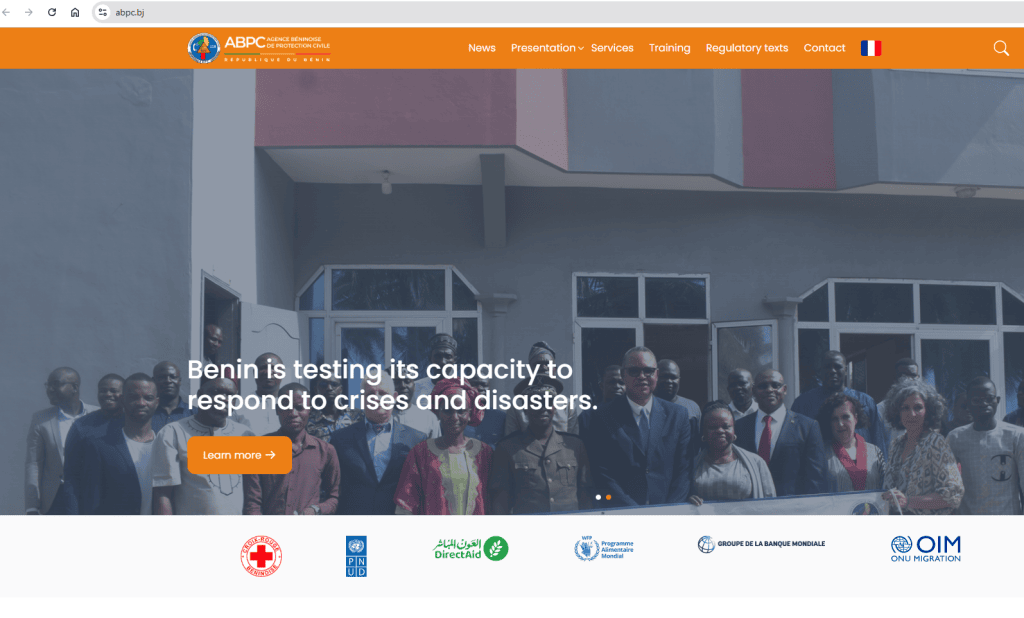
L’Agence Béninoise de Protection Civile (ABPC)
L’Agence Béninoise de Protection Civile (ABPC) (anciennement ANPC) est dirigée par le Directeur Général Abdel Aziz BIO DJIBRIL
Les locaux de la direction se trouvent à Cotonou (Vêdoko, Lot 1268-Agontikon vers Sainte Cécile). Pour toute urgence ou demande de renseignement, vous pouvez consulter le site officiel de l’ Agence Béninoise de Protection Civile ou contacter les services d’urgence locaux.
Message from the Director General

Welcome message from the Director General of ABPC
Dear citizens, partners and visitors,
Welcome to the digital platform of the Benin Civil Protection Agency (ABPC). As Director General, it is with immense satisfaction that I offer you this space for exchange and information dedicated to an essential mission for our nation: civil protection.
The ABPC’s mission cannot be accomplished without active cooperation. The security of our country and its inhabitants depends on synergy between institutions, local authorities, civil society organizations, the private sector, and, above all, every citizen. This website aims to be a catalyst for strengthening this collaboration, sharing knowledge, and promoting a genuine culture of security and resilience in Benin.
We invite you to explore the various aspects of our work: from risk mapping and awareness campaigns to emergency planning and training for response teams. Our goal is to make information accessible to everyone, to share best practices, and to provide you with the tools you need to act in a crisis.
An informed and prepared population is our best ally in the face of challenges and unforeseen events. Explore our resources, familiarize yourself with alert procedures and safety guidelines, and actively participate in protecting your community. Together, we have the power to strengthen our collective capacity to prevent, manage, and overcome crises.
Your questions, suggestions, and involvement are invaluable to us. We encourage you to use this site as a space for interaction and active participation in civil protection in Benin.
With my most respectful greetings, Abdel Aziz BIO DJIBRIL
Director General of the Benin Civil Protection Agency
Risk awareness
Disaster risk awareness in Benin is a key component of the national strategy to strengthen the resilience of populations to natural and man-made hazards. Here is an overview of the main aspects of this awareness campaign:
1. Awareness-raising objectives:
Inform and educate:
- Inform the public about the different types of risks (floods, fires, droughts, etc.) and their consequences.
- Educating on prevention measures and appropriate behavior in the event of a disaster.
Strengthen preparation:
- Encourage people to develop family and community relief plans.
- Promote awareness of early warning systems and evacuation procedures.
Promoting resilience:
- Developing the capacity of communities to adapt to risks and recover after a disaster.
- Promote safer construction and land development practices.
2. Key actors in awareness-raising:
Benin Civil Protection Agency (ABPC):
- She is at the forefront of raising awareness, with information campaigns and training programs.
National Platform for Disaster Risk Reduction and Adaptation to Climate Change (PNRRCC-ACC):
- She coordinates awareness efforts and ensures consistency in messaging.
Non-governmental organizations (NGOs):
- They carry out local awareness campaigns, particularly in vulnerable areas.
Media:
- They disseminate information on risks and prevention measures, and relay alerts.
Local authorities:
- They play a crucial role in raising awareness at the community level.
3. Awareness-raising methods:
Information campaigns:
- Broadcasting messages on radio, television and social media.
- Displaying signs and distributing leaflets.
Education :
- Integrating risk education into school curricula.
- Organization of workshops and training sessions for teachers and community facilitators.
Simulations and exercises:
- Organizing disaster simulations to test emergency plans and raise public awareness.
Local communication:
- Organizing public meetings and educational talks in neighborhoods and villages.
- Use of communication materials adapted to different populations (local languages, images, etc.).
4. Challenges to overcome:
Lack of resources:
- Awareness-raising activities require significant financial and human resources.
Difficulty in reaching vulnerable populations:
- The populations most exposed to risks are often the most difficult to reach.
Low level of awareness:
- Some populations are not aware of the risks or do not take the necessary preventative measures.
Coordination:
- Coordination between the various stakeholders involved in raising awareness needs to be strengthened.
Despite these challenges, constant efforts are being made to raise awareness among the population about disaster risks in Benin.