MHEWC intends to support the National Disaster Management Office (NDMO), Fiji
To,
The Directorate of National Disaster Management Office (NDMO), Fiji
Subject: Proposal for Technical Cooperation and Partnership to Strengthen Multi-Hazard Early Warning Systems, Disaster Risk Governance, and Emergency Management Capacities in Fiji.
Dear Sir,
Greetings from the Multi-Hazard Early Warning System Development and Implementation Center (MHEWC).
MHEWC is a specialized technical knowledge and solutions platform dedicated to strengthening climate and multi-hazard risk governance, disaster risk management, and the design and operationalization of integrated, end-to-end, people-centered early warning systems. Our technical expertise encompasses institutional capacity assessments, hydro-meteorological observation and monitoring networks, geospatial risk intelligence, ICT- and AI-enabled Decision Support Systems (DSS), impact-based forecasting, anticipatory action, and disaster preparedness, response, and recovery management.
Recognizing the critical importance of strengthening the national disaster risk management capabilities, MHEWC would welcome the opportunity to establish technical cooperation and a strategic working partnership with the NDMO.
In collaboration with NDMO’s relevant national hydro-meteorological institutions, sectoral ministries, local authorities, and other stakeholders, MHEWC is prepared to provide specialized technical assistance in the following priority areas:
1) Assessment and Modernization of Hydro-Meteorological Observation and Monitoring Networks
Conduct comprehensive technical diagnostics of existing hydro-meteorological observation stations and monitoring infrastructure, identify institutional and technological gaps, and develop a phased modernization and investment plan. This may include the technical design, installation, calibration, and integration of Automated Weather Stations (AWS), Internet of Things (IoT) sensors, and real-time environmental and hazard-monitoring technologies to strengthen the detection, tracking, and forecasting of potentially hazardous conditions.
2) Strengthening Integrated Multi-Hazard Monitoring and Early Warning Capacities
Assess existing monitoring, observation, forecasting, and early warning capabilities and support NDMO’s and relevant national meteorological and hydrological services in upgrading and integrating observation networks. This includes hybrid weather and hazard-monitoring systems, interoperable sensor networks, real-time data acquisition and transmission, and automated data ingestion into operational Decision Support Systems for multi-hazard monitoring, forecasting, and warning dissemination.
3) Modernization and Operationalization of the National Emergency Operations Center (EOC)
Undertake a comprehensive technical and institutional assessment of existing Emergency Operations Center facilities, operational procedures, communication systems, and information management infrastructure. Based on the findings, develop an EOC modernization roadmap and support the technical design, upgrading, and operationalization of an integrated National Emergency Operations Center and Situation Room.
The proposed EOC architecture would incorporate real-time hydro-meteorological observations, IoT-enabled monitoring networks, geospatial risk information, automated hazard tracking, impact-based forecasting, early warning dissemination, anticipatory action advisories, and coordinated emergency response management.
4) Development of ICT- and AI-Enabled Emergency Management and Decision Support Applications
Design and develop customized ICT- and AI-enabled applications to support automated hazard identification, real-time monitoring, predictive analytics, impact forecasting, emergency information management, and operational decision-making.
These solutions may include automated data processing, geospatial visualization, scenario-based impact analysis, threshold-based alert generation, emergency resource tracking, incident management, and decision-support workflows. AI-assisted outputs would be subject to appropriate technical validation and oversight by authorized national institutions.
5) Transformation of NDMO’s Web Portal into an Integrated Geospatial Decision Support Platform
Provide technical assistance to assess and upgrade NDMO’s existing web-based information systems into an integrated, geospatial, database-driven, and application-enabled Disaster Risk Information and Decision Support System (DRI-DSS).
The platform would support real-time hazard monitoring, climate and multi-hazard risk information management, institutional coordination, preparedness planning, anticipatory action, emergency response, recovery management, and evidence-based decision-making across national and subnational administrative levels.
6) Development of National Climate and Multi-Hazard Risk Assessment Frameworks and Risk Information Repositories
Develop standardized methodologies, analytical frameworks, technical tools, and operational guidelines for conducting climate and multi-hazard risk and vulnerability assessments.
Technical assistance would include the preparation of GIS-based hazard, exposure, vulnerability, and risk maps; multi-sectoral risk profiles; climate and disaster risk scenarios; and the establishment of a centralized, interoperable national risk information repository and geospatial database management system.
7) Design and Operationalization of End-to-End, People-Centered Multi-Hazard Early Warning Systems
Support NDMO and relevant technical institutions in designing and implementing integrated, end-to-end Multi-Hazard Early Warning Systems (MHEWS), aligned with the four pillars of the Early Warnings for All (EW4All) initiative.
Priority interventions may include:
- Hazard detection, monitoring, weather nowcasting, and forecasting services.
- Impact-Based Forecasting (IBF) and Impact-Based Warning (IBW) systems.
- Forecast-Based Financing (FbF) and anticipatory action mechanisms.
- Development of hazard-specific triggers, Early Action Protocols (EAPs), and anticipatory response plans.
- Common Alerting Protocol (CAP)-enabled warning generation and dissemination.
- DSS-supported emergency preparedness, contingency planning, and response management.
- Development of operational guidelines, Standing Orders on Disaster, and institutional Standard Operating Procedures (SOPs).
- Strengthening last-mile warning communication, community preparedness, and coordinated early action.\
8) Integration of Climate and Disaster Risk Intelligence into Sectoral and Local Development Planning
Develop GIS-enabled databases, digital planning tools, and sector-specific risk information systems to support national ministries, government departments, municipalities, and local authorities in integrating climate and disaster risk considerations into development planning, public investment, and budgeting processes.
Technical assistance would focus on strengthening Disaster Risk Reduction (DRR), Climate Change Adaptation (CCA), Nature-Based Solutions (NbS), Locally Led Adaptation (LLA), resilient infrastructure planning, and climate-informed sectoral investment strategies.
9) Review and Strengthening of Multi-Hazard Preparedness, Emergency Response, and Recovery Plans
Review existing disaster preparedness, emergency response, contingency, and recovery plans at national, regional, municipal, and sectoral levels.
Support the development and upgrading of hazard-specific and multi-hazard operational plans, institutional coordination mechanisms, emergency communication protocols, resource mobilization procedures, and risk-informed recovery strategies consistent with NDMO’s mandate and national disaster management priorities.
10) Strengthening National-to-Local Disaster Risk Governance and Institutional Capacities
Provide specialized technical assistance to strengthen the institutional, regulatory, organizational, and operational foundations of disaster risk governance.
This may include institutional assessments, capacity development, stakeholder coordination frameworks, interagency information-sharing protocols, technical training, knowledge transfer, and the preparation of phased, costed implementation roadmaps to improve national and local emergency management capabilities.
11) Technical Support to Climate Change, Meteorological, Hydrological, and Disaster Management Institutions
Provide targeted technical support to NDMO and relevant climate change institutions, National Meteorological and Hydrological Services (NMHS), and other designated government agencies to strengthen climate information services, weather and climate monitoring, multi-hazard risk assessments, forecasting, early warning operations, climate resilience planning, and institutional technical capacities.
Such cooperation would be tailored to institutional requirements, existing technical infrastructure, priority hazards, and national development objectives.
Proposed Way Forward
MHEWC proposes initiating the cooperation through a joint technical consultation with NDMO to identify priority institutional and technological needs, review existing capacities, and determine potential areas for collaboration.
Based on NDMO’s priorities, we would welcome the opportunity to conduct an initial technical scoping and institutional capacity assessment, followed by preparing a practical, phased, costed technical cooperation and implementation roadmap.
Our approach emphasizes national ownership, technology transfer, institutional sustainability, interoperability, and the development of operational systems that connect hazard observation and risk intelligence with timely warnings, informed decisions, and effective anticipatory action.
We would be pleased to arrange a virtual meeting with your technical and management teams at a mutually convenient time to discuss potential collaboration and identify immediate opportunities for technical support.
We look forward to your favorable consideration and the opportunity to contribute to strengthening national disaster risk governance, multi-hazard early warning, and emergency management systems.
Yours sincerely,
Z M Sajjadul Islam
Director & Advisor
Multi-Hazard Early Warning System Development and Implementation Center (MHEWC)
Website: https://www.mhewc.org/fiji/ http://www.glocs.org
Email: zmsajjad@gmail.com | sajjad@mhewc.org
Phone & WhatsApp: +88 01711 979179
—————————————–
Climate risk and vulnerabilities of Fiji
Fiji is highly exposed and vulnerable to climate change and multi-hazard risks due to its small-island geography, coastal settlement patterns, dependence on tourism, agriculture, fisheries, water resources, coral reefs, and critical coastal infrastructure. The country faces recurrent and severe risks from tropical cyclones, storm surge, coastal and riverine flooding, flash floods, landslides, drought, sea-level rise, coastal erosion, saltwater intrusion, ocean acidification, and ecosystem degradation. Climate change is expected to intensify these risks through heavier rainfall, increasing flood losses, sea-level rise, storm-surge impacts, coral bleaching, water insecurity, health risks, and growing pressure on vulnerable coastal and outer-island communities. Strengthening multi-hazard early warning systems, resilient infrastructure, coastal adaptation, ecosystem-based protection, climate-smart agriculture, water security, disaster risk financing, shock-responsive social protection, and locally led adaptation is essential to reduce losses and protect Fiji’s development gains.
Fiji is highly vulnerable to climate change and multi-hazard risks because of its small-island geography, dispersed island communities, high coastal exposure, tropical cyclone belt location, steep volcanic terrain, climate-sensitive economy, and concentration of people, infrastructure, tourism assets, agriculture, and public services near the coast. The country is particularly exposed to tropical cyclones, storm surge, coastal flooding, river flooding, flash floods, landslides, drought, coastal erosion, sea-level rise, saltwater intrusion, ocean warming, ocean acidification, coral reef degradation, and climate-sensitive health risks.
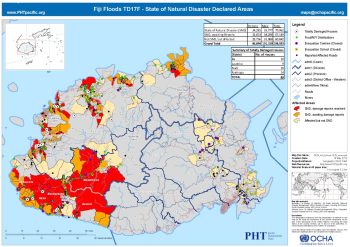
Fiji Flooding Tropical Depression TD17F-2012 Situation Report No. 6

Building replacement cost density by district.
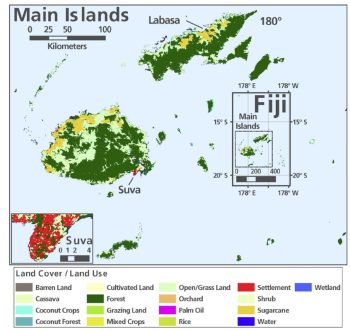
Land cover/land use map.
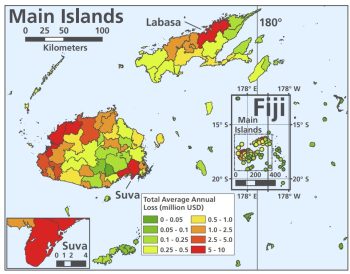
Contribution from the different districts to the average annual loss for tropical cyclone and earthquake (ground shaking and tsunami).
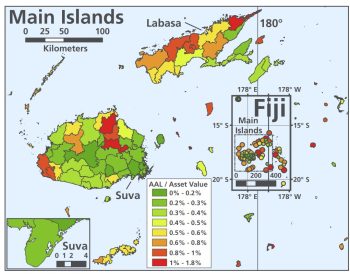
Contribution from the different districts to the tropical cyclone and earthquake (ground shaking and tsunami) average annual loss divided by the replacement cost of the assets in each district.

1. Multi-hazard exposure
Fiji’s disaster risk profile is dominated by hydrometeorological and coastal hazards. Fiji’s National Adaptation Plan identifies the country as susceptible to cyclones, floods, and droughts, while also warning that slower-onset changes such as sea-level rise and ocean acidification will have major impacts. The same document emphasizes that Fiji’s vulnerability is increased by the location of key assets and infrastructure along the coast and by high economic dependence on climate-sensitive sectors such as tourism and agriculture.
Fiji also has exposure to geophysical hazards. UNDRR notes that Fiji is located near the Pacific Ring of Fire, meaning that earthquakes, earthquake-induced tsunamis, and landslides are possible. However, the most common disasters have historically been high-impact hydrometeorological events, particularly cyclones, heavy rainfall, and flooding. (unisdr.org)
2. Cyclone, flood, and economic-loss vulnerability
Tropical cyclones and floods are among Fiji’s most damaging hazards. A World Bank/GFDRR climate vulnerability assessment estimated that average asset losses from tropical cyclones and floods exceed F$500 million per year, representing more than 5% of Fiji’s GDP. It also estimated that a 100-year fluvial flood could cause asset losses above F$2 billion, with transport infrastructure and buildings accounting for a large share of losses.
Cyclone Winston in 2016 demonstrated the severity of Fiji’s cyclone exposure. UNDRR reports that Winston was a Category 5 tropical cyclone with average wind speeds of 233 km/h, causing destroyed assets valued at about US$1.3 billion and total damage and losses estimated at about 20% of GDP. The agriculture sector suffered heavily, with production losses affecting crops, fisheries, and longer-term livelihoods. (unisdr.org)
3. Sea-level rise, coastal erosion, and island-community vulnerability
Sea-level rise is one of Fiji’s most serious long-term climate risks. Low-lying coastal settlements and outer islands are exposed to coastal inundation, storm surge, coastal erosion, saltwater intrusion, and eventual relocation pressure. The World Bank/GFDRR assessment warns that sea-level rise could become a major threat for Fiji, especially for small low-lying islands where tens of thousands of people live and where protection against sea-level rise and storm surge may be difficult and expensive.
Coastal risk is not only a physical hazard; it is also a livelihood and development risk. Many communities depend on coastal fisheries, tourism, mangroves, reefs, freshwater lenses, coastal roads, jetties, schools, health facilities, and village infrastructure. Damage to these systems can trigger cascading impacts on mobility, food security, income, education, health access, and cultural continuity.
4. Flood and landslide vulnerability
Flood risk in Fiji is driven by heavy rainfall, tropical cyclones, river overflow, poor drainage, settlement in flood-prone areas, and land-use change. Climate change is expected to increase flood losses if adaptation is not accelerated. The World Bank/GFDRR assessment found that, under climate scenarios with increased rainfall, fluvial flood losses could increase by almost 40% and pluvial flood losses by 45% by 2050, with flood asset losses alone potentially exceeding 5% of GDP.
Landslides are also a significant hazard because of Fiji’s steep terrain, weathered rock, heavy rainfall, tropical storms, cyclones, road cuts, farming on slopes, and settlement expansion into unstable areas. The same assessment notes that rainfall-triggered landslides are a major risk and can intensify with heavier precipitation.
5. Drought, water security, and saltwater intrusion
Although Fiji is often associated with cyclones and floods, drought is also a significant risk, particularly during El Niño periods. Drought can reduce agricultural production, cause livestock losses, reduce drinking-water availability, increase fire risk, and lower river flows. The World Bank/GFDRR assessment reports that Fiji’s 1998 drought caused estimated damages of F$275–300 million and that drought-related low river flows can be associated with saline water intrusion.
Water security is therefore exposed to both extremes: floods can contaminate water sources and damage infrastructure, while drought can reduce water availability, degrade water quality, and intensify saltwater intrusion in coastal and island aquifers.
6. Sector-specific vulnerabilities
| Sector | Main climate and hazard risks |
|---|---|
| Coastal communities and outer islands | Sea-level rise, storm surge, coastal flooding, erosion, saltwater intrusion, relocation pressure |
| Tourism | Cyclone damage, beach erosion, coral bleaching, coastal flooding, infrastructure losses, negative risk perceptions |
| Agriculture and food security | Cyclones, floods, drought, saltwater intrusion, soil erosion, landslides, crop and livestock losses |
| Fisheries and marine ecosystems | Ocean warming, acidification, coral bleaching, cyclone damage, reef degradation, coastal habitat loss |
| Water resources | Drought, flood contamination, saltwater intrusion, damaged water systems, reduced freshwater availability |
| Transport infrastructure | Flooded roads, bridge damage, landslides, coastal road erosion, cyclone damage |
| Housing and public buildings | Cyclone wind damage, flood damage, storm surge, landslide exposure |
| Health | Dengue and other vector-borne disease risks, diarrhoeal disease, heat stress, disaster-related service disruption |
WHO and UNFCCC’s Fiji health and climate profile highlights that Fiji’s climate-health risks include climate hazards, health vulnerabilities, health impacts, and the need for climate-resilient health systems. (World Health Organization)
7. Social vulnerability and displacement
Fiji’s vulnerability is unevenly distributed. The most vulnerable groups include coastal and outer-island communities, informal settlers, rural households, smallholder farmers, fishers, women-headed households, children, older persons, people with disabilities, and communities dependent on climate-sensitive livelihoods. Vulnerability is highest where exposure to cyclones, floods, coastal erosion, drought, or landslides overlaps with low income, weak housing, limited savings, limited insurance, insecure land tenure, and restricted access to evacuation, early warning, and recovery finance.
Disaster displacement is a major concern. IDMC reported that disasters triggered about 153,000 displacements in Fiji between 2008 and 2019, linked mainly to weather-related events such as storms and floods.
8. Priority resilience needs
Fiji’s resilience agenda should prioritize multi-hazard early warning systems, cyclone preparedness, flood forecasting, coastal inundation warning, drought monitoring, climate-resilient infrastructure, resilient housing, risk-informed land-use planning, coastal-zone management, mangrove and coral reef protection, climate-smart agriculture, water-security planning, social protection, disaster risk financing, and planned relocation where protection is no longer viable.
Fiji’s National Adaptation Plan contains 160 prioritized adaptation measures and emphasizes climate information services, mainstreaming climate risk into national and subnational planning, ecosystem protection, inclusive and locally driven adaptation, and integration of climate adaptation with disaster risk management.
National Disaster Management Office (NDMO), Fiji

https://www.ndmo.gov.fj ( Website is not accessible from outside in Fiji???? )
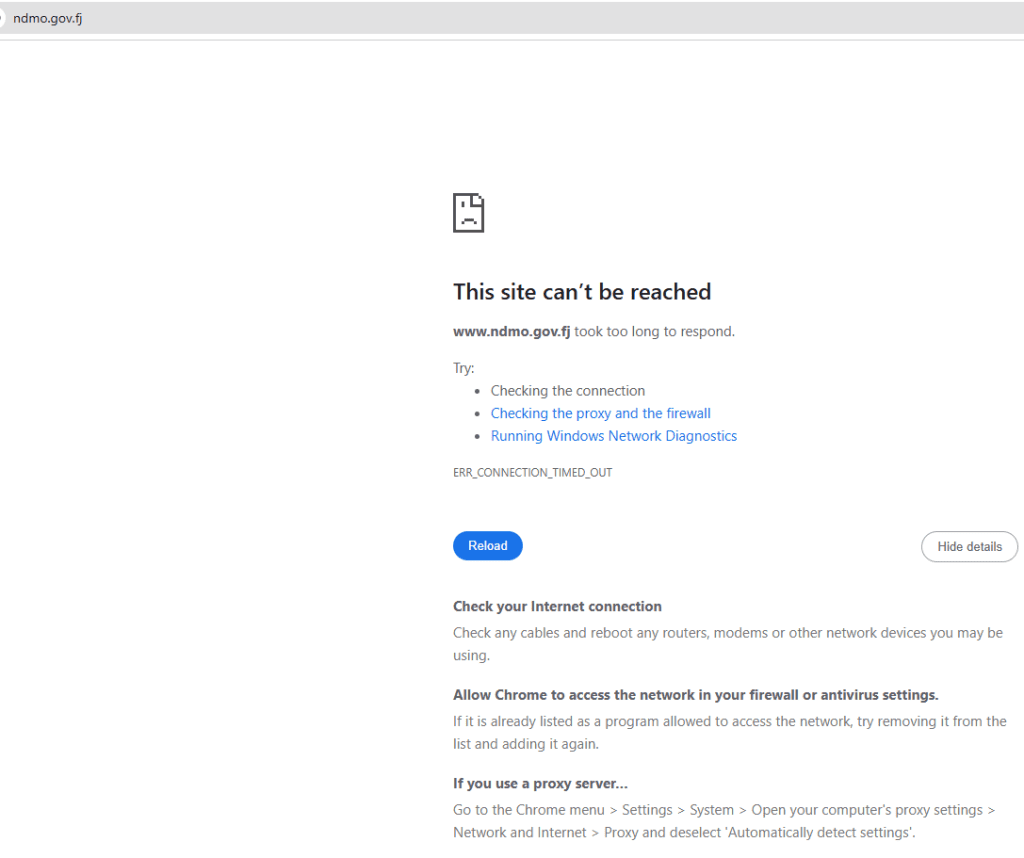
(NDMO, Please shoot this trouble. Why is it not accessible from the outside in Fiji? )
The NDMO was established to facilitate, coordinate and manage national disaster risk reduction and disaster management activities to enhance the provisions of a safer and more secure Fiji.
The NDMO is guided by the following six (6) principles to help prepare, plan and respond to national disaster situations: 1. Governance – Organisational, Institutional, Policy and Decision-making Framework 2. Knowledge, Information, Public Awareness and Education 3. Analysis & Evaluation of Hazards, Vulnerabilities and Elements at Risk 4. Planning for effective Preparedness, Response and Recovery 5. Effective, Integrated and People-Focused Early Warning Systems 6. Reduction of Underlying Risk Factors.
Fiji faces many natural hazards- cyclones, floods, droughts and the threat of earthquakes and tsunamis. This October, join us to get informed and be prepared on how to protect your family and community.

NATIONAL DISASTER MANAGEMENT COUNCIL (NDMC)
During emergency operations, it will have overall responsibility for the efficient conduct of emergency operations at National, Divisional and District levels through the respective Emergency Operation Centres (EOCs)
Fiji National Emergency Operation Centre
Government office
Suva, Fiji · +679 331 9250
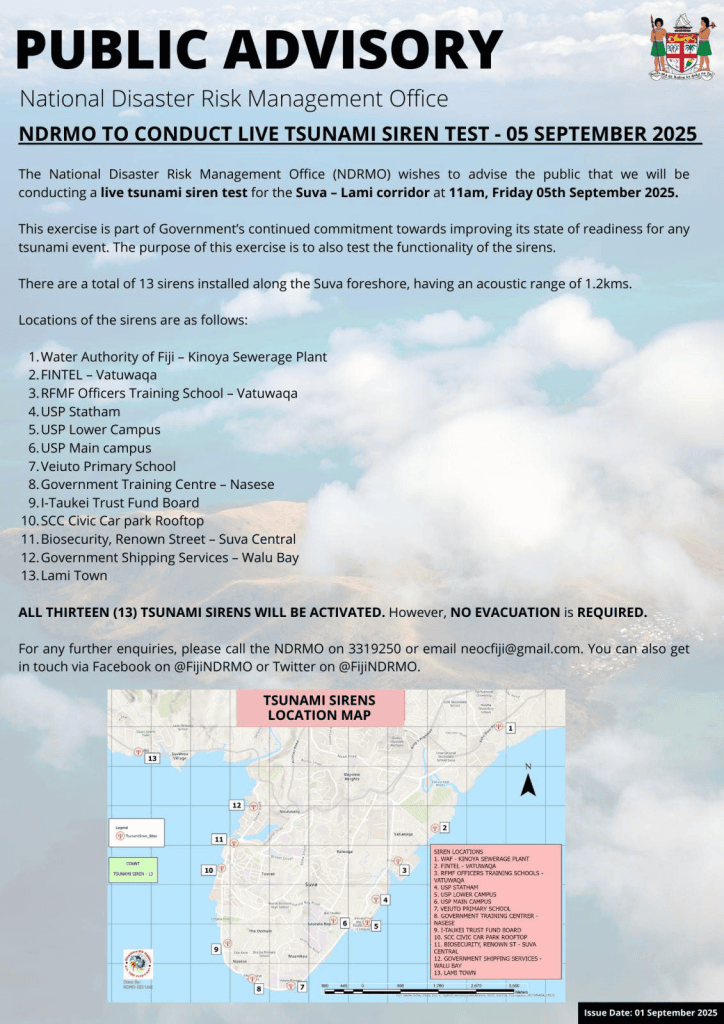
Capacity Building :
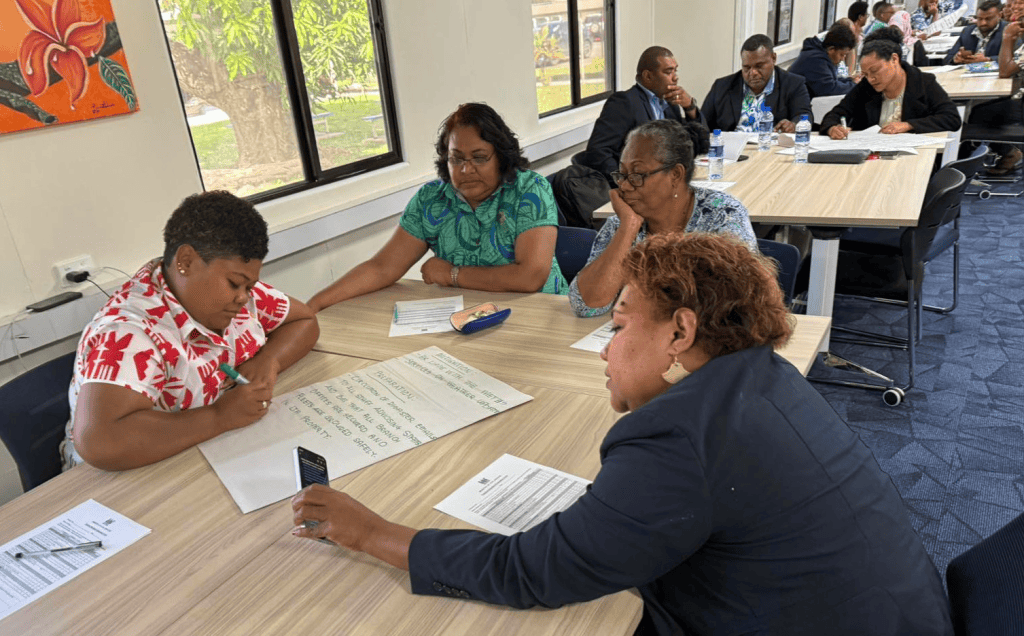
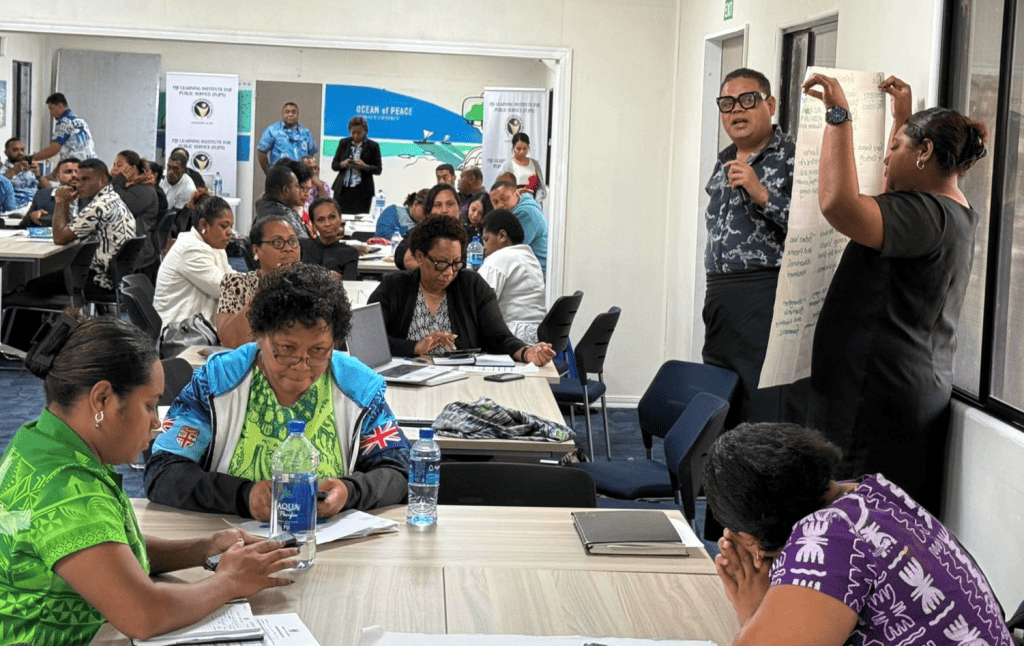
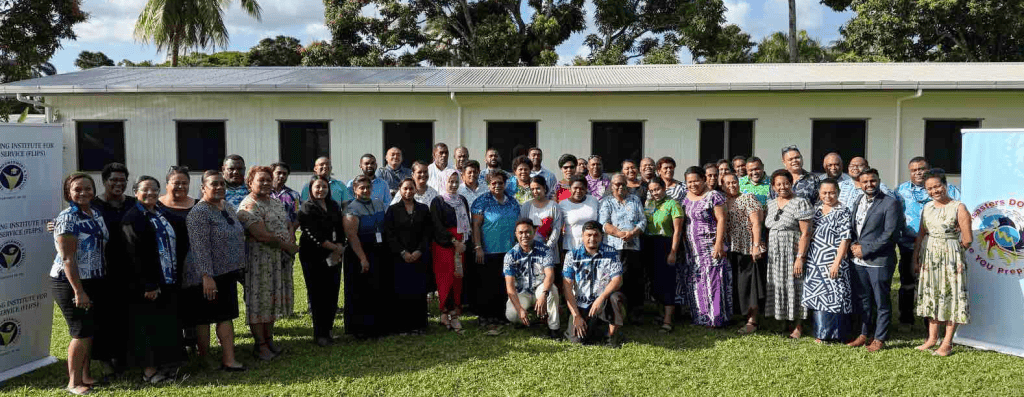
The National Disaster Risk Management Office (Fiji NDRMO) conducted a Disaster Risk Management (DRM) Training for civil servants from across Government in Suva last week. The programme focused on Fiji’s National Disaster Risk Management Arrangements and the process of conducting an Initial Damage Assessment (IDA).
Training civil servants on DRM is vital because Government officials play a central role in coordinating response and recovery efforts during disasters. By strengthening their understanding of national arrangements, officials are better equipped to:
 Respond quickly and effectively to emergencies;
Work together effectively across ministries and agencies;
Ensure that IDAs are accurate and timely, helping guide relief and recovery resources to where they are needed most; and
Support communities with coordinated, inclusive, and resilient solutions.
The Fiji NDRMO team sincerely acknowledges the Ministry of Civil Service for incorporating DRM training and awareness into their training calendar. This support will ensure that disaster preparedness becomes part of the continuous professional development of our civil servants.
Health Emergencies and Disaster in Fiji
According to the World Health Organisation, over the last 10 years, an average of 700 disasters has been reported every year. Annually, an estimated 268 million people are affected by disasters, of whom more than 100,000 are killed. In 2010, humanitarian emergencies requiring international assistance occurred in 32 countries. The epidemiological profile associated with disasters and conflicts is changing. Although most of the mortality associated with disasters and conflicts continues to be due to infectious diseases, non-communicable diseases are increasingly among the top five causes of morbidity and mortality in such settings. Global trends in urbanisation are providing a further impetus for the adaptation of intervention strategies.
Fiji is geographically situated in one of the most natural disaster prone areas in the world. Some hazards occur as a consequence of tropical depressions and cyclones or as part of tropical weather condition that normally affects the region. Hazards such as landslides, flash floods and storm surges are most common.
Since 1980, there have been 36 recorded natural disasters in Fiji, with 221 fatalities and over 1 billion dollars worth of economic damage to Fiji’s economy.
National Health Emergencies and Disaster Management Plan (HEADMAP)
In 2002, The Ministry of Health had drafted its National Disaster Management Plan and aligned it to the Fiji National Disaster Management Plan. The first National Health Emergencies and Disaster Management Plan (or HEADMAP) was designed along with the Fiji National Pandemic Plan and the Draft Communicable Disease Guideline, Since then, the review of the 2007 – 2011 HEADMAP has seen the addition of standard operating procedures (SOPs) and specific guidelines for various types of hazards faced in Fiji.
The revised HEADMAP, released in January 2013 is supported by a number of other plans and documents related to disaster risk reduction and disaster management.
Objectives of HEADMAP
The primary objective of the Fiji National Health Emergencies and Disaster Management Plan (HEADMAP) is to serve as a guide for the health sector in the management of public health emergencies and disasters.
The specific objectives include:
- Minimise the potential loss of lives and impact of disasters;
- Ensure prompt and appropriate disaster responses to affected communities
- Achieve rapid recovery and rehabilitation following any emergency/disaster.
- Ensure provision of adequate resources to support implementation at various levels
Cluster Approach to Disaster Management
Coordination in emergencies is vital. Appropriate coordination results in fewer gaps and less overlaps. It allows for a more coherent and complementary approach, and encourages different partners in the response, preparedness and recovery phases of disasters to work together for better collective results.
Disaster Management Clusters have been adopted for Fiji to improve coordination. The Clusters are groups of organisations working in the main sectors of humanitarian action. Clusters provide a clear point of contact and are accountable for adequate and appropriate action. They create partnerships between international humanitarian actors, national and local authorities, and civil society.
A global cluster system has been in place for some time, strongly supported by the United Nations and partner organizations. Clusters have also been implemented at the Regional level, represented by the Pacific Humanitarian Team (PHT).
The Fiji National Clusters have been closely based on the global and regional clusters. The adoption of similar clusters means that there is better understanding of the role of each cluster, providing ready access to terms of reference and standard operating procedures. It also means that there is more potential for assistance for partnering, training and funding.
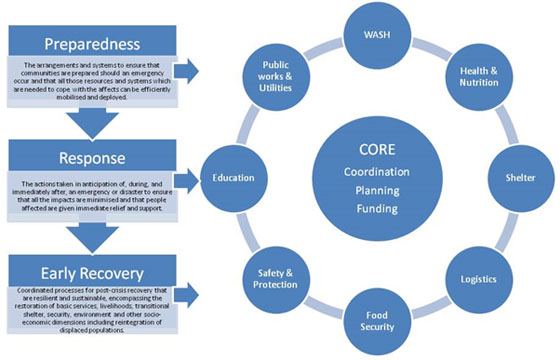
Eight National Clusters have been adopted. These are illustrated in figure below.
They are:
- Health & Nutrition (Lead: MOH, Co-Lead: WHO),
- Shelter (Lead: MOLGUDH&E, Co-Lead: IFRC),
- Education (Lead: MOE, Co-Leads: UNICEF, STC),
- Food Security (Lead: DOA, Co-Lead: NK),
- Safety & Protection (Lead MOWSW&PA, Co-Lead: NK),
- WASH (Lead: MOH-EH, Co-Lead: UNICEF),
- Logistics (Lead: MOF – FPO, Co-lead: NDMO),
- Public Works & Utilities (Lead: MOWT&PU, Co-Lead: NK).
Fiji National Disaster Management Clusters
Comprehensive Emergency & Disaster Management
In order to incorporate the Risk Reduction and Risk Management components of Disasters Management, the Health & Disaster Emergency Management requires an integrated comprehensive approach through four phases of emergency & disaster management, namely:
(a) Mitigation and Wellness (Prevention)
This phase encompasses actions to avoid an incident, to intervene to stop an incident from occurring or to mitigate an incident’s effects. It involves actions to protect lives and property and to defend against attacks, and may include public health surveillance and testing processes, immunizations, isolation or quarantine.
(b) Preparedness
This phase includes the activities necessary to build and sustain performance across the other phases. It involves efforts at all levels: to identify risks or threats; to determine vulnerabilities; to identify resources available and to address those vulnerabilities; to identify requirements or shortfalls; and conduct training and exercises.
(c) Response
This phase incorporates the activities necessary to address the immediate and short-term effects of an incident. Response activities include assessing preliminary effects, activating and deploying emergency resources, executing an emergency management plan, allocating existing resources in support of the plan and obtaining additional resources to sustain response operations.
(d) Recovery
The final phase encompasses those actions necessary to bring a community back to normal. It entails the coordination and execution of business continuity plans and the reconstitution of government operations and services
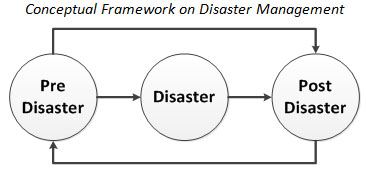
The integrated comprehensive approach through four phases of emergency & disaster management is shown in the figure below:
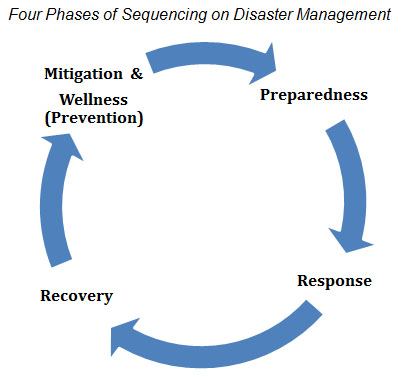
These phases are interdependent and, in practice, an affected community will address all of the phases consecutively although the emphasis may shift between them. The health services sectors need to be involved in all phases.
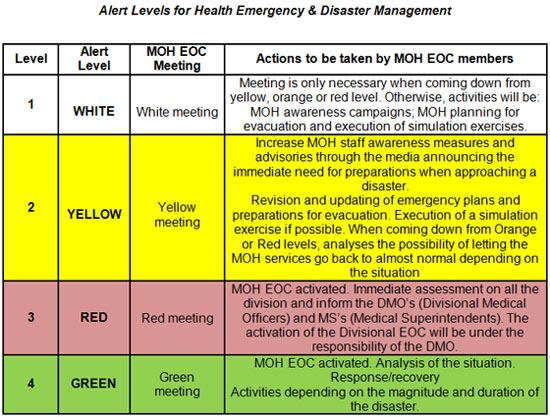
Alert Levels
The following are the emergency activation levels that apply to the ministry. This is an internal emergency management structure and the levels are not directly related to those that may be assigned in other organizations or jurisdictions:
Disaster Preparedness Campaign
The Government of Fiji is committed to improve disaster preparedness throughout the nation – and to ensure that everyone, young, old, woman, man, able, disabled, sick or healthy know how to protect themselves and other before, during and after a disaster.
The Ministry of Health therefore has developed the Get Ready. Disasters Happen campaign. This has been done with financial support from AusAID and NZ Aid and technical support from UNICEF Pacific.
Disaster Events:
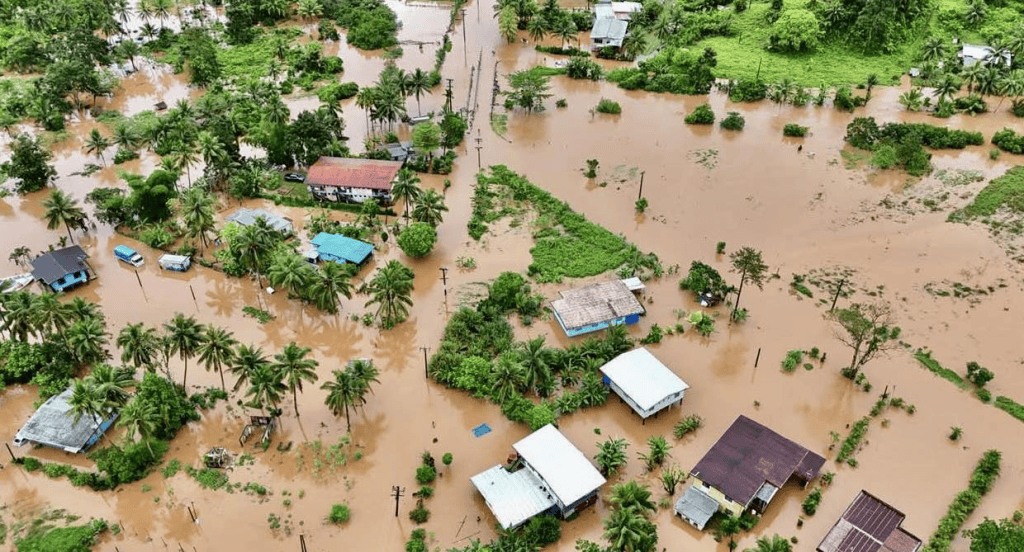
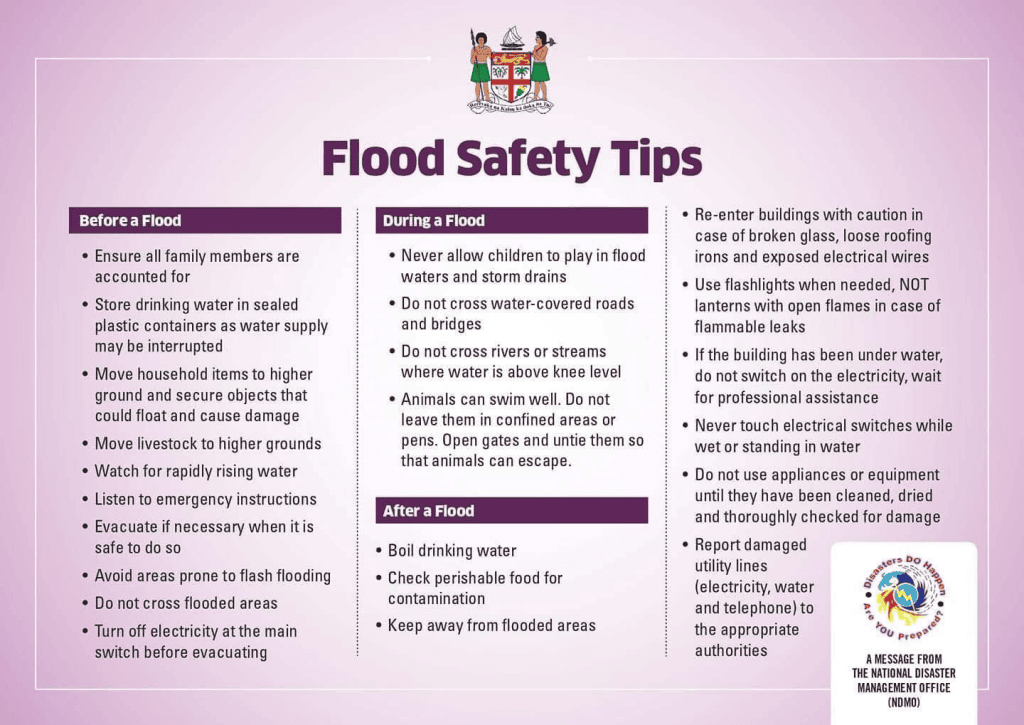
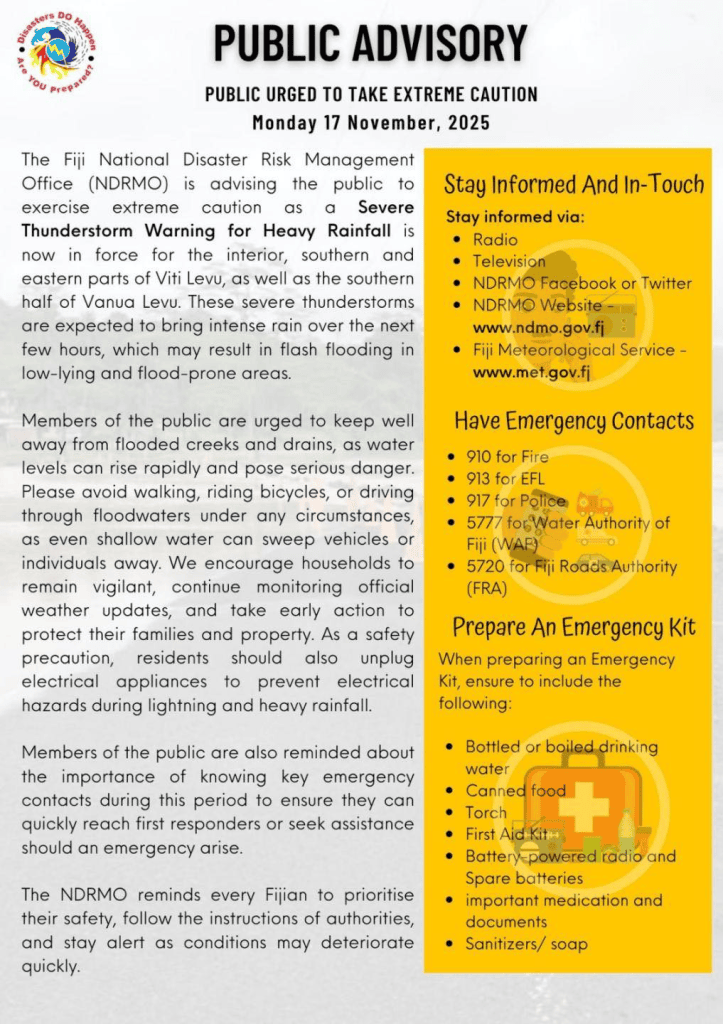
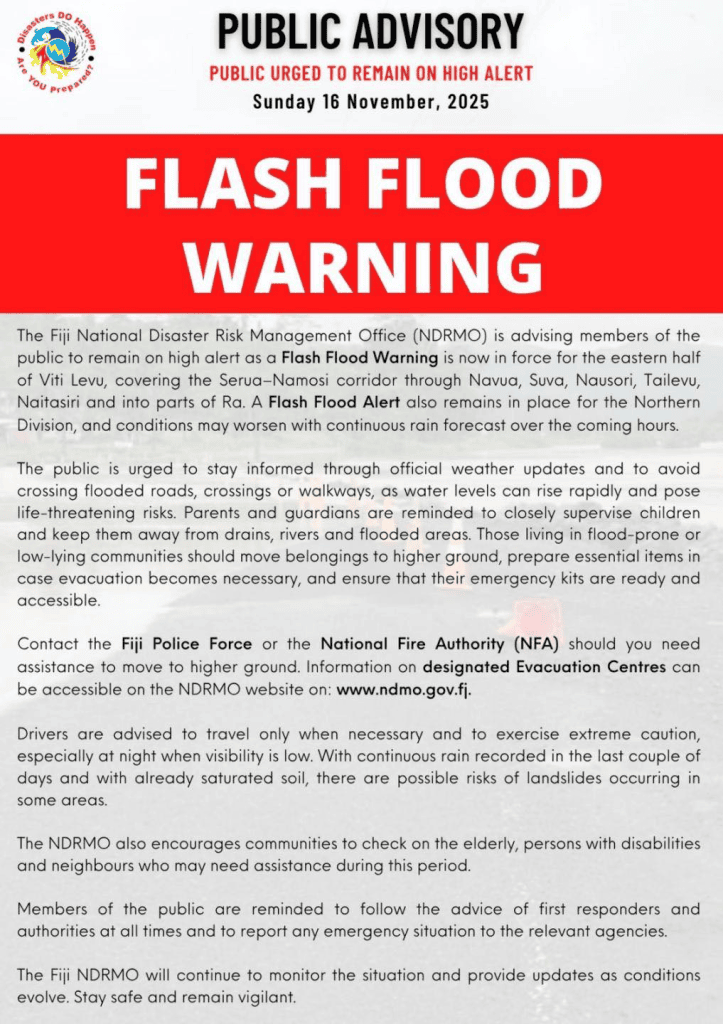
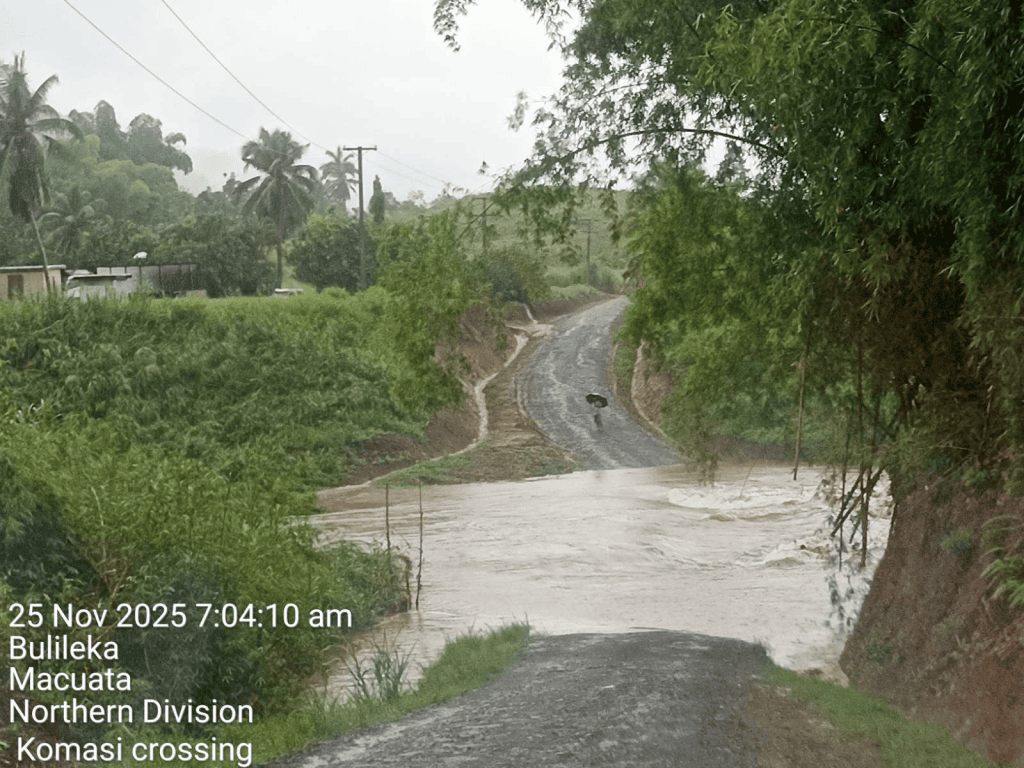
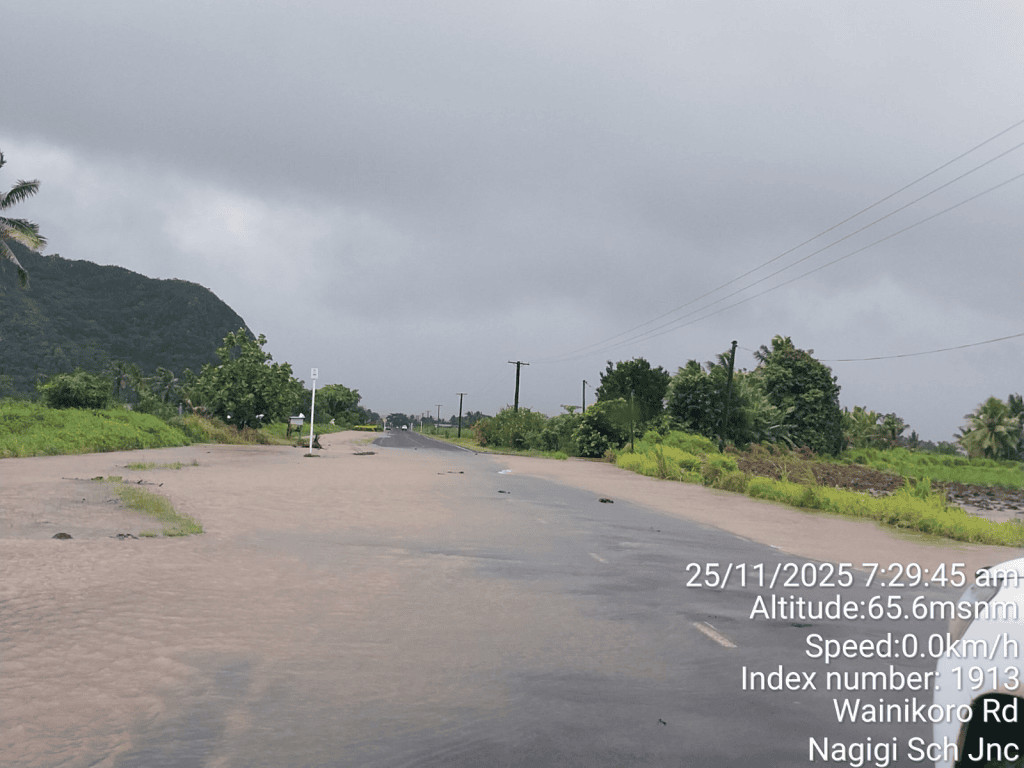
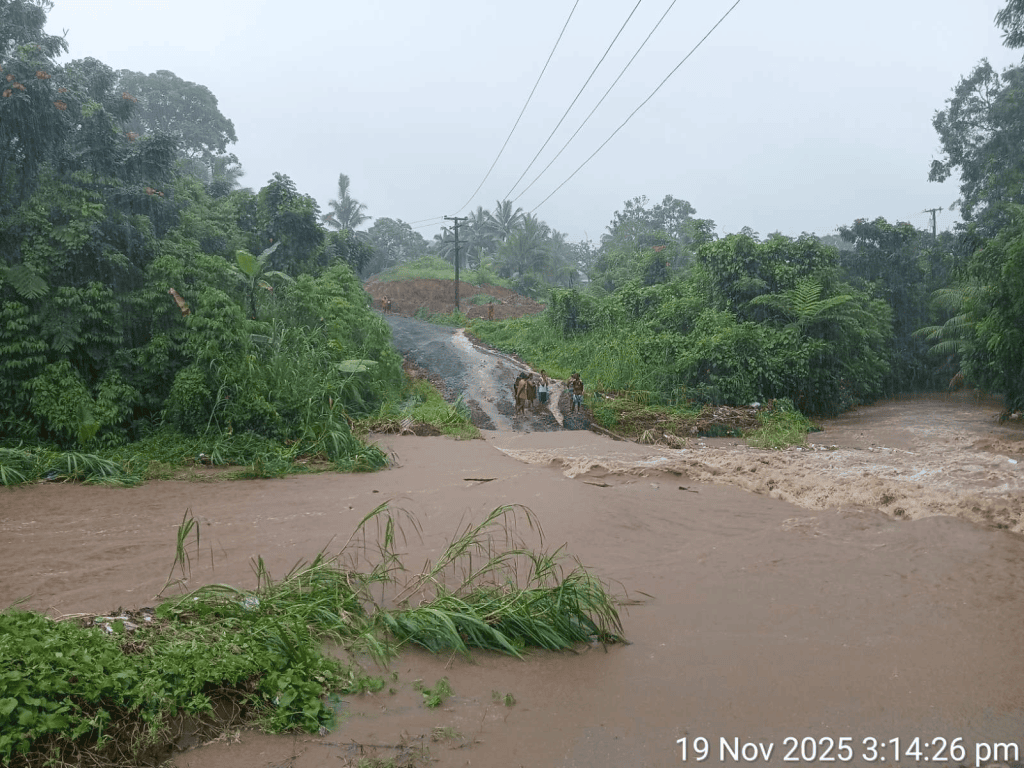
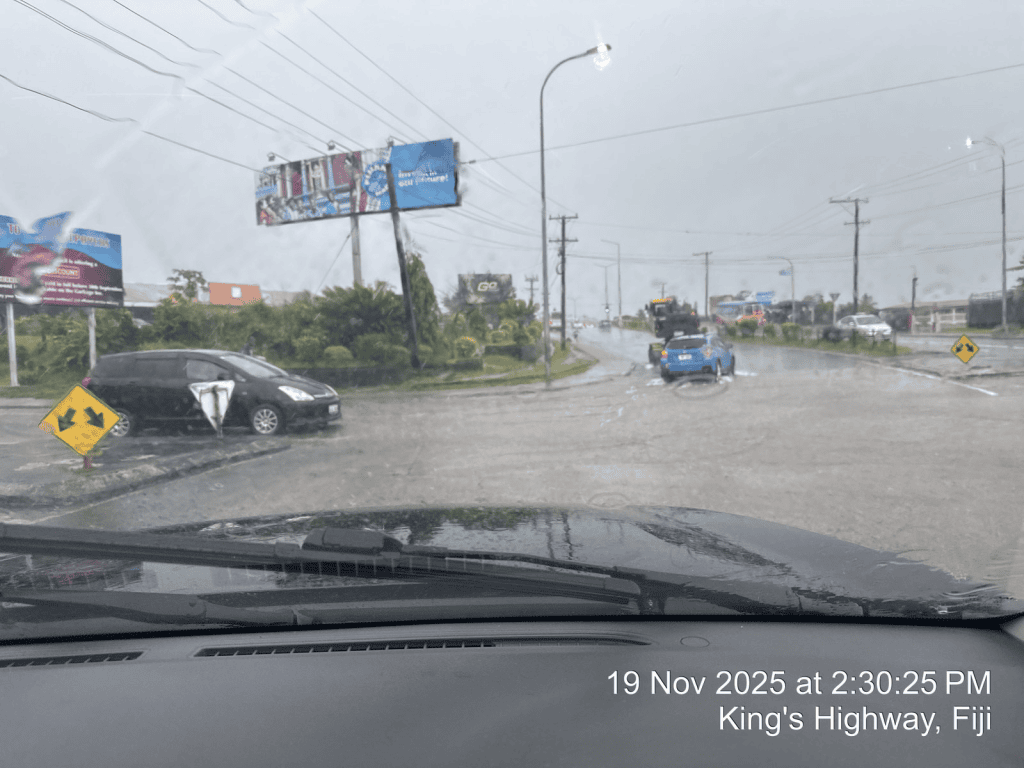
Flood
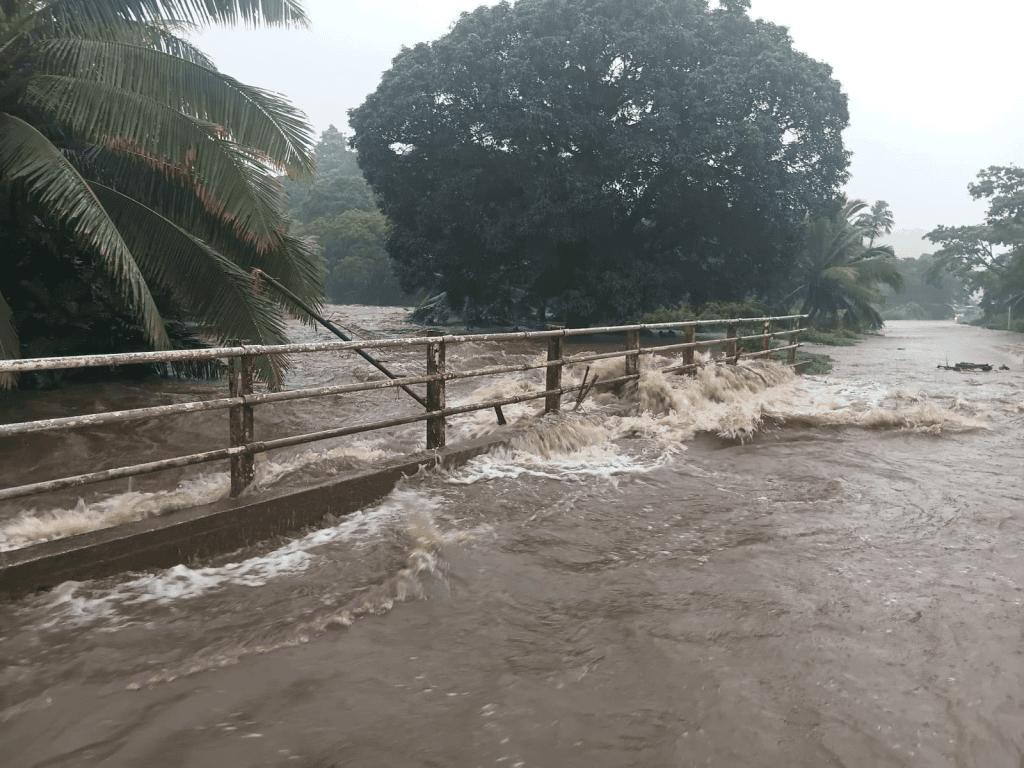
November 2025
Some useful Documents
Under construction…………
Policy Documents on the Pacific realm countries
To,
The Director,
National Disaster Management Office (NDMO), Fiji
Dear Sir,
Greetings from the Multi-Hazard Early Warning System Design and Implementation Center (MHEWC).
MHEWC provides technical solutions to strengthen Disaster Risk Management (DRM) governance systems, climate and multi-hazard risk management, and end-to-end early warning system design and implementation. We would be pleased to offer technical support to the NDMO in the following areas:
a) Upgrading NDMO’s existing web portal into a geospatial, database-driven, and app-enabled Decision Support System (DSS) to support real-time disaster risk governance, planning, preparedness, response, and recovery management.
b) Conducting climate and multi-hazard risk and vulnerability assessments, including the preparation of geospatial hazard, exposure, vulnerability, and risk maps, and the establishment of a centralized risk information repository and database management system.
c) Assessing existing monitoring, observation, and early warning capacities and supporting NDMO in the installation, enhancement, and integration of observation networks, including Automated Weather Stations (AWS), hybrid weather and hazard monitoring systems, and sensor-ingested real-time data systems linked to a functional DSS.
d) Designing and operationalizing end-to-end multi-hazard early warning systems, including weather and hazard nowcasting services, impact-based forecasting, forecast-based anticipatory early action, forecast-based emergency preparedness and response management, forecast-based financing, Early Action Protocol development, and DSS-supported Standing Orders on Disaster and Standard Operating Procedures.
e) Supporting automated hazard detection, monitoring, prediction, and emergency operations management, including the design, implementation, and operationalization of a Multi-Hazard and Disaster Emergency Operations Center (EOC).
f) Developing GIS, database, and information tool-driven local government and productive sector-level risk-informed planning and budgeting systems to strengthen disaster risk reduction, climate change adaptation, nature-based solutions, locally led adaptation, and resilience planning.
g) Reviewing and upgrading multi-hazard preparedness, response, and recovery plans across administrative levels and relevant priority sectors, in alignment with NDMO’s institutional mandate and national disaster management priorities.
h) Providing any additional technical assistance as may be required by NDMO to strengthen national-to-last-mile disaster risk governance and early warning capacities.
We would welcome the opportunity to discuss NDMO’s priorities and explore how MHEWC can support the development of a practical implementation roadmap for strengthening multi-hazard early warning, risk information, and disaster risk governance systems.
We look forward to your kind response.
Sincerely,
Z M Sajjadul Islam
Director
Multi-Hazard Early Warning System Design and Implementation Center (MHEWC)
Web: mhewc.org
Email: sajjad@mhewc.org
Phone & WhatsApp: +88 01711 979179