South Africa – climate and multi-hazard risk and vulnerabilities
South Africa is highly exposed to climate change and multi-hazard risks, especially drought, water scarcity, extreme heat, floods, flash floods, coastal storms, sea-level rise, wildfire, land degradation, biodiversity loss, climate-sensitive disease risks, and infrastructure disruption. The country lies within a drought-prone zone, has low average rainfall compared with the global average, and depends on climate-sensitive sectors such as agriculture, forestry, fisheries, tourism, water services, energy, urban infrastructure, and biodiversity-based livelihoods. (UNDP Climate Change Adaptation)
South Africa is already experiencing significant climate-change effects, including rising temperatures, rainfall variability, prolonged droughts and damaging floods. The National Climate Change Adaptation Strategy states that parts of the Western Cape, Northern Cape, Gauteng, Limpopo and the KwaZulu-Natal coast have warmed at around 2°C per century or higher, roughly twice the global rate, while extreme daily rainfall has increased in Gauteng and parts of the Free State.
Key hazard profile
| Hazard | Main risk pathway | Highly exposed areas / systems |
|---|---|---|
| Drought and water scarcity | Reduced dam levels, groundwater stress, crop losses, livestock losses, urban water restrictions, hydropower and industrial impacts | Western Cape, Northern Cape, Eastern Cape, Free State, Limpopo, North West, dryland farming areas |
| Extreme heat and heatwaves | Labour productivity loss, heat illness, crop stress, livestock mortality, higher cooling demand | Limpopo, Northern Cape, inland cities, outdoor workers, informal settlements |
| Floods and flash floods | Loss of life, housing damage, road and bridge failure, drainage overload, landslides, WASH contamination | KwaZulu-Natal, Eastern Cape, Gauteng metros, informal settlements, river valleys |
| Coastal hazards and sea-level rise | Coastal erosion, storm surge, damage to ports, tourism assets, roads and coastal settlements | Durban/eThekwini, Cape Town, Garden Route, Eastern Cape coast |
| Wildfire / veld fire | Loss of grazing land, forest damage, biodiversity loss, air pollution, settlement risk | Western Cape, Eastern Cape, Free State, Limpopo, wildland–urban interface areas |
| Food-system shocks | Reduced crop yields, livestock stress, food-price increases, rural livelihood loss | Commercial and smallholder farming zones, dryland maize and livestock systems |
| Climate-sensitive health risks | Heat stress, malaria range shifts, diarrhoeal disease after floods, respiratory impacts from fires and air pollution | Poor households, informal settlements, elderly people, children, outdoor workers |
Sector-specific vulnerability
1. Water security
Water scarcity is one of South Africa’s most strategic climate risks. The country’s mean annual rainfall is about 464 mm, far below the global average of about 857 mm, and higher temperatures combined with reduced rainfall in some regions are expected to further stress already depleted water resources. (UNDP Climate Change Adaptation)
The Cape Town “Day Zero” crisis demonstrated how drought, population growth, infrastructure constraints and demand pressures can converge into an urban water-security emergency. Between 2014 and 2018, the Theewaterskloof reservoir, a major water supply source near Cape Town, dropped to around 27% of full capacity. (Shorthand World Bank Group)
Water risk affects nearly every sector: domestic supply, irrigation, livestock, mining, energy, tourism, ecosystems and municipal service delivery. Priority adaptation needs include catchment restoration, groundwater monitoring, water-demand management, leakage reduction, wastewater reuse, desalination where appropriate, drought contingency planning, and integrated water-resource forecasting.
2. Agriculture, livestock and food security
Agriculture is directly exposed to rainfall variability, drought, heat stress, pests, soil degradation and flood damage. The World Bank identifies water management, irrigation expansion, watershed management, soil and water conservation, and climate-resilient agricultural practices as central priorities for building a more resilient agricultural sector. (World Bank)
Dryland maize, livestock grazing, horticulture, wine production, fruit exports and smallholder farming systems are particularly sensitive. Drought reduces pasture, livestock productivity, crop yields and farm income; heat stress reduces labour productivity and animal health; intense rainfall damages crops, farm roads, irrigation infrastructure and storage systems. Poor smallholders, farm workers, women farmers and rural households with limited access to irrigation, finance and insurance face the highest sensitivity.
3. Floods, storms and infrastructure exposure
Flood risk is a major concern in eastern and urban South Africa. The 2022 KwaZulu-Natal floods showed the scale of exposure: reported impacts included hundreds of deaths, damage to homes, roads, bridges, schools, electricity and water infrastructure, and widespread displacement. (ADRC)
Urban areas are especially vulnerable where informal settlements are located along floodplains, steep slopes, drainage corridors and unstable land. Flood risk is amplified by poor drainage, impermeable surfaces, waste-blocked stormwater systems, aging infrastructure and weak land-use enforcement. Climate-resilient infrastructure standards are therefore critical for roads, bridges, culverts, drainage, schools, clinics, electricity systems, water systems and housing.
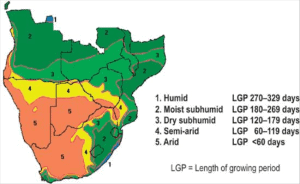
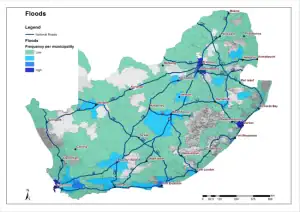
South African flood frequency map
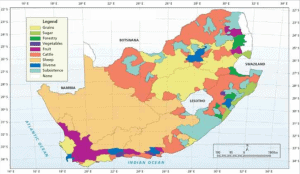
South African Agricultural regions
4. Heat stress and labour productivity
Heat is an increasingly important economic and public-health risk. The World Bank’s South Africa CCDR identifies heat shocks on labour productivity as a dominant climate-damage channel, accounting for a large share of modeled climate damages under its pessimistic scenario.
The most exposed groups include construction workers, farm workers, miners, transport workers, informal traders, elderly people, children, people with chronic illness and residents of poorly ventilated informal housing. Heat adaptation requires heat-health warning systems, occupational safety rules, shaded workspaces, urban greening, cool roofs, ventilation, school heat protocols, and targeted public-health messaging.
5. Coastal zones, ports and tourism
South Africa’s long coastline creates exposure to sea-level rise, coastal flooding, storm surge, erosion, saline intrusion and marine ecosystem change. Durban, Cape Town, the Garden Route and parts of the Eastern Cape coast are especially important because they concentrate ports, roads, rail corridors, tourism assets, settlements and coastal ecosystems.
Coastal risk also affects fisheries and biodiversity. UNDP notes that rising sea temperatures may alter marine fish migration patterns and increase harmful algal blooms, affecting fish, shellfish, marine mammals, seabirds and related livelihoods. (UNDP Climate Change Adaptation)
6. Biodiversity, ecosystems and wildfire
South Africa is globally important for biodiversity, but ecosystems are increasingly stressed by heat, drought, wildfire, invasive species, land degradation, water scarcity and changing rainfall patterns. The National Adaptation Strategy notes that climate zones are shifting, ecosystems and landscapes are being degraded, fires are becoming more frequent, and terrestrial and marine systems are under stress.
Ecosystem degradation increases disaster risk by reducing natural flood regulation, water retention, soil stability, carbon storage, grazing quality and coastal protection. Nature-based solutions—wetland rehabilitation, alien invasive clearing, catchment restoration, rangeland management, fire management and coastal dune/mangrove protection—are therefore central to climate resilience.
7. Public health vulnerability
Climate change threatens health through heat stress, malnutrition, air pollution, wildfire smoke, water contamination after floods, drought-related hygiene stress, and changing disease ecology. UNDP highlights malaria and schistosomiasis as climate-sensitive health concerns, with temperature and rainfall changes potentially expanding areas suitable for transmission. (UNDP Climate Change Adaptation)
Health vulnerability is highest among low-income households, informal-settlement residents, children, elderly people, people with disabilities, chronically ill persons, outdoor workers and communities with weak WASH access.
Exposure, sensitivity and adaptive capacity
Exposure
South Africa is exposed to both slow-onset risks—drought, water scarcity, heat, sea-level rise, ecosystem degradation—and rapid-onset hazards such as floods, flash floods, storms, coastal surges, wildfires and landslides. The World Bank identifies droughts, floods and heatwaves as major climate risks affecting the country’s long-term development prospects. (World Bank)
Sensitivity
Sensitivity is high because climate shocks interact with poverty, inequality, unemployment, water scarcity, informal settlements, aging infrastructure, land degradation and dependence on climate-sensitive livelihoods. The World Bank notes that South Africa’s climate damages are expected to be geographically uneven and concentrated in major urban centres, where economic activity and population are concentrated, with poor households disproportionately affected. (World Bank)
Adaptive capacity
South Africa has comparatively strong climate-policy, scientific, hydrometeorological and institutional foundations, but implementation gaps remain at provincial, municipal and community levels. The National Climate Change Adaptation Strategy provides a common reference point for adaptation across government, sectors and stakeholders, and South Africa’s Climate Change Act, 2024 creates a legal framework for a coordinated climate response and a long-term just transition toward a climate-resilient economy and society. (South Africa Government)
However, local adaptive capacity is constrained by municipal financing gaps, infrastructure maintenance backlogs, informal settlement growth, uneven technical capacity, weak data integration, limited risk financing, and the need to link early warning with anticipatory action and social protection.
Economic and poverty impacts
The World Bank estimates that South Africa’s modeled climate damages could reach about R1.5 trillion in net present value between 2022 and 2050, or around 0.8% of GDP on average, rising to about 1.2% of GDP per year between 2040 and 2050 under a pessimistic dry scenario. Without rapid and inclusive adaptation, climate-change-induced shocks could push almost 1 million South Africans into poverty or economic fragility by 2030.
Priority adaptation and early warning needs
South Africa’s resilience pathway should focus on an impact-based, multi-hazard early warning and anticipatory action system linked to water, agriculture, urban planning, health, infrastructure, social protection and disaster-risk financing.
Key priorities include:
Strengthen drought early warning using rainfall, dam levels, groundwater, soil moisture, vegetation condition, crop status, livestock condition and water-demand indicators.
Develop flood impact-based forecasting for KwaZulu-Natal, Eastern Cape, Gauteng metros, informal settlements and critical transport corridors.
Expand heat-health early warning systems, especially for cities, schools, outdoor workers, elderly people and informal settlements.
Integrate wildfire risk monitoring using weather, fuel-load, vegetation dryness, land-use and response-capacity data.
Build climate-resilient water systems, including demand management, leakage reduction, reuse, groundwater governance and catchment restoration.
Scale climate-smart agriculture, irrigation efficiency, drought-tolerant crops, livestock early warning, pasture monitoring and inclusive agricultural insurance.
Improve coastal risk monitoring for storm surge, erosion, sea-level rise, port disruption and tourism exposure.
Upgrade municipal drainage, roads, bridges, culverts, schools, clinics and electricity systems using future-climate design standards.
Link early warning with shock-responsive social protection, emergency cash, insurance, forecast-based financing and pre-positioned relief.
Establish a national geospatial Decision Support System integrating hazard forecasts, exposure databases, vulnerability layers, infrastructure assets, social protection registries and local disaster-management plans.
Overall, South Africa’s climate-risk profile is defined by severe water stress, rising heat, recurrent drought, damaging floods, high urban and infrastructure exposure, biodiversity sensitivity, and deep social inequality. Its adaptation challenge is not only technical; it is also institutional, fiscal and social. The country’s resilience agenda must therefore combine climate science, municipal implementation capacity, risk-informed infrastructure, water security, social protection, ecosystem restoration, and last-mile early warning for early action.
National Disaster Management Centre
Overview
The National Disaster Management Centre is established in terms of Section 8 of the Disaster Management Act, 2002 (Act No 57 of 2002) (DMA). The National Centre functions as an institution within the public service and forms part of, and functions within, a department of state (DCOG) for which the Minister is responsible. The objective of the National Centre is to promote an integrated and co-ordinated system of disaster management, with special emphasis on prevention and mitigation, by national, provincial and municipal organs of state, statutory functionaries, other role-players involved in disaster management and coimmunities’ National Centre is also responsible for the administration of the Fire Brigade Services Act, 1987 (Act No 99 of 1987) (FBSA)Within the South African environment, disaster management is a shared responsibility which must be fostered through partnerships between the various stakeholders and co-operative relationships between the different spheres of government, the private sector and civil society.
Furthermore, disaster management is an intergovernmental process, with each sphere of government playing a unique role and performing a specific set of responsibilities in the process. The DMA makes provision for the establishment of Disaster Management Centres across all spheres of government.The general powers and duties of the Nation Centre are stipulated in Section 15 of the DMA and this includes the following:must specialise in issues concerning disasters and disaster management:may act as an advisory and consultative body on issues concerning disasters and disaster management must promote the recruitment, training and participation of volunteers in disaster management;must promote disaster management capacity building, training and education throughout the Republic, including in schools, and, to the extent that it may be appropriate. in other southern African states;Section 6 of the DMA stipulates that the Minister must prescribe a national disaster management framework.
The national disaster management framework is the legal instrument specified by the Act to address such needs for consistency across multiple interest groups, by providing ‘a coherent, transparent and inclusive policy on disaster management appropriate for the Republic as a whole’ in terms of Section 7(1) of the DMA. The national disaster management framework comprises four key performance areas (KPAs) and three supportive enablers required to achieve the objectives set out in the KPAs. The KPAs and enablers are informed by specified objectives and, as required by the Act, key performance indicators (KPIs) to guide and monitor progress. In addition, each KPA and enabler concludes with a list of guidelines that will be disseminated by the NDMC to support the implementation of the framework in all three spheres of government. The diagram below depicts the interface between the four KPAs and how the three Enablers: The FBSA is administered by the Directorate Fire Services. The primary objective of this Directorate is to oversee, manage and provide oversight in the efficient implementation of the FBSA, and other related policies and strategies on fire services nationally. This Directorate provide secretariat services to the Fire Brigade Board.
Vision
An integrated system of Disaster Management and Fire Services.
Mission
To coordinate system of Disaster Management and Fire Services, through: Developing and implementing appropriate policies and regulatory frameworks. Promoting a culture of risk avoidance by creating enabling mechanisms for stakeholder participation. Monitoring and evaluation of disaster management programmes across the spheres of government. Strengthening cooperation amongst stakeholders in disaster management. Inform and direct SA’s disaster management efforts to achieve the priorities of Regional and International Frameworks.
About Us
NOTES ON THE HISTORY OF THE DISASTER MANAGEMENT INSTITUTE OF SOUTHERN AFRICA (DMISA)
The Disaster Management Institute of Southern Africa (DMISA) aims to advance the discipline and create learning and networking opportunities. DMISA, which was founded in 1985, has engaged with the South African National Disaster Management Centre (NDMC) on various occasions. Regular meetings between DMISA leadership and the NDMC ensures a constant flow of information from functionaries in all spheres of government, directly to the NDMC, cutting red tape and improving cooperation and understanding. DMISA is a self-governing body committed to standardization, and hosts the biggest annual Disaster Risk Management conference in Africa, routinely attracting more than 350 delegates.
In partnership with the NDMC, DMISA plays an important role in furthering the interests of DRM practitioners in South Africa and in the Southern Africa region as a whole. DMISA has kept pace with global changes since its inception, and has undergone several name changes and considerable constitutional reforms in recent years. Founded in April 1985 as the Civil Defence Association of South Africa, it has contributed significantly to South Africa’s legislative reform in DRM through inputs of its members and structures.
When the institute was established, civil defence services were rendered according to the provisions of the Civil Defence Act (Act 67 of 1977) and the Fund Raising Act of 1978. However, it became increasingly apparent that civil defence and protection had to change to keep abreast with international approaches to disasters and how they were managed. The International Decade for Natural Disaster Reduction (IDNDR), introduced by the United Nations (UN) during the 1990s, was a clear call for the world to shift the focus away from reactive disaster responses onto disaster prevention and preparedness and building resilience through developmental initiatives. The changes within the Institute reflected the changes in thinking and approach among practitioners in the field, as well as a move away from military influence towards a reaffirmation of the principles of civilian control and democracy.
DMISA organised a study tour to Europe and the United Kingdom in 1990, which contributed significantly to a paradigm shift from civil defence and protection to disaster management in South Africa. Coming at the end of the apartheid era, the tour was accepted by the UN in Geneva. As a result, the UN Disaster Management Training Programme (UNDP), developed by the UN Disaster Relief Organization (UNDRO), was introduced to South Africa, leading in 1996 to a partnership with Technikon SA to offer Certificate Courses in Disaster Management based on the UNDP modules. The courses were jointly accredited and certified by Cranfield University in the UK; the University of Wisconsin in the USA; and the then Civil Protection Association.
The changing face of DMISA:
Source: Reid, 2006
PROFESSIONAL BODY STATUS
The introduction of additional membership categories linked to qualifications and experience heralded the start of another transformation process for DMISA. This has resulted in the recognition by SAQA (South African Qualifications Authority) of DMISA as the professional body for Disaster Management in South Africa from 18 February 2015 (SAQA professional body ID 940), and the registration of four professional designations with SAQA:
- Disaster Management Technician (DMT) – SAQA designation ID 760
- Disaster Management Associate (DMA) – SAQA designation ID 761
- Disaster Management Practitioner (DMPc) – SAQA designation ID 762
- Disaster Management Professional (PrDM) – SAQA designation ID 593
DMISA administers the four designations and regularly reports to SAQA on governance matters.
CONCLUSION
DMISA is the non-profit professional association for Disaster Management in Southern Africa and the SAQA-recognised professional body for Disaster Management in South Africa and remains committed to providing learning, networking and alignment opportunities for its members in support of the Disaster Management community of practice with the ultimate goal of reducing disaster risk and disaster impact and building capacity, resilience and agility within society.
This article written by Peter Mokoto, Pat Reid and Johan Minnie in August 2006 and updated by Johan MInnie in August 2019 and January 2023.
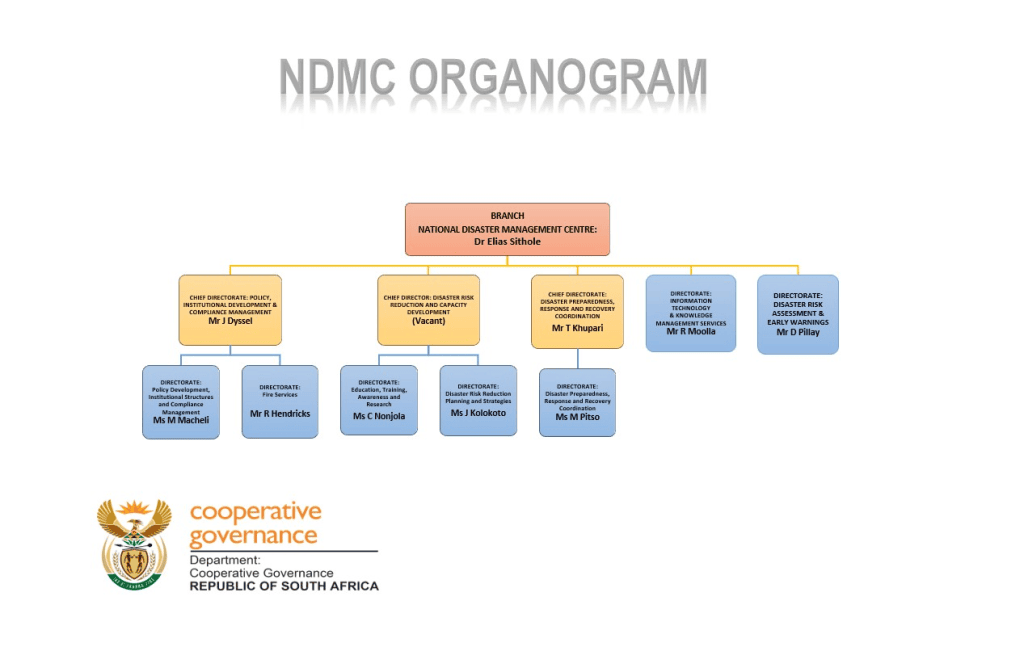
SA Profile
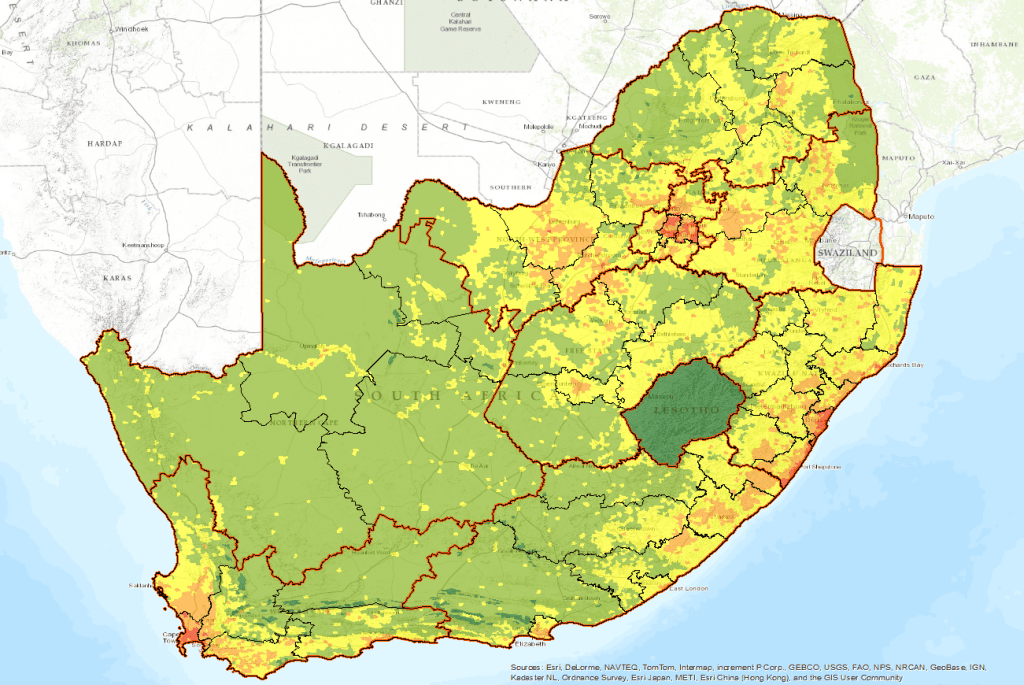
South Africa faces increasing levels of disaster risk. It is exposed to a wide range of weather hazards, including drought, cyclones and severe storms that can trigger widespread hardship and devastation. In addition, South Africa’s extensive coastline and proximity to shipping routes present numerous marine and coastal threats. Similarly, our shared borders with six southern African neighbours present both natural and human-induced cross-boundary risks, as well as humanitarian assistance obligations in times of emergency
In addition to these natural and human-induced threats and despite ongoing progress to extend essential services to poor urban and rural communities, large numbers of people live in conditions of chronic disaster vulnerability – in underserved, ecologically fragile or marginal areas – where they face recurrent natural and other threats that range from drought to repeated informal settlement fires.
Severe floods in Cape Town’s historically disadvantaged Cape Flats in June 1994 profiled the urgency for legislative reform in the field of disaster risk management, stimulating a consultative process which resulted in Green and White Papers on Disaster Management. These important discussion and policy documents afforded opportunity for consultation with multiple stakeholder groups and provided the platform for development of draft legislation in 2000 that was consistent with emerging international trends in disaster risk reduction.
EarlyWarning
- Media Release 23 June 2025Uploaded by lindisizwem@ndmc.gov.za on 2025-06-23
- Seasonal Profile Spring 2025Uploaded by lindisizwem@ndmc.gov.za on 2025-09-16
- Media Release 23 June 2025Uploaded by lindisizwem@ndmc.gov.za on 2025-06-23
- Seasonal Profile Spring 2025Uploaded by lindisizwem@ndmc.gov.za on 2025-09-16