Climate risk and vulnerabilities of Eritrea
Eritrea is highly vulnerable to climate change and multi-hazard risks due to its arid and semi-arid climate, recurrent droughts, high rainfall variability, limited freshwater resources, dependence on rainfed agriculture and pastoralism, land degradation, low-lying Red Sea coastal areas, fragile mountain ecosystems, and constrained adaptive capacity. Eritrea’s NDC 3.0 identifies the country as highly vulnerable to climate impacts such as droughts and floods, while its NAPA highlights vulnerability associated with low-lying coastal regions, arid and semi-arid zones, drought- and desertification-prone areas, and fragile ecosystems including mountainous ecosystems.
Eritrea is highly exposed and vulnerable to climate change and multi-hazard risks due to its arid and semi-arid climate, low and unreliable rainfall, recurrent droughts, limited freshwater resources, dependence on rainfed agriculture and pastoralism, degraded rangelands and watersheds, fragile ecosystems, and exposed Red Sea coastal areas. The country faces major risks from droughts, rainfall variability, water scarcity, flash floods, desertification, land degradation, heat stress, crop failure, livestock losses, coastal erosion, sea-level rise, saltwater intrusion, marine ecosystem stress, and climate-sensitive disease outbreaks. Climate change is expected to intensify these vulnerabilities through rising temperatures, more frequent dry spells, severe droughts, erratic rainfall, flood events, groundwater stress, reduced agricultural productivity, pasture scarcity, and growing pressure on food security, livelihoods, health, infrastructure, ecosystems, and vulnerable rural and coastal communities. Strengthening multi-hazard early warning systems, drought and flood forecasting, water security, climate-resilient agriculture, rangeland restoration, pastoral livelihood protection, coastal adaptation, health surveillance, disaster risk financing, and locally led community preparedness is essential to reduce losses and protect Eritrea’s vulnerable populations.

1. Multi-hazard exposure
Eritrea’s main climate and disaster risks include drought, floods, erratic rainfall, water scarcity, heat stress, desertification, land degradation, rangeland decline, coastal hazards, sea-level rise, pest and disease outbreaks, and climate-sensitive health risks. Eritrea’s NDC 3.0 states that the country experiences extreme weather events including droughts, floods, epidemic pests, diseases, parasitic weeds, and water-related stresses.
The country’s risk profile is shaped by strong ecological contrasts: the hot arid Red Sea coastal plains, the central highlands, the western lowlands, and the eastern escarpment all face different combinations of drought, flash flooding, erosion, groundwater stress, crop failure, livestock losses, and coastal vulnerability. Eritrea’s NAPA specifically identifies drought, desertification, low-lying coastal exposure, and fragile mountainous ecosystems as central adaptation concerns. (UNFCCC)
2. Climate change as a risk multiplier
Climate change is expected to worsen Eritrea’s already high exposure to rainfall variability, drought, water scarcity, and food insecurity. The Adaptation Fund notes that projected impacts include temperature increases above the global mean, increasing rainfall variability, more frequent dry spells, and more severe droughts, with direct consequences for water resources, agriculture, and food security. (Adaptation Fund)
This makes Eritrea’s climate risk not only an environmental issue, but also a food-security, water-security, livelihood, public-health, ecosystem, and disaster-risk governance challenge. Climate shocks can rapidly affect rural production, livestock mobility, household nutrition, drinking-water access, agricultural income, and the coping capacity of pastoral and agro-pastoral communities.
3. Drought, water scarcity, and groundwater vulnerability
Water scarcity is one of Eritrea’s most critical climate vulnerabilities. Eritrea’s NDC 3.0 states that the water sector is highly vulnerable to climate change and notes that most of the country receives less than 500 mm of precipitation, with no permanent rivers except one, limited lakes, and insufficient storage dams, all of which constrain freshwater availability.
Drought affects drinking water, livestock water points, groundwater recharge, irrigation, rainfed farming, pasture regeneration, household food security, and rural livelihoods. Eritrea’s NAPA reports that wells are drying in more arid coastal plains and highland valleys, and that groundwater supply for irrigation, livestock, and human use has become critical in vulnerable areas. (UNFCCC)
4. Agriculture, pastoralism, and food-security vulnerability
Agriculture and livestock systems are central to Eritrea’s vulnerability. More than 70% of Eritrea’s population depends on agriculture, including crop and livestock production, while domestic food production remains below national requirements even in good years, increasing reliance on imports. (dicf.unepgrid.ch)
Smallholder farmers and pastoralists are highly exposed because many production systems depend on rainfall, rangeland condition, groundwater, seasonal mobility, and traditional farming practices. UNEP-GRID notes that small-scale farmers dominate the agricultural sector, have low productivity, rely on rainfed and traditional practices, and are therefore extremely vulnerable to climate variability. (dicf.unepgrid.ch)
Key livelihood risks include:
| Sub-sector | Main climate and hazard risks |
|---|---|
| Rainfed crops | Drought, delayed rains, erratic rainfall, crop failure, soil erosion |
| Irrigated agriculture | Groundwater decline, drying wells, salinity, water shortages |
| Pastoralism | Pasture scarcity, water-point shortages, livestock mortality, reduced productivity |
| Agro-pastoral systems | Combined crop failure and livestock losses during drought years |
| Rangelands | Biomass decline, degradation, replacement of nutritious species by less valuable vegetation |
| Food security | Reduced domestic production, malnutrition risk, import dependence, livelihood erosion |
Eritrea’s NAPA states that pastoral livelihoods in several lowland areas are becoming less sustainable because of declining pasture, lack of feed and water, animal losses, and disruption of traditional livestock movement. (UNFCCC)
5. Flood and flash-flood vulnerability
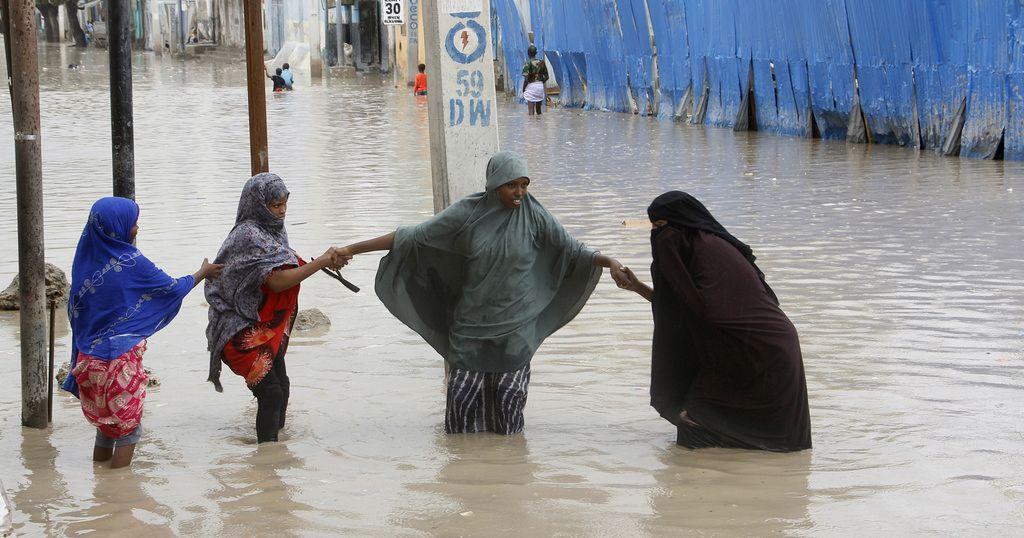
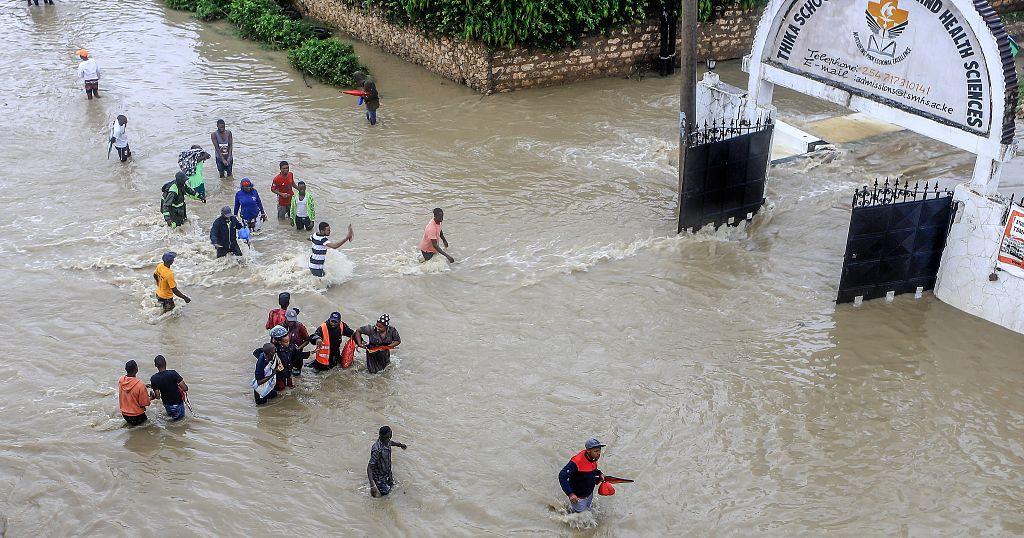
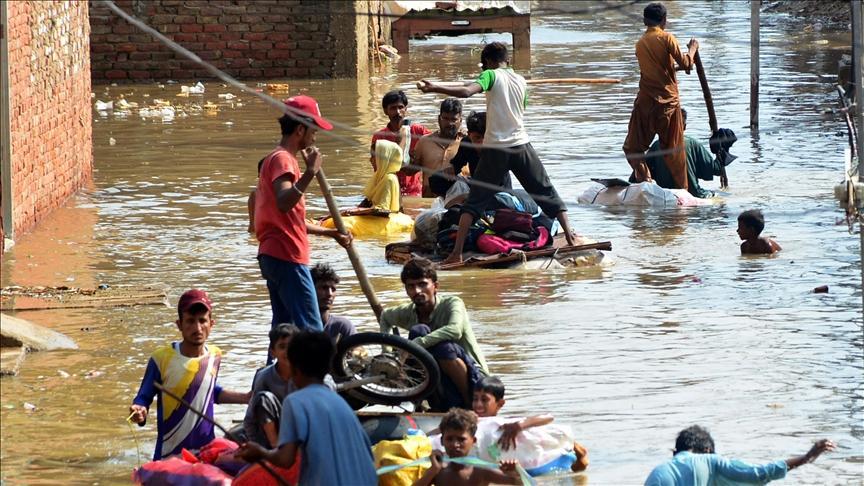
Although drought is the dominant climate hazard, Eritrea is also vulnerable to floods and flash floods, especially when intense rainfall occurs over dry, degraded, or steep catchments. Floods can damage crops, water-harvesting structures, roads, settlements, small dams, irrigation infrastructure, health facilities, and rural access routes.
Flood risk is particularly relevant in seasonal riverbeds, lowland floodplains, spate-irrigation areas, urban drainage systems, and mountain-to-lowland catchments, where intense rainfall can rapidly generate runoff and erosion. Eritrea’s NDC 3.0 explicitly identifies floods as one of the key climate impacts affecting the country.
6. Coastal and marine vulnerability
Eritrea’s Red Sea coast and islands are exposed to sea-level rise, coastal erosion, saltwater intrusion, marine heat stress, ocean acidification, coastal flooding, and degradation of marine and coastal ecosystems. Eritrea’s NDC 3.0 states that the marine resources sector is highly vulnerable to climate change and identifies observed risks including sea-level rise, surface-water temperature rise, soil instability and landslides along the coast, drought and water scarcity, strong rainfall and wind, and acidification of sea and freshwater.
Coastal vulnerability affects fishing communities, coastal settlements, ports, salt flats, mangroves, coral reefs, marine biodiversity, tourism potential, and groundwater resources. Saltwater intrusion is particularly important where coastal aquifers are already stressed by low rainfall, high evaporation, and groundwater extraction.
7. Health and social vulnerability
Climate change can worsen health risks through water scarcity, malnutrition, heat stress, diarrhoeal disease, malaria, dengue fever, schistosomiasis, waterborne disease, and reduced access to safe water. Eritrea’s NDC 3.0 reports increasing trends in climate-sensitive diseases, especially those associated with water, and identifies malaria, dengue fever, schistosomiasis, diarrhoea, and malnutrition as likely to worsen under climate change.
The most vulnerable groups include smallholder farmers, pastoralists, agro-pastoral communities, fishing communities, rural women, children, older persons, pregnant women, people with disabilities, poor households, coastal communities, and households living in drought-prone, water-stressed, flood-prone, or degraded rangeland areas. Eritrea’s NAPA also identifies children, pregnant women, elderly people, refugees, and rural communities as particularly vulnerable to climate-related health and livelihood impacts. (UNFCCC)
8. Sector-specific vulnerability summary
| Sector | Main climate and multi-hazard risks |
|---|---|
| Water resources | Drought, low rainfall, drying wells, limited surface water, groundwater stress, saltwater intrusion |
| Agriculture and food security | Crop failure, drought, rainfall variability, pests, soil erosion, low productivity |
| Pastoralism and livestock | Pasture degradation, water scarcity, livestock mortality, declining productivity |
| Coastal zones and marine systems | Sea-level rise, coastal erosion, salinity intrusion, warming waters, acidification |
| Health | Malnutrition, diarrhoeal disease, malaria, dengue, schistosomiasis, heat stress |
| Forests and ecosystems | Deforestation, land degradation, desertification, biodiversity loss, reduced ecosystem services |
| Infrastructure | Flood damage, water-supply stress, road disruption, damage to small irrigation and storage systems |
| Rural livelihoods | Income loss, migration pressure, food insecurity, weakened coping strategies |
9. Priority resilience needs
Eritrea’s resilience agenda should prioritize multi-hazard early warning systems, drought monitoring, rainfall and flood forecasting, water-resource assessment, groundwater recharge, spate irrigation improvement, soil and water conservation, climate-resilient agriculture, rangeland restoration, pastoral livelihood support, coastal-zone monitoring, climate-health surveillance, food-security early warning, disaster risk financing, and community-based adaptation.
A practical resilience package should include:
| Priority area | Key actions |
|---|---|
| Early warning and anticipatory action | Impact-based warnings for drought, floods, heat, pests, livestock stress, food insecurity, and coastal hazards |
| Water security | Groundwater monitoring, rainwater harvesting, small dams, recharge systems, safe rural water supply |
| Climate-resilient agriculture | Drought-tolerant crops, soil-moisture conservation, agro-climate advisories, spate irrigation, seed support |
| Pastoralist resilience | Rangeland restoration, fodder systems, water-point rehabilitation, livestock health services, mobility support |
| Flood-risk management | Flash-flood mapping, drainage improvement, watershed restoration, flood-safe irrigation and rural infrastructure |
| Coastal resilience | Sea-level-rise monitoring, salinity management, mangrove and coral protection, resilient coastal livelihoods |
| Health and nutrition resilience | Climate-sensitive disease surveillance, safe WASH systems, nutrition support, heat-health preparedness |
| Risk governance | Local risk planning, climate data systems, contingency finance, community-based preparedness |
Disaster response and management in Eritrea is coordinated by the Ministry of Labour and Social Welfare (MoLSW).
Disaster response and management in Eritrea is coordinated by the Ministry of Labour and Social Welfare (MoLSW). It is represented at the sub-national and community levels through its sub-regional offices. Support to emergency coordination and response is managed at a sectoral level through the Ministries of Health (MoH) and the Ministry of Land, Water and Environment (MoLWE). The UN Resident Coordinator and UNOCHA support humanitarian coordination within the UN country team, and UNICEF is a key member of the UNCT Humanitarian Needs Group. There is no formal cluster system in Eritrea.