Climate risk and vulnerabilities of Palau
Polished final version
Palau is highly exposed and vulnerable to climate change and multi-hazard risks due to its small-island geography, dispersed archipelago, low-lying coastal and atoll communities, fragile freshwater resources, dependence on coral reefs, fisheries and tourism, and concentration of people, infrastructure, services and cultural assets near the coast. The country faces major risks from sea-level rise, coastal flooding, storm surge, coastal erosion, saltwater intrusion, typhoons, intense rainfall, flash floods, landslides, drought, extreme heat, coral bleaching, ocean warming, fisheries decline, water insecurity, agricultural losses, infrastructure damage and climate-sensitive health impacts. Climate change is expected to intensify these vulnerabilities through rising seas, stronger coastal inundation, hotter conditions, more damaging storm and rainfall events, drought stress, saline contamination of groundwater and soils, reef degradation and increasing pressure on food security, water security, public health, infrastructure, livelihoods, ecosystems and vulnerable island communities. Strengthening multi-hazard early warning systems, impact-based forecasting, typhoon and storm-surge preparedness, coastal protection, water security, coral reef conservation, fisheries adaptation, climate-resilient infrastructure, disaster risk financing and locally led island adaptation is essential to reduce losses and protect Palau’s development gains.
Palau is highly vulnerable to climate change and multi-hazard risks because of its small-island geography, dispersed archipelago, low-lying coastal and atoll communities, dependence on coral reefs and marine ecosystems, limited freshwater resources, exposure to typhoons and storm surge, and reliance on climate-sensitive fisheries, tourism, agriculture, infrastructure, and coastal settlements. The World Bank identifies Palau’s key climate threats as coral bleaching, intense rainfall, sea-level rise, droughts, and increased storm activity. (Climate Change Knowledge Portal)

1. Multi-hazard exposure
Palau’s major hazards include typhoons, storm surge, coastal flooding, sea-level rise, drought, intense rainfall, landslides, tsunamis, extreme heat, coral reef degradation, and climate-sensitive health risks. UNDRR identifies Palau as susceptible to tropical cyclones or typhoons, storm surges, floods, landslides, tsunamis, extreme heat, and droughts. (undrr.org)
Palau’s exposure varies across its islands. Babeldaob faces rainfall-driven runoff, landslides, road damage, river flooding, water-supply stress, and ecosystem degradation. Koror and Malakal face high exposure because of concentrated population, port activity, tourism infrastructure, roads, utilities, and coastal development. Kayangel, Peleliu, Angaur, Sonsorol, Hatohobei, and other low-lying or remote island communities face storm surge, coastal erosion, saltwater intrusion, limited emergency access, and fragile water and food systems.
2. Climate change as a development risk multiplier
Climate change is a direct development risk for Palau because it affects tourism, fisheries, water security, food systems, public health, coastal infrastructure, cultural heritage, and public finance. Palau’s climate-risk profile highlights that the country consists of an archipelago of 586 islands in the western Pacific and faces climate threats from sea-level rise, droughts, intense rainfall, increased storm activity, and coral bleaching. (PreventionWeb)
Palau’s adaptation planning process is being organized around a whole-of-society approach, with priority sectors including water security, food security, coastal protection, infrastructure, health, and cultural heritage. This reflects the fact that climate risk in Palau is not confined to one sector; it is a cross-cutting risk to national resilience, island livelihoods, and long-term development planning. (NAP Global Network)
3. Sea-level rise, coastal erosion, and storm-surge vulnerability
Sea-level rise is one of Palau’s most strategic long-term risks. Rising seas increase coastal flooding, wave overtopping, shoreline retreat, saltwater intrusion, erosion of beaches and mangroves, damage to roads and utilities, and loss of usable land. Palau’s earlier national communication noted that sea-level rise will increase coastal erosion and the severity of coastal flooding, causing coastlines to recede unless adaptive action is taken. (Climate Policy Radar)
Coastal risk is particularly serious because many of Palau’s critical systems are near the shoreline: homes, roads, ports, tourism assets, fuel storage, schools, clinics, churches, cemeteries, water systems, wastewater systems, power infrastructure, and cultural sites. Low-lying atolls and reef islands are especially exposed because they have limited elevation, limited relocation space, and high dependence on coastal and marine resources.
4. Typhoon, extreme rainfall, flood, and landslide vulnerability
Palau is exposed to damaging typhoons and storm systems. The 2020 disaster-management reference handbook notes that Palau experienced three major natural-hazard disasters since 2012, including Typhoon Bopha in 2012, Typhoon Haiyan in 2013, and Typhoon Surigae in 2021. (ReliefWeb) These events show how typhoon winds, storm surge, heavy rainfall, coastal flooding, and wave damage can rapidly affect housing, infrastructure, crops, reefs, transport, and public services.
Extreme rainfall can also trigger flash floods, drainage failure, landslides, sedimentation, road washouts, and water contamination, especially on steep or disturbed slopes. Landslide and erosion risks are important where rainfall interacts with road cutting, vegetation loss, poor drainage, unstable soils, and infrastructure expansion.
5. Drought and water-security vulnerability
Although Palau receives high annual rainfall, freshwater security remains climate-sensitive. UNDP notes that Palau receives about 150 inches of rainfall annually, but increasing temperatures and saltwater inundation may threaten freshwater supplies. It also notes that the country has wet and dry seasons, with dry periods creating vulnerability where storage is limited. (Adaptation UNDP)
Water risks include drought, reduced rainwater availability, groundwater salinization, contamination after floods, damaged storage systems, and rising demand from households, tourism, agriculture, and public services. Remote islands and atoll communities are especially vulnerable where freshwater lenses are thin, rainwater storage is limited, desalination capacity is constrained, and emergency water delivery is difficult.
6. Coral reefs, fisheries, tourism, and marine ecosystem vulnerability
Coral reefs are central to Palau’s resilience. They support fisheries, tourism, biodiversity, shoreline protection, food security, cultural identity, and the national economy. Climate change threatens reefs through marine heatwaves, coral bleaching, ocean acidification, storm damage, sedimentation, pollution, and reef ecosystem decline. The World Bank climate-risk profile identifies coral bleaching as one of Palau’s major climate threats. (Climate Change Knowledge Portal)
Tourism and fisheries are therefore highly exposed. Reef decline can reduce fish habitat, weaken natural coastal protection, reduce dive tourism value, and undermine community livelihoods. Stronger storms can also damage reefs, ports, boats, coastal tourism facilities, beaches, and nearshore ecosystems.
7. Agriculture, food security, and livelihood vulnerability
Palau’s agriculture is vulnerable because land is limited, production is small-scale, and crops are exposed to saltwater intrusion, drought, heavy rainfall, typhoon winds, pests, heat stress, and soil erosion. Palau’s Third National Communication identifies agriculture, fisheries, and water resources as directly linked to food security and health, and notes that agriculture is significantly vulnerable to climate change. (UNFCCC)
| Sub-sector | Main climate and hazard risks |
|---|---|
| Root crops and gardens | Saltwater intrusion, drought, flooding, heat stress, pests, soil erosion |
| Tree crops and agroforestry | Typhoon wind damage, salt spray, drought stress, pest outbreaks |
| Coastal fisheries | Coral bleaching, ocean warming, acidification, storm damage, reef degradation |
| Tourism livelihoods | Reef decline, beach erosion, storm damage, water stress, business disruption |
| Remote-island livelihoods | Limited emergency access, water shortages, transport disruption, high recovery costs |
8. Health and social vulnerability
Climate change can increase health risks through heat stress, unsafe water, diarrhoeal disease, vector-borne disease, food insecurity, malnutrition risk, storm-related injury, respiratory stress after debris burning or dust, and mental stress after disasters. Floods and storm surge can contaminate water and sanitation systems, while drought can reduce hygiene and increase household stress.
The most vulnerable groups include coastal households, outer-island communities, fishers, small farmers, tourism-dependent workers, children, older persons, people with disabilities, low-income households, women-headed households, and communities living in typhoon-, flood-, erosion-, or drought-prone areas. Pacific RISA notes that children, elderly people, low-income families, and individuals with disabilities are at greater risk from extreme weather and climate events in Palau. (Pacific RISA)
9. Sector-specific vulnerability summary
| Sector | Main climate and multi-hazard risks |
|---|---|
| Coastal settlements | Sea-level rise, storm surge, coastal flooding, erosion, wave overtopping, saltwater intrusion |
| Water resources | Drought, saline intrusion, limited storage, flood contamination, rising demand |
| Fisheries and reefs | Coral bleaching, ocean warming, acidification, reef degradation, storm damage |
| Tourism | Reef decline, beach erosion, typhoon damage, water stress, coastal infrastructure exposure |
| Agriculture and food security | Saltwater intrusion, drought, flooding, pests, crop losses, limited arable land |
| Infrastructure | Coastal road damage, port disruption, drainage failure, landslides, utility exposure |
| Health | Heat stress, waterborne disease, vector-borne disease, injury, nutrition stress |
| Cultural heritage | Coastal erosion, cemetery and sacred-site damage, relocation pressure, land loss |
| Remote islands | Water shortages, delayed response, limited transport, emergency-supply constraints |
10. Priority resilience needs
Palau’s resilience agenda should prioritize multi-hazard early warning systems, impact-based forecasting, typhoon and storm-surge preparedness, coastal-risk mapping, sea-level-rise monitoring, water security, coral reef conservation, fisheries adaptation, climate-resilient infrastructure, drought preparedness, climate-health surveillance, disaster risk financing, and locally led island adaptation.
| Priority area | Key actions |
|---|---|
| Early warning and anticipatory action | Impact-based warnings for typhoons, storm surge, coastal flooding, drought, heat, intense rainfall, landslides, and tsunamis |
| Coastal resilience | Shoreline monitoring, nature-based protection, mangrove and reef restoration, setback planning, erosion control |
| Water security | Rainwater harvesting, storage expansion, groundwater and salinity monitoring, desalination backup, drought contingency planning |
| Reef and fisheries resilience | Coral reef monitoring, marine protected areas, sustainable fisheries, reef restoration, sediment and pollution control |
| Climate-resilient infrastructure | Elevated and flood-safe roads, ports, clinics, schools, utilities, drainage, and wastewater systems |
| Food security | Salt- and drought-tolerant crops, agroforestry, protected gardens, food storage, local production support |
| Health resilience | Heat-health planning, WASH resilience, disease surveillance, emergency medical preparedness |
| Risk governance and financing | Climate-risk screening of public investments, contingency finance, insurance, resilient recovery planning |
National Emergency Management Office

Mission
Th
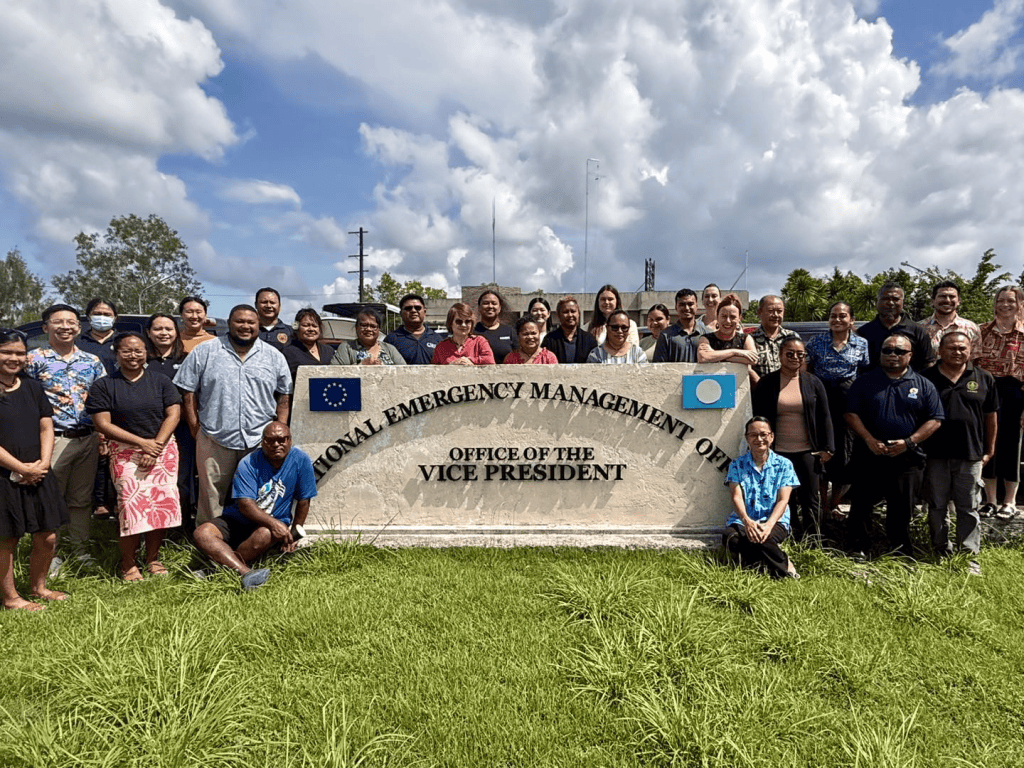
The National Emergency Management Office (NEMO) is involved in all aspects of disaster management. It acts with the counsel of and in concert with the National Emergency Committee (NEC). NEMO also performs the day-to-day operations associated with disaster management and submits reports to the Vice President. NEMO’s responsibilities include, but are not limited to the following:
Maintaining and testing the National Disaster Plan; Providing assistance to national and state agencies in the development of Agency Support Plans; Coordinating the development of public education programs regarding disaster planning; Coordinating and assisting in the training of specific disaster related skills; Providing logistical support to the Emergency Operation Center; Coordinating state and national disaster management planning; Periodically reviewing state and national legislation and regulations to insure that all are in compliance and coordination with this Plan; Performing other tasks as prescribed by law, executive order, and regulations or as required by the NEC.
New National Emergency Operations Center in Palau

June 25, 2021
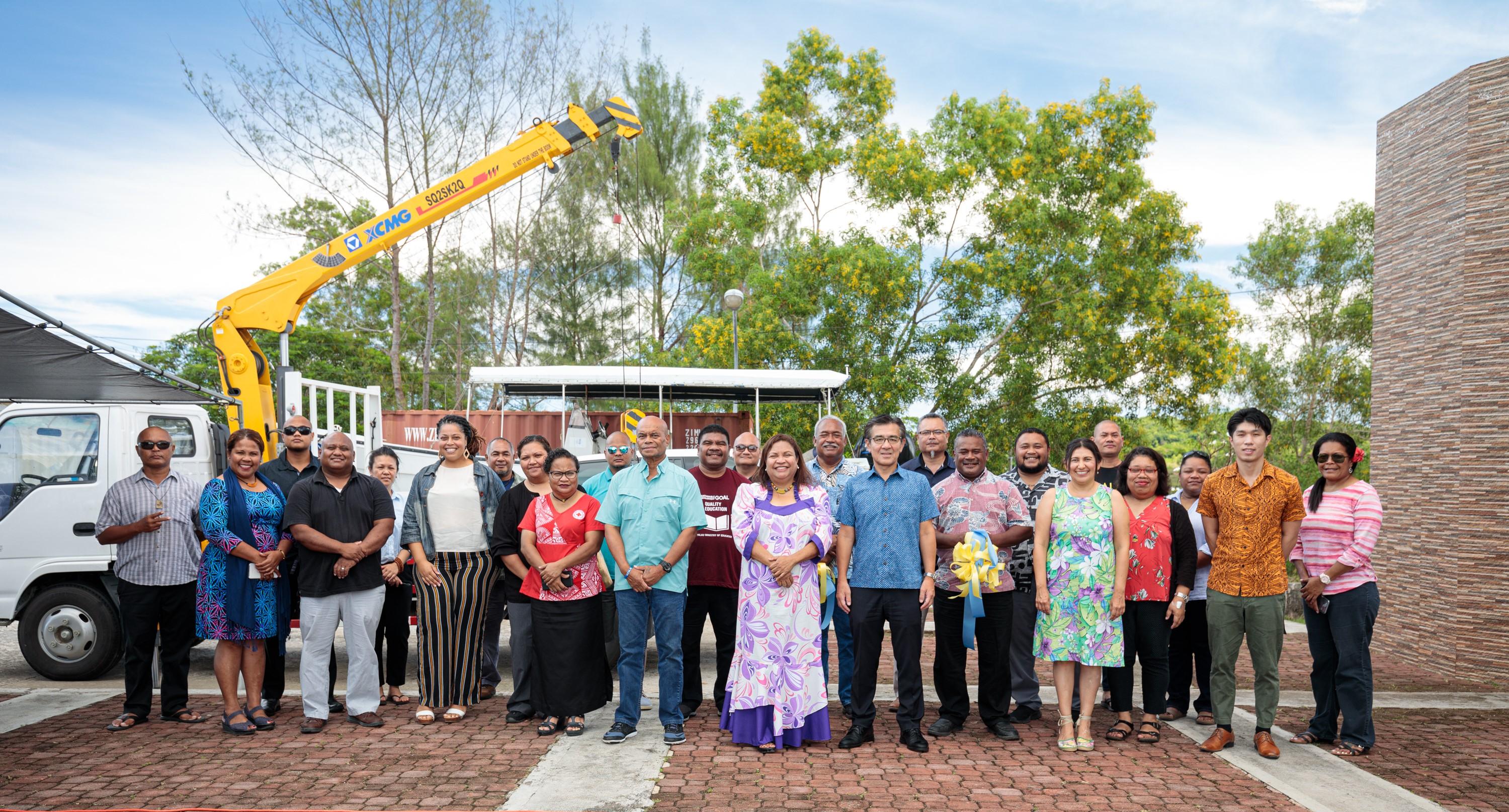
Koror, Palau – A new National Emergency Operations Center in Palau will enhance the country’s capacity for disaster preparedness and response.
A retrofit of the National Emergency Operations Center (NEOC), which was initiated in October 2020 has been completed with support from the United Nations Development Programme (UNDP) Pacific Office in Fiji, through the Japan funded Enhancing Disaster and Climate Resilience (EDCR) project.
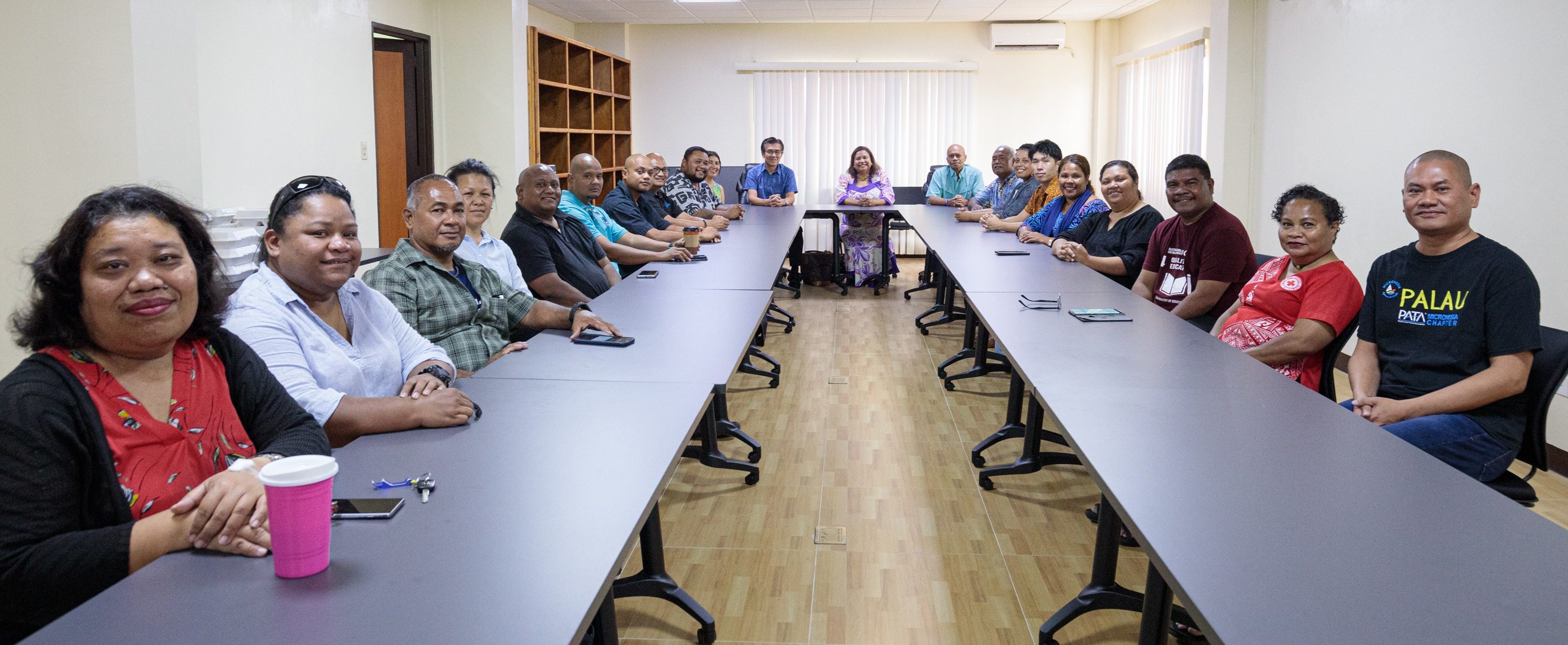
With furnished conference and communications/operation rooms, the NEOC will allow the National Emergency Committee (NEC) members to efficiently coordinate emergency responses. A 3.5-ton truck was also handed over to the National Emergency Management Office (NEMO) in support of emergency operations.
The major functions of the NEOC include:
· Providing the overall command, control and coordination in response to national disasters
· Gathering, collating and disseminating information
· Serving as point of contact for the media through the Public Information Officer
· Preparing and disseminating situation reports
· Facilitating damage and needs assessment processes
· Maintaining effective communication and information systems
· Coordinating all government, non-government, private, and regional donor assistance
· Managing the logistic arrangements of the immediate and medium-term relief supplies
At a hand-over ceremony held in NEMO today, Honorable J. Uduch Sengebau Senior, Vice President and Minister of State said, “As the Chair of NEC, I truly appreciate the funding assistance of our friends from Japan and extend our appreciation to UNDP for its tireless efforts to ensure that the new NEOC meets all functions of a command center for Palau’s use during natural disasters and national emergencies.”
His Excellency KARASAWA Akira, Ambassador of Japan to Palau stated that a retrofit of the facility and the provision of furniture will be a great addition for NEC members to maintain their productivity and efficiency. In addition, he asked the NEC members to take good care of the retrofitted building and new furniture for a long period of time
Aleyda Valdes, Country Project Coordinator for the UNDP EDCR Project conveyed the message on behalf of Mr. Levan Bouadze, Resident Representative of UNDP Pacific in Fiji, highlighting that the support to the fully furnished office spaces is timely for NEC members. She said this will help them effectively respond to emergency situations as well as adapt to the new ways of working during and after COVID-19.
The retrofit work has been carried out by the Ministry of Public Infrastructure, Industries & Commerce, Bureau of Public Works, and the total value of the support provided amounts to approximately US$ 264,000.
It is the fifth handover of the UNDP ECDR Project to the country, which is supported by the Government of Japan in partnership with the Government of Palau.
The UNDP EDCR project, since its commencement in 2019, has provided equipment strategic to Palau’s disaster risk management. The project aims to strengthen gender sensitive disaster communication and climate monitoring systems; enhance gender sensitive national and state disaster responder’s readiness capacity; and enhance community disaster resilience through improved water resource management and integrated gender and social inclusion awareness.
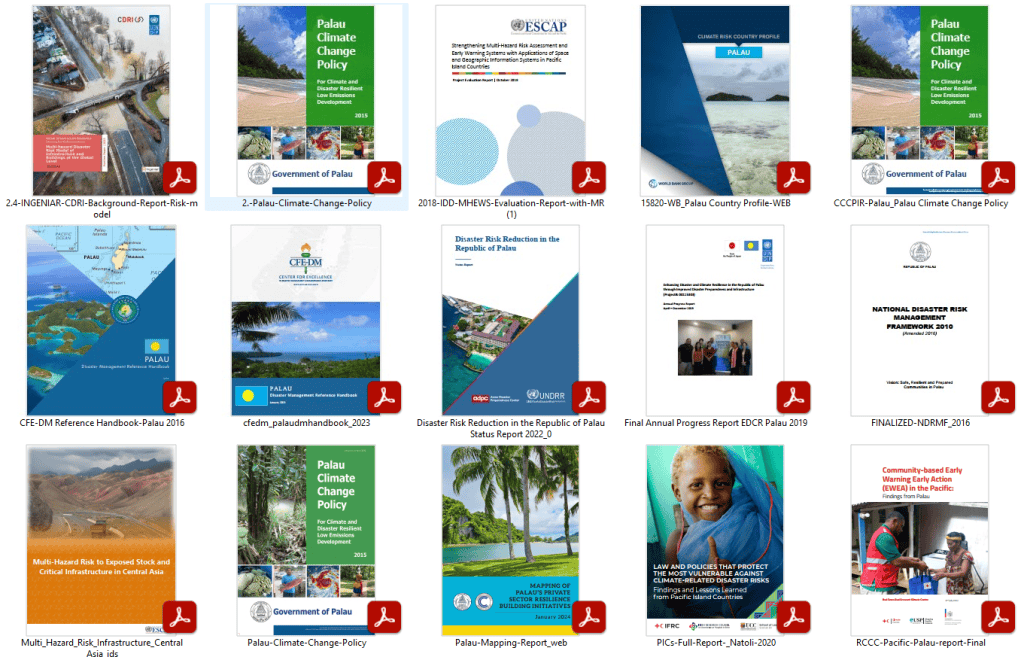
Useful documents on Palau
https://drive.google.com/drive/folders/1yEFGLV7ZbcyFzR51rJQkozoYo-MG0jqH?usp=sharing