Assessment of National Meteorological and Hydrological Services (NMHS), gaps, barriers, and propose a design
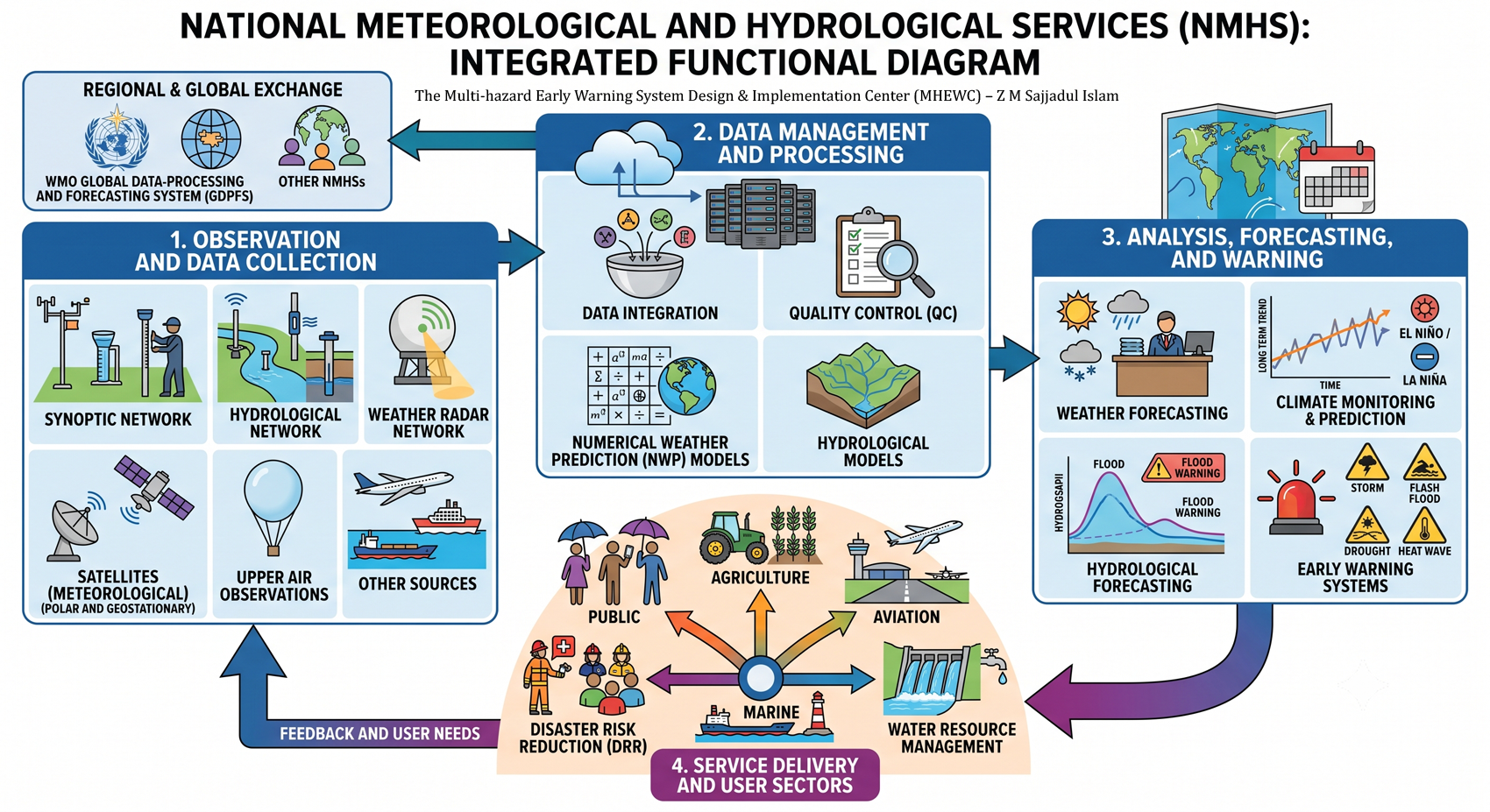
National Meteorological and Hydrological Services are the principal public institutions responsible for observing, monitoring, analyzing, forecasting, and communicating weather, climate, water, and related environmental conditions.
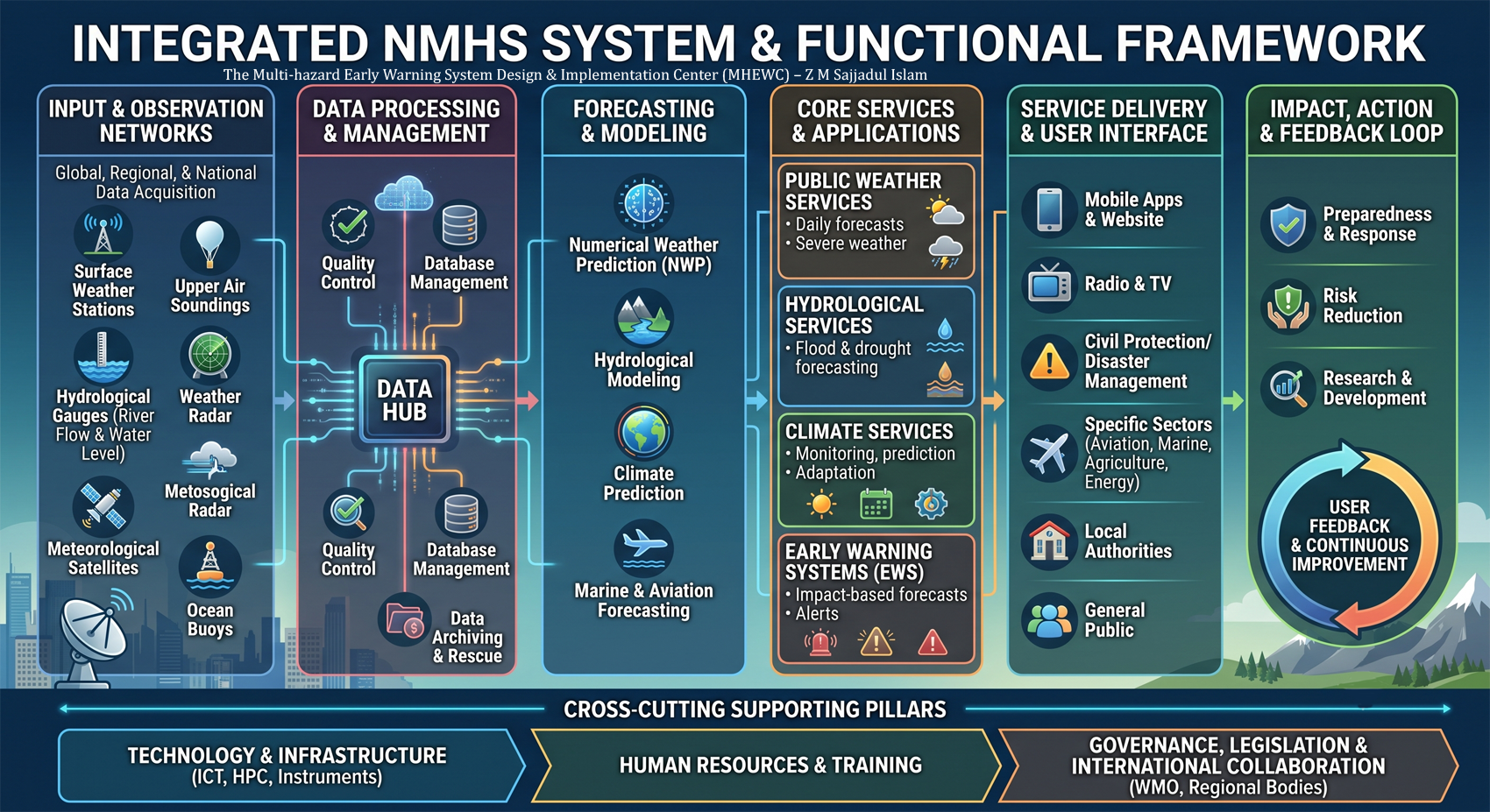
NMHS provide the scientific and operational foundation for:
- Weather forecasting;
- Climate monitoring and prediction;
- Flood and drought forecasting;
- Multi-hazard early warning;
- Aviation and marine meteorology;
- Agricultural and water-resource services;
- Public-health preparedness;
- Disaster risk management;
- Climate-change adaptation;
- Infrastructure planning;
- Environmental management;
- Anticipatory action; and
- Sustainable development.
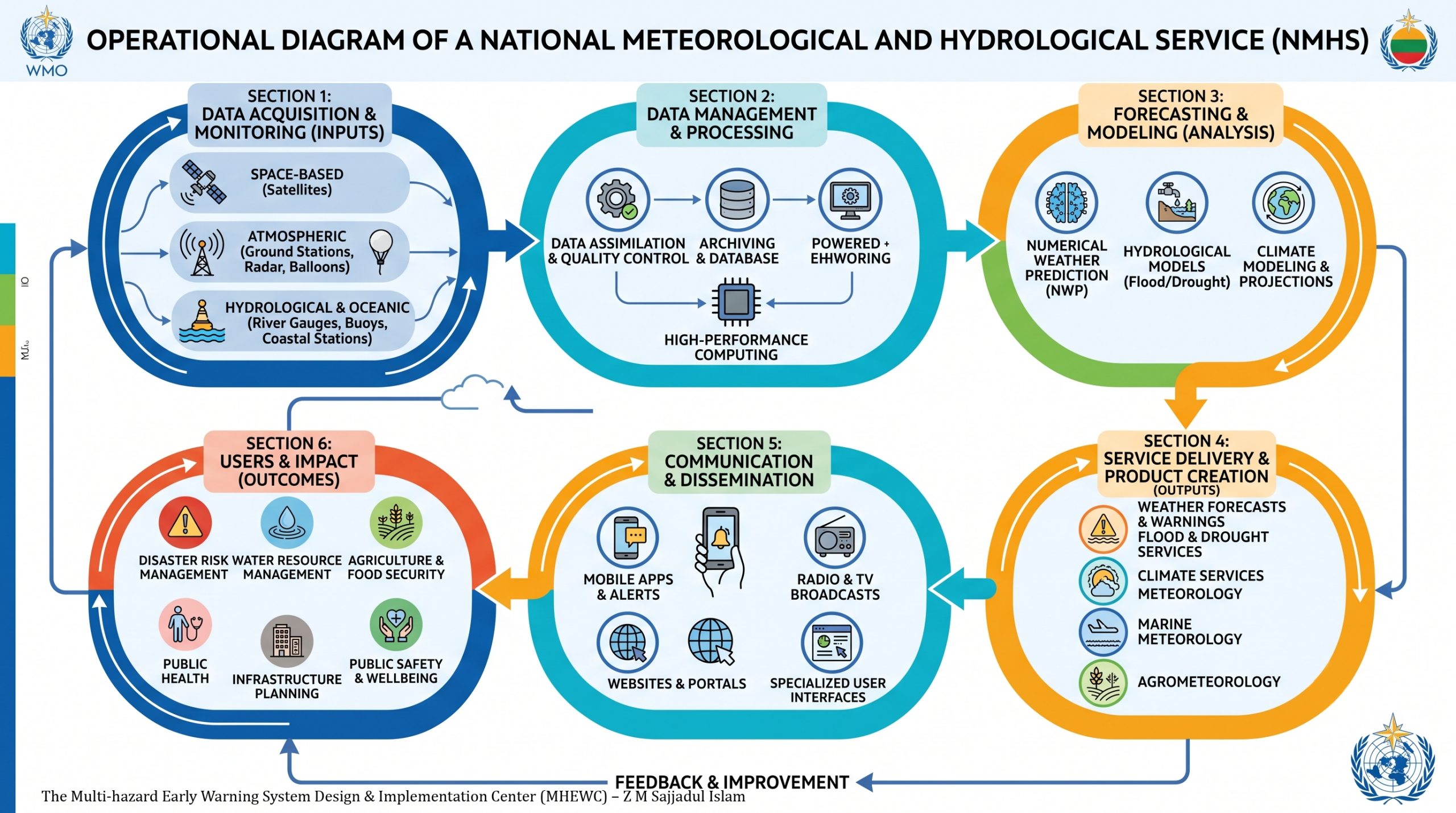
An effective NMHS should function as an integrated, end-to-end service system. It must connect observation and monitoring with data processing, forecasting, impact analysis, warning generation, communication, preparedness, and user action.
The effectiveness of an NMHS should therefore not be measured only by the scientific accuracy of its forecasts. It should also be assessed by whether its information is timely, reliable, accessible, understandable, impact-based, sector-specific, and capable of triggering protective action.
Core Mandate of an NMHS
The mandate of an NMHS generally includes:
- Monitoring atmospheric, hydrological, climatic, oceanographic, and related environmental conditions;
- Maintaining national observation networks;
- Collecting, processing, storing, and quality-controlling data;
- Producing weather forecasts and climate outlooks;
- Issuing warnings for hazardous weather and hydrological events;
- Providing climate services to government institutions, businesses, and communities;
- Supporting disaster preparedness, anticipatory action, emergency response, and recovery;
- Maintaining historical weather, climate, and hydrological archives;
- Conducting research and model development;
- Supporting national reporting and international data exchange;
- Establishing technical standards;
- Providing specialised services to priority sectors; and
- Advising governments on weather-, water-, and climate-related risks.
In some countries, meteorological and hydrological functions are managed by one institution. In others, they are divided among separate meteorological, hydrological, water-resource, environmental, aviation, marine, or disaster-management agencies.
Regardless of the institutional arrangement, strong coordination and data interoperability are essential.