Climate risk and vulnerabilities of Saudi Arabia
Saudi Arabia is highly exposed to climate change and multi-hazard risks due to its arid and hyper-arid climate, extreme heat, scarce renewable freshwater resources, dependence on groundwater and desalination, extensive desert ecosystems, long Red Sea and Arabian Gulf coastlines, rapidly expanding urban areas, and concentration of population, energy infrastructure, transport systems, industry, and economic assets in heat-, flood-, water-stress-, and coastal-risk zones.
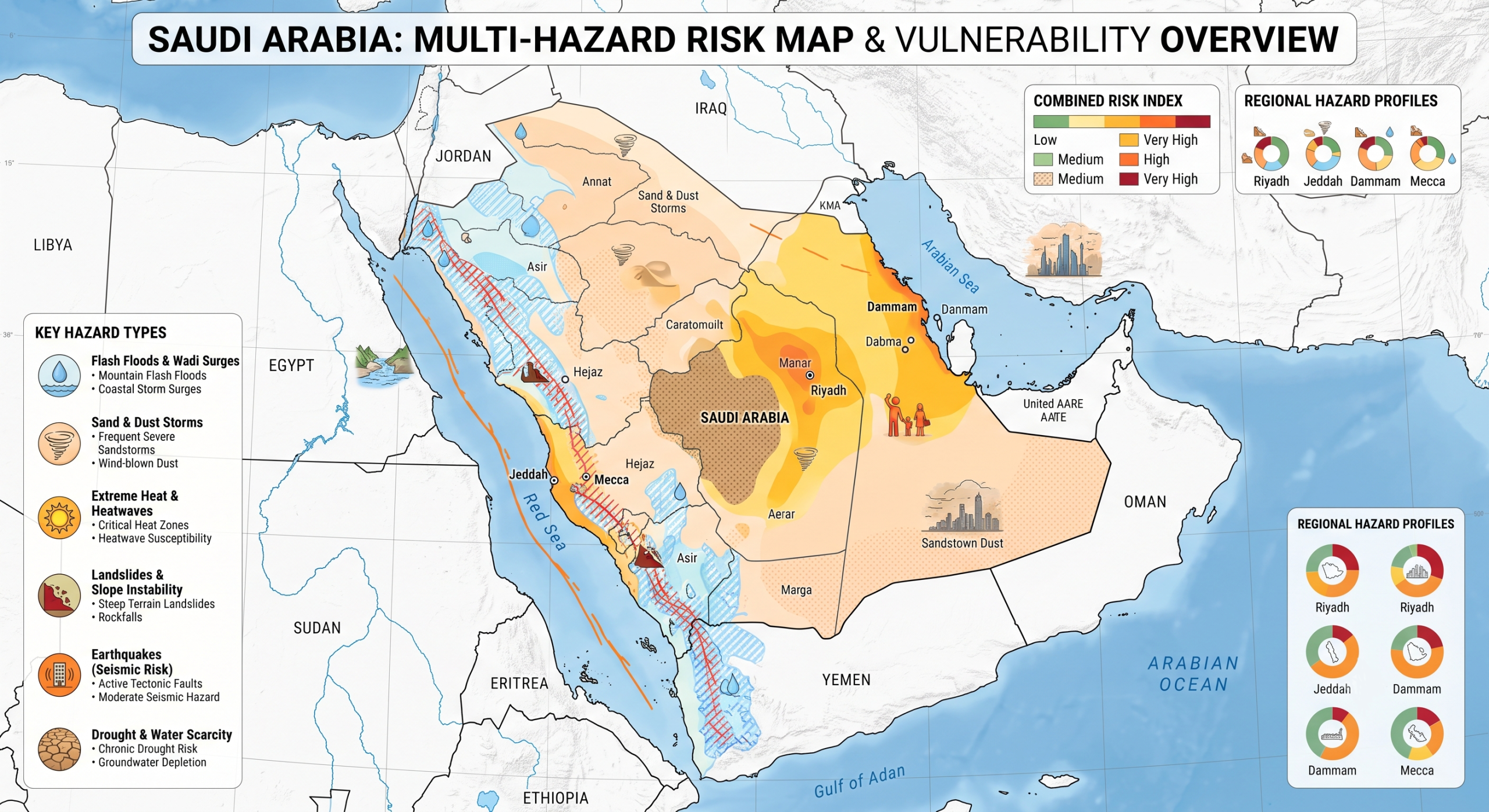
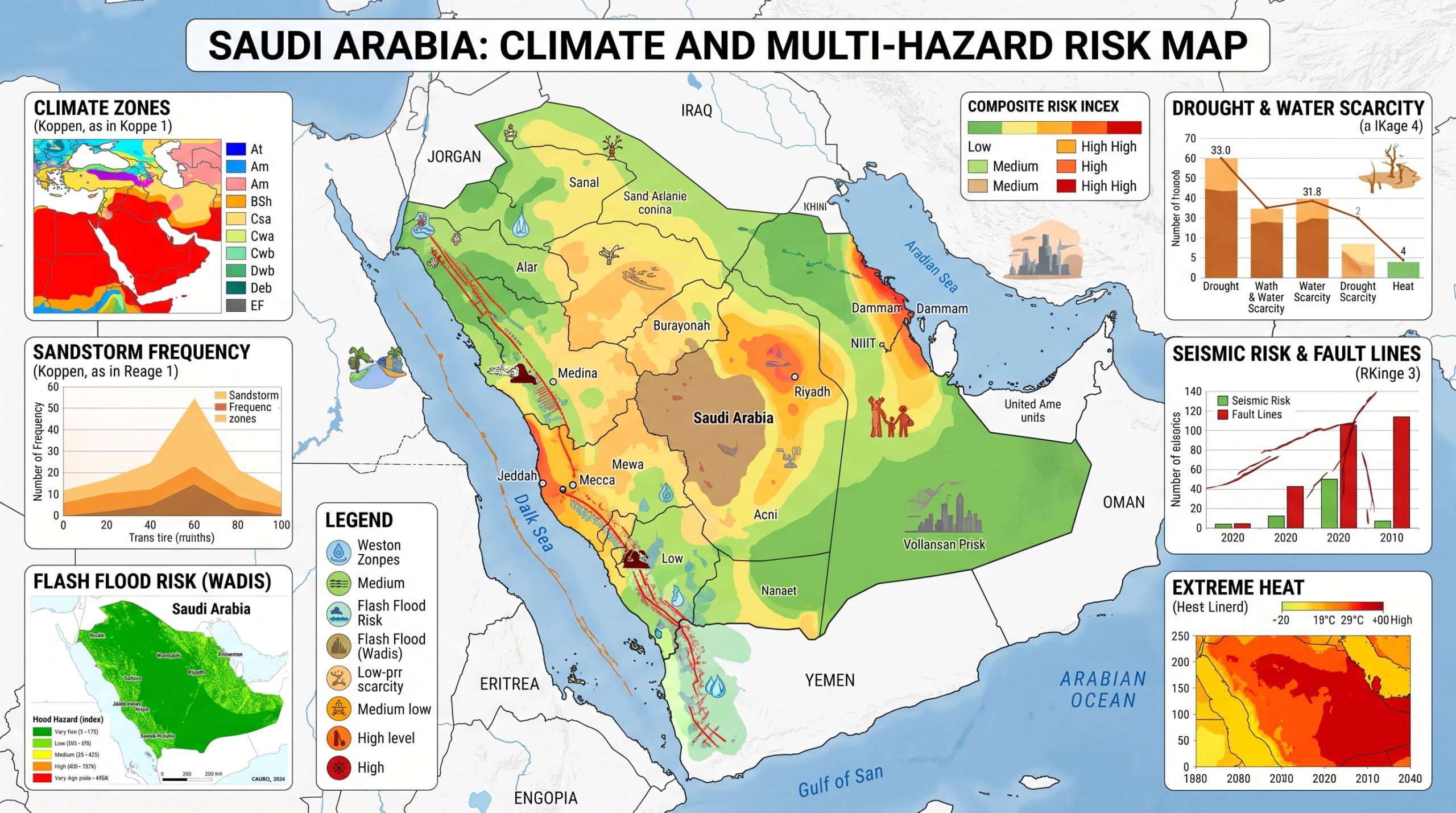
Saudi Arabia is highly exposed to climate change and multi-hazard risks because of its arid climate, extreme heat, severe water scarcity, non-renewable groundwater dependence, desert ecosystems, rapid urbanization, and long Red Sea and Arabian Gulf coastlines. The country faces growing risks from extreme heat, heatwaves, drought, water scarcity, flash floods, coastal flooding, sea-level rise, coastal erosion, saltwater intrusion, sand and dust storms, wildfires, desertification, agricultural stress, ecosystem degradation, and climate-sensitive health impacts. Climate change is expected to intensify these vulnerabilities through rising temperatures, longer hot seasons, increased evapotranspiration, more variable rainfall, severe water stress, higher flash-flood risk from intense rainfall events, and growing pressure on public health, agriculture, livestock, infrastructure, energy demand, coastal assets, ecosystems, tourism, and pilgrimage management. Strengthening multi-hazard early warning systems, impact-based forecasting, heat-health action planning, flash-flood management, water security, coastal protection, climate-resilient agriculture, ecosystem restoration, disaster risk financing, and locally led preparedness is essential to reduce losses and safeguard Saudi Arabia’s development gains.
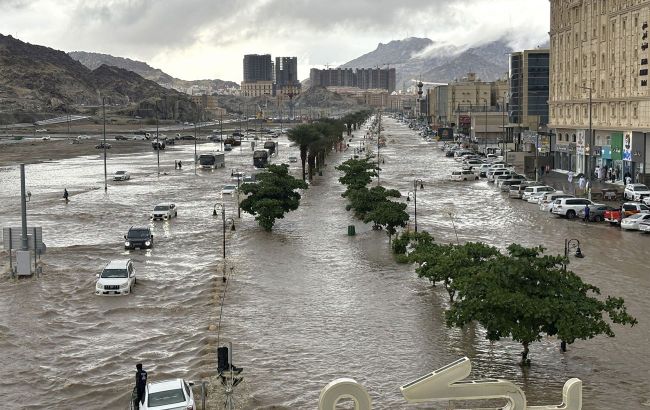
City of Mecca submerged: Saudi Arabia hit by massive flooding Tue, January 07, 2025 – 12:30
1. Multi-hazard exposure
Saudi Arabia’s principal climate and disaster risks include extreme heat, drought, water scarcity, flash floods, coastal floods, wildfires, sand and dust storms, landslides in mountainous terrain, and sea-level-rise-related coastal impacts. A climate fact sheet for the Kingdom classifies coastal floods, extreme heat, wildfires, and water scarcity as high-risk hazards, while river floods and landslides are classified as medium-level risks. It also records 24 flood events and 2 storm events between 1900 and 2023, with 479 deaths and reported damages of about US$2.9 billion.
Saudi Arabia’s exposure is geographically differentiated. The interior and desert regions face extreme heat, water scarcity, drought, sand and dust storms, desertification, and heat-related health stress. The western mountains and wadis face flash floods, landslides, and rapid runoff after intense rainfall. Major cities such as Riyadh, Jeddah, Makkah, Madinah, Dammam, Khobar, Taif, Abha, and Tabuk face varying combinations of heat, flash flooding, water demand, drainage stress, and infrastructure exposure. The Red Sea and Arabian Gulf coasts face sea-level rise, coastal flooding, erosion, marine heat stress, coral reef impacts, and risks to ports, desalination plants, energy facilities, logistics corridors, tourism zones, and coastal settlements.

2. Climate change as a risk multiplier
Climate change is expected to make Saudi Arabia hotter and more water-stressed. Mean temperature is projected to rise from about 25–26°C during 1995–2014 to around 27.85°C by mid-century and 31.89°C by the end of the century under a high-emissions scenario. The number of hot days above 35°C is projected to rise from about 159 days in the reference period to about 181 days by mid-century and 221 days by the end of the century under a high-emissions scenario.
Climate change will also affect rainfall variability. Saudi Arabia is generally dry, but intense rainfall events can generate destructive flash floods because dry soils, wadis, urban surfaces, and inadequate drainage can convert short-duration rainfall into rapid runoff. The 2022 Jeddah flash floods followed record rainfall of 179 mm, the highest value recorded in the country, and caused deaths and urban disruption.
3. Water scarcity and drought vulnerability
Water scarcity is Saudi Arabia’s most strategic climate vulnerability. Water demand from urban areas, agriculture, industry, energy, tourism, and ecosystems is high, while renewable freshwater availability is very limited. Saudi Arabia relies on a combination of groundwater, surface water, desalinated water, and treated wastewater, with non-renewable groundwater historically playing a major role in supply.
Climate change is expected to increase pressure on already scarce water resources. Projected crop water requirements are expected to increase by about 1,395 million m³ per year by 2071–2100 compared with 2018, driven largely by higher temperatures. The projected drought index also indicates increasing dry stress under high-emissions scenarios, implying stronger pressure on scarce water resources and risks to agricultural productivity, sanitation, health, livestock, and ecosystems.
4. Extreme heat and public-health vulnerability
Extreme heat is one of Saudi Arabia’s most serious and rapidly intensifying risks. Heat affects public health, outdoor labour, pilgrimage safety, transport systems, electricity demand, cooling costs, agriculture, livestock, and urban liveability. The 2024 Hajj heatwave highlighted the severity of this hazard: temperatures along pilgrimage routes reached around 47°C and exceeded 51.8°C at Makkah’s Grand Mosque; a scientific attribution assessment reported that climate change made the heat about 2.5°C hotter. (Reuters)
The most heat-exposed groups include outdoor workers, construction workers, municipal workers, transport workers, security personnel, pilgrims, older persons, children, people with chronic illnesses, low-income households, and people with limited access to cooling. Heat stress also increases electricity demand for air conditioning, which can stress energy systems during peak periods.
5. Flash flood and urban drainage vulnerability
Flash floods are a major rapid-onset hazard in Saudi Arabia. Despite low average rainfall, extreme rainfall over dry catchments can generate high runoff in wadis and urban areas. This risk is especially serious in Jeddah, Makkah, Madinah, Riyadh, Taif, Abha, and other cities or settlements located near wadis, flood channels, low-lying areas, or rapidly urbanized catchments.

Police help motorists in flooded streets of Jeddah, Saudi Arabia, November 2022. Photo: Government of Mecca


Key flash-flood vulnerability drivers include:
| Driver | Risk implication |
|---|---|
| Arid soils and wadis | Rapid runoff after intense rainfall |
| Urban expansion | Higher impermeable surfaces and drainage overload |
| Blocked or undersized drainage | Localized flooding, road disruption, property damage |
| Settlement near flood channels | High exposure of people, vehicles, buildings, and services |
| Mountain catchments | Fast-flowing floods, debris flows, landslide potential |
| Limited public awareness in dry regions | Higher risk of people entering floodwater or wadis |
Flash floods can damage roads, tunnels, bridges, buildings, vehicles, schools, hospitals, power systems, drainage infrastructure, and water networks. They also create serious risks for traffic, emergency access, public safety, and business continuity.
6. Coastal vulnerability and sea-level rise
Saudi Arabia’s Red Sea and Arabian Gulf coastlines are increasingly exposed to sea-level rise, coastal flooding, erosion, salinity intrusion, marine ecosystem stress, and risks to coastal infrastructure. Under a high-emissions scenario, sea level along coastal Saudi Arabia is projected to rise by about 0.27 m by mid-century and 0.75 m by the end of the century. Sea-level rise is expected to increase coastal flooding and accelerate erosion, inundation, and coral reef bleaching.
Coastal risk is strategically important because Saudi Arabia’s coasts host ports, desalination plants, power stations, oil and gas terminals, industrial cities, tourism developments, fisheries, coral reefs, mangroves, roads, and growing urban settlements. Coastal flooding or salinity intrusion can affect logistics, water supply, energy infrastructure, marine biodiversity, tourism, and coastal livelihoods.
7. Agriculture, livestock, and food-security vulnerability
Saudi Arabia’s agricultural sector is highly constrained by water availability, heat, soil salinity, desertification, and limited arable land. The climate fact sheet notes that Saudi Arabia uses less than 1% of its land area for agriculture, and agriculture, forestry, and fishing account for about 2.2% of GDP. It also reports that around 75% of food consumption needs are met through imports, making food security sensitive to both domestic climate stress and global supply-chain shocks.
Climate change can affect crop yields, pasture regeneration, livestock water availability, animal health, and food-import dependence. UNDP’s adaptation profile for Saudi Arabia reports that expected yield losses for field crops, vegetables, forage crops, fruit trees, and date palms could range from 5% to more than 25%, while higher temperatures can increase evapotranspiration and worsen desertification risk. (UNDP Climate Change Adaptation)
8. Desertification, ecosystems, dust storms, and wildfire risk
Saudi Arabia’s ecosystems are highly sensitive to warming, water stress, land degradation, and desertification. The country includes deserts, mountains, wadis, salt pans, lava fields, meadows, mangroves, coral reefs, and coastal ecosystems, all of which are exposed to climate stress in different ways. UNDP notes that much of Saudi Arabia has ecosystems sensitive to climate change, especially through desertification processes. (UNDP Climate Change Adaptation)
Sand and dust storms are frequent because of desert soils, dry landscapes, high winds, and sparse vegetation. They can reduce visibility to near zero, disrupt transport and communications, damage infrastructure, affect crops and habitats, and worsen respiratory and cardiovascular disease risks. Wildfire risk is also identified as high, particularly where heat, drought, vegetation stress, and human activity interact.
9. Sector-specific vulnerability summary
| Sector | Main climate and multi-hazard risks |
|---|---|
| Water resources | Water scarcity, groundwater depletion, drought, high evaporation, rising demand, salinity intrusion |
| Agriculture and livestock | Heat stress, irrigation water shortage, drought, desertification, pasture decline, crop-yield losses |
| Urban settlements | Extreme heat, flash floods, drainage overload, water demand, air-quality stress |
| Coastal zones | Sea-level rise, coastal flooding, erosion, saltwater intrusion, coral reef bleaching |
| Energy and industry | Cooling demand, coastal infrastructure exposure, flood disruption, water demand, heat stress |
| Transport infrastructure | Flash floods, road washouts, dust storms, reduced visibility, heat impacts on assets |
| Public health | Heat illness, respiratory disease from dust, flood-related injuries, waterborne disease risks |
| Ecosystems | Desertification, habitat degradation, wildfire risk, coral bleaching, mangrove stress |
| Tourism and pilgrimage | Extreme heat, crowd health risk, flash floods, water demand, coastal ecosystem stress |
10. Social vulnerability
Saudi Arabia has substantial financial and institutional capacity compared with many climate-vulnerable countries, but risk is unevenly distributed. The most vulnerable groups include outdoor workers, migrant workers, low-income households, elderly people, children, people with chronic illnesses, pilgrims, remote rural communities, livestock keepers, small farmers, coastal communities, and people living in flood-prone wadis or poorly drained urban areas.
Vulnerability is highest where climate exposure overlaps with limited access to cooling, poor housing, outdoor labour, weak drainage, limited mobility, occupational heat exposure, or dependence on water-sensitive livelihoods. Pilgrimage seasons also create unique risk because large numbers of people may be exposed to extreme heat, crowding, and mobility constraints.
11. Priority resilience needs
Saudi Arabia’s resilience agenda should prioritize multi-hazard early warning systems, impact-based forecasting, flash-flood nowcasting, drought monitoring, heat-health action planning, water-demand management, groundwater protection, desalination resilience, wastewater reuse, climate-resilient agriculture, urban drainage upgrading, coastal-zone management, dust-storm warning, wildfire preparedness, and ecosystem-based adaptation.
A practical resilience package should include:
| Priority area | Key actions |
|---|---|
| Early warning and anticipatory action | Impact-based warnings for heatwaves, flash floods, dust storms, coastal flooding, drought, and wildfire |
| Heat-risk management | Heat-health plans, occupational safety standards, cooling centres, pilgrimage heat protocols, public alerts |
| Water security | Groundwater regulation, desalination backup, wastewater reuse, leakage reduction, demand management |
| Flash-flood resilience | Wadi flood mapping, drainage upgrading, flood-retention basins, road underpass protection, public awareness |
| Climate-resilient agriculture | Water-efficient irrigation, drought- and heat-tolerant crops, protected agriculture, crop advisories |
| Coastal resilience | Sea-level-rise monitoring, coastal setback planning, port and desalination plant protection, coral and mangrove conservation |
| Ecosystem restoration | Native vegetation restoration, rangeland management, desertification control, wildfire-risk reduction |
| Risk governance and financing | Risk-informed urban planning, infrastructure climate screening, insurance, business-continuity planning |
Saudi Arabia’s updated NDC highlights national climate-related initiatives including the Saudi Green Initiative, Middle East Green Initiative, Circular Carbon Economy National Program, National Renewable Energy Program, and Saudi Energy Efficiency Program, alongside a target to reduce, avoid, or remove 278 million tons of CO₂-equivalent annually by 2030. (PreventionWeb)
Saudi Civil Defense ( https://998.gov.sa ) of Ministry of Interior (MoI)
MOI Objectives and Responsibilities
The ministers of interior have defined the following strategic objectives for the Ministry:
Reinforce security cooperation with Arab countries to protect cultural possessions and achievements, support internal and external security, control crime, terrorism and drug smuggling and develop Arab security institutions.
Achieve security and stability Kingdom-wide, provide tranquility and safety for the citizens and and fight against all means of crime to ensure the safety of Saudi society and its development.
Ensure safety of Pilgrims in order to perform their rituals safely.
Reinforce security relationships with neighboring Arab countries and cooperate with the Countries of Gulf Cooperation Council (GCC), to maintain safety in the Kingdom and abroad, control crime and drug smuggling, exchange security information, organize citizenship regulations and systems and other miscellaneous issues.
About Civil Defence
The Saudi Civil Defense(Arabic: الدفاع المدني السعودي) is an organization established in Saudi Arabia with the primary aim of protecting the public and responding to emergencies, natural disasters, and other incidents that pose a risk to the safety of the people. It is a government agency that operates under the Ministry of Interior and has been operating for over six decades.
The history of Saudi Civil Defense can be traced back to 1953 when the Directorate of Civil Defense was established. It was initially established to provide fire safety services, but over the years, its scope has expanded to include other emergency response services. In 1972, the Directorate of Civil Defense was restructured and reorganized, and it became the General Directorate of Civil Defense.
Civil Defense, as defined by the Civil Defense Law issued by Royal Decree No. M/10 dated 10/5/1406 H (20/1/1986), is a set of measures and actions necessary to protect the population as well as public and private property against the hazards of fires, disasters, wars, and other incidents, in addition to providing relief to victims, maintaining the safety of transportation, communications, and the proper operation of public utilities, and protecting national resources at times of peace, war, and emergencies.

Multi-hazard risk of KSA:
Sea level rise, coastal erosion, and altered storm patterns could expose 210,000 Saudis to devastating floods by 2050 in a high emissions scenario. Precipitation variability is predicted to fluctuate as much as 60 percent from one year to the next, increasing exposure to droughts and floods alike. The science shows that Saudi Arabia will experience devastating climate impacts if it follows a high-emissions pathway. Without urgent action, Saudi Arabia will see an 88% increase in the frequency of agricultural drought by 2050.
Impacts on the natural environment
Climate change is already having devastating effects in Saudi Arabia. This report collates scientific projections of how climate impacts will play out up to 2050 and 2100, on low, medium and high emissions pathways.
The science shows that Saudi Arabia will experience devastating climate impacts if it follows a high-emissions pathway. Without urgent action, Saudi Arabia will see an 88% increase in the frequency of agricultural drought by 2050. Heatwaves will last more than 4,242% longer and the combination of sea level rise, coastal erosion and fiercer weather will cause chaos for Saudi Arabia’s economy, which stands to lose around 12.2% of GDP by 2050.
The faster Saudi Arabia adopts low-carbon policies, the less the climate impacts cascade and the more manageable they become. Limiting temperature rise to 2°C will see the cost of climate impacts in Saudi Arabia drop to just 4.8% of its GDP by 2050 and 0.78% by 2100.
Temperature and weather changes
From 1979 to 2019, Saudi Arabia has seen its mean temperature increase by 2.1°C which is nearly three times more than the world average. The increase has been even more dramatic in the summer months as the mean temperature has increased by 2.5 °C.[10] Because of climate change, there has been a global rise in extreme weather events such as the record heatwaves in the summer of 2010. During this period, the Saudi Arabian city of Jeddah saw temperatures reach 52 °C, causing eight of the nation’s power stations to shutdown with multiple cities suffering from blackouts.[11] The overall increase in temperature disproportionately affects the country and is dependent on the seasons. For instance, the nation’s capital, Riyadh saw increases in its average summer temperature increase by 0.067 °C per year between 2009 and 2013 while its winter averages increased by 0.056 °C per year. On the other hand, Tabuk in the north-west saw slightly more gradual increases during the same period with its summer average increasing by 0.058 °C per year and its winter temperatures increasing by 0.042 °C per year.[12] This reflects the overall regional trends in Saudi Arabia of lower temperatures in the north and higher temperatures in the coastal and central parts of the country.[11]
Sea level rise
Climate change and the rising temperatures that accompany it lead to the melting of ice and the expansion of ocean water. The combination of these processes manifests in the form of rising sea levels, threatening coastal and island nations throughout the world.[13] Saudi Arabia’s coastal regions are densely populated and these regions are also important for the economy. Along the country’s Red Sea coast are the four major cities of Tabuk, Al Madinah, Jeddah and Jizan. These areas are home to a number of religious and historical sites that are important tourist attractions and they also host agricultural land and oil and natural gas deposits.[14] Sea level rise anywhere can be accompanied by a range of negative environmental consequences. These include flooding in coastal areas, erosion of beaches, contamination of freshwater sources, salinization of soils, and loss of habitats along coasts.[13] Areas to the north and south of Dammam are at the highest risk of inundation in the country and, therefore, are threatened by the accompanying environmental impacts.[15]
Water resources

Saudi Arabia is a semi-arid nation with limited groundwater resources and no natural rivers or lakes. High temperatures and low rainfall of less than 100mm per year cause the few surface water resources that exist to be unable to meet the nation’s needs due to the rate of evaporation being higher than the rate of precipitation.[16][17] Aridity has only been further driven by the fact that the thermostatic effect from the oceans has shifted the thermal equator.[17] Groundwater, makes up between 80 and 90 percent of water use in Saudi Arabia and comes from both nonrenewable fossil reservoirs and renewable shallow terrestrial aquifers.[16] There are eight aquifers that account for approximately 86% of the non-renewable water while the other 14% is contained within the rest of the secondary aquifers. These aquifers are mostly in the northern and central parts of the country.[17] Because fossil water is non-renewable and the renewable shallow aquifers are being extracted from faster than they can recharge, it is estimated that the reserves of groundwater will runout in under 50 years should the current rates of extraction continue.[16]
Ecosystems
_lrg.jpg)
Within Saudi Arabia exist some of the most species rich and productive marine habitats in the world in the form of its coastal wetlands. These ecosystems bolster the regional fisheries and house breeding bird populations.[18] Two of the ways in which climate change impacts the wetlands is through the rising temperatures and falling quantities of precipitation which alter wetland hydrology and ecological community compositions. An additional threat imposed by climate change is sea level rise which, when combined with anthropomorphic activities like land development and pollution, make wetlands like mangroves and mudflats the most threatened ecosystems within the country.[18] In the Khulais region, located within the Arabian Shield along the western side of the country, it has been found that the abundance of many of the native species has been declining while presence of invasive species has been on the rise. This is likely a direct result of the increasing temperatures and the reduced levels of precipitation that lower the availability of water in the nation. So, not only is climate change negatively impacting Saudi Arabian ecosystems with its reduction of water resources but also with its facilitation of the growth of harmful invasive species.[19]
Impacts on people
The effects of climate change present a host of challenges for public health. The increases in the prevalence of heat stroke and heat-related illnesses in the region are attributable to rising temperatures associated with climate change.[20] The combined threats of deteriorating air quality, desertification, and diminishing water resources are of immediate concern to both human health and livelihoods. Farmers predict a significant decrease in their annual yield, which is dependent on increasingly strained irrigation systems, a consequence that simultaneously reinforces the country’s dependence on food imports and endangers the well-being of vulnerable populations in terms of both food security and economic stability.[21] Due to the prevalence of insect and pest infestation alone, agriculture in Saudi Arabia faces 12.6-20% yield loss annually. These challenges worsen food insecurity, an increasingly pressing issue due to the country’s rapid population growth.[22]
Saudi Arabia’s air quality ranks among the most polluted in the world and is found to lower the population’s average lifespan.[23] Additionally, the change in temperature, humidity, and precipitation create an environment more conducive to mosquitoes and the spread of mosquito-borne illnesses.[20] Compared to other nations in the Gulf Cooperation Council, Saudi Arabia is the only country with recorded increases in the mortality rate attributable to the air’s concentration of particulate matter. [23] Air pollutants in the region contribute to the increased risk and prevalence of chronic obstructive pulmonary diseases and ischemic heart diseases in Saudi Arabia.[24]
Mitigation
One of the critical issues in the Updated Nationally Determined Contributions of Saudi Arabia is economic diversification. [25] Economic diversification involves broadening the country’s main sources of income, which is heavily emphasized for oil-exporting nations that will be subject to the detriments of the volatile oil market. The fluctuation of crude oil prices exacerbates Saudi Arabia’s vulnerability to inflationary pressures and facilitates economic instability.[26]
When it held the G20 presidency, Saudi Arabia introduced the circular carbon economy (CCE) as a strategy to reduce its greenhouse gas emissions. The model of CCE relies on the principles of reduce, reuse, recycle – accomplishing a decrease in carbon emissions through the management of carbon as a product input or through carbon capture.[27] Further, Saudi Arabia began reform of energy pricing to reduce subsidies that promote excess energy consumption and disincentivize more sustainable energy sources. To shield lower income households from the detriments of price increases, Saudi Arabia implemented a form of government assistance known as the Citizens’ Account.[28] Moreover, the Saudi government introduced Vision 2030 in 2016, and set several sustainability goals to be achieved by 2030. This project continued with the introduction of the Saudi Green Initiative in 2021. Current initiatives focus on afforestation, conservation, and the implementation of sustainable practices in the private and public sectors.[29]
Adaptation
The projected growth in population and the nation’s economy necessitate adaptation in sectors such as transportation, electricity, and agriculture. Rising temperatures exacerbate concerns surrounding energy waste, primarily as the region’s cooling needs continue to rise. Saudi Arabia faces the task of adaption as the introduction of CCE and energy price reforms place stress on the industrial sector and create a need for carbon-neutral alternatives.[20] The country is investing in solar and wind energy projects intending to generate half of its energy from renewables by 2030 to reduce its reliance on oil. Saudi Arabia seeks to address growing concerns through a reimagined urban planning that allocates for more efficient transportation and the creation of green spaces.[20][29]
Society and culture
The impacts of climate change have shifted the livelihoods of those in Saudi Arabia. Farmers are increasingly worried about the viability of their crops, which led to shifts to more sustainable crops and altered irrigation methods in response to water shortages.[21] Alongside the endangerment of traditional livelihoods, climate change impacts the preservation and accessibility of important cultural heritage sites.[30] The culmination of climate change impacts has taken a toll on the country’s rates of mental illness, with depression and anxiety rising to the leading causes of disability.[20] Water pollution onset by unsustainable practices, along with salinity and acidity changes, has impacted the livelihoods of fishermen and the operation of fisheries. The disruptions to this industry pose a threat to the culture of fish consumption in Saudi Arabia and present the potential for job loss in traditional lines of work.[31] The tangible effects of climate change in the region have become a problem for the country’s tourism industry, as the increase in temperature poses health risks to tourists. In Saudi Arabia, much of the concern surrounds the barriers to religious tourism to Mecca and Medina, which are culturally and spiritually salient.[32]
International cooperation
Cooperation between the Kingdom of Saudi Arabia and the United Nations through the United Nations Sustainable Development Cooperation Framework with the Kingdom of Saudi Arabia 2022-2026 (UNSDCF) allows the country to abide by the UN’s 2030 Agenda. The framework focuses on policy advising and supporting efforts toward poverty alleviation, economic growth, and sustainable resource consumption.[33] Saudi Arabia is a contributor to the development of Nigeria’s carbon market, facilitating bilateral relations in oil, agriculture, and infrastructure.[34]
Regionally, Saudi Arabia led the establishment of the Saudi and Middle East Green Initiatives to address climate change.[35] The Middle East Green Initiative, launched by the Crown Prince, aims to reduce global carbon emissions by 10% through ambitious goals such as planting 50 billion trees, restoration of 200 million hectares of land, and achieving 50% renewable energy in electricity generation by 2030, all while fostering innovation and international collaboration to combat climate change.[35][36]
Climate projections
In a high emissions scenario, the Saudi GDP is projected to shrink by more than 12% by 2050.
Related resources
About the Ministry
Disaster Response Plans for Municipalities
History of the Ministry of Municipalities and Housing
The Ministry of Municipal and Rural Affairs was established in 1395 AH / 1975 AD by Royal Decree No. (A/266) dated 8/10/1395 AH and was entrusted with the responsibility of urban planning for the cities of the Kingdom, and what this entails in providing roads and basic equipment, improving and beautifying cities and developing municipal and rural areas in addition to To the management of the services necessary to maintain the cleanliness and health of the environment in the Kingdom.
Vision
Improving the standard of living and citizen satisfaction by providing services and infrastructure with the best specifications and ensuring residential communities with integrated services and facilities. .
الرسالة
Improving the quality of life and prosperity in Saudi cities to respond to the aspirations and needs of current and future generations and achieve the happiness of the residents.
| # | العنوان | Type | Action |
|---|---|---|---|
| 1 | MOMAH Functions and Responsibilities during Disasters | Municipal Agencies Guide in Preparing Disaster Response Plans | |
| 2 | Prepared Plans for Disaster Response | Municipal Agencies Guide in Preparing Disaster Response Plans | |
| 3 | National Plans for Disaster Response | Municipal Agencies Guide in Preparing Disaster Response Plans | |
| 4 | How To Make Cities More Resilient: A Handbook for Local Government Leaders (2010-2020) | International Agreements, References and Scientific Studies | |
| 5 | Regional Analysis of Disaster Loss Databases in Arab States – UN | International Agreements, References and Scientific Studies | |
| 6 | Executive Regulations for Evacuation and Sheltering Operations | National Disaster Response Plans | |
| 7 | City and villages Cleaning and Disaster Recovery Plan | Municipal Agencies Guide in Preparing Disaster Response Plans | |
| 8 | Factors of Higher Disaster Risk | Municipal Agencies Guide in Preparing Disaster Response Plans | |
| 9 | National Plan to Counter Maritime Disasters | National Disaster Response Plans | |
| 10 | Guidelines for Municipalities for the Preparation of Disaster Response Plans | Municipal Agencies Guide in Preparing Disaster Response Plans |
| # | العنوان | Type | Action |
|---|---|---|---|
| 1 | Disaster Types | Municipal Agencies Guide in Preparing Disaster Response Plans | |
| 2 | Disaster Definition | Municipal Agencies Guide in Preparing Disaster Response Plans | |
| 3 | Municipalities and Disasters | Municipal Agencies Guide in Preparing Disaster Response Plans | |
| 4 | Significance of Disaster Risk Reduction in Saudi Arabia | Municipal Agencies Guide in Preparing Disaster Response Plans | |
| 5 | ISDR Terminology | International Agreements, References and Scientific Studies | |
| 6 | Camp Coordination and Camp Management (CCCM) – UN | International Agreements, References and Scientific Studies | |
| 7 | Making Disaster Risk Reduction Gender-Sensitive – UN | International Agreements, References and Scientific Studies | |
| 8 | Cities Resilience to Disasters | International Agreements, References and Scientific Studies | |
| 9 | WHO – Emergency Response Framework | International Agreements, References and Scientific Studies | |
| 10 | National Plan for Chemical and Bacterial Incidents | National Disaster Response Plans |
| 1 | Early Warning Systems – UN | International Agreements, References and Scientific Studies | |
| 2 | Making Cities Resilient – “My City is Getting Ready!” (2010-2015) | International Agreements, References and Scientific Studies | |
| 3 | Awareness Materials | Awareness Materials |
Civil Protection
Introduction
Mankind has suffered for many years from natural disasters that devastated property and population. It was difficult for countries to confront such disasters because they were incapable.
Before the First World War, there were no industrial disasters; the development occurred when countries started manufacturing weapons of mass destruction. Countries then developed such weapons to become a multi-species (nuclear – biological – chemical); then there has been an evolution in facing resultant disasters. Saudi Arabia adopted new methods to fight such disasters and to protect life and property. It established the General Directorate of Civil Protection (GDCP) as a civil defense department for this purpose, (refer to the definition of civil protection).
From this standpoint, the General Directorate of Civil Protection endeavors, under guidance and directives of Saudi Arabia’s leadership, to curb potential disasters and minimize the effects in co-operation with other bodies through risk analysis, study and possibilities of occurrence; preparation of plans to control disasters; and readiness by making available all human and technical materials. The directorate performs evacuation and rehabilitation works as well.
Definition:
In the majority of states adopting same definition, legislations define civil protection as (The protection and rescue of mankind and his properties in all circumstances, during wars, upheavals and disasters).
In Saudi Arabia, according to the functions and objectives, Civil Protection is defined as (The deterrence of natural, industrial and military hazards; and mitigation of their consequences; to unify efforts to confront threats, to keep-going-on work of important facilities, to apply appropriate measures and actions to protect lives, public and private property under all circumstances).
History:
The idea of deterrence from hazards like earthquakes, volcanoes, winds, hurricanes etc.; and the dangers of wars are as old as man himself is. By elapse of time, evolution of human societies and prosperity of industries, urbanization, consequent risks of modern technology along with various disasters and calamities occurring at times, human thinking has changed to preserve the human race and economics, particularly because the modern social organization system threatens at all times of disasters, especially in large cities, where there are hundreds of thousands of population, large industrial vehicles and accumulation of lethal materials which make cities pools of risks and calamities besides the changes in some States at times like armed conflicts or wars. Thus, a majority of world’s nations reconsider the establishment of a protection department to save man and property against hazards.
Britain was the first country in the world to organize civil protection in 1935; it has developed precautionary measures against air raids that urged the Defense Council to accredit the civil service in peacetime in 1940. The other countries participating in the Second World War were not equipped to cope with disasters then, because the civil protection department was not at their hierarchies. Government authorities before World War II did not develop a general comprehensive national system to be applied at peacetime, leaving the natural disasters confrontation to local authorities like municipalities and villages. When a disaster occurs, only citizens and volunteers intervene heterogeneously.
The need to seriously structure and regulate a civil protection body emerged worldwide in 1960. In Saudi Arabia, the Civil Protection Department, Directorate General of Civil Defense applies many tasks entrusted to them.
The Civil Protection Department has undergone many phases since establishment:
1- The Department was created in 1402H under the name “Relief and Disaster prevention Administration” that included the following sections:
- Civil Defense Council.
- Evacuation and Shelter.
- Hiding.
- Relief.
- Warning and Blackouts.
- Co-ordination and Follow-up.
2- The Department was restructured in 1406H and was renamed “Assistant to director General of Civil Protection” with following sections:
- Local Committees Administration.
- Evacuation and Shelter.
- Hiding.
- Relief.
- Warning and Blackouts.
- Co-ordination and Follow-up.
- Volunteers’ Affairs.
3- The Department was restructured in 1408H and was renamed “Civil Protection Affairs” with the following administrations:
- Technical Prevention.
- Volunteers.
- Warning Systems and Communication.
- Operations Planning and Co-ordination.
- Relief and Emergencies.
- Risk Analysis.
4- The Department was restructured in 1409H and was renamed “The General Directorate of Civil Protection Affairs” with the following administrations:
- Contingency Planning .
- Warning Systems and Communication.
- Technical prevention.
- Volunteers Affairs.
- Risk Analysis.
- Relief and Emergencies.
5- The Department was restructured in 1416H and was renamed “The General Directorate of Civil Protection” with following the administrations:
- Risk Analysis.
- Warning Systems and Guidance.
- Programs and Authentication.
- Contingency Planning
- Readiness and Confrontation.
Tasks and functions of Civil Protection:
In some countries, civil protection carries out all civil defense tasks; and in some countries, some special tasks may be assigned at emergencies as follows:
- Classify risks to develop appropriate methods of confrontation.
- Deter natural, industrial and military hazards; and mitigate their consequences; unify efforts to confront threats, help continuation of work in important facilities and apply appropriate measures and actions to protect lives, public and private property.
- Plan how to confront emergencies to mitigate the effects of accidents of industry, nature and war.
- Set emergencies’ general plans and the basis for detailed plans and follow-up the key committees at regions.
- Prepare scientific studies and field analysis to identify potential risks; and coordinate with all sectors and government institutions to develop general plans for intervention in cases of disasters.
- Arrange rapid intervention systems in emergencies.
- Prepare plans for volunteers.
- Prepare evacuation plans and accommodation in cases of wars and emergencies.
- Arrange and implement plans, policies and programs to apply the civil defense’s rules and regulations relating to civil protection.
- Apply volunteers’ rules and regulating articles; and plan to take advantage of them.
- Coordinate with the competent authorities to prepare warning-against-dangers plans.
- Work in co-ordination with ministries and government agencies responsible for implementation of Civil Defense activities.
- Train and prepare Civil Protection staff to confront potential risks.
- Protect against dangers of chemical, biological and nuclear wars.
- Erect temporary shelter camps to accommodate the victims and displaced.
Civil Protection Sections:
First – Risk Analysis
This section identifies current or anticipated hazards, to develop procedures and requirements to confront them.
Second – Contingency Planning:
This section sets emergencies’ general plans and the basis for detailed plans and follow-up the key committees at regions, and it supervises the enacting of the DGCD’s code and regulations in co-ordination with the Secretariat of the Council of Civil Defence.
Third – Readiness and Confrontation:
It Plans how to confront emergencies to mitigate the effects of accidents of industry, nature and war. It as well, plans emergency evacuation, sheltering, rehabilitating; and provides food and clothing to help victims return as quickly as possible to normal life.
Fourth – Warning Systems and Guidance:
It plans a warning network for dissemination, and sets general standards and measures for hidings and follow-up them; it educates community on civil protection activities, operational procedures and organization of work and it arranges operations rooms and centers to manage emergency confrontation.
Fifth – Programs and Documentation:
This section sets training plans and programs for CP staff, follows-up dealings with advisers and documents CP works in computer.
Download some documents on KSA
https://drive.google.com/drive/folders/1EyrJwZgupUfnimgfHaijujKFcru5mkoX?usp=sharing
