Climate risk and vulnerabilities of Madagascar / Risques climatiques et vulnérabilités de Madagascar
Madagascar is highly vulnerable to climate change and multi-hazard risks due to its Indian Ocean cyclone exposure, long coastline, drought-prone south, flood-prone eastern and northern regions, steep terrain, high rural poverty, rainfed agriculture, fragile infrastructure, and globally significant biodiversity. The country faces recurrent risks from tropical cyclones, floods, flash floods, landslides, droughts, coastal erosion, sea-level rise, storm surge, water scarcity, food insecurity, ecosystem degradation, wildfires, and climate-sensitive disease outbreaks.

Madagascar is highly exposed and vulnerable to climate change and multi-hazard risks due to its cyclone-prone Indian Ocean location, long coastline, drought-prone south, flood- and landslide-prone eastern and northern regions, high rural poverty, dependence on rainfed agriculture and natural resources, fragile infrastructure, and globally significant biodiversity. The country faces recurrent risks from tropical cyclones, floods, flash floods, landslides, droughts, coastal erosion, sea-level rise, storm surge, water scarcity, food insecurity, ecosystem degradation, wildfires, and climate-sensitive disease outbreaks. Climate change is expected to intensify these vulnerabilities through stronger cyclones, heavier rainfall extremes, prolonged droughts, more variable rainfall, coastal impacts, biodiversity loss, and growing pressure on agriculture, water resources, health, infrastructure, livelihoods, and vulnerable communities. Strengthening multi-hazard early warning systems, impact-based forecasting, cyclone and flood preparedness, drought monitoring, climate-resilient agriculture, water security, coastal adaptation, ecosystem protection, disaster risk financing, and locally led adaptation is essential to reduce losses and protect Madagascar’s development gains.

1. Multi-hazard exposure
Madagascar has one of Africa’s highest cyclone-risk profiles. The World Bank’s 2024 Country Climate and Development Report states that Madagascar has the highest cyclone risk in Africa, experiencing three to four cyclones per year on average between November and April, and a major tropical cyclone about once every three years. Over the past 20 years, the country has been hit by 35 cyclones, eight floods, and five severe drought periods. (Open Knowledge Repository)
Madagascar’s main hazard zones are spatially differentiated: the east and north are highly exposed to cyclones, intense rainfall, flooding, and landslides; the south and southwest are highly exposed to drought and water stress; the central highlands face erosion, landslides, and flood risks; and the coastal zones face storm surge, erosion, sea-level rise, and ecosystem degradation. The World Bank notes that drought and water-stress risks are concentrated in the south and southwest, while cyclone exposure is greatest in the north and along the east coast. (Open Knowledge Repository)
2. Climate change as a development risk multiplier
Climate change is already affecting Madagascar’s development trajectory. The World Bank reports that Madagascar contributes only 0.09% of global greenhouse gas emissions, yet is among the countries most affected by climate change; without adaptation, an additional 1.68 million people could fall into poverty by 2050, and GDP could decline by 5.8% by 2050 under a business-as-usual pathway. Targeted adaptation investments and reforms could reduce the projected GDP loss to 1.7%. (World Bank)
The World Bank CCDR further notes that Madagascar’s aspiration to become an emerging country by 2040 could be derailed unless the country strengthens resilience to intensifying climate shocks. Repeated extreme events have already contributed to macroeconomic disturbances, weak growth, poverty, and food insecurity. (PreventionWeb)
3. Cyclone, flood, and landslide vulnerability
Cyclones are among Madagascar’s most damaging hazards. They bring destructive winds, extreme rainfall, storm surge, river flooding, flash floods, landslides, crop losses, road damage, bridge failure, housing destruction, school and health facility disruption, and water-system contamination. The World Bank estimates that a typical tropical cyclone costs Madagascar about 1% of GDP per year, while a one-in-100-year event can cost up to 8% of GDP; cyclone losses in 2020 alone were equivalent to 4.8% of GDP. (Open Knowledge Repository)
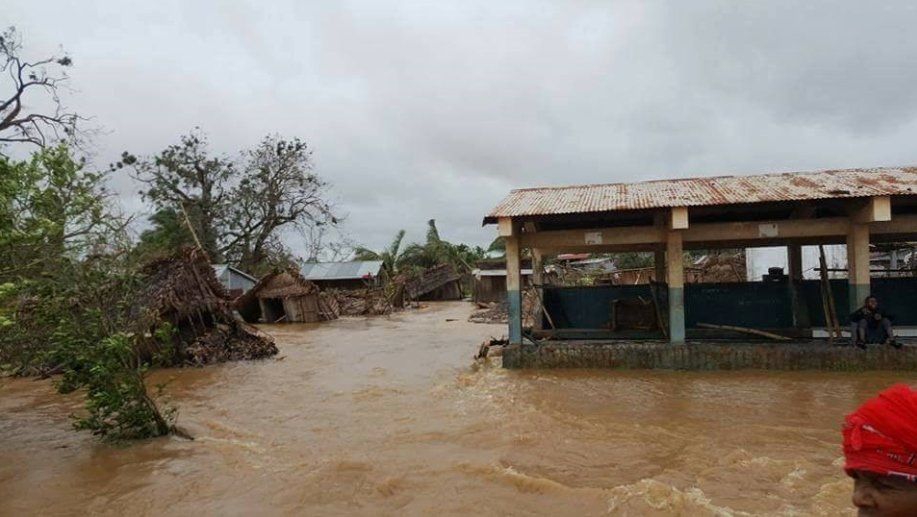
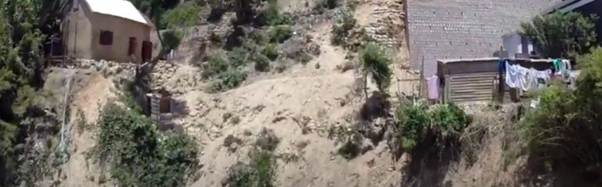
Floods and landslides are especially severe where cyclone rainfall interacts with deforestation, steep slopes, fragile soils, poor drainage, weak roads, and settlements located near rivers or unstable hillsides. Major transport corridors, rural roads, bridges, schools, health posts, irrigation systems, and markets are frequently exposed, making climate shocks both a humanitarian and infrastructure-resilience challenge.

4. Drought, water scarcity, and food-security vulnerability
Drought is one of Madagascar’s most severe slow-onset hazards, particularly in the Grand Sud and southwest. Multi-year droughts undermine rainfed agriculture, livestock, water access, nutrition, household income, and migration patterns. The World Bank identifies severe multi-year drought in the south as having an even more profound effect than cyclones because it deepens poverty and food insecurity. (Open Knowledge Repository)
In 2024, Madagascar was affected by several extreme events, including three severe cyclones, a tropical storm, and an El Niño-related drought; these shocks left around 4.7 million people needing humanitarian assistance and nearly 2 million people with very limited access to food. (international-climate-initiative.com)
5. Agriculture, livelihoods, and rural vulnerability
Madagascar’s rural livelihoods are highly climate-sensitive. Many households depend on rainfed rice, cassava, maize, livestock, fishing, forest products, and small-scale farming. Cyclones destroy crops and infrastructure in the east and north, while drought causes crop failure, pasture stress, water scarcity, and food insecurity in the south.
| Sub-sector | Main climate and hazard risks |
|---|---|
| Rice and staple crops | Cyclone flooding, drought, rainfall variability, pests, erosion, crop loss |
| Livestock | Drought, water scarcity, pasture decline, heat stress, disease |
| Fisheries | Cyclones, coastal erosion, reef degradation, ocean warming, storm damage |
| Rural roads and markets | Flood damage, bridge collapse, landslides, isolation of communities |
| Smallholder farmers | Low savings, limited irrigation, weak insurance coverage, repeated livelihood shocks |
| Food security | Crop failure, price shocks, market disruption, malnutrition, distress migration |
6. Coastal, marine, and biodiversity vulnerability
Madagascar has about 5,000 km of coastline and globally important coastal and marine ecosystems, including coral reefs and mangroves. These systems are exposed to sea-level rise, storm surge, coastal erosion, ocean warming, acidification, cyclone damage, and pollution. The World Bank CCDR notes that Madagascar contains about 5% of the world’s biodiversity, with around 90% of species endemic to the island, making biodiversity loss a major climate and development concern. (Open Knowledge Repository)
Coastal erosion and sea-level rise threaten coastal settlements, roads, ports, fishing communities, tourism areas, mangroves, coral reefs, and freshwater systems. Damage to ecosystems also reduces natural protection against storms and floods, weakening community resilience.
7. Health and social vulnerability
Climate change increases health risks through heat stress, malnutrition, waterborne diseases, vector-borne diseases, injuries during cyclones and floods, mental stress, and disruption of health services. The World Bank’s 2024 Climate and Health Vulnerability Assessment identifies Madagascar’s exposure to cyclones, floods, droughts, landslides, and sea-level rise as increasing the likelihood of health risks sensitive to temperature and precipitation changes. (Open Knowledge Repository)
The most vulnerable groups include smallholder farmers, fishing communities, women-headed households, children, older persons, people with disabilities, poor rural households, informal urban settlers, communities in drought-prone southern regions, and coastal communities exposed to cyclones, storm surge, erosion, and flooding.
8. Sector-specific vulnerability summary
| Sector | Main climate and multi-hazard risks |
|---|---|
| Agriculture and food security | Cyclones, floods, droughts, rainfall variability, crop loss, pests, malnutrition |
| Water resources | Drought, flood contamination, water scarcity, damaged water systems, poor recharge |
| Coastal zones | Sea-level rise, coastal erosion, storm surge, saltwater intrusion, cyclone impacts |
| Transport infrastructure | Road washouts, bridge damage, landslides, port disruption, rural isolation |
| Health | Malnutrition, malaria and other vector-borne disease, diarrhoeal disease, heat stress, service disruption |
| Biodiversity and ecosystems | Forest degradation, coral reef stress, mangrove loss, biodiversity decline, wildfires |
| Tourism | Cyclone damage, reef degradation, coastal erosion, infrastructure disruption |
| Public finance | Disaster response costs, reconstruction needs, reduced growth, poverty impacts |
9. Priority resilience needs
Madagascar’s resilience agenda should prioritize multi-hazard early warning systems, impact-based forecasting, cyclone preparedness, flood and landslide risk mapping, drought monitoring, climate-resilient agriculture, water-security planning, coastal-zone management, ecosystem-based adaptation, resilient transport infrastructure, disaster risk financing, shock-responsive social protection, and locally led adaptation.
A practical resilience package should include:
| Priority area | Key actions |
|---|---|
| Early warning and anticipatory action | Impact-based warnings for cyclones, floods, droughts, landslides, heat, coastal hazards, and food-security shocks |
| Cyclone and flood resilience | Evacuation planning, resilient shelters, drainage upgrades, river and floodplain risk mapping |
| Drought and food-security resilience | Drought monitoring, water harvesting, climate-resilient crops, nutrition-sensitive social protection |
| Climate-resilient agriculture | Drought-, flood-, and cyclone-resilient crops; agro-climate advisories; seed systems; crop insurance |
| Coastal and ecosystem resilience | Mangrove restoration, coral reef protection, coastal erosion control, marine ecosystem management |
| Infrastructure resilience | Climate-resilient roads, bridges, schools, health facilities, ports, and water systems |
| Risk financing | Contingency finance, forecast-based financing, insurance, scalable safety nets, resilient recovery funding |
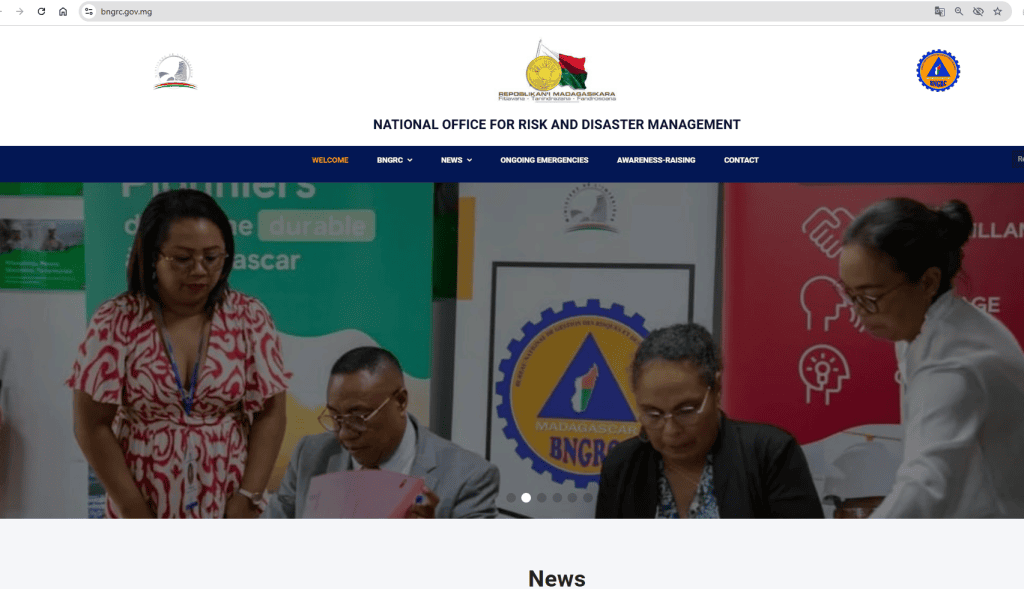
Bureau National de Gestion des Risques et des Catastrophes (National Office for Risk and Disaster Management)
- Created in 1962, the CNS (National Relief Council) was only in charge of emergency and rescue operations.
- Decree 72-377 of 20-10-1972: Single Agency
- In December 1984 (Decree 84-443), the CNC (National Coordination Committee for Cyclone Damage Rehabilitation Works) was established to take charge of the reconstruction
- Decree 2006-904, the CNS became BNGRC and extended its activities to prevention, preparedness, response and early recovery.
- The BNGRC is the public entity responsible for coordinating all activities related to prevention, preparedness, response and rehabilitation/reconstruction.
BNGRC Mandate Art. 6
The National Office for Risk and Disaster Management (BNGRC) has two main missions:
– the coordination and implementation of the National Strategy for Risk and Disaster Management (SNGRC) through the development of intervention plans and their implementation, the monitoring and evaluation of the activities of these different intervention plans throughout the territory.
– the mobilization of national and international funding for Disaster Management actions and the provision of funds in the event of disasters called the National Contingency Fund.
Sendai Framework for Disaster Risk Reduction 2015-2030
Sendai Framework for Disaster Risk Reduction 2015-2030. Read more >
National Strategy for Risk and Disaster Management 2016-2030
ACTION PLAN FOR THE NATIONAL STRATEGY FOR RISK AND DISASTER MANAGEMENT 2020-2030
CYCLONE BULLETIN – CYCLONE GAMANE MARCH 28, 2024
Download

Situation update – Heavy rains 23-01-2024
Download
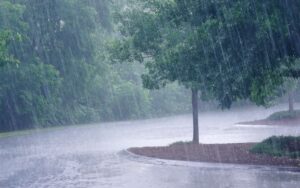
Filazana fampitandremana momba ny fahabetsahan’ny rotsakorana 16 Janoary 2024

Situation update – Cyclone ALVARO 04-01-2024
Download

Situation update – Cyclone ALVARO 03-01-2024
Download

Situation update – Cyclone ALVARO 02-01-2024
Download


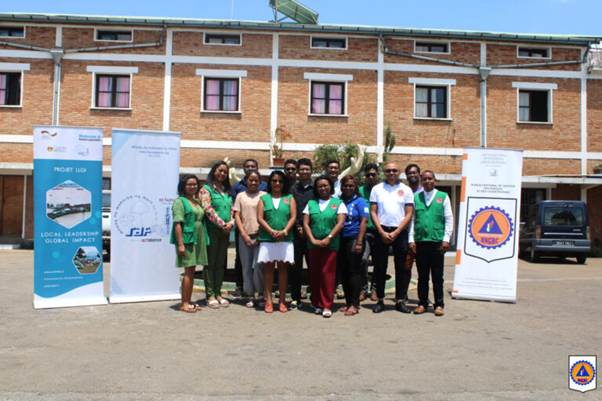
Training of SAF FJKM technicians in drone piloting for disaster management in Madagascar
Awareness-raising
LRaising awareness and preventing natural disasters are at the heart of our commitment! Here, we are mobilized to provide you with essential information on the preventative measures to adopt in the face of a variety of devastating phenomena.
Whether you are worried about a HEAT WAVE , a CYCLONE , a threatening LANDSLIDE , a FIRE , a FLOOD , a DROUGHT , a devastating TSUNAMI , a shaking EARTHQUAKE , or other natural threats.
Our goal is to equip you with the essential knowledge to protect yourself, your family, and your community. Explore our informative resources, from practical tips to educational videos, to learn how to anticipate, respond to, and survive emergencies. Because the best defense against a natural disaster is preparation. Remember, every action counts in building a more resilient community. So, dive into our articles, share knowledge, and together, let’s make prevention our first line of defense against the forces of nature.
Playlist 7 Videos COLOR CODE 0:16 COLOR CODE 0:16 CYCLONE FLOOD 0:16 FIRE SPOT FIRE LANDSLIDE

Raising awareness to improve our response to cyclones

Message from the Director General
Message from the Director
Dear visitors,
Welcome to the official website of the National Office for Risk and Disaster Management (BNGRC). As Director General of this institution, I am honored to welcome you to this space dedicated to raising awareness and providing information on the management of risks and disasters that threaten our country.
The mission of the BNGRC is essential: to protect human life, preserve dignity, and strengthen the resilience of our communities in the face of natural hazards and crises. In a global context marked by increasing climate change and extreme weather events, it is imperative that we act collectively and proactively.
At the BNGRC, we are committed to implementing early warning systems, optimizing emergency response, and promoting actions that have a direct and measurable impact on citizens’ lives. Through a Results-Based Management (RBM) approach, we ensure the transparency and effectiveness of our initiatives.
We recognize that risk management is a shared responsibility. That’s why we work closely with all stakeholders in disaster risk management: government ministries, local authorities, civil society, and technical and financial partners. Together, we must build a robust framework to anticipate, prepare for, and respond to disasters.
I invite you to explore our website to discover the progress of our projects, report on our actions, and raise public awareness of the risks. Your support and commitment are essential to ensuring the safety and well-being of our citizens.
Together, let us face the challenges and build a more resilient future for our nation.
Enjoy your reading!
Major General RAMANANTSOA Gabriel,
Director General of the National Office for Risk and Disaster Management (BNGRC)
Partners :

