Climate risk and vulnerabilities of Malaysia
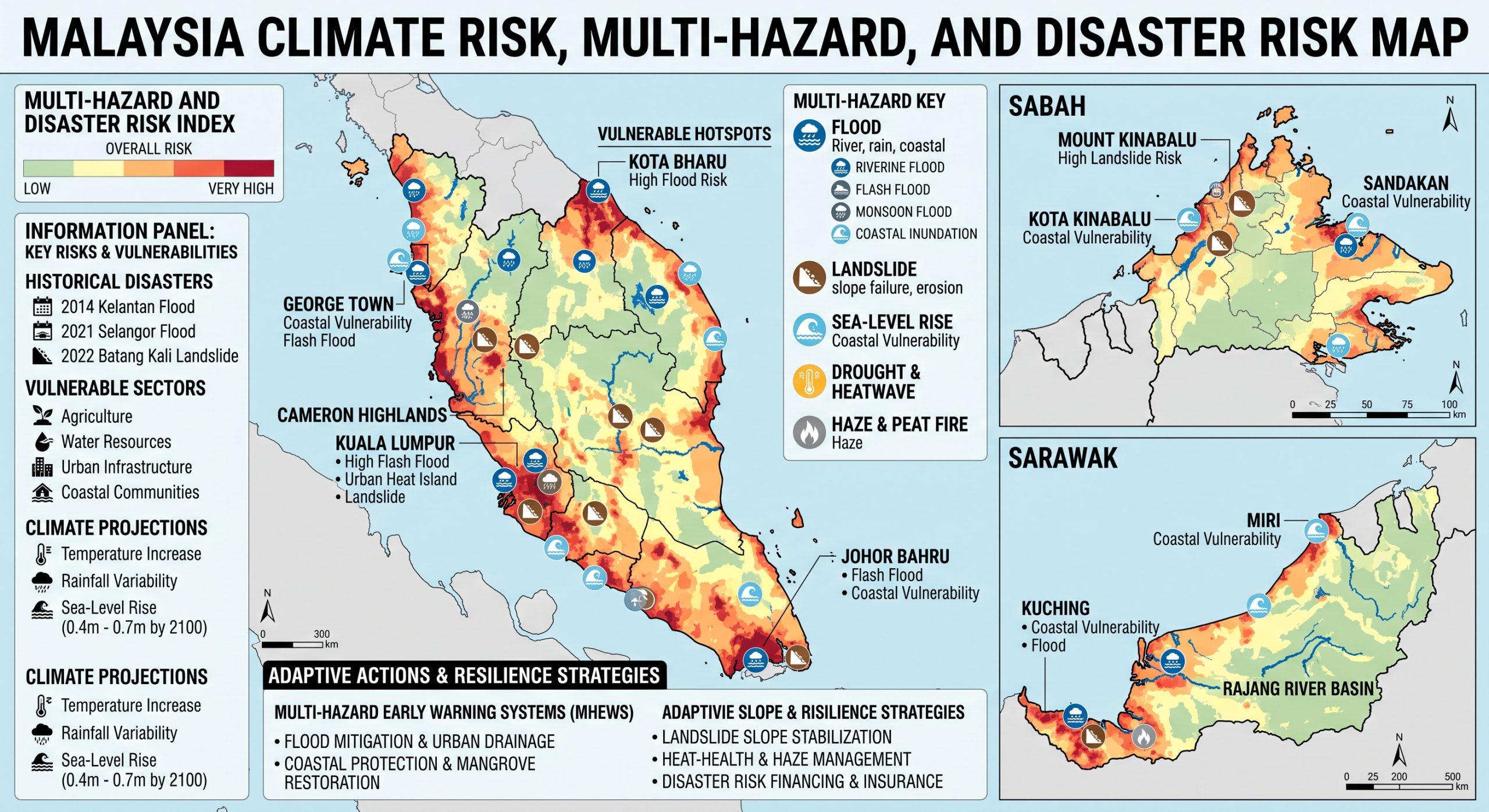
Malaysia is exposed to a complex climate and multi-hazard risk profile shaped by its tropical monsoon climate, long coastline, low-lying coastal and riverine settlements, rapidly urbanizing areas, steep highlands, extensive forests and peatlands, and dependence on climate-sensitive sectors such as water, agriculture, fisheries, infrastructure, tourism, energy, biodiversity, and public health. Key hazards include monsoon floods, flash floods, riverine flooding, landslides, coastal flooding, sea-level rise, coastal erosion, drought, heat stress, haze, forest and peat fires, storms, water pollution, and localized seismic/tsunami exposure. UNDRR notes that Malaysia is frequently affected by floods, droughts, landslides, possible tsunamis, anthropogenic hazards, and epidemics. (UNDRR)
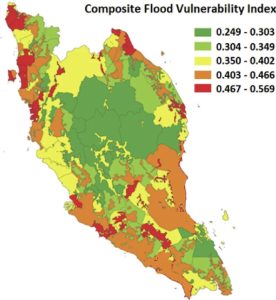
Malaysia is highly exposed and vulnerable to climate change and multi-hazard risks due to its tropical monsoon climate, extensive coastlines, low-lying coastal settlements, exposed river basins, rapidly urbanizing areas, highland slopes, peatlands, forests, and climate-sensitive economic sectors. The country faces recurrent risks from monsoon floods, flash floods, riverine flooding, landslides, coastal flooding, coastal erosion, sea-level rise, droughts, heat stress, haze, forest and peat fires, water stress, and climate-sensitive health impacts. Climate change is expected to intensify these vulnerabilities through heavier rainfall, more frequent extreme-weather events, rising temperatures, sea-level rise, coastal inundation, water-security stress, ecosystem degradation, and growing risks to agriculture, infrastructure, cities, public health, biodiversity, tourism, and vulnerable communities. Strengthening multi-hazard early warning systems, impact-based forecasting, flood and landslide risk reduction, coastal adaptation, urban drainage, climate-resilient agriculture, water security, heat-health planning, haze and peat-fire management, disaster risk financing, and locally led adaptation is essential to reduce losses and protect Malaysia’s development gains.
1. Multi-hazard exposure
Malaysia’s main climate-related disaster risks are floods and landslides, especially during the northeast and southwest monsoon seasons and during localized convective storms. Flooding affects river basins, low-lying urban areas, coastal communities, transport corridors, agricultural land, and public infrastructure. Landslides are common where intense rainfall interacts with steep slopes, road cutting, hillside development, deforestation, and weak drainage systems.
Malaysia’s climate-risk profile also includes droughts, heatwaves, sea-level rise, coastal erosion, forest fires, haze, water pollution, and ecosystem degradation. Malaysia’s National Policy on Climate Change 2.0 identifies floods, droughts, heatwaves, sea-level rise, and related climate hazards as important adaptation concerns. (Natural Resources Ministry)
2. Flood and landslide vulnerability
Flooding is Malaysia’s most recurrent and damaging climate hazard. Monsoon floods affect states such as Kelantan, Terengganu, Pahang, Johor, Perak, Selangor, Sabah, and Sarawak, while flash floods increasingly affect urban areas such as Kuala Lumpur, Klang Valley, Shah Alam, Penang, Johor Bahru, Kota Kinabalu, Kuching, and other rapidly growing cities.
Flood vulnerability is driven by:
| Driver | Risk implication |
|---|---|
| Intense monsoon rainfall | River overflow, flash floods, drainage congestion |
| Urban expansion | More impermeable surfaces, reduced infiltration, higher runoff |
| Drainage blockage | Localized flooding, traffic disruption, public-health risks |
| Settlement in floodplains | Housing damage, displacement, livelihood disruption |
| Degraded catchments | Higher runoff, erosion, sedimentation, slope instability |
| Climate change | More intense rainfall and greater flood uncertainty |
Landslides are especially important in highland areas, hill-slope settlements, road corridors, construction zones, and areas affected by deforestation or slope modification. Heavy rainfall can trigger slope failure, road blockage, infrastructure damage, fatalities, and isolation of communities.
3. Coastal vulnerability and sea-level rise
Malaysia has extensive coastal exposure across Peninsular Malaysia, Sabah, and Sarawak. Coastal areas face sea-level rise, coastal erosion, tidal flooding, storm surge, saltwater intrusion, mangrove degradation, port exposure, and damage to coastal settlements and tourism assets.
The World Bank/ADB climate risk profile for Malaysia projects that, under a high-emissions pathway, up to 234,500 people in Malaysia could be exposed to flooding from sea-level rise by 2070–2100. (Climate Change Knowledge Portal) NAHRIM’s sea-level-rise assessment also highlights that Malaysia’s low-lying coastal and river-estuary areas are particularly at risk, with projected sea-level rise varying across Peninsular Malaysia, Sarawak, and Sabah coastlines by 2100. (Nahrim)
4. Drought, heat, haze, and water-security vulnerability
Although Malaysia is generally humid and rainfall-rich, drought and water stress remain important risks, especially during El Niño periods and in areas dependent on reservoirs, river intakes, irrigation systems, or shallow groundwater. Drought can affect water supply, agriculture, hydropower, ecosystems, public health, and industrial activity.
Heat stress is becoming more important for public health, labour productivity, outdoor workers, urban residents, agriculture, and electricity demand. Urban heat-island effects can intensify heat exposure in dense cities.
Haze and forest/peat fires are also significant environmental and health risks. Fire and haze can affect air quality, respiratory health, schools, transport, tourism, agriculture, and business continuity, especially when dry conditions combine with land-use pressure and peatland degradation.
5. Sector-specific vulnerability summary
| Sector | Main climate and multi-hazard risks |
|---|---|
| Water resources | Drought, flood contamination, sedimentation, reduced water quality, reservoir stress |
| Agriculture and food security | Floods, drought, heat stress, pests, crop losses, irrigation stress, soil erosion |
| Coastal zones | Sea-level rise, coastal erosion, tidal flooding, saltwater intrusion, mangrove loss |
| Urban settlements | Flash flooding, drainage failure, heat stress, landslides, traffic and service disruption |
| Transport infrastructure | Road flooding, slope failure, bridge damage, port and coastal asset exposure |
| Tourism | Coastal erosion, haze, storms, flooding, biodiversity and reef degradation |
| Forests and biodiversity | Forest fires, peat fires, habitat degradation, invasive species, ecosystem stress |
| Public health | Heat illness, respiratory impacts from haze, waterborne disease after floods, dengue risk |
| Energy and industry | Water-supply disruption, flood damage, heat-related demand stress, supply-chain disruption |
Malaysia’s emerging National Adaptation Plan process identifies five priority climate-sensitive sectors: water and coastal resources, agriculture and food security, infrastructure and cities including energy, forestry and biodiversity, and public health. The MyNAP is expected to provide a coherent national framework for adaptation by the end of 2026. (NAP Global Network)
6. Social vulnerability
The most vulnerable groups include low-income urban households, informal settlers, rural communities, Indigenous peoples, coastal communities, smallholder farmers, fishers, elderly people, children, people with disabilities, outdoor workers, and communities living in flood-prone, landslide-prone, coastal, drought-prone, or haze-affected areas.
Vulnerability is highest where climate exposure overlaps with weak housing, limited savings, poor drainage, insecure tenure, limited insurance coverage, restricted mobility, and weak access to timely warnings and recovery support. The MyNAP process explicitly recognizes intersectional vulnerabilities shaped by gender, age, socio-economic status, background, and ethnicity. (NAP Global Network)
7. Priority resilience needs
Malaysia’s resilience agenda should prioritize multi-hazard early warning systems, impact-based forecasting, flood and landslide risk mapping, urban drainage upgrading, coastal-zone management, sea-level-rise monitoring, drought monitoring, heat-health planning, haze and peat-fire risk reduction, climate-resilient agriculture, resilient infrastructure, ecosystem-based adaptation, disaster risk financing, and locally led adaptation.
A practical resilience package for Malaysia should include:
| Priority area | Key actions |
|---|---|
| Early warning and anticipatory action | Impact-based warnings for floods, landslides, heat, drought, haze, storms, and coastal flooding |
| Flood-risk management | River-basin forecasting, drainage upgrading, retention ponds, floodplain zoning, community preparedness |
| Landslide risk reduction | Slope monitoring, hazard mapping, drainage control, safe hillside development, road stabilization |
| Coastal resilience | Mangrove restoration, coastal setback planning, erosion control, sea-level-rise monitoring |
| Urban resilience | Stormwater management, blue-green infrastructure, heat-risk planning, risk-informed land-use planning |
| Agriculture and food security | Climate advisories, flood- and drought-resilient crops, irrigation efficiency, crop insurance |
| Water security | Drought planning, reservoir management, water-quality protection, catchment restoration |
| Health resilience | Heat-health action plans, dengue surveillance, haze preparedness, flood-safe WASH systems |
| Risk governance and financing | Adaptation finance, climate-risk screening of public investment, insurance, contingency financing |
National Disaster Management Agency (NADMA)
Following the major flood disaster that occurred during the 2014/2015 Northeast Monsoon (MTL), the Cabinet in its meeting on 26 August 2015 agreed to the establishment of the National Disaster Management Agency (NADMA) to take over the role of the main lead agency for disaster management from the National Security Council, Prime Minister’s Department (MKN, JPM) at the national, regional and international levels.
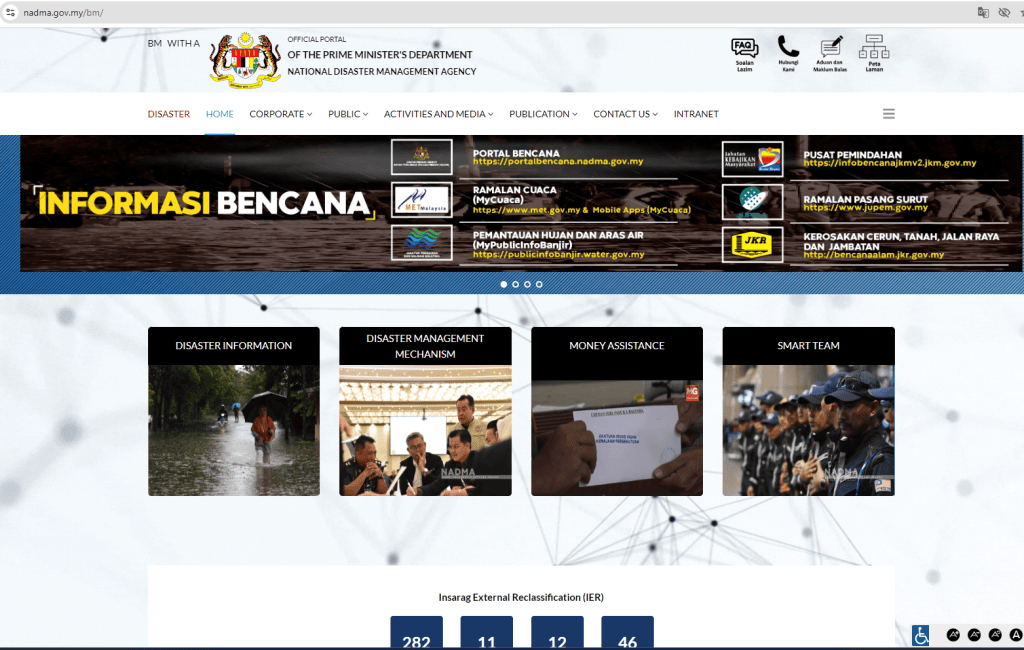
Thanks to the National Disaster Command Center (NDCC) for running the geoportal on event situation update at https://portalbencana.nadma.gov.my/ms/ but it is still not sufficnent, Malaysia need to install real-time data ingested national situtation room/EOC. The MHEWC would like to support the Malaysian National Disaster Management Agency (NADMA) in installing a robust EOC
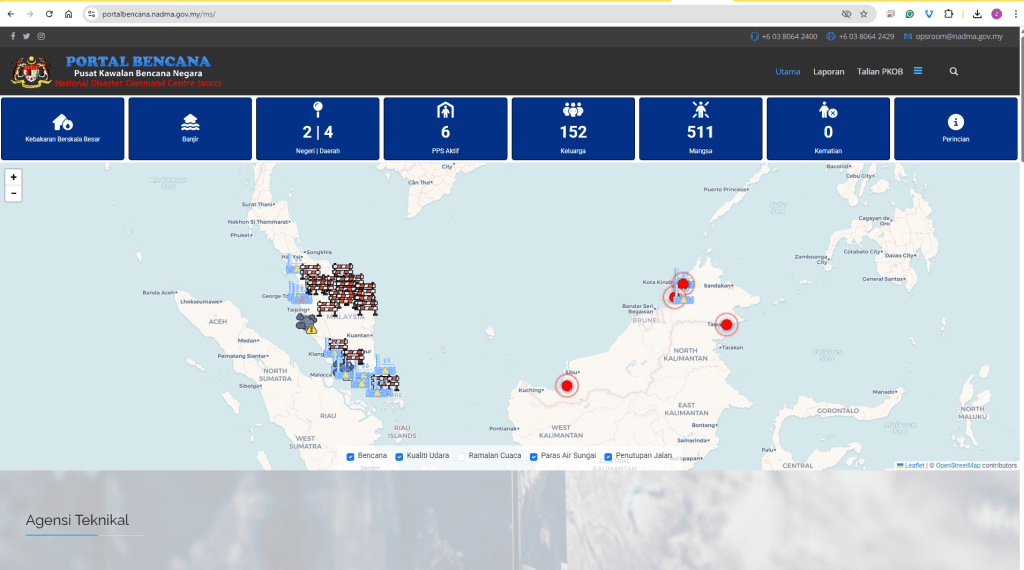
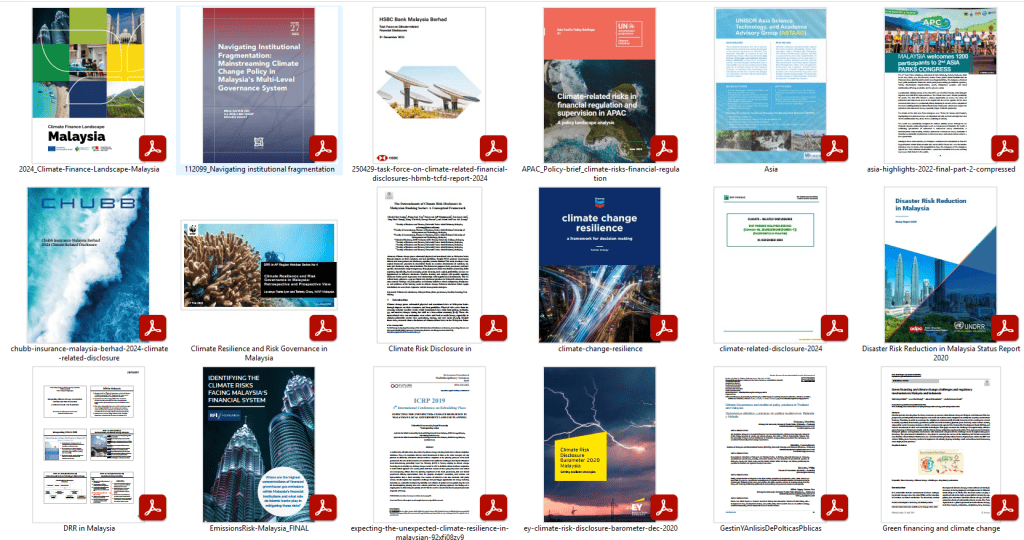
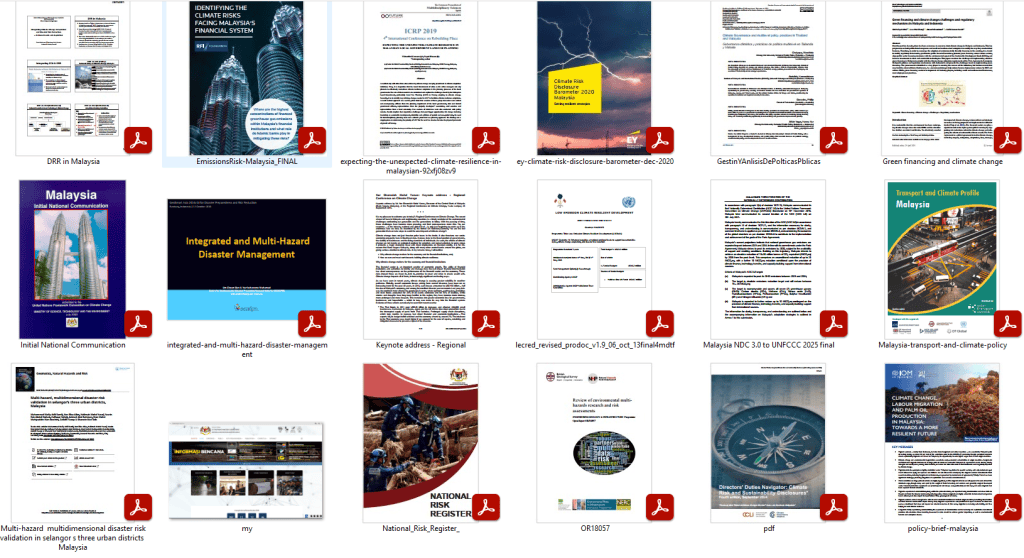
Some useful documents on Malaysia
To access all documents given snapshots, please click the Google Drive link……………..
https://drive.google.com/drive/folders/1O5oHQmQqFf5Sni6ADFOAuHrZY3CzwxKF?usp=sharing
To,
The Director-General (Ketua Pengarah) of the National Disaster Management Agency (NADMA), Malaysia
Subject: Working opportunity with the NADMA of Malaysia
Dear Sir,
Greetings from the Multi-Hazard Early Warning System Design and Implementation Center (MHEWC).
MHEWC provides technical solutions to strengthen Disaster Risk Management (DRM) governance systems, climate and multi-hazard risk management, and end-to-end early warning system design and implementation. We would be pleased to offer technical support to the National Disaster Management Agency (NADMA), Malaysia, in the following areas:
a) Upgrading NDMA’s existing web portal into a geospatial, real-time database-driven, and app-enabled Decision Support System (DSS) to support real-time disaster risk governance, planning, preparedness, response, and recovery management.
b) Conducting climate and multi-hazard risk and vulnerability assessments, including the preparation of geospatial hazard, exposure, vulnerability, and risk maps, and the establishment of a centralized risk information repository and database management system.
c) Assessing existing monitoring, observation, and early warning capacities and supporting NADMA in the installation, enhancement, and integration of observation networks, including Automated Weather Stations (AWS), hybrid weather and hazard monitoring systems, and sensor-ingested real-time data systems linked to a functional DSS.
d) Designing and operationalizing end-to-end multi-hazard early warning systems,including weather and hazard nowcasting services, impact-based forecasting, forecast-based anticipatory early action, forecast-based emergency preparedness and response management, forecast-based financing, Early Action Protocol development, and DSS-supported Standing Orders on Disaster and Standard Operating Procedures.
e) Supporting automated hazard detection, monitoring, prediction, and emergency operations management, including the design, implementation, and operationalization of a Multi-Hazard and Disaster Emergency Operations Center (EOC).
f) Developing GIS, database, and information tool-driven local government and productive sector-level risk-informed planning and budgeting systems to strengthen disaster risk reduction, climate change adaptation, nature-based solutions, locally led adaptation, and resilience planning.
g) Reviewing and upgrading multi-hazard preparedness, response, and recovery plansacross administrative levels and relevant priority sectors, in alignment with NDMC’s institutional mandate and national disaster management priorities.
h) Providing any additional technical assistance as may be required by NADMA to strengthen national-to-last-mile disaster risk governance and early warning capacities.
We would welcome the opportunity to discuss NADMA’s priorities and explore how MHEWC can support the development of a practical implementation roadmap for strengthening multi-hazard early warning, risk information, and disaster risk governance systems.
We look forward to your kind response.
Sincerely,
Z M Sajjadul Islam
Director
Multi-Hazard Early Warning System Design and Implementation Center (MHEWC)
Web: mhewc.org
Email: sajjad@mhewc.org , zmsajjad@gmail.com
Phone & WhatsApp: +88 01711 979179
