Climate and multi-hazard risk and vulnerabilities
Uruguay is highly exposed to climate variability and climate change, especially through drought, water scarcity, riverine flooding, urban flooding, coastal erosion, sea-level rise, severe storms, strong winds, tornadoes, hailstorms, heatwaves, cold waves, agricultural losses, livestock stress, water-quality deterioration, and infrastructure disruption. Although Uruguay has stronger institutions and adaptive capacity than many countries in the region, its development model remains highly sensitive to rainfall variability, pasture productivity, water availability, coastal concentration, and hydrometeorological extremes.
Uruguay’s National Adaptation Plan for Cities and Infrastructure identifies multiple climate hazards affecting cities and infrastructure, including intense precipitation and floods alternating with drought periods, heat and cold waves, storms, strong winds, and rising sea level. The same plan notes that more than 94% of Uruguay’s population lives in cities, and more than 70% lives in coastal areas, creating high exposure of people, services, infrastructure and economic activity to climate-sensitive urban and coastal risks.
Uruguay’s climate-risk profile is defined by high rainfall variability, recurrent drought, flood-prone cities, coastal concentration, livestock and agriculture sensitivity, water-supply vulnerability, and rising heat and storm risks. The country has strong institutional foundations, but the 2022–2023 drought showed that resilience now depends on moving from general climate planning to operational, forecast-based, sector-specific early action. Priority investments should focus on water security, drought preparedness, flood-risk reduction, climate-smart agriculture, coastal ecosystem protection, resilient infrastructure, health adaptation and integrated climate-risk financing.
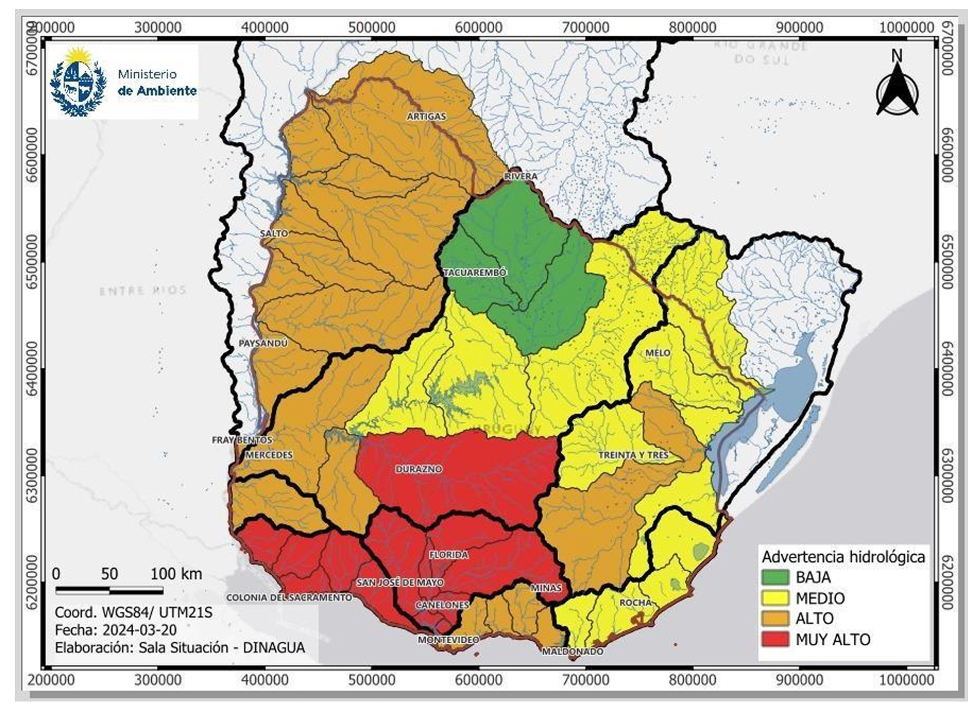
IFRC GO – Emergency – URY: Flood – 03-2024 – Floods
Key hazard profile
| Hazard | Main risk pathway | Highly exposed areas / systems |
|---|---|---|
| Drought and water scarcity | Drinking-water shortages, reduced reservoir levels, livestock stress, pasture loss, crop losses, water-quality deterioration | Montevideo metropolitan water supply, Santa Lucía basin, livestock areas, rainfed agriculture |
| Riverine and urban flooding | Evacuation, housing damage, road disruption, water contamination, impacts on poor settlements | Riverbank cities, low-lying urban areas, floodplain settlements |
| Coastal flooding and erosion | Beach loss, damage to coastal infrastructure, tourism disruption, saline intrusion, ecosystem degradation | Montevideo, Canelones, Maldonado, Rocha, coastal tourism zones |
| Severe storms, strong winds and tornadoes | Rapid damage to houses, power lines, schools, crops, trees and infrastructure | Urban and rural settlements nationwide |
| Heatwaves | Health stress, labour-productivity loss, livestock heat stress, higher cooling demand | Cities, elderly populations, outdoor workers, livestock systems |
| Cold waves and frosts | Health impacts, livestock losses, crop damage, transport disruption | Rural areas, exposed settlements, horticulture and livestock systems |
| Hailstorms and heavy rainfall | Crop damage, soil erosion, drainage overload, infrastructure losses | Agricultural zones, cities and road corridors |
| Wildfire / grassland fire | Pasture loss, biodiversity damage, air pollution, rural asset loss | Grasslands, forestry areas, drought-affected rural zones |
Uruguay’s own loss-and-damage submission to the UNFCCC identifies the country as vulnerable to droughts, floods, cold and heat waves, strong winds, tornadoes, hailstorms, frosts, heavy rains and severe storms. It also notes that El Niño tends to increase the probability of excess rainfall in spring and autumn, while La Niña is commonly associated with long and serious droughts, particularly in the north. (UNFCCC)
Climate trends and exposure
Uruguay is projected to become warmer. NAP-Cities reports that, compared with 1981–2010, models project temperature increases of 0.5°C to 1.6°C for 2020–2044, and 1.5°C to 5.5°C for 2075–2099, depending on the global emissions pathway. It also warns that heatwaves in the region are expected to increase in both number and duration by the end of the 21st century.
Rainfall risk is more complex: Uruguay may experience both intense rainfall and drought. NAP-Cities highlights that cities face a greater frequency and intensity of severe climate events, including intense precipitation and floods alternating with drought periods. It also notes that higher atmospheric water vapour under warming can contribute to stronger storms and rainfall events.
Coastal risk is a major national issue. NAP-Cities states that sea-level rise in the South Atlantic has contributed to increased coastal flooding, while the combination of wind, precipitation changes and rising sea level increases risks of floods, erosion, overflow, storm surge effects, beach sand loss and cliff recession, affecting ecosystems and key urban infrastructure.
Sector-specific vulnerabilities
1. Water security and drought risk
Water security is one of Uruguay’s most critical emerging climate risks. The 2018–2023 drought demonstrated the scale of vulnerability in the Montevideo metropolitan water-supply system. NASA reports that Uruguay experienced its worst drought in nearly a century from 2018 to 2023, and that by mid-2023 the Paso Severino Reservoir, Montevideo’s main water source, had dropped to only 1.7% of capacity. (NASA Science)
Reuters reported in May 2023 that Uruguay’s water deficit was the worst in 74 years, with Paso Severino at around 10% of capacity and authorities forced to mix freshwater with more saline water from the River Plate estuary, increasing sodium and chloride levels in the public supply. (Reuters)
The main water-risk pathways are:
declining reservoir storage during prolonged drought;
reduced freshwater availability for Montevideo and surrounding areas;
higher salinity and poorer water quality during shortages;
competition between domestic supply, livestock, irrigation, forestry and other productive uses;
increased dependence on emergency reservoirs, transfers and real-time monitoring;
greater need for drought forecasting, basin management and water-demand planning.
NASA also notes that Uruguay’s National Water Authority has begun using satellite-based reservoir-monitoring tools based on Landsat and Sentinel imagery to support reservoir tracking and emergency water decisions. (NASA Science)
2. Agriculture, livestock and food security
Agriculture is a major transmission channel of climate risk in Uruguay. UNDP’s NAP-Ag case study notes that the agricultural sector contributes around 70% of exports and 7% of GDP, and that agricultural production remains vulnerable to climate variability, especially more intense floods and droughts. (Adaptation UNDP)
Uruguay’s productive systems are particularly sensitive because livestock, dairy, crops, forestry, horticulture and rice production depend on reliable rainfall, pasture growth, soil moisture, water availability and climate-stable growing conditions. Drought reduces pasture biomass, livestock weight gain, milk production, animal health and farm income. Excessive rainfall and flooding damage crops, rural roads, soil structure, field access, horticulture and livestock infrastructure.
Climate-risk financing has already been recognized as an adaptation need. Uruguay’s NAP-Ag baseline assessment notes that the Ministry of Livestock, Agriculture and Fisheries prioritized climate-risk coverage tools, including index insurance for horticulture against excessive rainfall and pilot index insurance for livestock farmers to manage summer water-deficit and drought risk.
3. Floods, storms and urban exposure
Flooding is one of Uruguay’s most recurrent and damaging hazards for cities. NAP-Cities reports that from 2005 to 2018, floods caused large numbers of evacuees and damaged housing, and cities with the highest evacuated and self-evacuated populations were those where floods occurred. The plan also notes that flood impacts are linked to housing damage, livelihood disruption, pollution-related disease risks and water-associated vectors.
Urban vulnerability is increased by the location of settlements in flood-prone areas, historical under-consideration of flood risk in land-use planning, and exposure of vital infrastructure. NAP-Cities specifically identifies the need to strengthen prediction and alerting capacities for cities, including for storms, strong wind gusts and tornadoes.
4. Coastal zones, tourism and infrastructure
Uruguay’s coastal zone is highly strategic because it concentrates population, tourism, infrastructure, ecosystems and economic activity. Coastal hazards include sea-level rise, erosion, storm surge effects, tidal flooding, beach degradation, cliff recession and damage to public infrastructure. These risks are particularly relevant for Montevideo, Canelones, Maldonado and Rocha.
Coastal adaptation should therefore combine hard and nature-based solutions: coastal zoning, setback lines, beach and dune restoration, wetland protection, ecosystem-based adaptation, flood-sensitive land-use planning, resilient drainage, coastal infrastructure standards and tourism risk management. Uruguay’s national climate policy also identifies reducing vulnerability in riverine, coastal and marine areas through ecosystem-based adaptation as a strategic objective. (UNDP)
5. Energy security and hydrometeorological variability
Uruguay has made major progress in renewable energy, but climate variability still matters for energy security. Hydrological variability affects hydropower availability, while drought can increase reliance on other generation sources and raise system costs. NAP-related documents identify adaptation in power generation as one of Uruguay’s existing adaptation action areas. (UNDP)
Energy-sector resilience should therefore include hydrological forecasting, reservoir monitoring, climate-informed dispatch planning, storage, demand management, grid resilience, and protection of transmission and distribution infrastructure against storms, heat and floods.
6. Public health vulnerability
Climate change affects health through heat stress, cold waves, flood-related contamination, vector risks, poor water quality, storm injuries, mental stress after disasters, and disruption of health services. NAP-Cities explicitly calls for stronger integration of climate adaptation and risk management with the health sector, and for public services to maintain operational continuity during climate extremes and emergencies.
Priority health concerns include:
heat stress among elderly people, children, people with chronic illness and outdoor workers;
water-quality risks during drought and salinity episodes;
diarrhoeal and vector-related risks after floods;
storm-related injury and service disruption;
mental-health stress associated with evacuation, water shortages and livelihood losses.
7. Ecosystems, biodiversity and land degradation
Uruguay’s grasslands, wetlands, riverine ecosystems, coastal dunes, beaches and agricultural soils are exposed to climate stress. Drought reduces pasture productivity and ecosystem resilience; intense rainfall increases erosion and runoff; coastal erosion threatens beach and dune systems; and biodiversity loss reduces ecosystem services.
Soil conservation is a central adaptation issue. Uruguay’s NAP-Ag baseline assessment notes that the Ministry of Livestock, Agriculture and Fisheries established a soil-use regulation system requiring farmers to present land-use plans that consider soil-management practices, crop sequence and erosion estimates.
Exposure, sensitivity and adaptive capacity
Exposure
Uruguay is exposed to both slow-onset risks and rapid-onset hazards. Slow-onset risks include drought, water scarcity, sea-level rise, coastal erosion, biodiversity loss and land degradation. Rapid-onset hazards include floods, intense rainfall, storms, tornadoes, hailstorms, strong winds, heatwaves and cold waves.
Sensitivity
Uruguay’s sensitivity is concentrated in several systems: drinking-water supply for Montevideo, livestock and pasture-based production, crop and dairy systems, coastal cities, floodplain settlements, water-quality systems, tourism infrastructure and transport networks. The 2022–2023 drought showed that even a relatively high-capacity country can face acute stress when rainfall deficits persist across seasons.
Adaptive capacity
Uruguay has comparatively strong adaptive capacity, including a National Climate Change Response System, sectoral adaptation planning, NAP-Cities, agriculture-sector NAP processes, climate services, monitoring programmes and disaster-risk governance mechanisms. UNDP notes that Uruguay has undertaken adaptation measures in power generation, coastal ecosystem restoration, cattle production and soil management, and has worked on information systems, climate services, monitoring programmes, early warning systems, relocation plans and urban/infrastructure measures in high-risk areas. (UNDP)
However, implementation challenges remain: climate-proofing water supply, improving drought preparedness, reducing flood exposure in settlements, strengthening urban drainage, protecting coastal infrastructure, financing resilient infrastructure, expanding climate-risk insurance, and ensuring last-mile alerts for vulnerable communities.
Economic and fiscal risk
Climate shocks are macroeconomically relevant for Uruguay. A World Bank working paper on the macroeconomic impact of climate shocks in Uruguay finds that the volatility of a simulated economy exposed only to historical climate shocks reaches 22% of historical GDP volatility. It also estimates that GDP could fall by 2.3% under a combined negative climate and macroeconomic shock occurring roughly once every six years, and by 4.1% under a once-in-40-years combined negative shock. Climate change is expected to worsen drought downside risks by 18–30%, although uncertainty remains large. (Open Knowledge Repository)
The same research highlights droughts and floods as key sectoral shock channels, especially through agriculture, livestock, water and broader macro-fiscal impacts. This means Uruguay’s climate adaptation agenda should be treated not only as an environmental issue, but also as a fiscal-risk, food-system, infrastructure and development-planning priority.
Priority adaptation and early warning needs
Uruguay’s resilience strategy should focus on an impact-based, multi-hazard early warning and anticipatory action system linked to water security, agriculture, livestock, urban planning, health, energy and coastal management.
Key priorities include:
Drought and water-scarcity early warning
Integrate rainfall deficits, reservoir storage, groundwater, soil moisture, streamflow, pasture condition, water demand, salinity and seasonal forecasts.Reservoir and basin monitoring
Scale satellite-based reservoir monitoring, basin hydrological modelling and operational dashboards for the Santa Lucía basin and other strategic water systems.Flood impact-based forecasting
Improve riverine and urban flood thresholds, floodplain exposure mapping, drainage-risk modelling, evacuation planning and local warning dissemination.Agriculture and livestock climate services
Provide crop, pasture, livestock, dairy, horticulture and rice advisories linked to rainfall outlooks, soil moisture, heat stress, frost, pest risks and water availability.Climate-risk insurance and financing
Expand index-based insurance for drought, water deficit and excessive rainfall, linked to reliable climate data and farmer support systems.Coastal adaptation and ecosystem-based protection
Protect beaches, dunes, wetlands and coastal ecosystems while strengthening zoning, setback regulations, resilient infrastructure and coastal tourism planning.Urban resilience and infrastructure standards
Upgrade drainage, roads, public buildings, water systems and critical services using climate projections and multi-hazard risk assessments.Heat-health and water-quality early warning
Establish alerts for heatwaves, poor water quality, salinity episodes, flood-related contamination and climate-sensitive disease risks.Soil, pasture and ecosystem restoration
Strengthen soil conservation, rotational grazing, pasture recovery, wetland protection and sustainable land-use planning.Geospatial Decision Support System
Build or strengthen a national DSS integrating hazard forecasts, reservoir levels, flood maps, coastal exposure, agricultural zones, livestock vulnerability, public infrastructure, health facilities, vulnerable populations and early-action triggers.
The National Disaster Risk Reduction and Management Council (NDRRMC),
The National Disaster Risk Reduction and Management Council (NDRRMC), formerly known as the National Disaster Coordinating Council (NDCC) until August 2011, is a working group of various government, non-government, civil sector and private sector organizations of the Government of the Republic of the Philippines established on June 11, 1978 by Presidential Decree 1566.[1] It is administered by the Office of Civil Defense (OCD) under the Department of National Defense (DND). The council is responsible for ensuring the protection and welfare of the people during disasters or emergencies. The NDRRMC plans and leads the guiding activities in the field of communication, warning signals, emergency, transportation, evacuation, rescue, engineering, health and rehabilitation, public education and auxiliary services such as fire fighting and the police in the country. The Council utilizes the UN Cluster Approach in disaster management. It is the country’s focal for the ASEAN Agreement on Disaster Management and Emergency Response (AADMER) and many other related international commitments.

Oficina Nacionaldel Servicio Civil
Protección Civil promueve la colaboración entre los centros nacionales de coordinación de emergencias del área iberoamericana
Madrid, 15 noviembre 2019 | Curso en Montevideo, del 11 al 15 de noviembre
- Organizada por la Dirección General de Protección Civil y Emergencias, la actividad formativa ha reunido a 31 profesionales de distintas instituciones de América Latina y Caribe (Argentina, Bolivia, Chile, Colombia, Costa Rica, Ecuador, El Salvador, Guatemala, Honduras, México, Paraguay, Perú, República Dominicana y Uruguay) así como de España.
- El curso se enmarca en el Plan INTERCOONECTA de la Agencia Española de Cooperación Internacional para el Desarrollo (AECID).
Expertos de la Dirección General de Protección Civil y Emergencias del Ministerio del Interior han participado durante toda la semana en el Curso sobre gestión de emergencias desde centros nacionales de operaciones, que ha tenido lugar en el Centro de Formación que la Agencia Española de Cooperación Internacional para el Desarrollo (AECID) tiene en Montevideo.
En esta actividad, que forma parte del Plan de Trabajo de la Dirección General de Protección Civil y Emergencias para la implementación del Marco de Sendai y la Estrategia Internacional para la Reducción de los Desastres (EIRD), y que se enmarca dentro del Plan de Transferencia, Intercambio y Gestión de Conocimiento para el Desarrollo de la Cooperación Española en América Latina y el Caribe (INTERCOONECTA), han participado 31 responsables de la gestión de riesgos y coordinación de emergencias de 15 países del área iberoamericana (Argentina, Bolivia, Chile, Colombia, Costa Rica, Ecuador, El Salvador, Guatemala, Honduras, México, Paraguay, Perú, República Dominicana y Uruguay) así como de España.
El objetivo del curso es favorecer el intercambio de experiencias y la puesta en común de metodologías de trabajo entre los distintos centros nacionales de operaciones de la región para mejorar la coordinación y gestión de respuesta en situaciones de emergencia.
Se pretende, a su vez, mantener una colaboración continuada en el tiempo a través de acuerdos de trabajo para el desarrollo de metodologías comunes, de manera que se favorezca la interoperabilidad y la ayuda mutua entre los distintos centros nacionales.
En este sentido, la Dirección General de Protección Civil y Emergencias ha presentado la línea de trabajo establecida en el Centro Nacional de Emergencias, que opera con la Certificación de la norma ISO 22320 de gestión de emergencias.
Además, los responsables españoles han compartido el funcionamiento operativo del Mecanismo Europeo de Protección Civil, del que la Dirección General de Protección Civil y Emergencias es punto focal en España, con el objetivo de promover modelos regionales similares.
A lo largo del curso, se ha puesto especial hincapié en fortalecer la coordinación efectiva entre los centros de coordinación de emergencias en todos los niveles de la Administración (nacional, regional o departamental y local) resaltando buenas prácticas en materia de gestión de la información, información a la población, sistemas de alerta y gobernanza del riesgo (Prioridad 2 del Marco de Sendai).
Además de las exposiciones teóricas, los talleres de trabajos grupales, y las exposiciones de los propios participantes sobre resolución de emergencias reales de sus países, se ha realizado una visita a las instalaciones del SINAE (Sistema Nacional de Emergencias) de Uruguay en Montevideo, donde el grupo ha sido recibido por su director, Fernando Traversa, que les ha dado a conocer el Centro de Coordinación de Emergencias.
Al acto inaugural del pasado lunes asistieron la directora del Centro de Formación de AECID en Montevideo, Mercedes Flórez Gómez, y el director del Sistema Nacional de Emergencias de Uruguay, Fernando Traversa, junto con el subdirector general de Planificación, Prevención y Operaciones de la Dirección General de Protección Civil y Emergencias de España, Francisco Ruiz Boada, director del curso.
PLAN INTERCOONECTA
La Dirección General de Protección Civil y Emergencias es entidad colaboradora para el desarrollo de programaciones plurianuales (2018-2019) de capacitación y formación técnica del Plan de Transferencia, Intercambio y Gestión de Conocimiento INTERCOONECTA de la Agencia Española de Cooperación Internacional para el Desarrollo (AECID), con un programa bajo el título “Formación para la mejora de los sistemas de prevención, planificación y respuesta en la gestión del riesgo de desastres en América Latina y El Caribe”, con 11 actividades propuestas para impartir en 2019.
National School of Civil Protection (ENPC)
Training of human resources for the National Civil Protection System. This contributes to maintaining and improving their capacity to manage risk and respond to emergencies.
Presentation

Who we are
Specialized training of Civil Protection personnel from the General State Administration and other public institutions.

Our facilities
Complete teaching equipment and practice field.

Location
Rivas-Vaciamadrid / Camino de Salmedina, s/n.

Frequently Asked Questions
Information for students and other matters of interest.
Training plan
Plan structure
Functional division into modules and sub-modules, where the training activities are framed.
Training offer
Current training activities: dates, registration, target audience, programs.
Today at School
Training activities during the current week.
Access to training platforms
Student Registration/Access, Coordinator Access, Certificate Validation, Virtual Campus Access (online courses).
+ Training
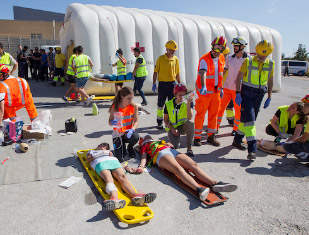
Civil Protection Training System

Listado Publicaciones
2024 | Textos y normas legales,Todas las publicaciones
Real Decreto 524/2023 Norma Básica de Protección Civil
- Descripción: Real Decreto 524/2023, de 20 de junio, por el que se aprueba la Norma Básica de Protección Civil
- Nipo en Línea: 126-24-092-9

Ver documentoReal Decreto 524/2023 Norma Básica de Protección Civil
2024 | Textos y normas legales,Todas las publicaciones
Ley 17/2015 Sistema Nacional de Protección Civil
- Descripción: Ley 17/2015, de 9 de julio, del Sistema Nacional de Protección Civil
- Nipo en Línea: 126-24-090-8

Ver documentoLey 17/2015 Sistema Nacional de Protección Civil
2024 | Material divulgación,Publicaciones institucionales,Todas las publicaciones
Subvencions
- Descripción: en consideració a determinades necessitats derivades de situacions d’emergència o de naturalesa catastròfica
- Nipo en Línea: 126-24-087-4
2024 | Guías didácticas,Riesgos naturales,Información población,Todas las publicaciones
Guía de información al ciudadano ante el Riesgo de Inundaciones
- Descripción: Colección Cultura Preventiva
- Nipo en Línea: 126-23-087-X
Ver documentoGuía de información al ciudadano ante el Riesgo de Inundaciones
2024 | Guías didácticas,Información población,Todas las publicaciones,Autoprotección
Guía de información al ciudadano sobre Autoprotección
- Descripción: Colección Cultura Preventiva
- Nipo en Línea: 126-23-097-1
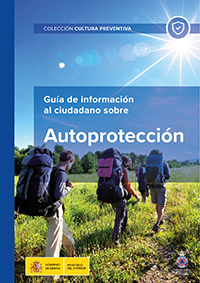
Ver documentoGuía de información al ciudadano sobre Autoprotección
2024 | Guías didácticas,Riesgos naturales,Información población,Todas las publicaciones
Guía de información al ciudadano ante Fenómenos Meteorológicos Adversos
- Descripción: Colección Cultura Preventiva
- Nipo en Línea: 126-23-095-0
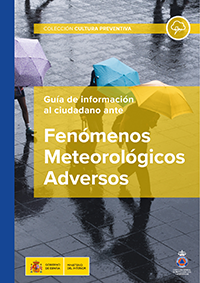
Ver documentoGuía de información al ciudadano ante Fenómenos Meteorológicos Adversos
2024 | Guías didácticas,Riesgo químico,Información población,Todas las publicaciones
Guía de información al ciudadano ante emergencias en Establecimientos Industriales
- Descripción: Colección Cultura Preventiva
- Nipo en Línea: 126-23-099-2
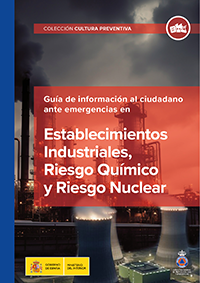
Ver documentoGuía de información al ciudadano ante emergencias en Establecimientos Industriales
2024 | Guías didácticas,Riesgos naturales,Información población,Todas las publicaciones
Guía de información al ciudadano ante el Riesgo de Tsunamis
- Descripción: Colección Cultura Preventiva
- Nipo en Línea: 126-23-089-0
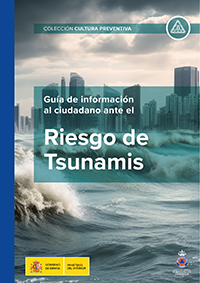
Ver documentoGuía de información al ciudadano ante el Riesgo de Tsunamis
2024 | Guías didácticas,Riesgos naturales,Información población,Todas las publicaciones
Guía de información al ciudadano ante el Riesgo Volcánico
- Descripción: Colección Cultura Preventiva
- Nipo en Línea: 126-23-093-X
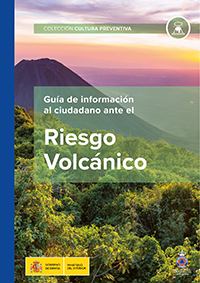
Ver documentoGuía de información al ciudadano ante el Riesgo Volcánico
2024 | Guías didácticas,Información población,Todas las publicaciones,Incendios forestales
Guía de información al ciudadano ante el Riesgo de Incendios
- Descripción: Colección Cultura Preventiva
- Nipo en Línea: 126-23-085-9