Climate and multi-hazard risk and vulnerabilities
Paraguay is highly vulnerable to climate variability and climate change, particularly through riverine floods, urban floods, drought, extreme heat, wildfire, severe storms, landslides, agricultural losses, hydropower disruption, waterway transport disruption, water-quality deterioration, and food-security stress. As a landlocked country at the centre of South America, Paraguay’s climate risk is strongly shaped by the Paraguay–Paraná river system, the Gran Chaco, the Pantanal wetland system, and its strong dependence on agriculture, livestock, hydropower and inland waterways. Paraguay contains several climate zones: a hot semi-arid northwest, tropical savanna conditions in the north and centre, and humid subtropical conditions in the southeast. (belonging.berkeley.edu)
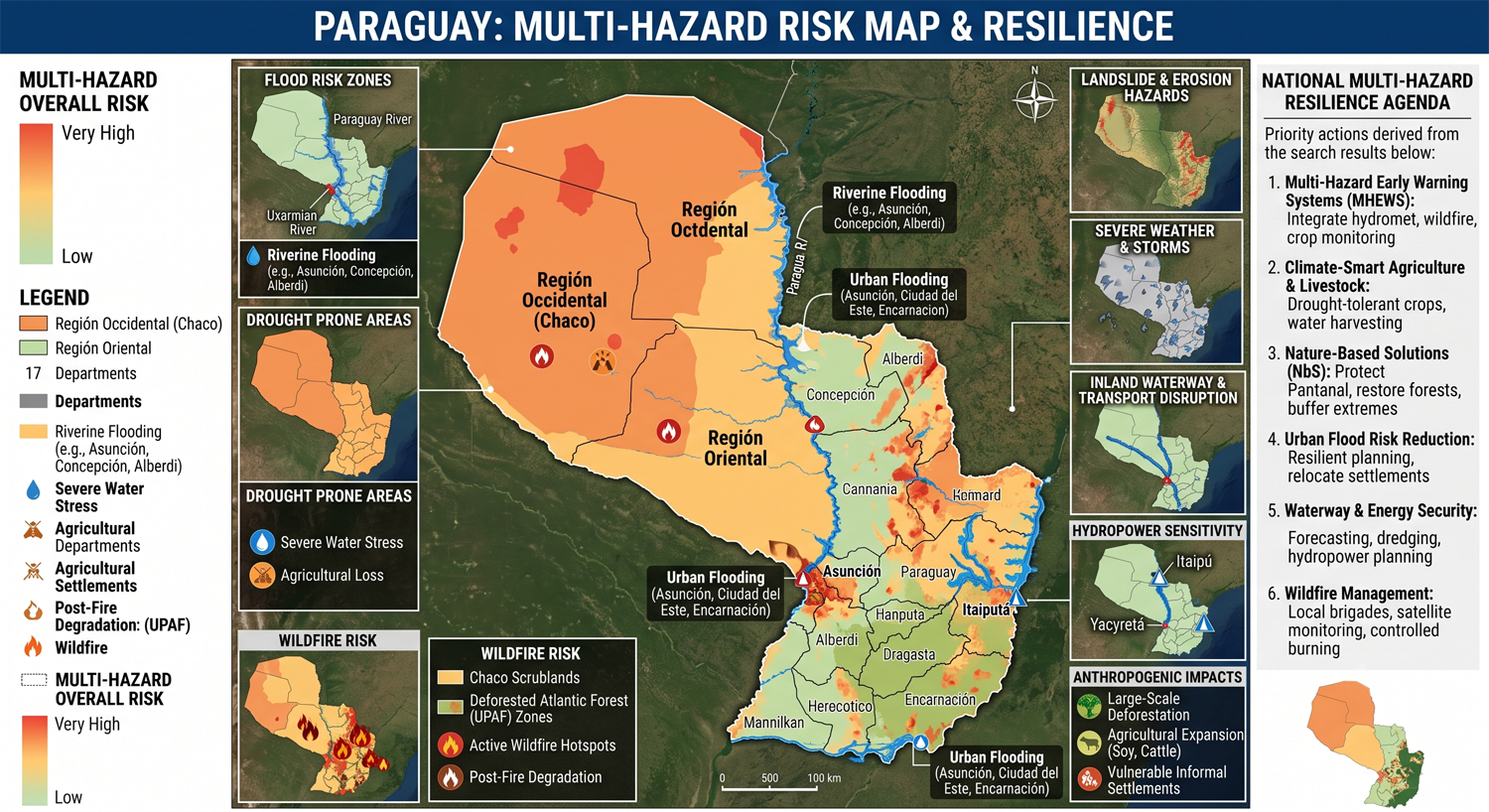
From 1965 to 2021, floods and droughts affected at least 4.2 million people, equivalent to around 60% of Paraguay’s current population. The World Bank projects that the frequency and intensity of these events could increase, especially along the Paraguay River and key watersheds in the Chaco. (World Bank) IDB RiskMONITOR identifies Paraguay’s largest historical disaster losses as the 1982–1983 floods, with losses equivalent to 17.2% of GDP, the 2021–2022 drought, with losses equivalent to 5.99% of GDP, and the 2019 wildfires, with losses of 0.23% of GDP. (riskmonitor.iadb.org)
Paraguay’s climate-risk profile is defined by high dependence on climate-sensitive agriculture and livestock, strong exposure to drought and river flooding, rising heat stress, wildfire-prone landscapes, vulnerable inland waterway trade, hydropower sensitivity, and uneven protection for rural, Indigenous and informal urban communities. The country’s resilience agenda should therefore combine hydromet modernization, river-basin management, climate-smart agriculture, wildfire management, nature-based solutions, resilient transport, health adaptation, adaptive social protection and forecast-based early action.
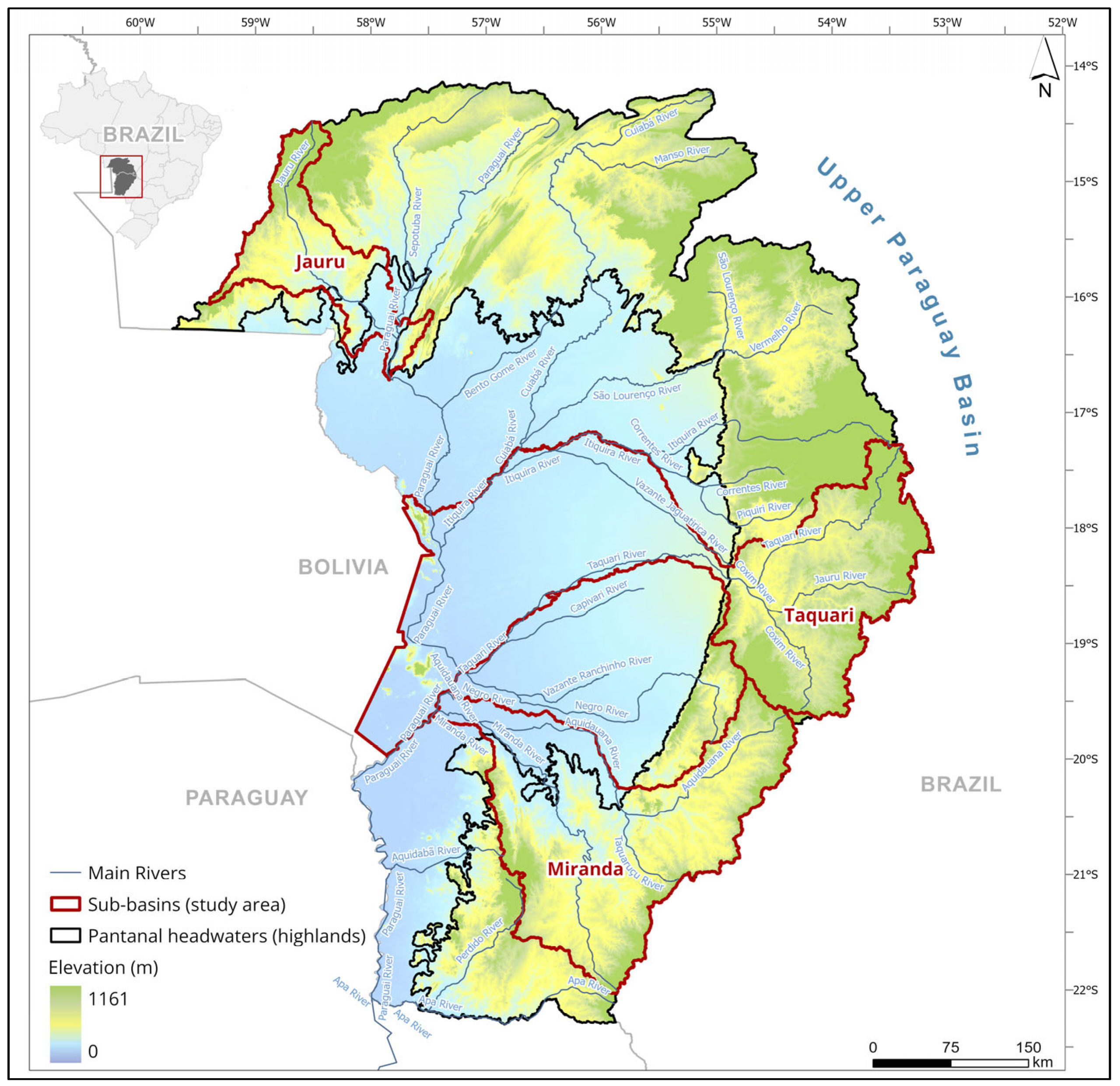
Elevation of Upper Paraguay River Basin with corresponding sub-basins.
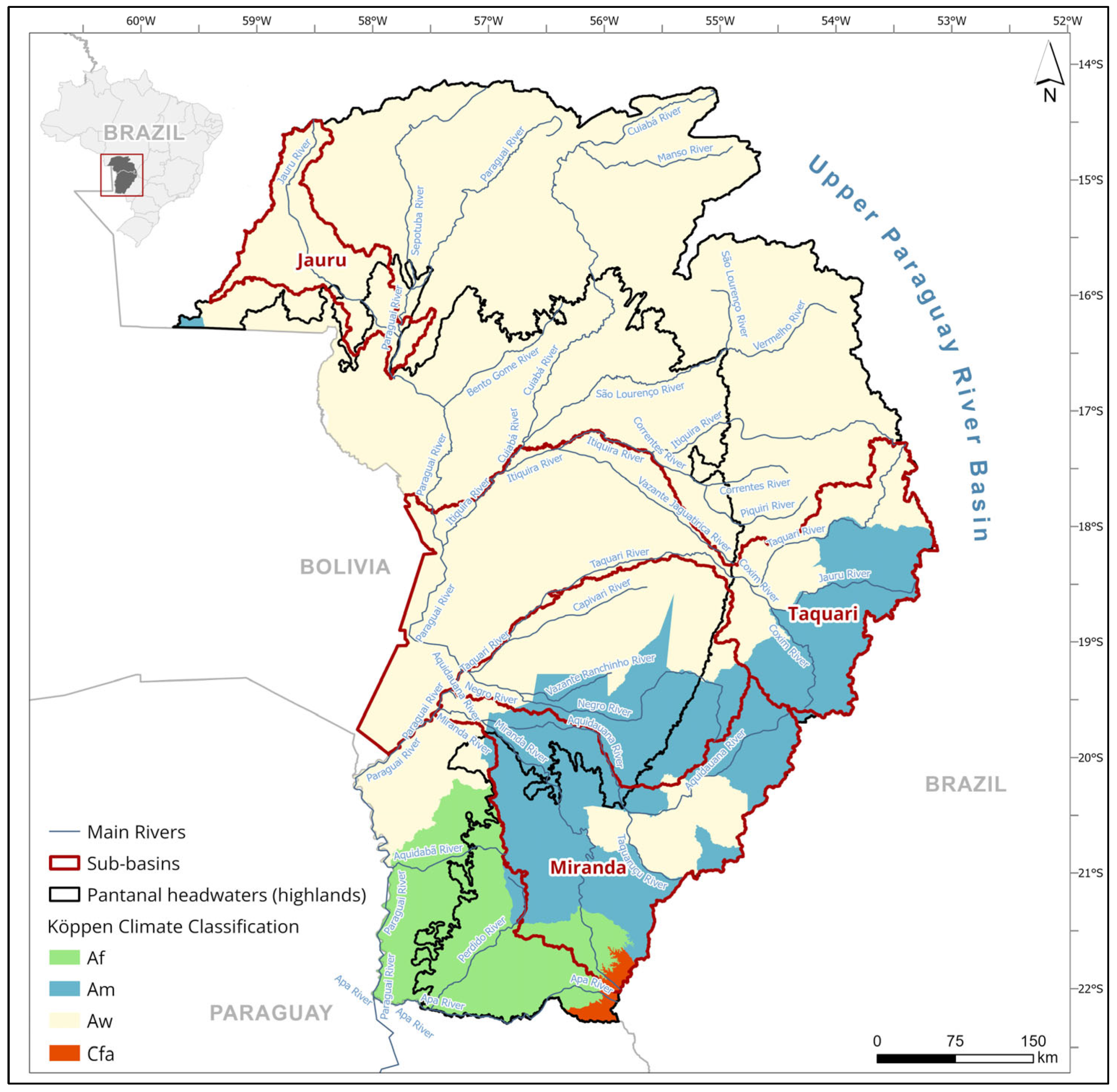
Upper Paraguay River Basin, with Köppen climate zones and corresponding sub-basins.
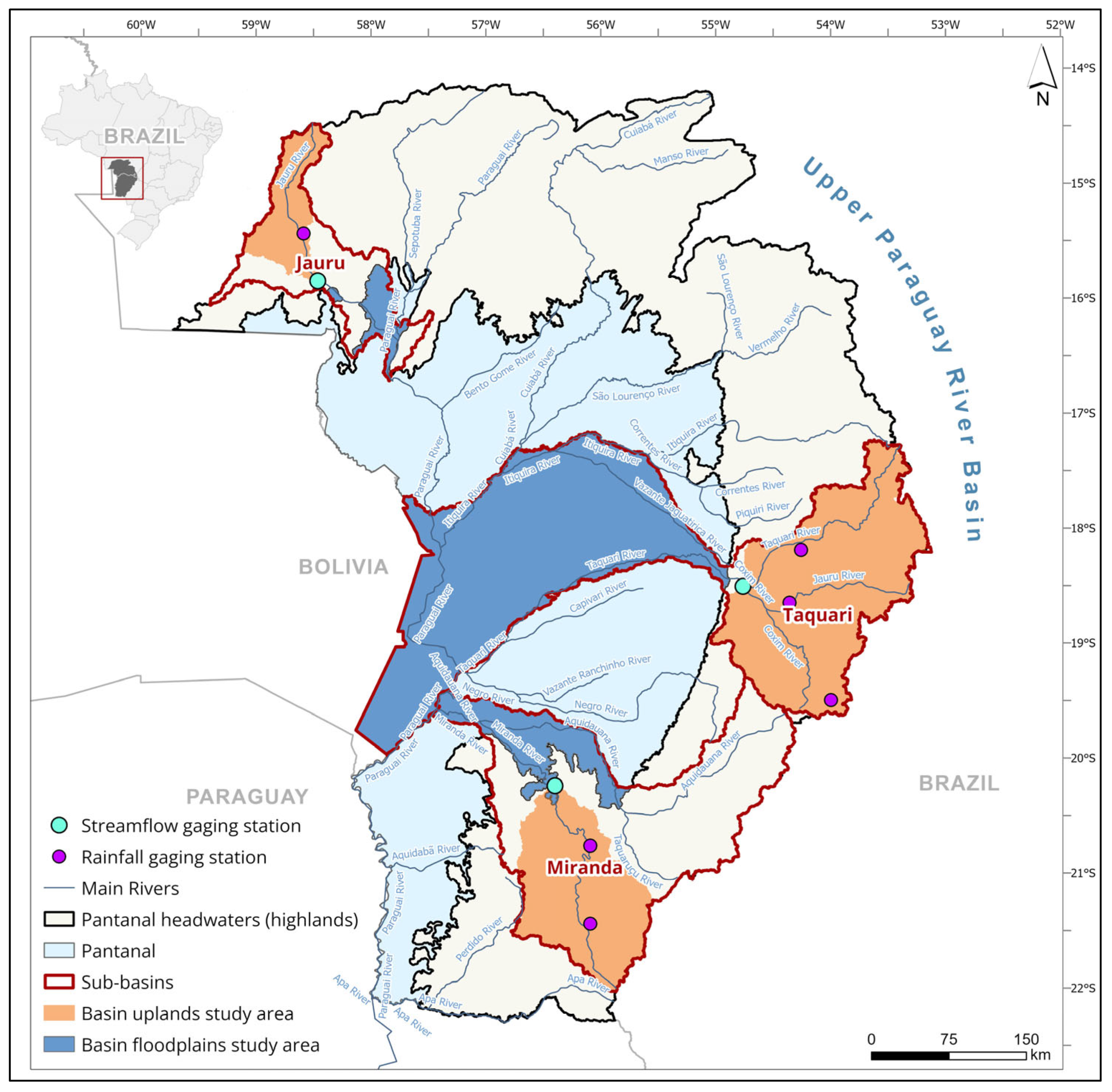
Figure 3. Upper Paraguay River Basin, with corresponding sub-basins, study areas, and rainfall and streamflow gauging stations.
Key hazard profile
| Hazard | Main risk pathway | Highly exposed areas / systems |
|---|---|---|
| Riverine floods | Damage to settlements, roads, crops, livestock, urban services and riverbank communities | Paraguay River, Paraná River, Asunción riverfront, low-lying eastern plains |
| Drought | Reduced crop yields, pasture stress, livestock losses, lower hydropower generation, waterway disruption | Western Paraguay / Chaco, agricultural zones, river transport corridors |
| Extreme heat | Heat-related illness, labour productivity loss, crop stress, livestock heat stress, higher electricity demand | Chaco, northern departments, outdoor workers, urban poor |
| Wildfires | Forest and pasture loss, air pollution, health impacts, biodiversity loss, carbon emissions | Presidente Hayes, Alto Paraguay, Chaco, forest–pasture transition areas |
| Severe storms, heavy rainfall and landslides | Localized damage to housing, roads, schools, farms and drainage systems | Eastern region, alluvial plains, hills and urban drainage corridors |
| Waterway transport disruption | Higher logistics cost, reduced export competitiveness, supply-chain delays | Paraguay–Paraná Waterway, export corridors for soy, maize, beef and fuel imports |
| Water, sanitation and health risks | Contaminated floodwater, reduced dilution during drought, diarrhoeal disease and vector risks | Rural poor, Indigenous communities, informal settlements, flood-prone areas |
Climate trends and exposure
Paraguay is expected to become significantly hotter. Under a high-emissions pathway, temperatures could rise by 4–10.5°C by 2100, with the number of very hot days above 35°C increasing fourfold. By 2050, temperatures are projected to increase by 2–5°C under RCP8.5 and 1.5–3.5°C under RCP4.5. The strongest warming is expected in the Chaco, especially during September–November. (World Bank)
Rainfall projections are uncertain, but uncertainty itself is a major risk. World Bank modelling indicates that annual precipitation by 2100 could range from a 50% decrease to a 75% increase, depending on models and scenarios. This means Paraguay must prepare for greater hydrological variability, with more severe droughts and more damaging flood episodes. (World Bank)
Paraguay’s hazard geography is differentiated. The Eastern region, where most people live, is exposed to flooding, intense rainfall and landslides, while the Western region / Chaco is more drought-prone, especially during La Niña and the December–February period. El Niño conditions can also generate high temperatures and severe flooding. (World Bank)

Sector-specific vulnerabilities
1. Agriculture, livestock and food security
Agriculture and livestock are central to Paraguay’s economy and are highly climate-sensitive. Paraguay became a major exporter of crops and beef, exporting about US$5.75 billion in agricultural products in 2020. Agricultural exports increased tenfold between 2000 and 2020, with the sector’s share of exports rising from 41.2% to 62.1%. Soy is the dominant crop, generating more than US$3 billion per year in exports, while beef exports exceeded US$1.2 billion in 2020. (World Bank)
Drought, frost and excessive rainfall already affect agricultural production. Average expected annual agricultural losses are estimated at US$504.3 million, equivalent to 7.6% of total agriculture value added or 1.3% of GDP. Future warming is expected to reduce yields of key crops such as soy, maize and wheat in important producing regions. (World Bank)
By 2050, climate impacts could reduce total crop output in a typical year by 1.1–4.0%, with maize losses estimated at 5.1–8.2% and soybean losses at 0.4–2.6%. Under a severe 1-in-20-year climate event, total crop output could fall by 12.9–15.9%, with losses above 10% for all analysed crops. (World Bank)
2. Water resources, hydropower and fiscal risk
Drought is a major macroeconomic risk because Paraguay depends heavily on hydropower. Paraguay exports about 60% of its share of Itaipú hydropower production to Brazil, and a smaller share of Yacyretá power to Argentina. Hydropower exports earn around US$1.7 billion per year, about 4% of GDP, while Itaipú transfers around US$600 million annually to the Paraguayan state, about 1.5% of GDP and around 10% of general government revenues. Drought reduces electricity generation, export revenues, royalties and compensation payments. (World Bank)
This creates a compound risk: drought can reduce hydropower production while heat simultaneously increases domestic electricity demand. Over time, rising cooling demand, transport electrification and biomass-to-electricity substitution will require additional electricity investment and better energy planning. (World Bank)
3. Paraguay–Paraná waterway and trade vulnerability
Paraguay’s international trade is highly dependent on river navigation. The Paraguay and Paraná rivers carry around 92% of export volumes and 79% of import volumes, moving about 22 million metric tons of freight annually, including soybeans, maize, rice, wheat, minerals, refrigerated beef, fuel, vehicles and containers. (World Bank)
Drought can sharply reduce navigability by lowering river levels and requiring vessels to reduce cargo loads, change convoy formations or use smaller vessels. The World Bank estimates that drought could increase logistics costs for supply chains dependent on waterway transport by 15–58%, while broader waterway logistics costs are already about 2.1% of GDP. (World Bank)
4. Urban flooding, informal settlements and infrastructure
Urban flood risk is significant, especially around Asunción and its flood-prone informal settlements. The Bañados area near Asunción’s historic centre is one of Paraguay’s largest informal settlements and houses many rural migrant families. Major flood events occur about every five years on average and cost these families around US$1.2–1.5 million in temporary relocation and job losses. (World Bank)
Transport infrastructure is also vulnerable. Only 9% of Paraguay’s road network is paved, and about 45% of the paved network is in poor condition. Around 10% of routes are exposed to flooding, which can disrupt transport corridors and isolate rural and Indigenous communities. (World Bank)
5. Water, sanitation and public health
Climate change affects health through heat stress, flood-related water contamination, drought-related water scarcity, air pollution from fires, and disease risks. Paraguay’s mortality rate attributable to non-optimal temperatures is projected to increase by up to 22% by 2050 under a worst-case climate scenario, potentially resulting in up to 380 additional deaths per year. (World Bank)
Flooding also increases water-borne disease risks. In rural areas, only 51% of the population has access to piped water and only 15% to safe sanitation, while poor and Indigenous populations suffer disproportionately from drought and flooding. During drought, sewage discharges are less diluted in rivers; during floods, contaminated water inundates land and settlements. (World Bank)
6. Wildfire, air pollution and ecosystem degradation
Wildfire is a growing climate and public-health risk, especially in the Chaco. Between 2001 and 2021, fires accounted for 7.1% of tree-cover loss in Paraguay. The peak wildfire season is July–September, and the most affected departments include Presidente Hayes and Alto Paraguay. (World Bank)
Climate change could make this worse. Fire-related air-pollution deaths are projected to rise by more than 150% by 2050 compared with 2020, while fire activity could increase by 9–46% by 2050, depending on climate scenario assumptions. (World Bank)
Deforestation also amplifies hydrological risk. It increases runoff, reduces infiltration, worsens floods and droughts, and lowers water retention in aquifers. Protecting and restoring the Pantanal, wetlands, streams and priority sub-watersheds is therefore essential because these ecosystems buffer precipitation extremes and store water for dry periods. (World Bank)
Exposure, sensitivity and adaptive capacity
Exposure
Paraguay is exposed to both slow-onset stressors and rapid-onset hazards. Slow-onset risks include drought, heat, land degradation, deforestation, water stress and ecosystem degradation. Rapid-onset hazards include floods, intense rainfall, storms, landslides, wildfire and riverbank inundation.
Sensitivity
Sensitivity is high because Paraguay’s growth model is closely linked to climate-sensitive sectors: soy, maize, wheat, beef, hydropower and river logistics. Climate shocks quickly affect exports, government revenues, energy security, food prices, transport costs, rural income and vulnerable households.
Adaptive capacity
Paraguay has important policy foundations, including its updated NDC, National Climate Change Adaptation Plan and sectoral adaptation initiatives. However, implementation barriers remain, including limited climate data systems, weak integration of adaptation into national and subnational planning, limited recognition of the disproportionate impacts on vulnerable groups, insufficient uptake of climate-resilient agriculture and forestry, and weak private-sector engagement in adaptation. (Green Climate Fund)
Priority adaptation and early warning needs
Paraguay’s resilience pathway should focus on an impact-based, multi-hazard early warning system linked to agriculture, hydropower, waterways, wildfire, health, urban planning and social protection.
Key priorities include:
Drought early warning and water-resource monitoring
Integrate rainfall, soil moisture, river levels, groundwater, reservoir operations, vegetation stress, crop condition and seasonal forecasts.Riverine flood and urban flood impact-based forecasting
Develop flood thresholds for the Paraguay and Paraná rivers, Asunción’s Bañados, rural riverbank communities and exposed transport corridors.Climate-smart agriculture and livestock systems
Scale drought-tolerant crops, improved pasture management, water harvesting, precision agriculture, climate-informed extension, index insurance and crop/livestock advisories.Waterway transport resilience
Use hydrological forecasting, river-depth monitoring, navigation advisories, dredging prioritization and regional coordination to reduce drought-related logistics shocks.Hydropower and energy-security planning
Link drought forecasts, heat-demand forecasts and reservoir management with electricity supply planning and demand-side efficiency.Wildfire early detection and response
Strengthen satellite hotspot monitoring, community fire brigades, fire-risk mapping, law enforcement, controlled-burning regulation and Chaco fire preparedness.Urban flood-risk reduction
Expand retention areas, drainage improvement, risk-sensitive land-use planning, river corridor protection and relocation/resilience support for informal settlements.Nature-based solutions
Protect and restore the Pantanal, wetlands, streams, riparian forests and priority watersheds to reduce runoff, increase infiltration and buffer drought/flood extremes.Health-climate surveillance
Link heat, smoke, water quality, dengue, diarrhoeal disease and flood exposure data with health-sector early warning and public messaging.Geospatial Decision Support System
Build a national DSS integrating hazard layers, crop zones, river levels, vulnerable populations, transport corridors, Indigenous communities, hydropower assets, wildfire hotspots and early-action triggers.
Secretaría de Emergencia Nacional – Paraguay
En ocasión del Día Nacional de la República de China (Taiwán), la Secretaría de Emergencia Nacional (SEN) hace llegar un afectuoso y respetuoso saludo al pueblo y al gobierno taiwanés, resaltando los sólidos lazos de cooperación y amistad que unen a ambas naciones y fortalecen el compromiso mutuo de trabajar por el bienestar de nuestras comunidades.
Deseamos al hermano pueblo de Taiwán prosperidad, bienestar y fortaleza para seguir avanzando en el camino del desarrollo y la solidaridad.
La Secretaría de Emergencia Nacional (SEN) es una institución creada en abril de 2005 por la Ley Nº 2.615/05, reglamentada por el Decreto N° 11.632/2013, dependiente directamente de la Presidencia de la República del Paraguay, cuyo rol y misión están enfocados a la gestión y reducción de riesgos de desastres. La SEN es el organismo rector de todas aquellas actividades comprendidas en el contexto d
e la gestión y reducción de riesgos, que busca asegurar la transversalización en todas las organizaciones de la sociedad civil, actores y sectores e instituciones de gobierno, en su accionar cotidiano y en los planes, programas y proyectos, la reducción de amenazas, vulnerabilidades y riesgos.
(The National Emergency Secretariat (SEN) is an institution created in April 2005 by Law No. 2,615/05, regulated by Decree No. 11,632/2013, directly under the Presidency of the Republic of Paraguay, whose role and mission are focused on disaster risk management and reduction. The SEN is the governing body for all activities within the context of disaster risk management.
Risk management and reduction, which seeks to ensure mainstreaming in all civil society organizations, actors and sectors and government institutions, in their daily work and in plans, programs and projects, the reduction of threats, vulnerabilities and risks.)
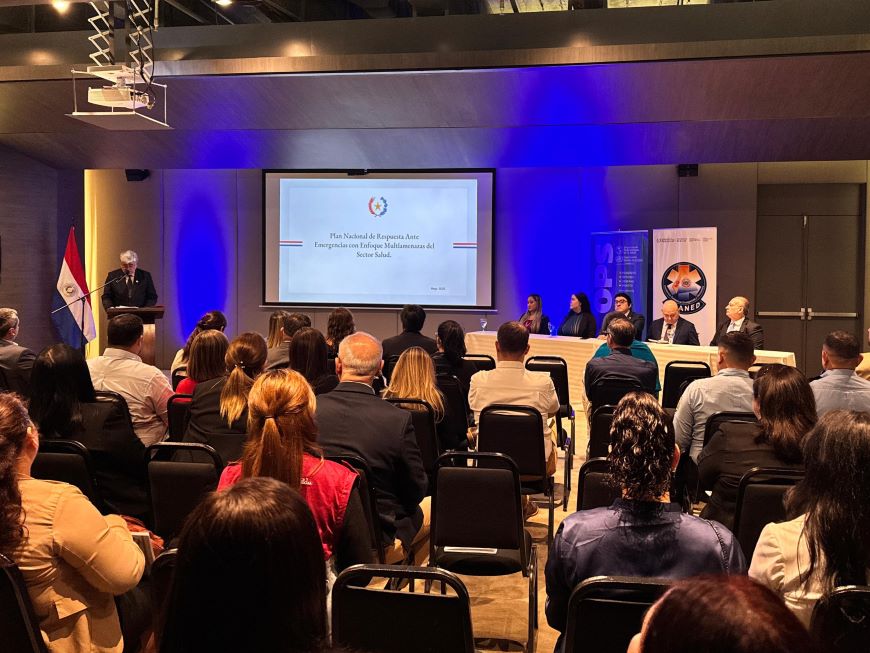
Health Ministry approves National Emergency Response Plan with a Multi-Hazard Approach
PRESS 08 may, 2025 1435
- The Ministry of Public Health, through the Directorate of Health Assistance in Emergencies and Disasters (ASANED), has led the development of the National Emergency Response Plan with a Multi-Hazard Approach for the Health Sector, with technical support from the Pan American Health Organization (PAHO/WHO) and the participation of the General Directorate of Health Surveillance.
During the period 2023-2024, inter-institutional workshops and virtual meetings were held with various departments of the Ministry of Public Health, public institutions and related organizations, with the objective of building a comprehensive plan that strengthens the national and subnational response capacity to disaster situations.
Thus, the Ministry of Public Health and Social Welfare, through the Directorate of Health Assistance in Emergencies and Disasters (ASANED), under the General Directorate of Development of Health Services and Networks, has led the preparation of the National Emergency Response Plan with a Multi-Hazard Approach to the Health Sector, with the technical support of the Pan American Health Organization (PAHO/WHO) and the participation of the General Directorate of Health Surveillance.
This new plan establishes an operational model based on health emergency response functions, and includes diagnoses and risk assessments by type of event, presented in technical graphics.
The official approval of the document was formalized through Resolution SG No. 770/2024, signed on November 18, 2024. Article 1 approves the National Plan, and Article 2 provides for its implementation and coordination by the Directorate of Health Assistance in Emergencies and Disasters (ASANED).
The plan clearly defines the operational and technical components, as well as those responsible for each response action, framed within current regulations, consolidating a coordinated strategy for public health emergencies.
In this way, the Ministry of Public Health, through the Directorate of Health Assistance in Emergencies and Disasters (ASANED), works on the preparation, coordination and effective response to disasters, in order to safeguard the health of the entire Paraguayan population.
La Secretaría de Emergencia Nacional, a través del Ministro Secretario Ejecutivo, Cnel. (R) Arsenio Zárate, felicita al Presidente de la República, Sr. Santiago Peña, en el día de su cumpleaños.


